REVIEW · NEW YORK CITY
New York City Harlem Highlights w/ Gospel Concert & Transfer
Book on GetYourGuide →Operated by Harlem Spirituals & New York Visions · Bookable on GetYourGuide
Gospel and Harlem, in one tidy ride. You get comfort-first bus touring with live narration, then a full hour of live gospel music that feels like the best kind of mid-week celebration.
I love how the guide keeps the facts moving without turning it into a slideshow, and how a guide like Peggy can handle bilingual flow while still directing the bus smoothly.
I also like the landmark line-up: you’ll see the Apollo Theatre area, the Schomburg Center, and more stops tied to Harlem’s culture and artists. The possible drawback is that the plan is bus-led, so your time outside can be brief, and you may not get to go in everywhere, especially if something is closed or under renovation.
In This Review
- Key Highlights You’ll Actually Feel
- From Times Square to Harlem: the comfortable transfer matters more than you think
- Harlem in context: from Dutch farms to Great Migration to a cultural magnet
- Landmark sequence: Apollo Theatre, Schomburg Center, and the homes that anchor the stories
- Morris-Jumel Mansion: why the oldest homes feel different in Harlem
- Duke Ellington’s footprint: a quick stop that can change how you listen
- The gospel concert: an hour of praise that’s the heart of the experience
- Guide energy and bilingual flow: what I’d look for on this kind of tour
- Price and value: $85 for 4 hours that balances sightseeing with music
- Who should book this Harlem highlights + gospel concert tour
- Quick practical tips so you get the most from the 4 hours
- Should you book this tour?
- FAQ
- How long is the tour?
- How much does it cost?
- Where do I meet the group?
- Will I be transported from Times Square?
- What’s included in the tour besides transportation?
- Is a church service included?
- What gospel concert will I see?
- What languages are available for the live guide?
- Is the tour available only at certain times of day?
- Is the tour accessible for wheelchair users?
Key Highlights You’ll Actually Feel
- A bus tour that teaches while you ride, with live commentary in English, French, or Italian
- A full hour of gospel music, presented as a mid-week concert (church service not included)
- Big-name Harlem sights you can orient to fast, including the Apollo Theatre and Schomburg Center
- Stops that connect people to places, like Duke Ellington’s former apartment and the Morris-Jumel Mansion
- A comfortable round-trip from Times Square, so you’re not piecing together subway routes
From Times Square to Harlem: the comfortable transfer matters more than you think

Meet at 690, 8th Avenue (between 43rd and 44th Streets). That location is easy to find, and having a set meeting point reduces the usual New York stress of trying to coordinate with a driver or guess which side of the street to stand on.
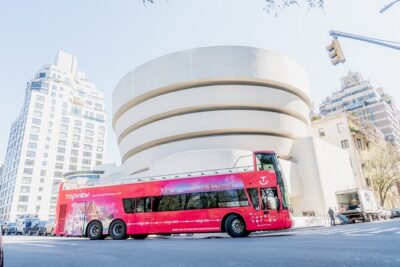
The big value here is the transportation-first format. You’re not burning energy walking in a new neighborhood before you even know your bearings. Instead, you settle in, you get oriented, and the guide builds a story while the bus rolls through Harlem.
You’ll want to arrive a few minutes early. Not because of complicated procedure, but because big meeting points plus New York traffic can turn a calm plan into a rushed one.
You can also read our reviews of more city tours in New York City



Harlem in context: from Dutch farms to Great Migration to a cultural magnet
This is not just a quick hit of photos. The narration walks you through how Harlem changed over time, starting with its origins as a rural Dutch farming community. Then the story shifts to when it became a summer retreat for prominent families, and eventually how the Great Migration shaped Harlem after the early 1900s.
For me, the helpful part is how the guide connects cause and effect. You hear about movement of people, how neighborhoods evolve, and how culture grows when creative communities gather in one place.
Then comes the Harlem Renaissance era: artists and writers drawing power from the neighborhood’s growing identity. Even if you don’t know names yet, you’ll start picking up patterns. That makes later self-guided visits feel less random.
Landmark sequence: Apollo Theatre, Schomburg Center, and the homes that anchor the stories
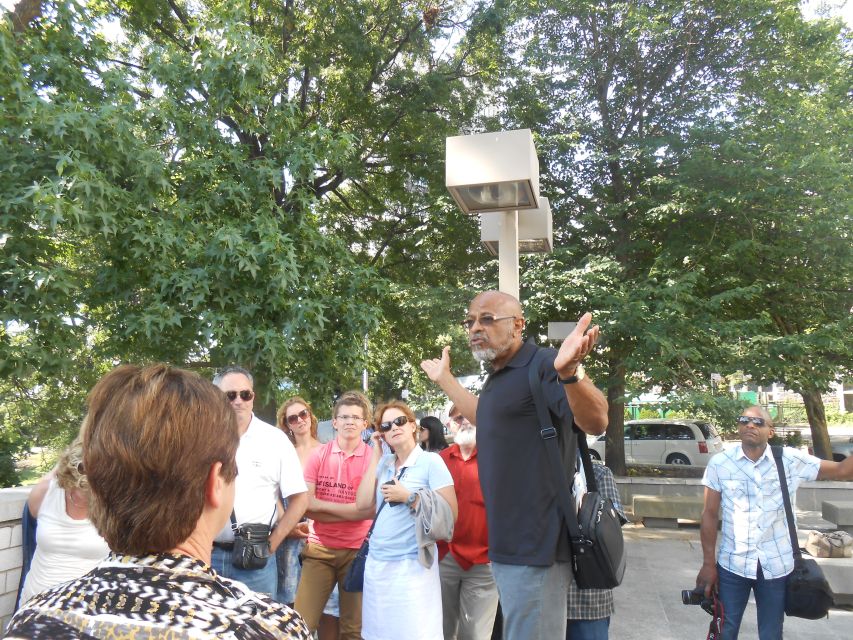
You’ll be shown major landmarks tied to Harlem’s art and literature, including the Apollo Theatre and the Schomburg Center for Research in Black Culture. These are “you’ve heard of it” stops, but the point here is to understand why they mattered, not just to recognize the signs.
The guide also ties in the legendary Cotton Club area, plus Duke Ellington’s former apartment. Those details matter because Harlem’s story isn’t only about one building. It’s about venues, institutions, and where creative life was happening month after month.
One practical note: this is designed as a highlights tour, and time on foot may be limited. You might get quick outside viewing at certain stops rather than long strolling. If you’re hoping to roam freely like you would on a walking tour, adjust your expectations and treat the bus time as your map.
If the Apollo Theatre area access is restricted due to renovations, you might still see it from the outside. That’s not a reason to skip the tour, but it is a consideration if you were counting on a longer look.
Morris-Jumel Mansion: why the oldest homes feel different in Harlem
The Morris-Jumel Mansion is included, and I like this stop because it gives you a contrast point. Harlem isn’t just 20th-century culture; it has older layers that make the neighborhood feel more grounded and less like a set made for visitors.
When you see a historic home like this in the middle of modern Manhattan, you feel the timeline. It becomes easier to understand why Harlem could shift so dramatically as new communities arrived and neighborhoods redefined themselves.
Even if your stop time is short, the mansion is a strong anchor for the narrative the guide is building. It also gives you a “break” from the more entertainment-focused stops, like the Apollo.
Duke Ellington’s footprint: a quick stop that can change how you listen

Duke Ellington’s former apartment is on the list, and it’s a smart inclusion. You might walk away from this thinking of Ellington not only as music, but as a person with a place in the neighborhood’s everyday life.
The guide’s framing helps you connect the cultural dots. Harlem wasn’t only about performances. It was about artists living, planning, collaborating, and being part of a community ecosystem.
If you’re into jazz, this stop can be a quiet morale boost. You’ll be reminded that the music you hear in concerts has roots in real rooms and real addresses, not just stage lights.
You can also read our reviews of more tours and experiences in New York City



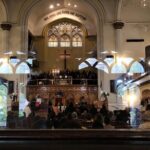
The gospel concert: an hour of praise that’s the heart of the experience
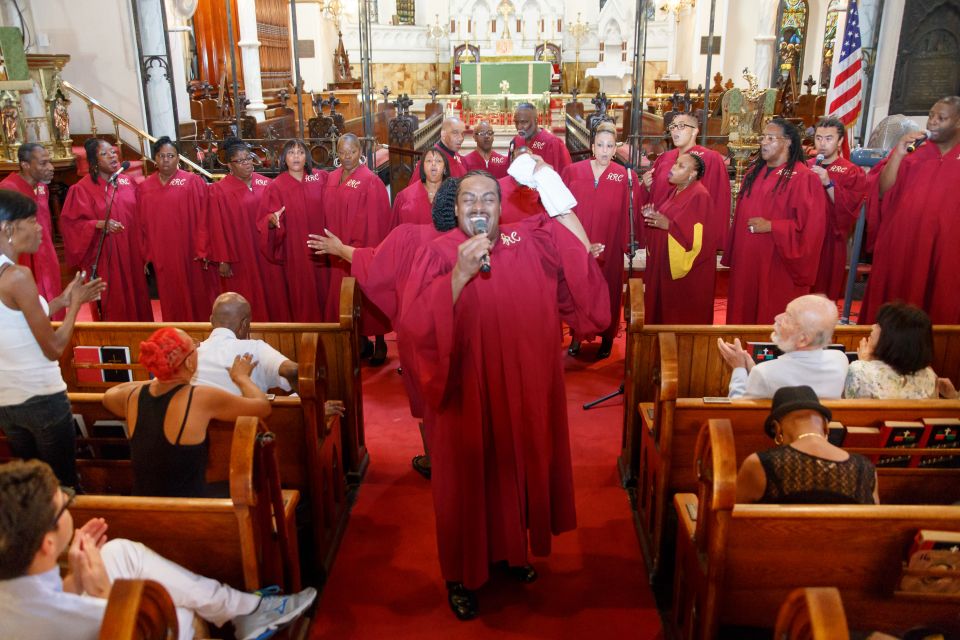
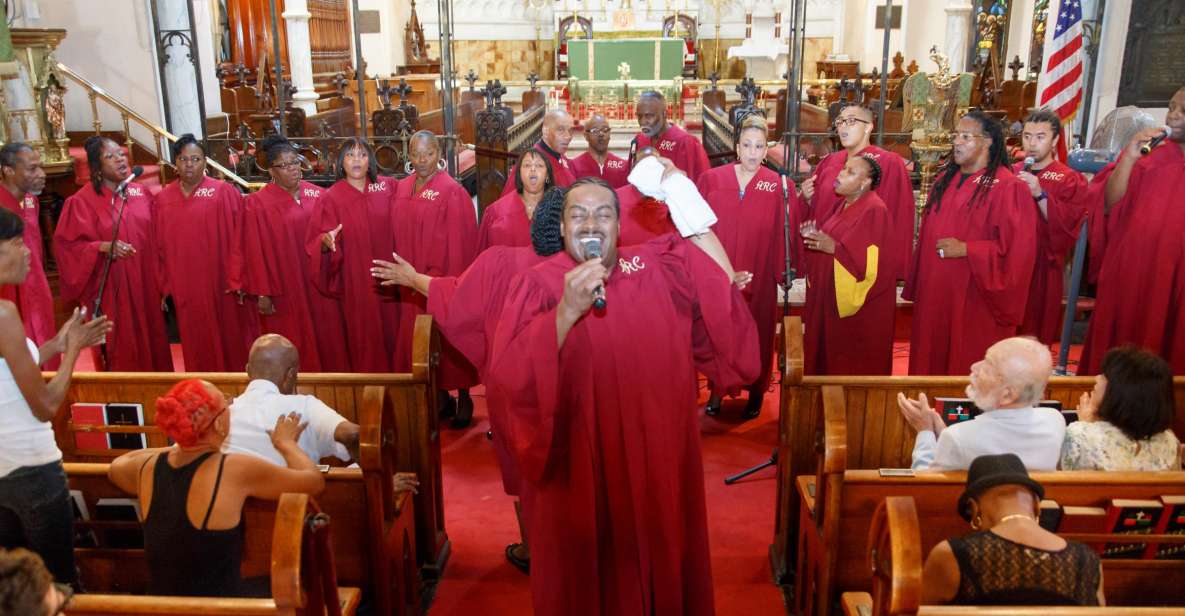
This is the part most people remember. You get a full hour of gospel music with the Harlem Ensemble Gospel Choir, presented by the operator as ARC Gospel Choir. Either way, it’s live, it’s musical, and it’s designed as a mid-week performance.
Why that matters for your trip: a lot of visitors come to New York for major museums and big landmarks, but they miss the feeling of community music-making. This concert gives you that emotional context in a way you can’t get from reading or watching videos later.
And there’s an important practical point: this experience includes the music, not a church service. So you’re not committing to a full Sunday-style schedule. It’s a strong option if you want the spiritual tone and sound without needing to fit your whole day around a service.
If you’re sensitive to volume, good to know: gospel concerts are meant to be felt. You’ll likely want to show up ready to listen with your whole attention, not as background noise.
Guide energy and bilingual flow: what I’d look for on this kind of tour
The tour runs with a live guide in English, French, or Italian. One frequently praised strength is how smoothly a guide can handle bilingual moments, including coordinating guidance without breaking the flow. That matters because Harlem stories are dense, and you’ll get more out of it if you’re not constantly catching up between languages.
I’d also pay attention to how the guide manages timing: when you’re seeing multiple landmarks in a short window, the quality of transitions makes or breaks the day. When it works well, you feel like the bus ride is doing real work for you.
Price and value: $85 for 4 hours that balances sightseeing with music
At $85 per person for about 4 hours, this isn’t a budget-only option, but it also isn’t a luxury splurge. You’re paying for a package that combines three things that are often separate on your own: structured Harlem context, transportation from Times Square, and a full hour of live gospel music.
The best value angle is time. Instead of spending your morning figuring out transit, mapping stops, and then hunting for where to listen to gospel music, you get it all organized. That’s especially helpful if this is your first time in Harlem.
One thing to weigh: because the tour is bus-led, the sightseeing part may not satisfy people who want long walking breaks. If you’re primarily there for the gospel concert and you want a guided orientation to the neighborhood, the cost starts to make sense fast. If you want deep, slow exploration on foot, you might feel like the tour gives you a taste, not a full meal.
Who should book this Harlem highlights + gospel concert tour
This tour fits best if you want:
- A first-time Harlem orientation without planning every stop
- A mix of landmark viewing plus story-driven context
- A live gospel hour without needing a Sunday church commitment
It may be less ideal if you:
- Plan to spend a lot of time on foot exploring each stop
- Need guaranteed building entry at the Apollo Theatre area
- Prefer long, independent walking time over guided routing
Also, it’s a nice pick for families and couples who want an evening of music later in life, but in a format that’s still manageable during a short stay.
Quick practical tips so you get the most from the 4 hours
- Bring a light layer. Even when Harlem weather is mild, inside concert spaces and buses can swing temperature.
- Have your meeting-point confirmation ready and arrive a bit early at 690, 8th Avenue.
- If you care about a specific landmark entrance, plan for the possibility of outside viewing only, depending on conditions.
- If the concert is the main reason you booked, treat the sightseeing portion as your warm-up, not the destination.
Should you book this tour?
If you’re torn between a Harlem sightseeing plan and a gospel music plan, this one works because it combines both. You’ll come away with context for the places you see, plus a live hour of music that feels personal and moving.
I’d especially recommend booking if you want a guided route that starts from Times Square, keeps you comfortable in transit, and gives you a structured Harlem story without turning your day into a logistics project. And if you’re the type who likes to understand the neighborhoods behind the famous names, the landmark mix makes a lot of sense.
If you’re mainly after lots of time off the bus to wander block by block, you may feel slightly constrained. In that case, consider pairing a shorter orientation like this with a later self-guided walk when you have more time.
FAQ
How long is the tour?
The tour duration is 4 hours.
How much does it cost?
The price is $85 per person.
Where do I meet the group?
Meet at 690, 8th Avenue, New York, NY 10036 (between 43rd and 44th Streets).
Will I be transported from Times Square?
Yes. Transportation to and from Times Square is included.
What’s included in the tour besides transportation?
You’ll get live commentary in your language of choice and a live gospel music experience.
Is a church service included?
No. The tour does not include a church service.
What gospel concert will I see?
You’ll enjoy a full hour of gospel music by the gospel group listed for the experience (described as Harlem Ensemble Gospel in the highlights and as ARC Gospel Choir in the included details).
What languages are available for the live guide?
The live guide is available in English, French, and Italian.
Is the tour available only at certain times of day?
It is usually available in the morning.
Is the tour accessible for wheelchair users?
Buses are not equipped with lifts. Only foldable wheelchairs or walkers are permitted on board and they are stored in the luggage compartment. A passenger using a foldable wheelchair must be accompanied by someone who can assist with boarding and disembarking, and you’re asked to notify in advance ideally up to 3 weeks before travel.