REVIEW · NEW YORK CITY
New York City: Museum at Eldridge Street Docent-Led Tour
Book on GetYourGuide →Operated by Museum at Eldridge Street · Bookable on GetYourGuide
A synagogue tour where the details do the talking. You’ll walk into the Eldridge Street Synagogue and get a clear look at Moorish-style architecture and the 60 stained glass windows, all tied to Jewish immigrant life on the Lower East Side. It’s a quick, 1-hour visit that helps you understand how a place of worship also became a home for community and permanence.
I love how the docent-led format turns big themes like immigration and preservation into something you can see in the room. The highlight for me is pairing historic stained glass with a modern window by Kiki Smith and Deborah Gans. One thing to consider: rules are strict about photography and certain items, so if you like to take lots of photos with gear, plan accordingly.
In This Review
- Key Things You’ll Notice on This Eldridge Street Synagogue Tour
- Stepping Inside Eldridge Street: Architecture With a Purpose
- The 1-Hour Flow: Immigration Stories You Can Follow in Real Time
- Moorish Architecture: Why the Style Matters Here
- Stained Glass at Eldridge: 60 Historic Windows Plus a Modern Twist
- How the Tour Makes Preservation Make Sense (Not Just a Buzzword)
- Using Your Visit Time: Museum Admission Beyond the Tour
- Price and Value: What $8 Buys You in This Neighborhood
- Who This Tour Fits Best
- Should You Book the New York City Museum at Eldridge Street Docent-Led Tour?
- FAQ
- How long is the docent-led tour at the Museum at Eldridge Street?
- What does the ticket price include?
- Where do I meet the tour?
- Is the tour offered in English?
- Are there any photography restrictions?
- Is the museum wheelchair accessible?
- What items are not allowed during the visit?
Key Things You’ll Notice on This Eldridge Street Synagogue Tour
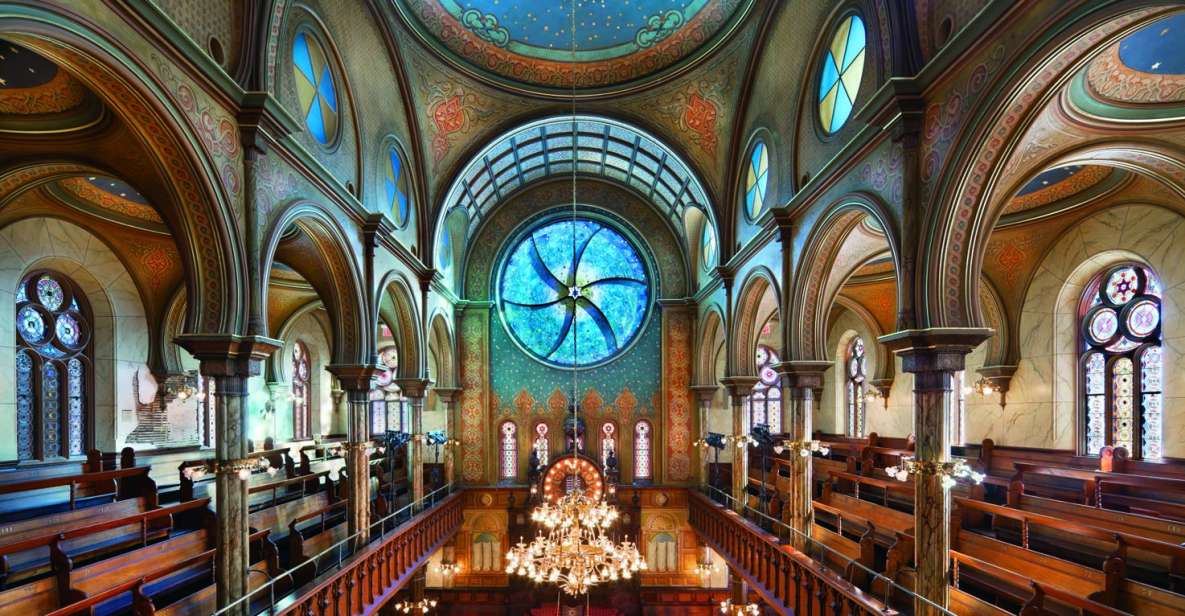
- A National Historic Landmark built in 1887 and restored after years of neglect
- Moorish architecture that feels bold and intentional, not decorative for decoration’s sake
- 60 historic stained glass windows that connect art to daily faith and community identity
- A modern window by Kiki Smith and Deborah Gans that shows the synagogue still speaks today
- Docent storytelling that links immigration, worship, and historic preservation into one visit
Stepping Inside Eldridge Street: Architecture With a Purpose
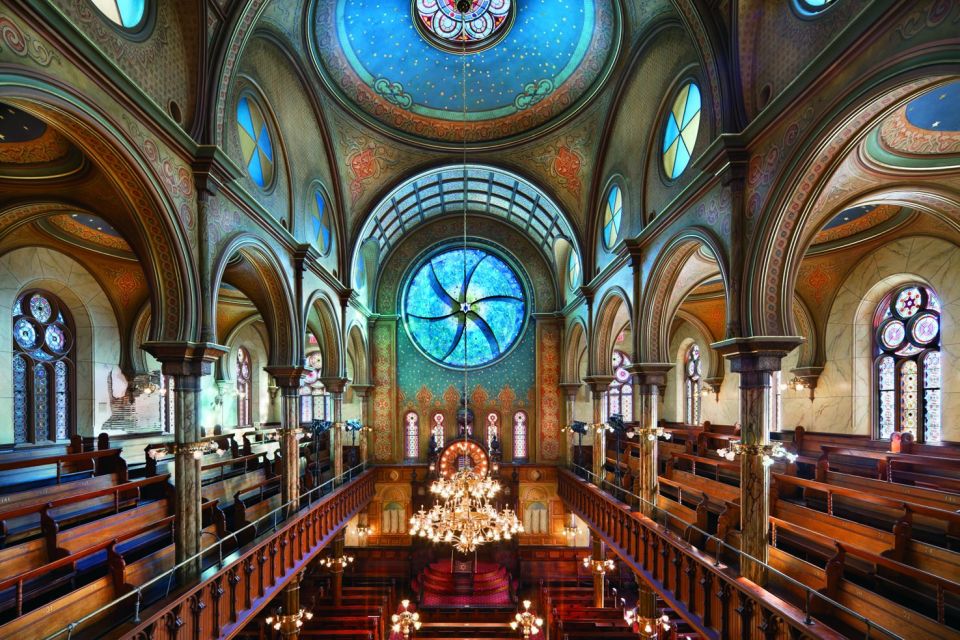
The tour starts inside the Museum at Eldridge Street. You walk down the stairs, enter the museum space, and then the docent begins with the building itself. Even before the story deepens, you’ll get a sense that this synagogue was meant to be seen, felt, and used as more than a simple meeting hall.
The Eldridge Street Synagogue was built in 1887, and it’s a National Historic Landmark. It holds a specific kind of pride: it was the first grand synagogue purpose-built by Eastern European Jewish immigrants in the United States. That matters because it reframes the building. You’re not just looking at old stone; you’re looking at people making a statement that they planned to stay.
You’ll also hear how the synagogue served multiple roles. Yes, it was a house of worship. But it also functioned as a community anchor, surrounded by overcrowded tenements and packed Lower East Side streets. Put simply: the building helped people build roots in a new country.
You can also read our reviews of more city tours in New York City



The 1-Hour Flow: Immigration Stories You Can Follow in Real Time
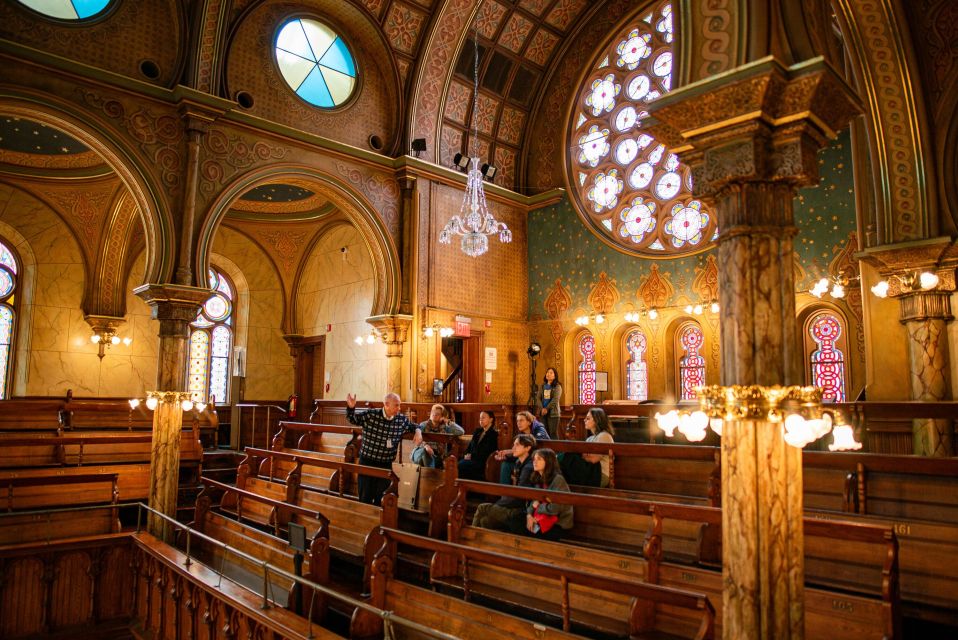
This is a 1-hour docent-led tour in English. That’s the sweet spot. Long enough for context, short enough that you’re not stuck listening while your feet try to negotiate a getaway plan.
As you move through the synagogue, the docent explains the big arc: rise, decline, and restoration. The rise part is where the story feels most immediate. The synagogue represents immigrant aspirations—what it meant to arrive, build a community, and form a lasting place around shared traditions.
Then comes the decline, tied to real-world pressure. In the 1920s, strict immigration quotas affected Jewish immigrant life, and the building was nearly lost to neglect. The point isn’t guilt or blame; it’s how quickly the conditions around you can change the fate of a community space.
Finally, the tour brings you to the restoration story. The Museum’s 20-year, $20 million restoration project returned the space to public use. You’ll feel why this matters: preservation here isn’t just about saving a building. It’s about keeping a record of how people lived, worked, prayed, and stayed connected.
Moorish Architecture: Why the Style Matters Here
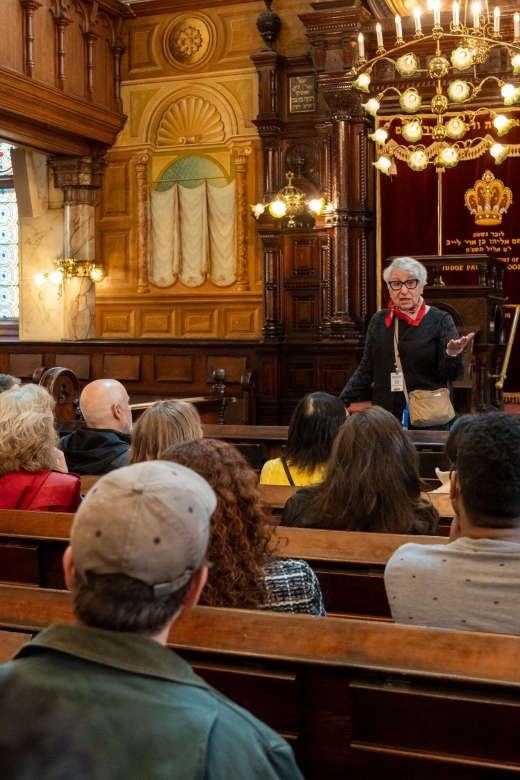
You’ll likely think of “synagogue” and imagine a straightforward worship space. This one is different. The tour focuses on the synagogue’s Moorish architecture, and the style isn’t random. It communicates confidence and identity, a way for a new community to claim visual presence in America.
Moorish design often includes bold forms and decorative patterns, and on this building you can connect that look to its historic moment. Eastern European Jewish immigrants didn’t just want a functional room. They wanted a landmark that matched the seriousness of what they were building in the Lower East Side.
As the docent talks through the architecture, I found it helpful to imagine the room when it was new. Think of people arriving, gathering, and using this space as a bridge between old-world traditions and the realities of New York. The architecture then becomes part of the immigrant story, not just background.
Stained Glass at Eldridge: 60 Historic Windows Plus a Modern Twist
If you like art that carries meaning, this is your stop. The synagogue has 60 historic stained glass windows, and the docent connects them to faith, atmosphere, and community life. Stained glass does more than look pretty. It shapes the light and changes how a room feels. In a place built for worship and community, that effect matters.
You’ll also see something that signals continuity: a modern window created by artists Kiki Smith and Deborah Gans. The museum calls it a modern addition within a historic space, and that’s exactly why I enjoy it. It shows the building isn’t stuck in the past. It’s still being used as a cultural platform.
Practical note: the museum has rules about photography, including no flash and no professional cameras. So if you care about capturing the stained glass, plan for lighting and permission. The good news is that the windows are still worth seeing even without nonstop picture-taking.
How the Tour Makes Preservation Make Sense (Not Just a Buzzword)
Historic preservation can sound like a technical phrase until you see the stakes. Here, you’ll learn that the building was nearly lost to neglect before the restoration. The story makes you understand preservation as a form of cultural survival.
The docent highlights how the Museum’s restoration brought the synagogue back to glory and public use. And because you’re hearing the story in the building itself, it doesn’t feel abstract. You can look around and realize: someone decided this place was worth the time, the money, and the labor.
This is one of the reasons I think the docent-led format works so well. The tour doesn’t just point at features. It connects them to the human choices behind them: immigrant aspiration on one end, survival and restoration on the other.
You can also read our reviews of more museum experiences in New York City




Using Your Visit Time: Museum Admission Beyond the Tour
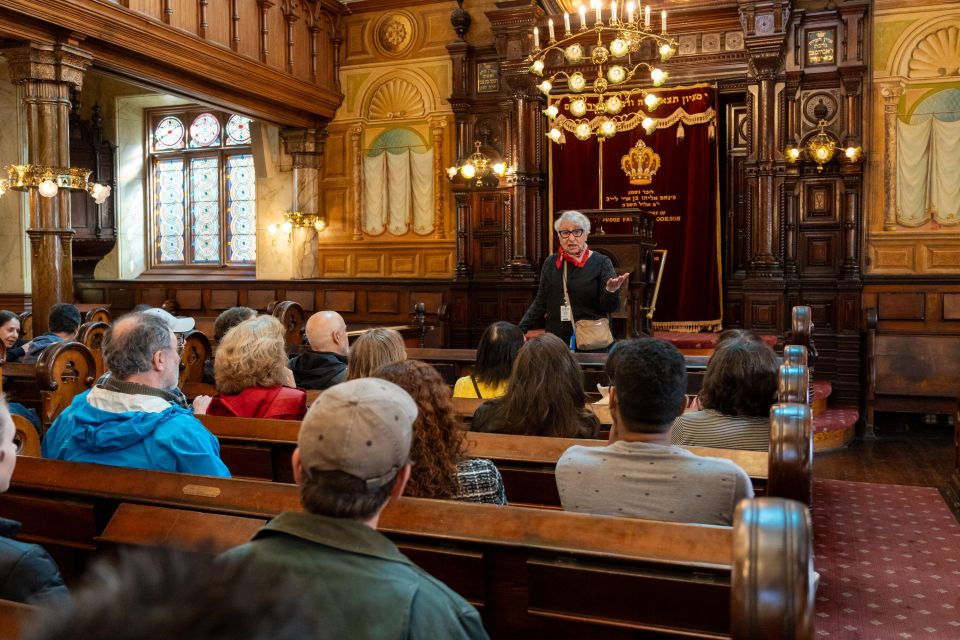
Your ticket includes museum admission to the Museum at Eldridge Street/Eldridge Street Synagogue. That also includes admission to the Museum’s temporary exhibit and permanent collection.
This is where you can tailor the trip to your pace. Since the docent tour is 1 hour, you can plan to use extra time before or after for the exhibits that interest you most. If you like context, spend a bit more time with the permanent collection. If you want something more current, check out the temporary exhibit included with your admission.
One caution: the rules about items can affect how you move through the space. Food and drinks (other than water) aren’t allowed, and strollers and backpacks will be searched and checked in on arrival. So if you’re traveling light, you’ll have an easier time.
Price and Value: What $8 Buys You in This Neighborhood
At $8 per person, this tour is a strong value, especially for a docent-led experience inside a landmark building. You’re paying for more than access. You’re paying for interpretation—someone helping you connect the visible details (architecture, light, stained glass) to the less visible story (immigration, community roots, restoration).
Also, it’s short. One hour means you get a meaningful experience without losing half a day to logistics. That matters in New York, where time is expensive and your calendar always looks overbooked.
Add in the fact that the building represents major themes of immigration and community-building on the Lower East Side, and the price feels even more reasonable. This is the kind of museum experience that gives you a full idea of the place without requiring a second week of study.
Who This Tour Fits Best
This tour is a great fit if you want more than postcard sightseeing. I think it works especially well if you enjoy architecture, art details, and historical context that’s tied to a real building.
You’ll also like it if you’re interested in how immigrant communities established permanent roots. The synagogue story isn’t only about worship. It’s about building community spaces that could survive real-world change.
If you’re short on time in the Lower East Side, the 1-hour format gives you a focused stop with a clear payoff. And if you care about preservation, the restoration arc makes a big impression in a small time window.
Should You Book the New York City Museum at Eldridge Street Docent-Led Tour?
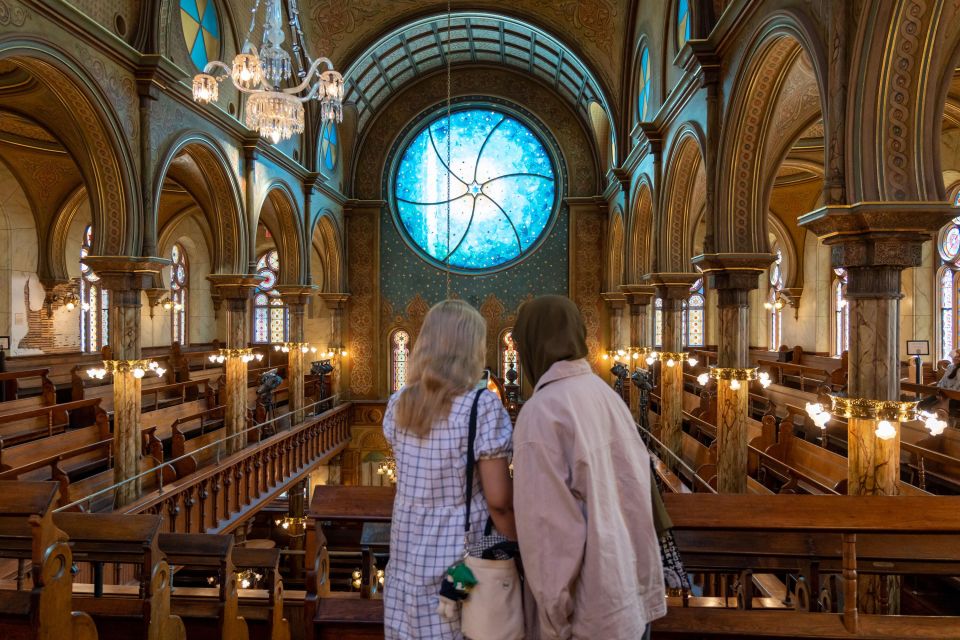
I’d book it if you want a high-impact stop that doesn’t drag. For $8, you get a docent-led look inside a National Historic Landmark with Moorish architecture, 60 historic stained glass windows, and a modern artwork window by Kiki Smith and Deborah Gans. The story ties immigration, community, and preservation together in a way that stays grounded in what you can actually see.
If you’re a serious photo enthusiast with professional gear, you may want to rethink the visit because the rules are strict (no professional cameras, no flash). And if you hate guided tours, you might prefer an independent museum browse—but the whole point here is the interpretation.
For most people, this is an easy yes: clear context, striking interiors, and a Lower East Side story with real stakes.
FAQ
How long is the docent-led tour at the Museum at Eldridge Street?
The tour duration is 1 hour. Starting times vary, so check availability for the times offered.
What does the ticket price include?
Your ticket includes museum admission to the Museum at Eldridge Street/Eldridge Street Synagogue, plus admission to the Museum’s temporary exhibit and permanent collection. The docent-led tour is also included, available in English.
Where do I meet the tour?
The tour starts inside the museum. The meeting point instructions are to walk down the stairs and enter the Museum, where the tour begins. The activity ends back at the meeting point.
Is the tour offered in English?
Yes. The docent-led tour is available in English.
Are there any photography restrictions?
Yes. Flash photography is not allowed, and professional cameras are not allowed. The museum also welcomes personal, non commercial photography.
Is the museum wheelchair accessible?
Yes. The museum is fully accessible, with an elevator reaching all 4 floors.
What items are not allowed during the visit?
The activity lists no bikes and no scooters. Also, food and drinks (other than water) are not allowed, and strollers and backpacks will be searched and checked in on arrival.