REVIEW · NEW YORK CITY
New York City: Prohibition Walking Tour
Book on GetYourGuide →Operated by Forty Thieves Tours · Bookable on GetYourGuide
A drink-and-scandal route in NYC. This Prohibition walking tour connects street corners to gangsters, bootleggers, and the political power that helped them thrive. You’ll follow the story across some of the city’s most historic neighborhoods, with Earl guiding you through bar after bar and explaining why these places mattered.
I really like the step-by-step format, with stops at four historic saloons and plenty of inside tales from legendary staff. I also like that Earl uses a tablet with photos to show locations and famous customers, so the stories feel specific instead of vague.
One thing to plan for: this tour includes a good chunk of walking, so comfortable shoes are not optional. You’re out for about two hours, and you’ll feel it by the end.
In This Review
- Key highlights you’ll feel right away
- Prohibition in NYC tastes better through old bars
- Starting at Little Owl and why early timing matters
- Four historic saloons: the underworld map you walk through
- McSorley’s: where stories start sounding real fast
- Little Italy: the streets between the drinking stops
- Old Town Bar: another classic setting for the same big story
- Pete’s Tavern and the wrap-up vibe
- Tammany Hall: where politics and corruption were part of the same conversation
- Gramercy Park and Union Square: a contrast that makes the stories stick
- Drinks, ID rules, and the practical stuff that affects your experience
- Who this tour suits best (and who should skip it)
- Should you book the New York City Prohibition Walking Tour?
- FAQ
- How long is the Prohibition walking tour?
- How much does it cost per person?
- What stops are included on the tour?
- Are drinks included in the tour price?
- What is the minimum age to join?
- Where do I meet the guide?
- What ID do I need to bring?
Key highlights you’ll feel right away
- Four historic saloon stops where the Prohibition-era underworld showed up in plain sight
- Earl’s tablet photo support, helping you match stories to real places
- Tammany Hall visit, tying politics directly to the city’s crooked deal-making
- Speakeasy and bootlegging storytelling built around real drinking spots
- Gramercy Park and Union Square for a contrast between polished New York and criminal history
- Back to Little Owl for a clear start-to-finish route
Prohibition in NYC tastes better through old bars
Prohibition didn’t just change laws. It reshaped the city’s social life, too. When alcohol became something you hunted for instead of something you ordered, whole networks sprang up to supply, protect, and profit from the demand. That’s the angle I like most here: you’re not learning Prohibition as trivia. You’re seeing how it worked through places people actually went, talked, and made decisions.
This tour keeps the focus where it belongs: saloons as meeting hubs. During Prohibition, those watering holes were more than hangouts. They became low-key information centers, rumor exchanges, and deal rooms. The guide’s stories connect that underworld to the city’s political scene, so you start to understand why corruption wasn’t a side plot. It was part of the system.
And because the route includes both the criminal side and the political side, it lands with a cleaner message. You finish thinking less about bootleggers as myth, and more about how power and alcohol fed each other.
You can also read our reviews of more walking tours in New York City



Starting at Little Owl and why early timing matters
The tour kicks off at Little Owl, and your meeting point is right across from the restaurant, at a bench where the guide will be waiting. Show up about 15 minutes early so you’re not rushed into the first explanation while you’re still figuring out where to stand.
Also, plan your evening around the pacing. This isn’t a sit-down history lecture. It’s a walking tour built around multiple short stops, with stories delivered along the way. From the reviews, you can expect plenty of steps—the fun kind, but still steps. Wear shoes you can move in for two hours without thinking about it.
Four historic saloons: the underworld map you walk through
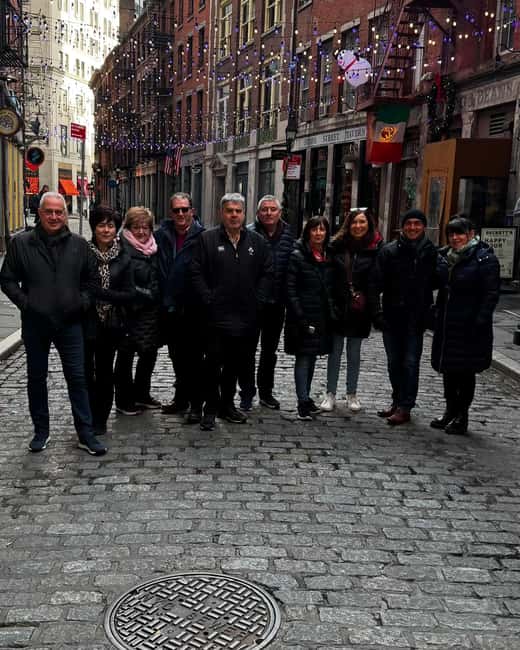
The tour’s core is simple: you’ll visit four of New York’s oldest and iconic saloons and listen to how each one fit into the Prohibition-era story. At each stop, you’ll hear inside stories from legendary staff, plus the guide fills in what went on around those counters and corners—gangsters, bootleggers, and the people who helped the wheels turn.
Just as important, you’re not stuck only outside. You’re taken inside the bars where possible, so you get that real sense of space and place. A tablet photo aid also helps here: Earl reportedly uses it to show images of the locations and the famous customers linked to them. That kind of visual cue is great if you’ve ever struggled to picture historical characters when all you’ve got is a name.
McSorley’s: where stories start sounding real fast
You begin with McSorley’s, which is one of the first stops on the guided route. Since the tour is built around historic saloons, this is less about a fancy performance and more about the atmosphere—old-school, purposeful, and tied into the broader Prohibition network the guide describes.
What to keep in mind: this stop sets the tone for the whole tour. The guide’s job is to show you the pattern—how these places acted like social hubs where the underworld could blend in. If you take a moment to look around and notice how people move and talk, the next stops will make more sense.
Little Italy: the streets between the drinking stops
After McSorley’s, you’ll move through Little Italy on a guided stroll. This part matters because it reminds you these bars didn’t exist in a vacuum. The stories connect to real neighborhoods, and the tour uses the walk itself to link scenes—how people traveled, where they gathered, and how informal networks formed.
One practical note: walking segments like this are where you’ll want to have your questions ready. If there’s a detail you’re curious about—how speakeasies spread, how organized crime and political power overlapped—you’ll probably catch your best explanations while you’re moving between stops.
You can also read our reviews of more city tours in New York City





Old Town Bar: another classic setting for the same big story
Next up is Old Town Bar, another historic saloon where the guide shares more of the same thread: Prohibition-era drinking culture, speakeasy history, and the characters who reportedly frequented places like this. It’s also where the inside staff stories tend to add color, because they give you that human angle beyond just big names and headlines.
If you’re the type who likes hearing how different venues functioned—how one bar might be more about talk, another more about deal-making—this stop is a strong match. The value here is the way the guide compares the roles of each saloon in the wider underworld system.
Pete’s Tavern and the wrap-up vibe
You’ll also visit Pete’s Tavern, and it’s one of the final bar stops before the route winds down. From the tour’s structure, this works like a closing chapter: you’ve already learned how the pieces fit—now you land back at a legendary drinking spot and feel the full story in one last setting.
The review notes also point to the vibe of going out with someone who knows the backstories, not just someone reading facts. Earl’s reported tablet use and upbeat style seem to help the last leg feel like a conclusion instead of a scramble to finish.
Tammany Hall: where politics and corruption were part of the same conversation
One of the biggest draws is the visit to Tammany Hall, which the tour treats as a key piece of the Prohibition-era puzzle. This is where the story expands from bars into power.
The tour makes the point that the saloons weren’t only about drinking. They were hubs where organized crime and corrupt political figures could connect to make deals and bend the rules. That connection is the “why” that many bar-history tours skip. Here, it’s central.
Even if politics isn’t usually your thing, you might still enjoy this stop because it’s explained through behavior and incentives—who had leverage, what people wanted, and how corruption could be convenient. You end up with a clearer sense of how the criminal economy didn’t run on its own. It ran on relationships, too.
Gramercy Park and Union Square: a contrast that makes the stories stick
The tour also includes time around Gramercy Park and Union Square. I like this pairing because it gives you contrast. The Prohibition setting is gritty and law-bent, while these areas are associated with a more refined side of the city.
That contrast helps the tour land emotionally. When you stand near more elegant surroundings while hearing about corruption and gangsters, it’s easier to understand how seamlessly those worlds could overlap. The city isn’t one mood. It’s many moods, sometimes sharing the same street.
Also, because the tour is walking-based, these park and square moments give your brain a break between bar interiors. You can reset your focus, look around, and then jump back into the next story with fresh attention.
Drinks, ID rules, and the practical stuff that affects your experience
Let’s talk about the part that can change your mood: drinks and the age rules.
The tour information says drinks are paid by the guest. At the same time, one review specifically mentioned drinks being included at each stop. Since that’s a real discrepancy, I’d treat it as a “confirm when you book” situation, especially if you want to budget tightly.
Age-wise, it’s 21+ only. You’ll need an ID card (a copy is accepted). This matters because the tour is built around bar interiors and adult storytelling. If you’re under 21, you won’t be able to join.
Finally, remember the walking reality. Even with short segments, it’s still a two-hour loop. The reviews specifically call out steps, so bring comfortable shoes and expect to move.
Who this tour suits best (and who should skip it)
I think this tour is a great match for you if:
- You like bar-based storytelling and want the Prohibition-era angle tied to real venues.
- You enjoy crime-and-politics history when it’s explained in plain language, not in a textbook voice.
- You’d rather see a route with four saloon stops and guided explanations than do a museum-style experience.
You might want to skip it if:
- You have mobility limitations, since the tour is described as not suitable for people with mobility impairments.
- You want a totally sit-down experience, because you’ll be on your feet for the full duration.
- You’re not interested in adult themes connected to drinking culture during Prohibition.
Should you book the New York City Prohibition Walking Tour?
I’d book it if you want an NYC experience that feels personal, not performative. The biggest reasons are practical: you get four historic saloon visits, a Tammany Hall stop, and a guide who uses visuals (Earl’s tablet photos) to make the stories land at street level.
The main decision point is drinks and walking. If you’re okay with budgeting for drinks (or confirming what’s included), and you’re fine with a two-hour walk, the value is strong for $59 because you’re getting multiple historic interiors plus guided political and speakeasy storytelling rather than just one neighborhood stroll.
If you like history that has a pulse, this one delivers.
FAQ
How long is the Prohibition walking tour?
The tour duration is 2 hours.
How much does it cost per person?
The price is $59 per person.
What stops are included on the tour?
You’ll visit four historic saloons, plus Tammany Hall and Gramercy Park. The walking route also includes Little Italy and areas around Union Square, with stops such as McSorley’s, Old Town Bar, and Pete’s Tavern.
Are drinks included in the tour price?
The tour information says drinks are paid for by the guest. One review mentioned drinks being included at each stop, so it’s worth confirming what’s included when you book.
What is the minimum age to join?
This tour is 21+ only.
Where do I meet the guide?
Meet right across from Little Owl at a bench, where the guide will be waiting.
What ID do I need to bring?
Bring an ID card. A copy is accepted.