REVIEW · NEW YORK CITY
Oppenheimer in New York: Upper West Side Walking Tour
Book on Viator →Operated by Purefinder New York · Bookable on Viator
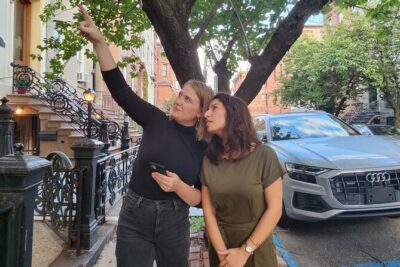
Oppenheimer’s New York streets have stories. This small-group walking tour with historian Krombie connects Oppenheimer’s family life to real places on the Upper West Side and Riverside Drive, and it makes the science-era ideas feel human, not abstract. I especially love how the route stays close together while still packing in big themes, and how the guide ties the Manhattan Project era back to childhood, morals, and politics. The one drawback? This is still a walking tour with moderate physical fitness needed, so plan on being outdoors and moving fairly steadily.
For me, the best part is the way you get perspective fast. You’ll start near Broadway and end at Columbia University, and the pacing is built so you’re not stuck with long stretches of “just walking.” It’s the kind of afternoon that turns a familiar neighborhood into a set of clues.
At $42 per person for about 2.5 hours, you’re paying for interpretation, not museum entry. Since the stops are outside and admissions listed are free, you’re mostly funding the thinking—and that’s where Krombie shines. If you don’t like walking, though, this is the moment to choose a different kind of sightseeing.
In This Review
- Key highlights at a glance
- Starting at 2518 Broadway and ending near Columbia
- Stop-by-stop on the Upper West Side: family beginnings you can stand next to
- Ella Oppenheimer’s premarital home: immigrant roots on the block
- The birth site: meeting Oppenheimer where it started
- Edwin R. A. Seligman and the Ethical Culture School connection
- The Clarendon and William Randolph Hearst: neighborhood power and WWII-era echoes
- The Clarendon: William Randolph Hearst’s presence in childhood territory
- Riverside Drive: when the street becomes part of the biography
- Soldiers’ and Sailors Monument: why Riverside Drive mattered to young Oppenheimer
- The Master Apartments: New Deal ideas and competing ideologies
- New York Buddhist Church: Shinran Statue and the atomic bomb’s cause-and-effect
- Ending with Isidor Rabi: the science circle behind Oppenheimer
- What makes this tour worth $42 (and when it might not fit)
- Who should book this
- Quick practical tips so your afternoon runs smoothly
- Should you book the Oppenheimer Upper West Side walking tour?
- FAQ
- FAQ
- How long is the Oppenheimer in New York Upper West Side walking tour?
- Where does the tour start and end?
- How much does the tour cost?
- What group size should I expect?
- Is the tour in English and do I need a printed ticket?
- Is there free cancellation?
Key highlights at a glance
- Historian-led storytelling with lots of cause-and-effect connections, not just dates
- Tight small group (capped at 13, with a maximum of 15), so questions stay practical
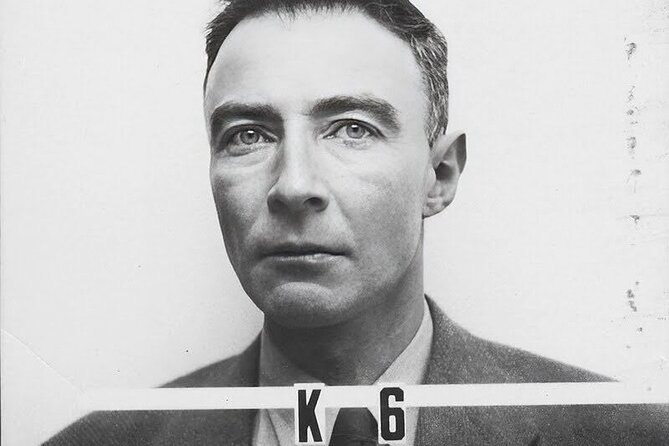
- Upper West Side birth and family sites, including the place Oppenheimer was born
- Riverside Drive context—the street’s history matches the era shaping young Oppenheimer
- New York Buddhist Church Shinran Statue stop, linked directly to atomic cause and effect
- Friend-of-Oppenheimer science connections, including Nobel-winning Isidor Rabi
Starting at 2518 Broadway and ending near Columbia
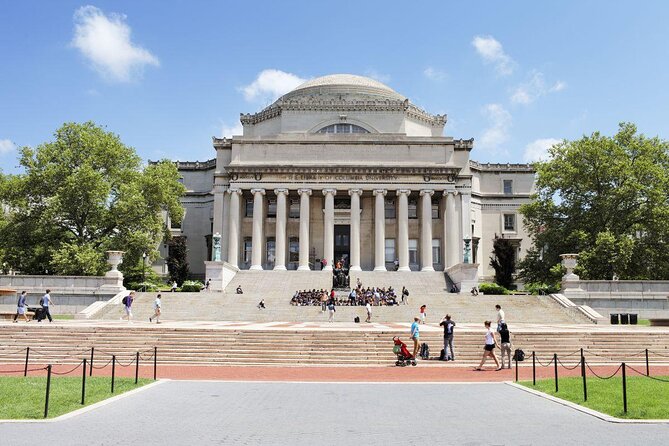
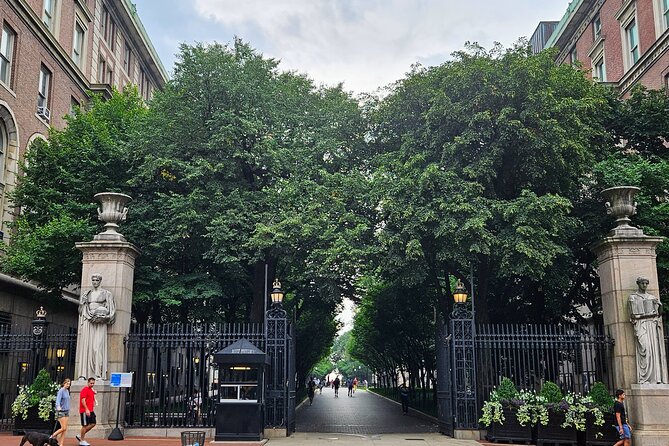
You meet at 94 Corner Cafe, 2518 Broadway at 1:00 pm, with the walk ending at Columbia University (116th and Broadway) at Main campus by Columbia University Plaza. That matters more than you might think: you finish in a very central area, which makes it easier to tack on a museum visit or a meal without another bus ride.
I like that the tour is built for an afternoon, not a full-day commitment. About 2 hours 30 minutes is long enough for real context, but short enough that you can still enjoy the rest of the day as flexible time.
The format is also friendly for a first walking tour. It’s English-language and uses a mobile ticket, so you’re not dealing with printouts or extra hassles.
You can also read our reviews of more walking tours in New York City



Stop-by-stop on the Upper West Side: family beginnings you can stand next to
This walk doesn’t treat Oppenheimer like a distant genius behind glass. Instead, it keeps bringing the story back to doors, blocks, and communities—especially on the Upper West Side.
Ella Oppenheimer’s premarital home: immigrant roots on the block
The tour begins with a stop tied to Ella Oppenheimer, Robert Oppenheimer’s mother, at her premarital home. You’ll talk about Oppenheimer’s immigrant ancestry here, and the point isn’t just genealogy. It’s how family background shaped identity, values, and the kind of intellectual life you could grow into in New York.
This is a quick stop (about 10 minutes), but it sets a tone: the guide keeps asking, in effect, Where did this person’s mindset come from?
The birth site: meeting Oppenheimer where it started
Next you head to the site connected to Oppenheimer’s birth. This is another short visit (around 10 minutes), but it plays a big role. Standing at a birth site is one thing; hearing how the guide frames the parents’ New York life is another.
What you get is a sense that Oppenheimer’s later work didn’t fall from the sky. It grew out of how his family lived, how they moved through New York, and what they absorbed around them.
Edwin R. A. Seligman and the Ethical Culture School connection
Then the walk turns toward education through the former home of Edwin R. A. Seligman. The key theme here is Oppenheimer’s connection to the Ethical Culture School, and the stop is designed to help you understand what kind of learning mattered to him.
This is about ideas—not grades. You’ll spend about 15 minutes, and that extra time helps you connect school values to later moral questions that come up when you talk about his career and legacy.
If you like “how did they think?” more than “what did they do?” this is a strong stop for you.





The Clarendon and William Randolph Hearst: neighborhood power and WWII-era echoes
One of my favorite techniques on this tour is how it uses nearby historical figures to widen the lens. You’re not only seeing Oppenheimer; you’re seeing the world he grew up in.
The Clarendon: William Randolph Hearst’s presence in childhood territory
At the former home of William Randolph Hearst, you’ll learn why he was such a big presence in Oppenheimer’s childhood neighborhood. The guide also points out that Hearst had ties with world leaders who would later be connected through WWII.
This stop runs about 10 minutes, but it does something useful: it shows how a kid’s environment can be shaped by media, public life, and the heavy gravity of famous adults.
You don’t need to be a Hearst fan to enjoy it. It’s more about understanding the air of the era—who had influence, and how far influence could reach.
Riverside Drive: when the street becomes part of the biography
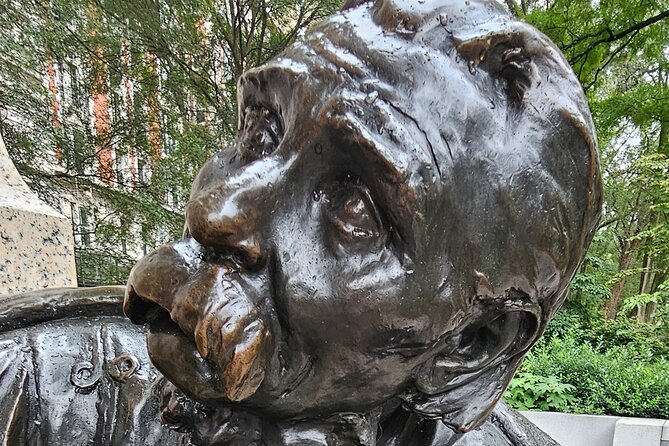
After the Upper West Side stops, the walk moves to Riverside Drive. This is where the tour starts to feel like a narrative drive—except on foot. The street itself becomes a timeline you can follow.
Soldiers’ and Sailors Monument: why Riverside Drive mattered to young Oppenheimer
At the Soldiers’ and Sailors Monument, you’ll learn about Riverside Drive’s history in the time period that overlaps with Oppenheimer’s formative years. It’s about 15 minutes, and the value is in the grounding.
Instead of treating “young Oppenheimer” as a generic phrase, the guide anchors it to a physical place with a long public meaning. That makes the later conversations about ideology and morality feel earned.
The Master Apartments: New Deal ideas and competing ideologies
Another Riverside Drive stop takes you to the Master Apartments, where you connect FDR’s New Deal to the era’s ideologies—ideas that prospered and that helped inform young Oppenheimer.
This part is short (about 10 minutes), but it’s built to be sticky. You’ll get a clearer picture of the intellectual climate in which Oppenheimer matured: social programs on one hand, ideological arguments on the other, and a sense that politics wasn’t background noise—it was part of daily life.
If you’re the type who likes history as a web, this is where the web starts to show.
New York Buddhist Church: Shinran Statue and the atomic bomb’s cause-and-effect
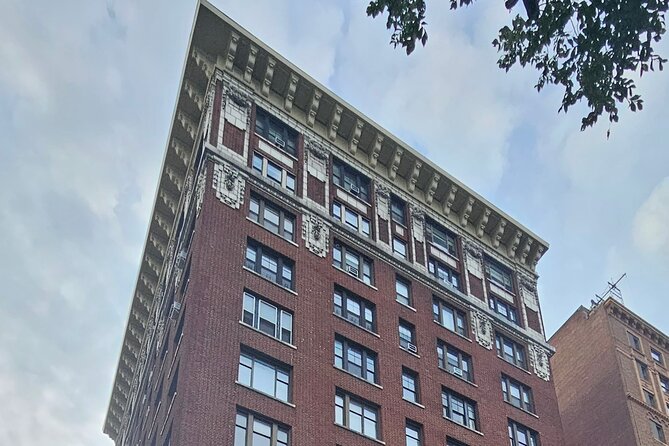
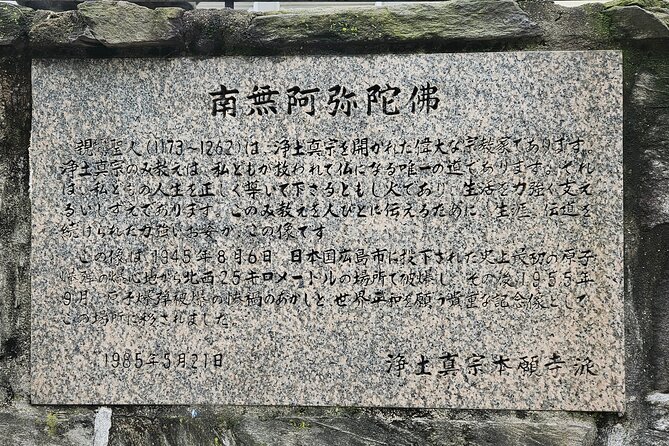
This stop is the most quietly powerful. The tour heads to the New York Buddhist Church to look at the Shinran Statue, and the guide ties it to the theme of cause and effect connected to the atomic bomb.
You’ll spend about 15 minutes here, and it’s not presented like a religion lecture. It’s presented like an ethical lens—one that helps you think about responsibility, consequences, and how actions ripple outward.
I appreciate that the tour doesn’t leave you with only the technical or only the political. It adds a moral framework, so the atomic story feels like it belongs to humans making choices, not just governments making decisions.
If you’re curious about how people in that time period processed moral responsibility, this is a highlight.
Ending with Isidor Rabi: the science circle behind Oppenheimer
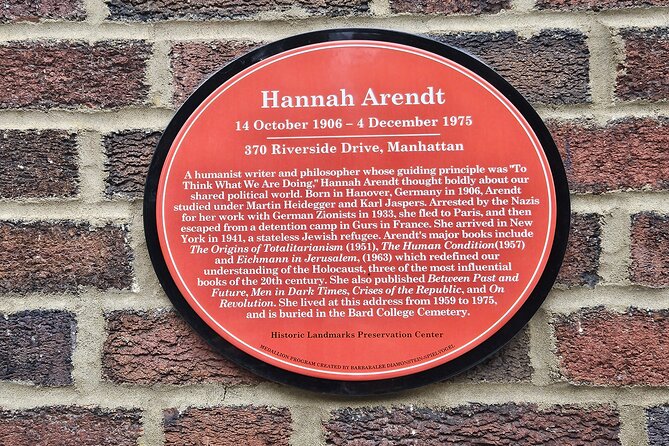
The final meaningful stop on Riverside Drive is tied to Isidor Rabi, described as a pioneer in 20th-century physics and a Nobel Prize winner, and also a close friend of Oppenheimer.
You’ll learn about that friendship and why it mattered, with about 10 minutes allotted for the stop. The goal isn’t to turn Rabi into the main character. It’s to show that Oppenheimer’s world wasn’t a lone genius narrative. It was a network of scientists and conversations.
In practical terms, this is also a good ending theme: by the time you reach the tour’s conclusion near Columbia, you understand the “human infrastructure” behind big scientific breakthroughs.
What makes this tour worth $42 (and when it might not fit)
The price—$42 per person—is in the range where you should ask: are you buying seats or buying insights? Here, you’re mostly buying a guided historical argument built from street-level context.
You also get value through format:
- The tour runs about 2.5 hours, long enough for meaning, short enough for an easy afternoon.
- The group is small (capped at 13, with a maximum of 15), which helps the guide keep conversations moving.
- Each stop is planned with a clear theme, and the outdoors-heavy route avoids museum-style waiting.
Is it for everyone? If you hate walking, or if you want only indoor stops with lots of time to rest, you may find the pace tougher than you want. But if you like city history that makes you think, this is a strong fit.
Who should book this
You’ll probably enjoy it most if:
- you’re in NYC for a limited time and want a story you can “see” on the street
- you like connecting culture, politics, and science instead of separating them
- you want a guide who can explain ideas clearly and keep them grounded in real places
If you’re already a hardcore Oppenheimer deep-dive fan, you might still find the neighborhood framing useful, especially the way the tour maps moral questions and ideologies onto physical locations.
Quick practical tips so your afternoon runs smoothly
A few small choices can make this walk better:
- Wear shoes you trust for steady sidewalks. The tour is spread across a few blocks and street segments.
- Bring a water bottle if you’re visiting in warmer months.
- If you have a question about the ethical or political themes (not just the science), this is the kind of tour where you can ask and get a real answer—Krombie’s style is direct and enthusiastic in a historian way.
Also, it’s designed for people with moderate physical fitness. Service animals are allowed, and it’s near public transportation, so you can adjust your plan before and after.
Should you book the Oppenheimer Upper West Side walking tour?
I’d book it if you want an Oppenheimer experience that feels like New York, not like a lecture in disguise. The walk’s real strength is how it connects family beginnings, neighborhood influence, Riverside Drive context, and ethical thinking into one coherent afternoon.
Skip it if you dislike walking outdoors or want mostly museum-style content with lots of seating. But for the right kind of traveler—someone who likes stories you can stand next to—this one’s a smart use of time and money.
FAQ
FAQ
How long is the Oppenheimer in New York Upper West Side walking tour?
It lasts about 2 hours 30 minutes (approx.).
Where does the tour start and end?
It starts at 94 Corner Cafe, 2518 Broadway, New York, NY 10025, and ends at Columbia University Plaza on 116th Street and Broadway, New York, NY 10027.
How much does the tour cost?
The price is $42.00 per person.
What group size should I expect?
The tour is capped at 13, with a maximum of 15 travelers.
Is the tour in English and do I need a printed ticket?
The tour is offered in English, and it uses a mobile ticket.
Is there free cancellation?
Yes. You can cancel for a full refund up to 24 hours in advance of the experience’s start time.