REVIEW · NEW YORK CITY
New York City: Sunday Harlem Gospel Guided Tour
Book on GetYourGuide →Operated by Harlem Spirituals & New York Visions · Bookable on GetYourGuide
Harlem hits different on a Sunday morning. You’ll get storytelling plus an actual gospel service, not just a quick look at famous streets. The result is a tour that helps you understand the neighborhood, then experience the sound that still carries it.
I love how the guide brings Harlem’s story to life with clear stops along the way, especially around 125th Street. I also love the ending: joining a local congregation for Sunday worship makes the trip feel personal and real, the kind of experience that’s hard to recreate on your own.
One thing to consider: you’ll be following a church-friendly dress code and photo rules. No shorts, sleeveless shirts, or sandals/flip-flops, and you can’t use flash or take photos inside—so if you’re hoping for lots of casual picture time, plan to dress smart and accept that some moments are meant to be lived, not photographed.
In This Review
- Key things to know before you go
- Why a Sunday Harlem Gospel Tour works better than going solo
- Where you start: the meeting point at 690, 8th Avenue
- 125th Street sights: the route that turns Harlem into a map
- The history you actually remember: Dutch farms to the Great Migration
- Apollo Theater and Cotton Club legends: culture with names you can place
- Where Duke Ellington fits on 125th Street
- Inside Sunday service: what the gospel part really means
- Dress code and photo rules: respect the space
- Price and value: is $89 fair for 4 hours?
- Who should book this Harlem gospel tour
- Should you book it?
- FAQ
- How long is the New York City Sunday Harlem Gospel Guided Tour?
- What’s included in the ticket price?
- Where do I meet for the tour?
- What languages are the live guides?
- Are there dress code rules or photo restrictions?
- Can I cancel for a refund?
- Is the tour accessible for wheelchair users?
Key things to know before you go
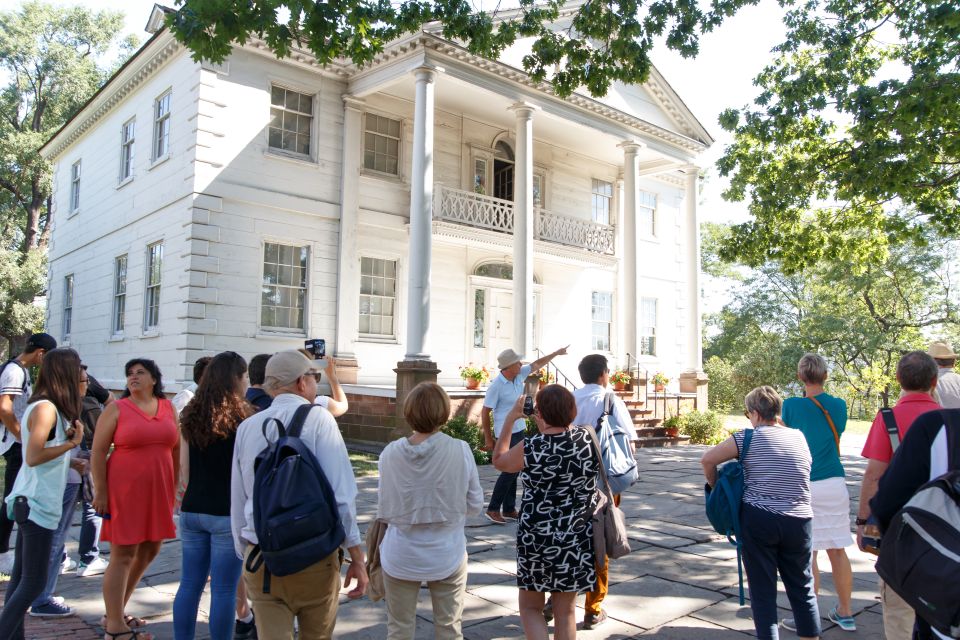
- Sunday access to a real congregation for an uplifting gospel service
- 125th Street landmarks with a guide who connects them to what Harlem became
- Apollo Theater and Cotton Club area legends folded into the walk-through
- Columbia University, Schomburg Center for Research in Black Culture, and more on the route
- Dress code and photo restrictions that you should treat as part of the experience
- Guides like Mrs. Peggy, Alvin, Anthony, or Serge can bring extra energy and humor
Why a Sunday Harlem Gospel Tour works better than going solo
Doing Harlem on your own is doable, but it’s easy to miss the meaning. A guided Sunday tour helps you put names to places fast—then you end the day where the music and community are the point, not the backdrop.
The big win here is that the day has a rhythm. You start with the neighborhood: streets, institutions, and landmarks that explain Harlem’s transformation over time. Then you transition into the service, where the story becomes sound—voices, rhythm, and call-and-response in a setting that feels lived-in.
If you’re the type of traveler who likes your sightseeing with context (and not just postcard angles), this format is a strong match. It’s also a relief if you’re not sure where to go for gospel worship on a Sunday. Someone else handles the path.
You can also read our reviews of more guided tours in New York City



Where you start: the meeting point at 690, 8th Avenue
You’ll meet at 690, 8th Avenue, between 43rd and 44th Streets. This matters more than it sounds. Starting in a clear, centralized spot helps you get moving quickly, especially on a Sunday when traffic and schedules can be unpredictable.
From there, you’ll ride by coach to Harlem and then spend most of your time touring with your guide. The tour is set up so the transit isn’t wasted time—it’s part of the experience.
125th Street sights: the route that turns Harlem into a map
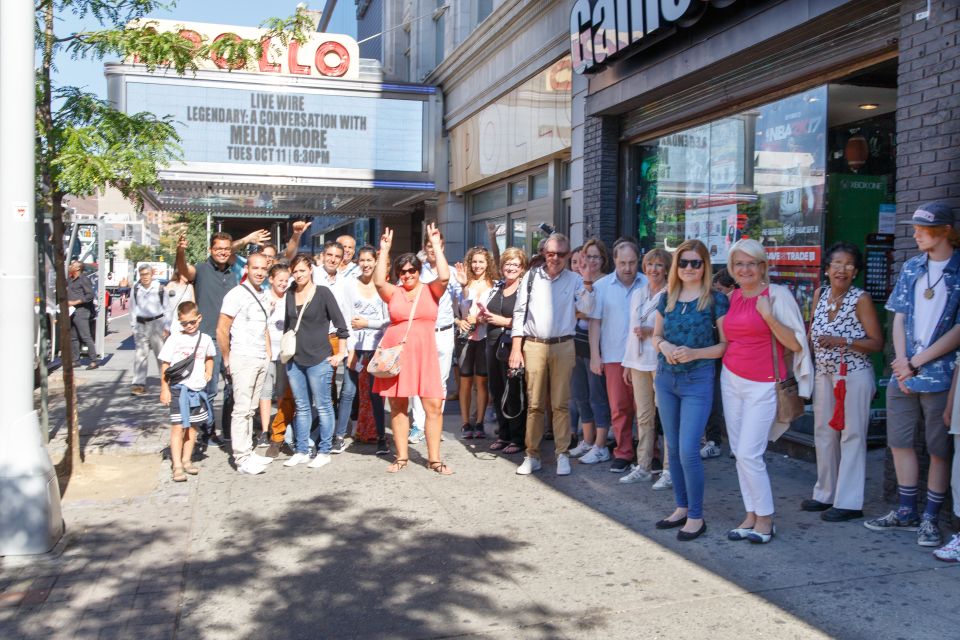
The heart of this tour is Harlem’s famous stretch around 125th Street. This is where you get your bearings, not just your photos. The guide points out major landmarks and ties them to the neighborhood’s big turning points—how Harlem evolved and why this corridor became so influential.
Along the way, expect to hear about a mix of cultural icons and institutions, including:
- Apollo Theater (a legendary performance venue)
- Cotton Club (another cultural landmark that shaped Harlem’s reputation)
- Schomburg Center for Research in Black Culture (an important center tied to Black history and culture)
- Columbia University (another major presence nearby)
Even if you’ve heard these names before, the guided format helps them click. Instead of thinking of them as random famous stops, you start to see how they connect to who lived here, what they built, and how Harlem gained its momentum.
If you enjoy walking routes where the guide keeps things moving, you’ll likely like this section. If you hate being on your feet, try to wear comfortable shoes anyway—this tour has a “get out, look around, then move again” feel.
The history you actually remember: Dutch farms to the Great Migration
One of the best parts is how the guide frames Harlem’s change over time. You don’t get a dry timeline. You get a story with clear links between geography, housing, and who ended up where.
You’ll learn how Harlem began as a rural Dutch farming community, then shifted as New York’s upper crust looked for space away from the congestion of Lower Manhattan. The tour connects that to how public transportation and real estate helped turn Harlem into a fashionable district.
Then the story turns toward the Great Migration, when African Americans moved from southern states and built strong communities in Harlem—communities that tackled economic, political, and social challenges together. That’s the thread that keeps showing up in the stops and the way the guide explains the culture.
What makes this work is the pace. With a 4-hour day, you’re not sitting through a lecture. You’re absorbing the key beats while watching the neighborhood pass by and landing them on real locations you can point to later.
Apollo Theater and Cotton Club legends: culture with names you can place
Two stops—Apollo Theater and the area connected to the Cotton Club—are more than famous markers. They’re part of Harlem’s storytelling engine: performance, style, and cultural impact.
The Apollo has a special kind of magnetism. Even if you only know it as a name, you’ll leave with a better sense of why it mattered and how Harlem’s identity was shaped through music and stage life.
The Cotton Club is similar, but in a different way. The tour uses it to help you understand how Harlem’s visibility grew and how its cultural exports became part of larger national conversations. You don’t just hear trivia—you learn how these venues fit into the neighborhood’s evolving reputation.
This is the section of the tour where the guide’s personality shows. You may meet a guide like Mrs. Peggy, known for mixing humor with sharp storytelling, or a guide like Alvin, Anthony, or Serge, who have been praised for keeping the day lively and clear. Either way, the goal stays the same: make famous names feel real and specific.
You can also read our reviews of more city tours in New York City






Where Duke Ellington fits on 125th Street
One of the standout “wait, that’s where?” moments is learning about where Duke Ellington lived on 125th Street. It’s the kind of detail that changes your mental picture of the neighborhood.
Instead of treating Harlem culture as something that happens in theaters, you start to see it as something tied to people’s daily lives—homes, routines, community networks. That detail helps connect the music you hear later at the service to the tradition that grew right here.
If you’re a music fan, this stop alone is worth paying attention to. If you’re not, it still helps you understand why Harlem produced so much artistic power: the neighborhood wasn’t just a stage; it was a home base.
Inside Sunday service: what the gospel part really means
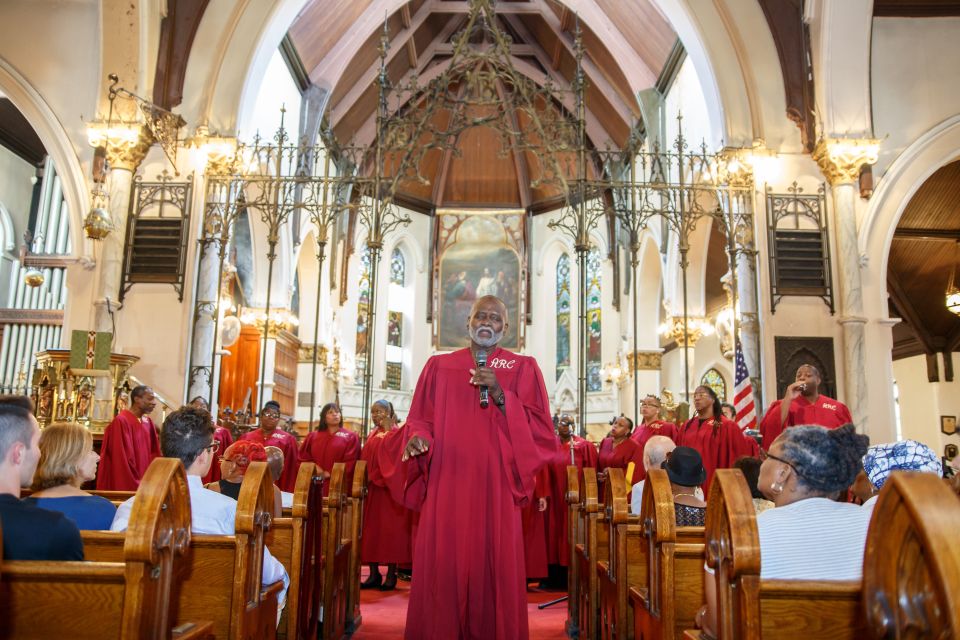
The tour ends with the best payoff: you join a local congregation for a Sunday service. This isn’t a “stand outside and listen” situation. You’re there for the worship experience, and the atmosphere is the point.
Gospel music in a church setting has its own energy. The sound isn’t background noise—it’s communication. Expect a mix of singing, participation, and emotional intensity. That’s why this works so well as a tour finale: the history you learned doesn’t stay in your head. It becomes something you can feel.
I also like that the setup makes you feel guided without making it feel like a tourist show. The service is still the service. You’re simply there with a clear path and context, which helps you avoid the awkwardness of trying to figure it out on your own.
And yes, weather and outdoor time can affect how much you’re outside before the service. One guest noted that rain limited photo time—so keep in mind you may spend more time on the bus if the skies turn.
Dress code and photo rules: respect the space
This is a church setting, and the tour asks you to dress accordingly. You’re not allowed:
- Shorts
- Sleeveless shirts
- Sandals or flip-flops
- Flash photography
- Photography inside the church
Even if you don’t love rules, this is one place where they make sense. The clothing guidelines help you fit in, and the photo restrictions protect the service atmosphere. It also means you’ll have to practice a small mindset shift: put the camera away and actually listen.
Practical tip: wear closed-toe shoes you can stand in. If your travel style is all sneakers and layers, you’re in luck. Bring a light layer too, because church interiors and morning temperatures can vary.
Price and value: is $89 fair for 4 hours?
At $89 per person for about 4 hours, this tour can feel pricey—until you break down what’s included. You’re paying for:
- a guided Harlem sightseeing component
- transportation by coach
- admission to a gospel service in a local church
That combination is the value. If you tried to do it yourself, you’d spend time figuring out where to go, how to time a Sunday service, and how to connect the landmarks on the same route. Here, the tour compresses all of that into one scheduled day with a guide handling the flow.
Also, the emotional value is real. You’re not just learning; you’re participating. For many people, that “inside the service” part is the memory they’ll talk about long after the sightseeing fades.
Not included: meals. So plan to eat before or after, especially if you know gospel services run with a steady pace and you don’t want to multitask hunger.
Who should book this Harlem gospel tour
This tour is a strong fit if you want:
- a guided introduction to Harlem’s most iconic stops
- a Sunday experience that goes beyond sightseeing
- history that connects to culture, not just facts on a page
- a structured way to visit a church service without feeling lost
It’s less ideal if:
- you hate dress guidance (because you’ll be asked to follow it)
- you need lots of indoor photos (you won’t get them)
- you prefer total freedom and no fixed schedule
If you’re traveling as a couple or a small group who likes shared experiences, it’s also a good choice. You’ll be with others on the bus, then you’ll move as a group around Harlem and into the service.
Should you book it?
If you want Harlem with both context and emotion, I’d book this tour. The price buys a lot more than a bus ride. You’re getting a guided map of 125th Street landmarks, plus access to a Sunday gospel service that’s the whole point of the day.
My main “decider” question for you: are you looking for an authentic experience you participate in, not just an attraction you pass by? If yes, this is a great pick for a half-day that feels meaningful.
If you’re unsure, you can also think about what you’d do otherwise. If your alternative is trying to plan Sunday church worship on your own, the guided format is usually worth it.
FAQ
How long is the New York City Sunday Harlem Gospel Guided Tour?
The tour lasts about 4 hours total.
What’s included in the ticket price?
Your ticket includes a Harlem sightseeing tour, transportation, and a gospel service in a local church. Meals are not included.
Where do I meet for the tour?
Meet at 690, 8th Avenue, between 43rd and 44th Streets.
What languages are the live guides?
The live tour guide is offered in Italian, French, and English.
Are there dress code rules or photo restrictions?
Yes. You can’t wear shorts, sleeveless shirts, or sandals/flip-flops. Flash photography isn’t allowed, and photography inside the church isn’t permitted.
Can I cancel for a refund?
Yes. You can cancel up to 24 hours in advance for a full refund.
Is the tour accessible for wheelchair users?
Buses are not equipped with lifts. Only foldable wheelchairs or walkers are permitted on board and are stored in the luggage compartment; a passenger using a foldable wheelchair must be accompanied by someone who can assist with boarding and disembarking. You’re also asked to notify the provider in advance (ideally up to 3 weeks) if traveling with a wheelchair.