REVIEW · NEW YORK CITY
New York City’s High Line: A Self-Guided Audio Tour
Book on Viator →Operated by VoiceMap Audio Tours · Bookable on Viator
The High Line tells stories as you walk. This self-guided VoiceMap walk turns the park into a timeline, including the Death Avenue train era and a final chapter at Vessel in Hudson Yards.
I really like how the narration feels like storytelling, not a lecture. And I love the practical setup: offline access to audio, maps, and geodata means you can keep moving without hunting for signal.
One thing to consider: the app commentary may not perfectly match your walking pace if you move much faster or slower than average.
In This Review
- Key things I found most useful
- Getting the VoiceMap audio working at 820 Washington St
- Walking the High Line as a timeline, not just a viewpoint
- Death Avenue to the present: the story behind the track
- Whitney Museum and Pier 57: keep your eyes moving
- Chelsea Market and the Standard Hotel: where the narration gets spicy
- The High Line’s repurpose ideas: 700+ ways to rethink a city space
- General Theological Seminary to Hudson Yards: old lines meet new icons
- Vessel at the end: the stairway to nowhere, designed for attention
- Price and logistics: why $14.99 can feel worth it
- Who should book this High Line audio walk (and who might skip it)
- Should you book this High Line audio tour?
- FAQ
- How much does the High Line self-guided audio tour cost?
- About how long does the tour take?
- Where do I start the tour?
- Where does the tour end?
- Is the tour available in English?
- What do I get with the tour purchase?
- Do I need my own smartphone and headphones?
- What are the posted opening hours?
- Is there a refund if I cancel?
Key things I found most useful

- Story chapters instead of dry facts that tie the High Line’s past to what you’re seeing now
- Offline audio, maps, and geodata through the VoiceMap app, so you’re not stuck with Wi‑Fi
- A route that links major stops from the Meatpacking District end toward Hudson Yards
- Cheeky pop-culture moments woven into the walk, including what the narration says about Chelsea Market and the Standard Hotel area
- A caution about pacing if your stride is very different from the audio timing
Getting the VoiceMap audio working at 820 Washington St
This is a self-guided walk, so your “start” is the meeting point listed at Friends of the High Line, 820 Washington St, New York, NY 10014. The audio route goes out along the High Line and then returns you back to the same starting area.
The duration is listed as about 1 hour 30 minutes. That’s a good length for a first High Line walk, especially if you pause for photos and quick looks without turning it into a half-day production.
Price is $14.99 per person, and the value is mostly about what you get for that money: lifetime access to the English audio. You can come back and redo it later without paying again, which matters in a city where you might only get one perfect day for a neighborhood.
Before you go, plan on using your own phone and your own headphones. Those aren’t included. The tour includes the VoiceMap application plus offline access to audio and maps, but the hardware is on you.
You can also read our reviews of more walking tours in New York City



Walking the High Line as a timeline, not just a viewpoint
What makes this experience click is that you’re not only walking a great elevated path—you’re also following a set of story chapters. Instead of thinking of the High Line as a single attraction, the audio treats it like a sequence of ideas: how the area worked, why it changed, and what people imagined could replace it.
The walk starts with a street-level train story from the late 1800s. The narration references an era when a train at street level killed so many pedestrians that the route became known as Death Avenue. It’s not just a shock moment. It helps you understand why safety, design, and city planning came to matter so much in dense areas.
Then the tour shifts into how the High Line became a place people want to walk through—an elevated path that feels like a cheat code for seeing the city from a calmer angle. As you move, you’ll also get commentary tied to specific landmarks you pass, so your eyes have something to look for besides views.
Death Avenue to the present: the story behind the track

In the early stretch, the audio spends time on the contrast between what used to be there and what you experience now. When you hear about the Death Avenue era, the High Line’s existence as a safe, pedestrian-friendly promenade stops feeling inevitable. It becomes a result—made from choices, not just chance.
You’ll also hear about the High Line’s repurposing in a very specific way: the tour mentions 700+ creative ideas submitted for how the space could be transformed. Among them, the narration includes playful concepts such as a mile-long swimming pool and a rollercoaster that snakes between buildings.
That creative list does two things for your walk:
- It makes the High Line’s final form feel like a human decision, not a miracle.
- It gives you permission to look at the park as a space for imagination—even when the city around it is firmly real.
If you like stories that connect urban design to everyday life, this part is a highlight.
Whitney Museum and Pier 57: keep your eyes moving
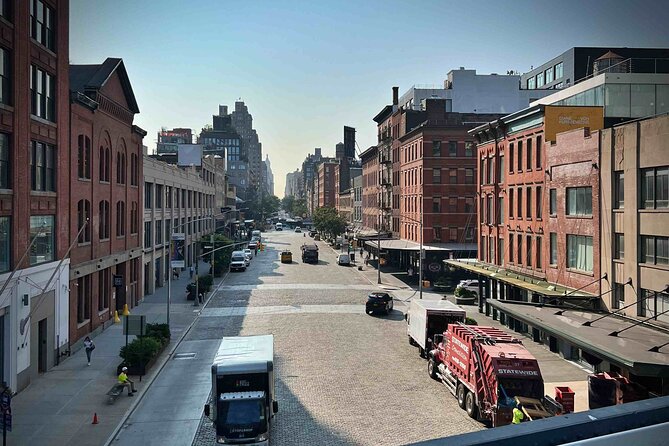
Midway through the route, the walk continues with stops connected to major points along the way, including the Whitney Museum of American Art and Pier 57. The important thing here is how the audio uses these interruptions.
Instead of rushing from one iconic photo spot to the next, the commentary helps you keep your bearings as you walk. You get the sense of moving across the city’s layers: museum-adjacent culture, water-adjacent views, and that very New York mix of old blocks with bold new structures.
Practical tip: use these moments to reset your pace. If you’re walking quickly, you can slow down slightly here so the narration timing feels more natural. If you’re walking slower, these sections can help you catch up without feeling like you’re being chased by the clock.
Chelsea Market and the Standard Hotel: where the narration gets spicy
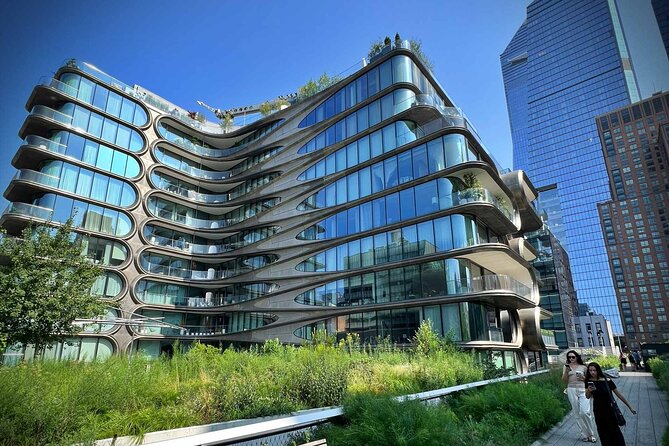
One of the most entertaining parts of the audio is how it calls out the surrounding neighborhood characters. The tour includes Chelsea Market, and the narration specifically mentions it as a place where the Food Network films hit shows.
Next to that, it also touches the area around the Standard Hotel, described in the audio with its nickname tied to the High Line view. The commentary goes further into the kind of overheard, street-level story that makes New York urban legends feel plausible: the audio references how people staying at the Standard Hotel have a reputation for leaning into the park’s attention, and it even includes a pop-culture anecdote involving Beyoncé’s sister and Jay-Z during an elevator incident.
Keep expectations realistic: you’re not going to verify every detail from the audio mid-walk. But if you enjoy the flavor of place—the way the High Line sits in a neighborhood that has both fashion and gossip—you’ll probably find these moments among the most memorable.
And yes, the narration keeps the walk feeling less like a museum and more like city life with a guided lens.
You can also read our reviews of more guided tours in New York City






The High Line’s repurpose ideas: 700+ ways to rethink a city space
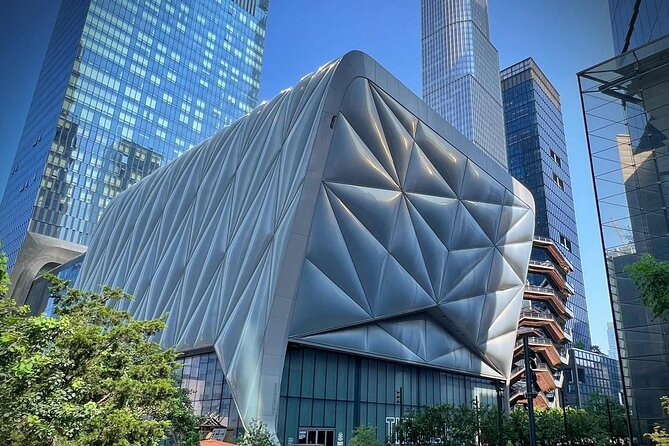
This tour isn’t only about what the High Line is today. It spends time on the creative pressure behind what it could have become. That’s where the mention of 700+ submitted ideas matters.
A city the size of New York turns every unused space into a debate. Some people want practical reuse. Others want spectacle. Some want art. The audio reflects that tension by including extreme concepts like a long swimming pool and an indoor-style rollercoaster layout that would weave between buildings.
Why I like this section: it turns your walk into a conversation with the future. Even if you’re not a city-planning nerd, it helps you notice details you might otherwise ignore:
- how buildings frame the park
- how the elevated path creates its own micro-neighborhood
- how people use the space when it isn’t just transit
You end up seeing the High Line as a design choice, not a static landmark.
General Theological Seminary to Hudson Yards: old lines meet new icons
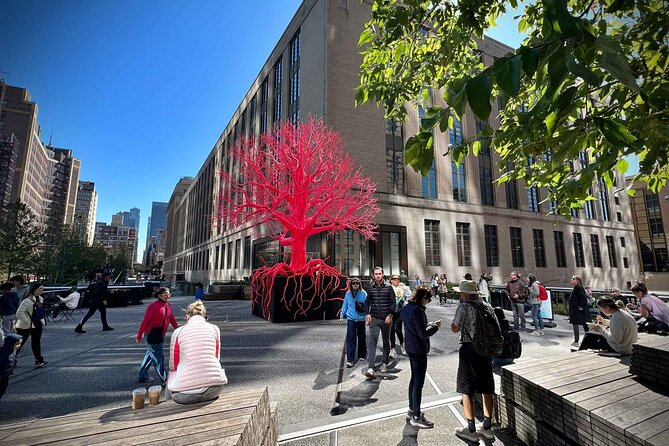
As you continue, the route includes General Theological Seminary and then moves onward toward Hudson Yards. This is a useful transition point because the High Line changes personality as you approach the new development zone.
Early on, the High Line feels like a reclaimed slice of the city—calmer, more intimate, and built from memory. Near Hudson Yards, it starts to read like a gateway to a future-looking district with big, Instagram-ready shapes.
The audio uses that shift to keep you oriented. You’re not just walking; you’re following a story arc that moves from gritty origin to polished reinvention.
If you’re a photo person, this is where you’ll likely slow down. Just remember: slowing down is fine, but it can affect whether the audio feels in sync with your walking pace. If you notice the narration falling behind, stop briefly, then resume at a steady pace so the timing catches up.
Vessel at the end: the stairway to nowhere, designed for attention

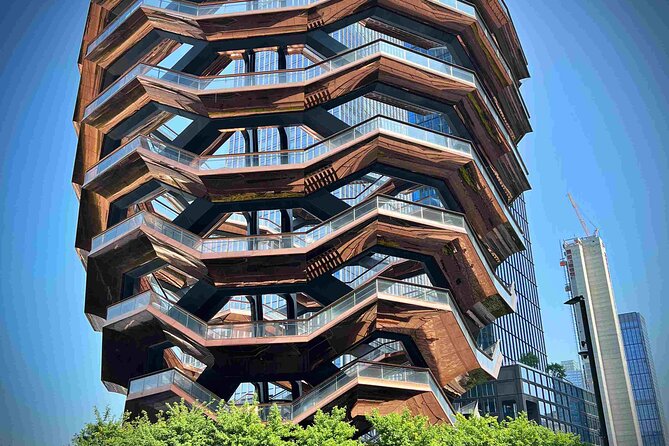
Your route ends at The Vessel, a sixteen-story structure described by the audio as the stairway to nowhere. The narration also frames Vessel as a Hudson Yards Instagram icon that became a tragic suicide magnet.
That ending is heavy. If you prefer cheerful park stories only, know this tour includes the real-world side of a high-visibility landmark. I appreciate that the audio doesn’t treat the structure like just another photo backdrop. It acknowledges that popularity has consequences.
When you reach Vessel, give yourself time to stand back and take it in from different angles. The point is less about rushing onto the structure and more about letting the story land. If the topic hits hard, take a pause. You can simply step away from the area for a minute and continue when you’re ready.
Price and logistics: why $14.99 can feel worth it
At $14.99, this isn’t a bargain tour in the sense of being free or super cheap. But it can be strong value for two reasons.
First, you get lifetime access. If you’re the type who revisits favorite neighborhoods, that alone can justify the price in a way that many one-time walking tours can’t.
Second, the tour includes offline access to audio, maps, and geodata. You pay less for convenience on a good network day and more for stability when your phone battery is low or signal is spotty.
Logistics are straightforward:
- It’s self-guided, so you can start when you want within the posted availability.
- The listed opening hours show Monday through Sunday: 12:00 AM to 11:59 PM.
- It’s offered in English.
- It’s near public transportation.
One caution based on the experience’s pacing: if you tend to walk much faster than average, the audio may feel slightly off. It’s usually an annoyance more than a dealbreaker, but it’s worth knowing before you plan a tight schedule.
Who should book this High Line audio walk (and who might skip it)
I’d book this if you want:
- a story-led approach to the High Line
- an easy way to connect multiple landmarks along the route
- an audio experience you can replay later thanks to lifetime access
- the freedom to walk at your own pace with offline maps and audio
I’d think twice if:
- you strongly prefer tours with exact timing and perfect audio synchronization
- you know you want to avoid any discussion of suicide in connection with a landmark
Should you book this High Line audio tour?
Yes—if you like walking with a guide who tells a coherent story and you want offline reliability. The price is reasonable for what you get, especially the lifetime access and the smart use of audio chapters from Death Avenue through to Vessel.
If you’re mainly after a quick sightseeing loop, you might find a shorter, simpler option better. But if you enjoy the way good narration turns familiar streets into something you actually remember, this one is a solid pick.
FAQ
How much does the High Line self-guided audio tour cost?
It costs $14.99 per person.
About how long does the tour take?
The duration is listed as approximately 1 hour 30 minutes.
Where do I start the tour?
You start at Friends of the High Line, 820 Washington St, New York, NY 10014.
Where does the tour end?
The tour ends back at the meeting point.
Is the tour available in English?
Yes, the tour is offered in English.
What do I get with the tour purchase?
You get lifetime access to the tour in English, plus the VoiceMap application and offline access to audio, maps, and geodata.
Do I need my own smartphone and headphones?
Yes. A smartphone and headphones are not included.
What are the posted opening hours?
The listed opening hours show 12:00 AM to 11:59 PM, Monday through Sunday.
Is there a refund if I cancel?
No. This experience is non-refundable and cannot be changed for any reason.