REVIEW · NEW YORK CITY
New York: Empire State & 48-hour Hop-on Hop-off Tour
Book on Viator →Operated by Big Bus Tours - USA · Bookable on Viator
NYC feels organized from the top deck. This 48-hour hop-on hop-off package strings together major sights across Midtown and downtown, with Empire State Building entry included.
I especially like how it turns your first visit into a choose-your-own-adventure day. You can hop off for photos, museums, and neighborhoods, then get back on to reposition fast without re-planning everything.
A second big win for me is the onboard Wi‑Fi plus digital audio commentary. The one possible drawback: traffic and crowding can make the circuit feel slow, so you’ll get the most out of it if you ride and hop strategically.
In This Review
- Key highlights you’ll actually notice
- 48 Hours and Two Loops: How you should plan your ride
- Empire State Building entry: the included wow needs a time slot
- Midtown starters: M&M’s, Times Square, and Flatiron
- SoHo to Chinatown: neighborhood switching in one pass
- Brooklyn Bridge and Wall Street: big views, then strategic walking
- World Trade Center area and Pier 57: where waterfront and memorial zones meet
- Hudson Yards and the Circle Line area: modern skyline energy
- Rockefeller Center, the Met area, and Central Park edges
- Carnegie Hall: finishing with a landmark that feels like New York
- Onboard experience: audio, Wi‑Fi, and comfort reality checks
- Price and value: when this combo makes sense
- Should you book Big Bus for Empire State and 48 hours?
- FAQ
- Do I have to pre-book a time for the Empire State Building using this package?
- How often does the bus arrive at each stop on the Red and Blue routes?
- Where can I redeem my ticket for the Empire State Building access?
- How long does a full loop take if I do not get off?
- How will I know which stops to use during the tour?
- Is the Empire State Building package wheelchair accessible?
Key highlights you’ll actually notice
- 48-hour flexibility to repeat the loop when you want better timing for photos and viewpoints
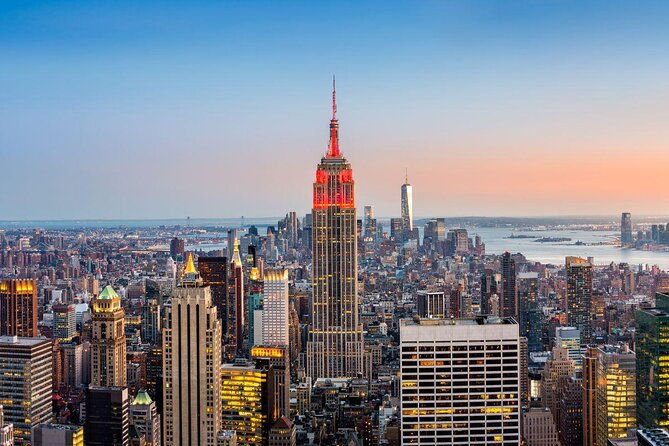
- Empire State Building admission included, which can save money versus buying separately
- Digital audio plus Wi‑Fi onboard, useful when you want to follow along while moving
- Strategic stops like Flatiron, SoHo, Chinatown, Brooklyn Bridge area, World Trade Center, and Central Park gateways
- App-based live bus tracking and easy activation, so you spend less time hunting for the right bus
48 Hours and Two Loops: How you should plan your ride
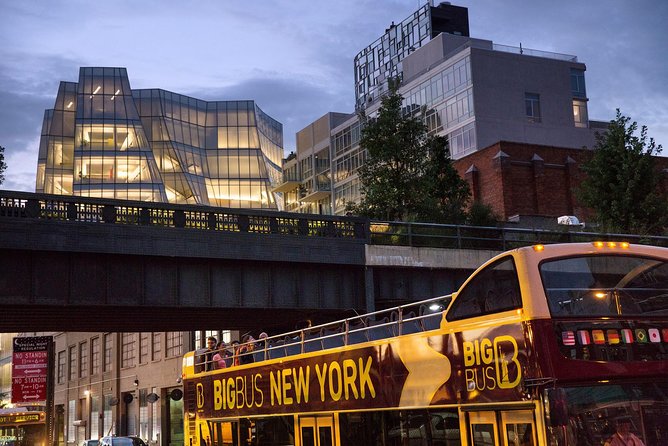
This is a classic “get your bearings” style ticket: you ride the Big Bus Downtown (Red) and Uptown (Blue) loops and your pass stays valid for 48 hours after your first use. A full circle on a route takes about 90 minutes without getting off, and yes, that can stretch a bit depending on the season and road conditions.
Here’s how I think about it as a practical visitor: treat the bus as your moving map. You’re not just sightseeing from a seat—you’re using the route to decide where you want to go deeper on foot. That is especially helpful in a city as big (and chaotic) as New York, where backtracking can cost you hours.
The stop spacing also matters. Some stops are close enough that you could realistically hop off, walk a few blocks, then hop back on later. Other stops are more like “anchor points” where you’ll want a longer pause or a separate plan. If you only want two or three distant stops, you might find the subway faster—because the bus can be slowed by traffic.
You can also read our reviews of more tours and experiences in New York City.



Empire State Building entry: the included wow needs a time slot
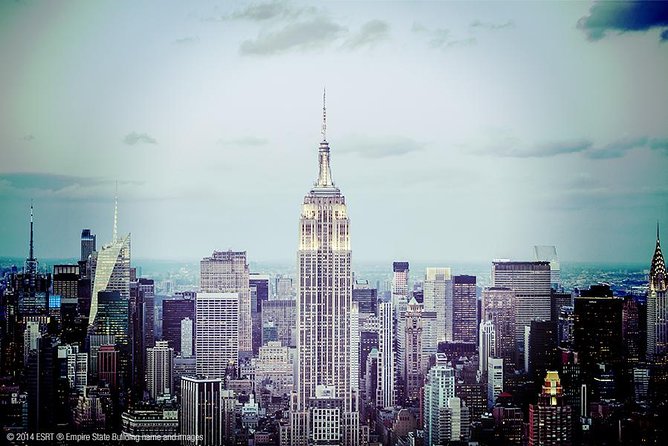
The biggest value lever in this combo is the included Empire State Building entry. It’s not just a viewpoint from the street; you’re paying for access to the building as part of the package, and that’s what turns a bus tour into a real day highlight.
One important detail: you must pre-book a time and date for the Empire State Building before you can use the entry you bought with the tour. The tour staff can help with booking at departure locations, or you can do it through the online portal in your confirmation. If you show up without a correct time plan, you’ll lose the main payoff.
Tip that saves stress: pick an ESB time that fits your energy level. If you’re aiming to beat lines, go earlier in the day. If you’re more relaxed and don’t mind crowds, choose later, but keep your bus plan loose enough that you can still get back to the stop on time.
Midtown starters: M&M’s, Times Square, and Flatiron
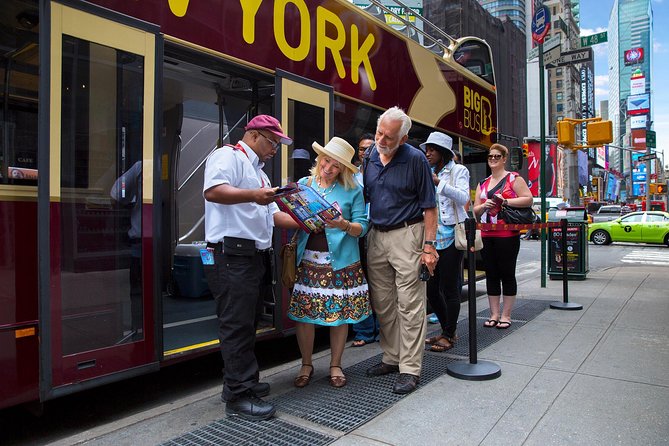
The route kicks off around Midtown at M&M’s New York (7th Ave & W 48th St), a very easy landmark to find. It’s not the most profound sight on the list, but it’s a solid meeting point and a quick way to drop into the tourist energy before you settle into the tour rhythm.
Next up is Times Square at the east side and Broadway area (W 42nd St and Broadway). This is where you’ll see the city at full volume—billboards, theaters, nonstop movement. The bus is a convenient way to stay above the crowd while you orient yourself, but the streets here can be slow, so don’t assume fast hop-on hop-off jumps within this neighborhood.
Then you hit the Empire State Building area (5th Avenue & W 32nd Street), where the combo really earns its keep. Even if you don’t go up right away, having this stop on the route means you can tie the rest of the day around your ESB plan.
A little south is Flatiron District (5th Ave & W 23rd St) in front of Eisenbergs Sandwich Shop. Flatiron is one of those Manhattan shapes that always looks better in person than in photos. If you like architecture and street-level perspectives, this is a good hop-off moment, even if you just do a quick photo walk and re-board.
SoHo to Chinatown: neighborhood switching in one pass
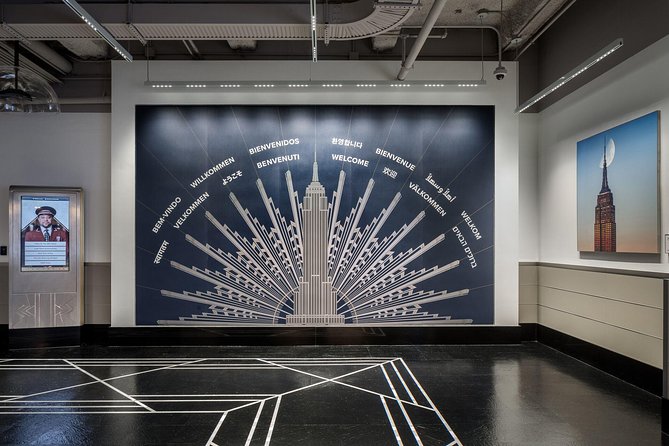
After Midtown, the bus drops you into the fashion-and-street-style swing of SoHo at West Broadway & Spring Street, with the stop placed in front of the Nike Store. SoHo is famous for its cast-iron storefront feel and boutique shopping lanes. The bus doesn’t make it feel “authentic,” but it does make it easy to reach the area without spending half your morning figuring out routes.
From there you move into Chinatown / Little Italy at near Walker Street (100 Lafayette St). This stop is a smart one because it puts you right where the neighborhood changes tone quickly. You can treat it like a grab-and-go zone: a short wander for street scenes, then back to the bus for your next anchor stop.
Practical note: this is also a place where walking crowds can make it tougher to board smoothly. So if you’re using the bus frequently here, pick your hop-on timing carefully. If you’re traveling with kids or mobility constraints, plan a slightly longer gap between hop-offs rather than frequent stop-and-go.
Brooklyn Bridge and Wall Street: big views, then strategic walking
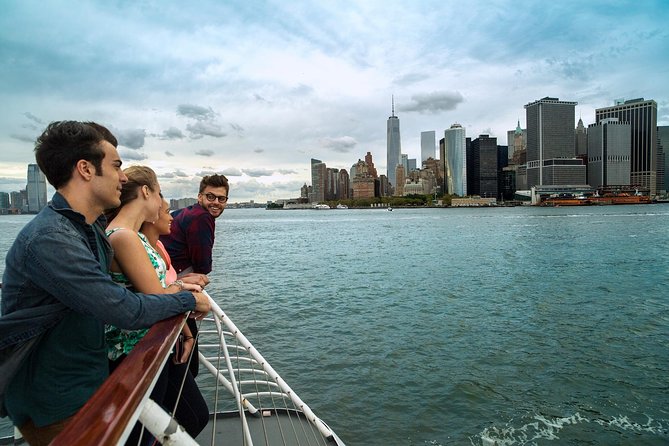
One of the most iconic “pause and look” moments is the Brooklyn Bridge area, stopping at Park Row & Beekman St. This is one of those Manhattan-to-waterfront edges where you can grab wide angles quickly, and the bridge itself works as an instant orientation tool for the rest of lower Manhattan.
Then the route moves into Wall Street around Wall St / Statue of Liberty (the stop is listed at Wall St/Statue of Liberty). Wall Street feels different from Midtown in a good way: it’s more built-up, more formal, and more about that skyline-and-streetscapes contrast. The bus helps you reach it without committing to a long subway transfer plan.
My favorite way to use this part of the route is to treat the bus stop like a launch point. You’re likely to want at least a short walking segment—either to see the area up close or to connect to something you picked out earlier on the day.





World Trade Center area and Pier 57: where waterfront and memorial zones meet
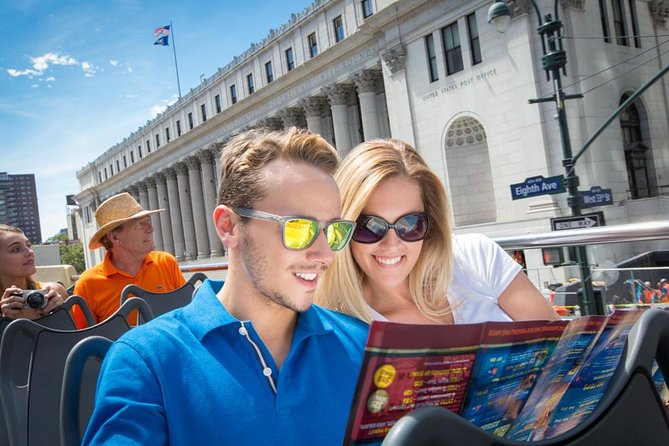
You’ll also pass through the World Trade Center area, with a stop at Church St & Vesey St, across from the Post Office. This is a powerful area to see from the street, and it also sets you up for either a quiet walk or a more focused revisit later. Even if you don’t have an exact plan, this is the type of stop where you can pause, take in the scale, and then decide whether you want more time.
Nearby is Pier 57, stopped at 11th Ave between W 15th St and W 16th St, across from Pier 57 and in front of the NBC Building. The waterfront zone is a nice change of pace from the dense grid of streets. It also gives you an easy place to reset: if you’ve been hop-on hop-off-ing all morning, this is a good moment to stretch and breathe before you head north.
One more planning tip: this segment is not the place to rush. If you’re trying to maximize every stop, you may feel bus-delay fatigue. If you’re using the bus as a flexible transport tool, you’ll probably enjoy this area more because you’ll actually take in what’s around you.
Hudson Yards and the Circle Line area: modern skyline energy
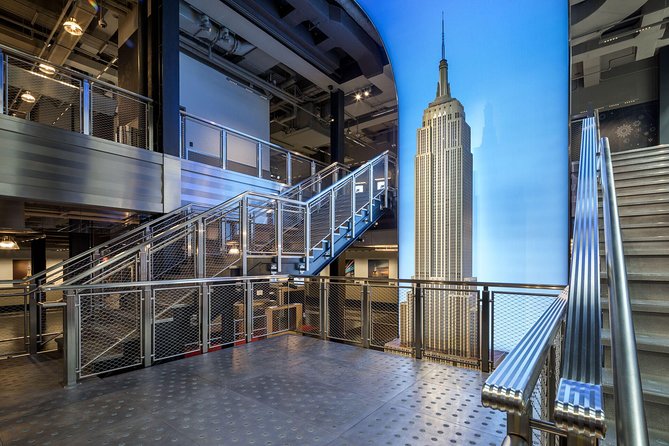
As you move north again, Hudson Yards is another major “Manhattan contrast” moment. The stop is at 12th Ave & 30th St (north-east corner). Hudson Yards looks like the future laid on top of the city grid, and even if you’re not going inside anything, the views and angles from the street are worth a short stop.
The route also lists the Circle Line Sightseeing Cruises – Midtown area at 12th Ave & 40th St, opposite Pier 81. Even if you’re not taking a cruise, this is a useful anchor point to understand where the waterfront activities happen in Midtown.
If you’re debating whether to add a cruise, use this stop to get your bearings. You’re close to the water, but you’re still in a walkable zone where it’s easy to compare options with what else you already want to do in Central Park and the museum area.
Rockefeller Center, the Met area, and Central Park edges
The uptown half includes a classic Manhattan trio: Hope Sculpture, Rockefeller Center, and the Met Museum zone.
- Hope Sculpture: 7th Ave & W 53rd St, in front of Chase Bank. It’s quick to spot and a nice “New York public art” breather.
- Times Square (again): listed at 42nd and Broadway, in front of the Knickerbocker Hotel—a helpful stop if you’re repositioning and need a familiar landmark.
- Rockefeller Center: W 49th St & 5th Ave, in front of Michael Kors. This is a great place to hop off for photos and then keep moving.
Then you reach The Metropolitan Museum of Art at 5th Ave & E 83rd St, outside the museum near 83rd St. I’d treat this as a “serious plan” stop. The museum deserves real time. If you hop off just to glance at the building, you might feel like you missed the point.
Next is Central Park Zoo at 5th Ave & E 66th St, opposite 845 5th Ave. For families, it’s a practical middle stop that can break up the day. For solo travelers, it’s a gentle entry to the park area without needing to commit to a long Central Park walk immediately.
Finally, you come to Columbus Circle at the southwest corner of Central Park, next to the Main Monument. This is one of the easiest points to reorient yourself in relation to the park. If you’re deciding where to spend your last few hours, this stop is a smart checkpoint.
Carnegie Hall: finishing with a landmark that feels like New York
At the northern end of the listed route is Carnegie Hall, at 7th Ave & W 57th St, in front of Trattoria Dell’Arte. Even if you’re not catching a performance, seeing Carnegie Hall outside is a clear reminder you’re in a city built for culture.
This is a strong “end cap” stop because it’s close to multiple other Midtown destinations. It also works as a practical re-entry point if you need to head back toward your hotel afterward.
Onboard experience: audio, Wi‑Fi, and comfort reality checks
This tour includes digital commentary and Wi‑Fi onboard, plus you can access route information and live bus tracking through the Big Bus app. That combo is helpful because it reduces the mental load of figuring out which stop is next and how long you’ll wait.
Just know that sound quality is not always perfect. Some riders reported issues with audio working in certain seats, while others felt the audio wasn’t as informative as they wanted. My practical advice: test your audio early. If it’s weak, change seats before you settle in for the long stretch.
Comfort is another real-world variable. One review noted that the buses weren’t heated in winter, which can make an open-air or upper-deck ride miserable when temperatures drop. Pack layers and plan for weather, even if the day starts sunny.
Also, pay attention to what’s allowed onboard: no food or alcohol, and no luggage. Non-alcoholic drinks in screw-top bottles are permitted, and pets aren’t allowed except ADA service animals. If you’re arriving with shopping bags, plan to keep things minimal.
And there’s a fun add-on: a bike offer where you can rent 1 hour and get 2 hours free. If you’re the type who likes mixing buses with short rides, this can stretch your day in a way that feels more local.
Price and value: when this combo makes sense
At $105 per person, the math works best when two things align: you genuinely want to see a wide swath of NYC quickly, and you’ll actually use the included Empire State Building access.
If you’re only trying to do a couple landmarks, you might find better value in going direct by subway or single attractions. The bus does best when you treat it as transport plus planning help. It’s also useful because it stacks multiple major stops into one day flow, so you’re not constantly switching plans.
Where the value often hits hardest is when the Empire State visit is already on your must-do list. The included entry can turn a standard hop-on hop-off day into something closer to a full itinerary with one big-ticket payoff.
That said, you should go in with a realistic pace expectation. Traffic can slow the circuit, and when that happens you may feel like you’re spending more time on the bus than you planned. If you’re the type who wants quick, efficient stop-to-stop touring only, this may not feel like the best use of time.
Also, don’t ignore the schedule timing around ESB. The included admission requires you to have a pre-booked time. If that time plan slips, the main value drops fast.
Should you book Big Bus for Empire State and 48 hours?
I’d book this if you want a low-stress first pass at New York’s big hitters, especially if Empire State Building access is already part of your plan. It’s a convenient way to make the city feel smaller—Midtown to downtown, then back toward Central Park without constant map work.
Skip it (or downgrade your expectations) if you’re chasing maximum speed. The bus can be slow in traffic, and the hop-on hop-off strategy works best when you plan to ride, get oriented, and then spend real time only at the stops that matter most to you.
FAQ
Do I have to pre-book a time for the Empire State Building using this package?
Yes. Before you can board the bus, you need to pre-book a time and date for the Empire State Building. You can do it through the online booking portal in your confirmation email or with staff at departure locations.
How often does the bus arrive at each stop on the Red and Blue routes?
The bus arrives approximately every hour on both the Downtown (Red) and Uptown (Blue) routes.
Where can I redeem my ticket for the Empire State Building access?
You can redeem your printed or electronic ticket at any of the listed bus stops.
How long does a full loop take if I do not get off?
A full rotation on each route is approximately 90 minutes, though tour duration can fluctuate by season.
How will I know which stops to use during the tour?
You’ll get help from pre-recorded commentary and live guides, and you can also use the Big Bus app for route information and live bus tracking.
Is the Empire State Building package wheelchair accessible?
Yes. Wheelchair-accessible vehicles with lifts are available and can accommodate up to 650 pounds. If you need an accessible vehicle, you should indicate it in the special requirements box during checkout.