REVIEW · NEW YORK CITY
New York High Line Park Walking Tour
Book on Viator →Operated by Uncle Sam's New York · Bookable on Viator
The High Line feels like Manhattan taking a deep breath. This guided 2-hour walk runs the long stretch of the old West Side railroad line turned green park, with big skyline views and plant details you’d normally miss. You also weave through Chelsea and the Meatpacking District, where history and street-level New York energy sit just below your feet.
What I love is how much you get done without rushing. You’re covering the 1.45-mile (2.33 km) park from the Tiffany and Co. Foundation Overlook toward the CSX Transportation Gate, plus guided stops around the neighborhood. I also like the added context: the route ties plant life to the rail past, and on this tour you can connect the dots to Pier 54 (Titanic survivors) and the old Nabisco factory at Chelsea Market (Oreo origin). Guides like Debra, Annie/Ann, and Bill come up in real bookings as a big part of why people feel the tour was worth it.
One drawback to factor in is reliability. A few past bookings reported no-show problems or confusion at meeting arrangements, so I’d build in buffer time, double-check the exact meeting spot, and have the day’s contact method handy in case anything feels off.
In This Review
- Key things to know before you go
- High Line in Two Hours: What You Actually Walk
- Meatpacking District to West Side Rail Past: How the story hangs together
- The Plant Details You’ll Actually Remember on the High Line
- Tiffany Overlook to Whitney Museum Views: How the Greenway Frames Manhattan
- Titanic at Pier 54 and Oreo Origins at Chelsea Market
- Price and logistics: Does $30 feel fair?
- Meeting Point Reality Check at 44 9th Ave
- Who should book this High Line Park tour, and who may not need it
- Should you book? My honest call
- FAQ
- How long is the New York High Line Park Walking Tour?
- Where does the tour start and end?
- What time does the tour begin?
- How much does the tour cost?
- Is the tour guided?
- What’s included vs not included for admission?
- Is this walk very strenuous?
Key things to know before you go
- Full High Line stretch (1.45 miles / 2.33 km): you’re not just seeing a single section.
- Plants with names: dogwoods, bottlebrush buckeye, bigleaf magnolia, sassafras, serviceberry, plus seasonal wild growth like asters and goldenrods.
- Views in both directions: east toward the Meatpacking District and west toward the Whitney Museum area.
- Neighborhood add-ons: Meatpacking and Chelsea context, with chances to see Pier 54 and Chelsea Market.
- Small group by design: max 25 travelers, which helps you actually hear the guide.
High Line in Two Hours: What You Actually Walk

You start on 44 9th Ave at 10:00 am and end right back at the meeting point. The walk is designed for a morning slot, so you can finish before lunch and still have time to wander on your own after.
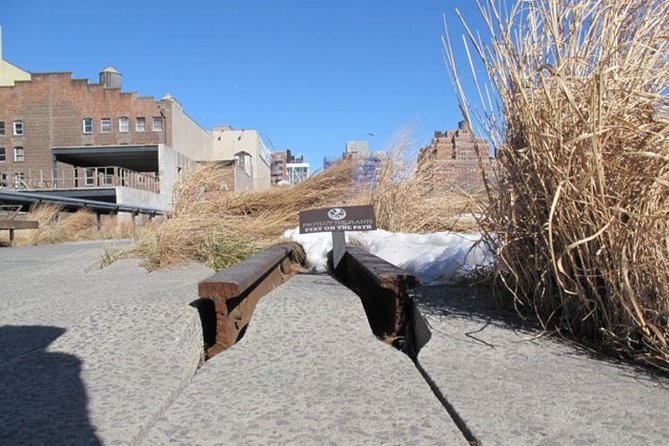
The core of the experience is the High Line itself. Think of it as an elevated, reused rail line turned greenway, built on the old West Side line. This tour covers the length of the park from near the Tiffany and Co. Foundation Overlook—with an eastward view toward the Meatpacking District—to the CSX Transportation Gate further west.
Direction matters for photo timing and mental landmarks. You’re going through a chain of overlooks and sundecks along the way, so the “walk” is really a sequence of short viewing moments and plant sightings. If you’ve ever wandered the High Line feeling like you’re mostly moving between Instagram corners, this structure is the fix.
Practical note: the tour is described as moderate physical fitness level, and it’s still a lot of walking in about two hours. Plan for comfortable shoes, and bring water even if it’s cool out.
You can also read our reviews of more walking tours in New York City



Meatpacking District to West Side Rail Past: How the story hangs together
The tour works best if you like connections: how one part of New York explains the next part. Before you even get deep into the green stretches, the guide sets up what this used to be.
High Line Park began as part of a Manhattan West Side improvement plan, connecting freight trains to factories and warehouses. That matters because the High Line wasn’t created for sightseeing. It was built to move goods. Once that use ended, the corridor was commissioned into the park you walk today.
On the ground, you’ll also be circling through the Meatpacking District and heading toward spots like the Collier Publishing building area as part of the route. The tour’s rhythm is meant to move you from the rail story to the neighborhood story—public art, architecture, and the way this district’s identity keeps reinventing itself while the park keeps the memory visible.
If you’re the type of person who likes to understand why a place looks the way it does, this tour is a strong match. You’re not just told that the High Line is beautiful. You’re shown why it exists, and how the old track format shaped the walk and viewpoints you get now.
The Plant Details You’ll Actually Remember on the High Line
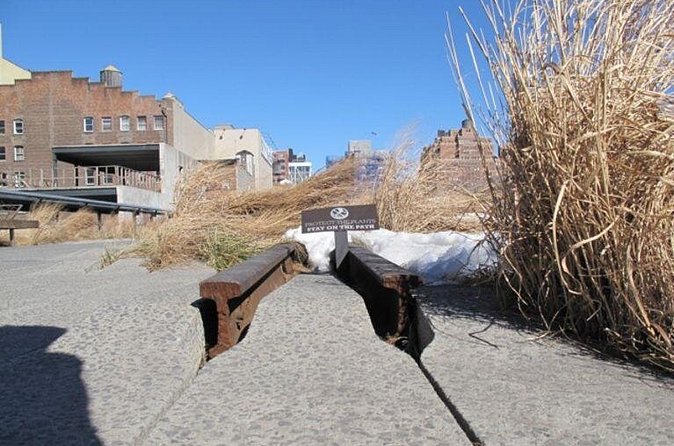
Here’s the thing about the High Line: it’s easy to treat it like scenery. With a guide, it becomes a living classroom with great returns.
Along the route, you can expect stop-and-look moments for plant life. There’s a two-block-long pathway described as a miniature forest, with dense shrubs and trees such as dogwoods, bottlebrush buckeye, hollies, and roses. Near it, the tour also highlights a grove featuring bigleaf magnolia, sassafras, and serviceberry.
Then comes the best kind of trivia: the park includes wild growth that grew up there even before it was a park. That includes crabapple trees, asters, sedges, goldenrods, and alumroot. The guide’s job is to help you notice these instead of just passing them like background.
Why this is valuable for you: if you’ve walked the High Line solo, you might remember the views but forget the “how” and “what.” On this tour, you’re given names and patterns. That makes your self-guided wandering afterward more fun, because you’re suddenly spotting details without help.
Tiffany Overlook to Whitney Museum Views: How the Greenway Frames Manhattan
One of the biggest reasons people love the High Line is viewpoint design. The park gives you elevated sightlines, but it also places you in the right spots to look east and west at different city layers.
This tour starts with the idea of the Tiffany and Co. Foundation Overlook, where you get a view east toward the Meatpacking District. As you progress, you also get westward framing connected to the Whitney Museum of American Art area. Even if you’re not planning to go inside museums, the external view connections help you orient the whole neighborhood.
The High Line experience includes sundecks and multiple overlooks in between. The upside of doing those with a guide is timing: you’re less likely to miss a viewpoint because you were busy scanning your phone. The downside is you’re on a schedule, so if you’re the sort who likes to linger for a full photo session, you’ll still have to wait your turn during the guided part.
A tip: after the tour ends back at the meeting point, I’d use what you learned about sightlines to pick one last viewpoint and linger. That’s when you get the best payoff.
Titanic at Pier 54 and Oreo Origins at Chelsea Market
This tour adds two history-linked stops that go beyond the park itself.
First, there’s a chance to visit Pier 54, described as where the survivors of the Titanic disembarked. That’s a serious New York story tucked into the same general west side travel loop. Even if you only spend a short time there, it changes your mood from scenery mode to human-history mode.
Second, the tour also includes the old Nabisco factory at Chelsea Market, where the original Oreo Cookie was invented. Chelsea Market is one of those places where you can easily lose 90 minutes to food smells and shopping. The guided approach helps you place the market in a bigger narrative: this wasn’t just a cool building; it was industrial New York with an actual invention story attached.
There’s also a Whitney Museum of American Art stop on the route, and the tour information you have indicates museum admission is not included. If your plan includes going inside the Whitney, you’ll want to budget separately and be realistic about how much time you can add on top of the two-hour walk.





Price and logistics: Does $30 feel fair?
For $30 per person, you’re buying a guided experience for about two hours, with a guide leading you through the park and the surrounding neighborhood context. At max 25 travelers, it’s not a cattle-call situation, and that matters when you want to actually hear plant names and history explanations.
In plain terms: if you’d happily pay for a guide to point out what you’d otherwise walk past, this is good value. If you mostly want views and you’re great at wandering, you could do the High Line on your own for free. The reason the guided format can be worth it is the plant-specific focus plus the tie-ins to Titanic and the Oreo story.
Also, this starts at 10:00 am, which tends to feel right for a High Line walk. You avoid peak midday crowds and still give yourself a chunk of time for whatever you want after.
One more practical detail: you’ll use a mobile ticket, and it’s near public transportation. That’s helpful if your day is already packed and you don’t want to overthink logistics.
Meeting Point Reality Check at 44 9th Ave
The meeting point is 44 9th Ave, and the tour ends back there. That’s great for simplicity. But given that a few past bookings reported no-show issues or meeting confusion, I strongly suggest you treat the first five minutes as mission-critical.
Do this the morning of:
- Arrive a bit early so you can locate the group and settle.
- Make sure your mobile ticket is accessible offline.
- Keep your contact method ready in case the guide is running late or the plan shifts.
Not because you should panic—just because Manhattan is Manhattan, and details can slip.
Once the guide starts, the tour seems to run as intended: a guided history intro, then paced movement through the High Line sections with stops for overlooks and plant life, plus the Chelsea/Meatpacking context.
Who should book this High Line Park tour, and who may not need it
This tour is ideal if you want:
- A guided way to cover the High Line without guessing where to go first.
- Plant names and specific sightings, not just general scenery.
- A short history story tying rail freight, public art, and neighborhood change together.
- Bonus stops that connect the west side to Titanic and Oreo origins.
It may not be the right fit if you:
- Prefer long, unstructured wandering where nobody tells you when to move on.
- Only care about photos and you don’t want any narration.
If you’re a first-time High Line visitor with limited time, a guided format usually gives you the best “Aha, now I get it” feeling. If you’ve already done the High Line twice and you only want a calm repeat, save the $30 and just go.
Should you book? My honest call
If your goal is to understand the High Line—why it was built, how it became a park, and what’s growing there now—this is a solid way to spend a morning. The best part is the combination: city views plus plant details plus recognizable neighborhood story points like Meatpacking, Chelsea Market, and the Titanic/Pier 54 link.
If you’re the type who cares about smooth execution, go in prepared. Not for fear—just for self-respect. Arrive early at 44 9th Ave, confirm you have the exact meeting details, and keep your contact method ready.
For me, the value lands when you want guidance. For pure wanderers who already know what they want to see, it’s easy to think the free option would be enough.
FAQ
How long is the New York High Line Park Walking Tour?
It’s about 2 hours.
Where does the tour start and end?
It starts at 44 9th Ave, New York, NY 10011 and ends back at the same meeting point.
What time does the tour begin?
The start time listed is 10:00 am.
How much does the tour cost?
The price is $30.00 per person.
Is the tour guided?
Yes. It includes a guided walking tour with a professional guide.
What’s included vs not included for admission?
Some stops include an admission ticket, while Whitney Museum of American Art admission is not included.
Is this walk very strenuous?
The tour notes a moderate physical fitness level is recommended.