REVIEW · NEW YORK CITY
NYC: Contrasts Tour of Harlem, The Bronx, Queens & Brooklyn
Book on GetYourGuide →Operated by Interviajes NY · Bookable on GetYourGuide
Borough-hopping in one afternoon feels like magic. This Harlem, Bronx, Queens & Brooklyn tour strings together landmark blocks, famous movie spots, and everyday life so you can see how New York flips moods by the borough. I love that the guide keeps the story moving from the Hudson-side glamour up through the grit, then back into immigration-fueled Queens and historic Williamsburg.
The second thing I like is the focus on street art as more than a photo backdrop. The stops in the Bronx include the Joker steps, a Yankee Stadium photo moment, and murals tied to names and eras, so you understand why the walls matter.
The one drawback to plan around is comfort. This is done in a small vehicle, and if your seat is toward the back on a hot day, air flow can be less helpful than you’d hope.
In This Review
- Key highlights to look for
- Why this Harlem-to-Brooklyn contrast route feels different
- Times Square start and the quick setup northbound
- Harlem passes: fast context at the Cotton Club and Apollo Theater
- The Bronx: Joker steps, Yankee Stadium photos, and street art with receipts
- Joker stairs and the photo stop rhythm
- Fort Apache vibes at the 42nd Precinct
- Grand Concourse to South Bronx murals: Big Pun and I Love the Bronx
- Queens: Whitestone Bridge views, MALBA homes, and Flushing Meadows-Corona Park
- Crossing to MALBA (and why it’s such a visual contrast)
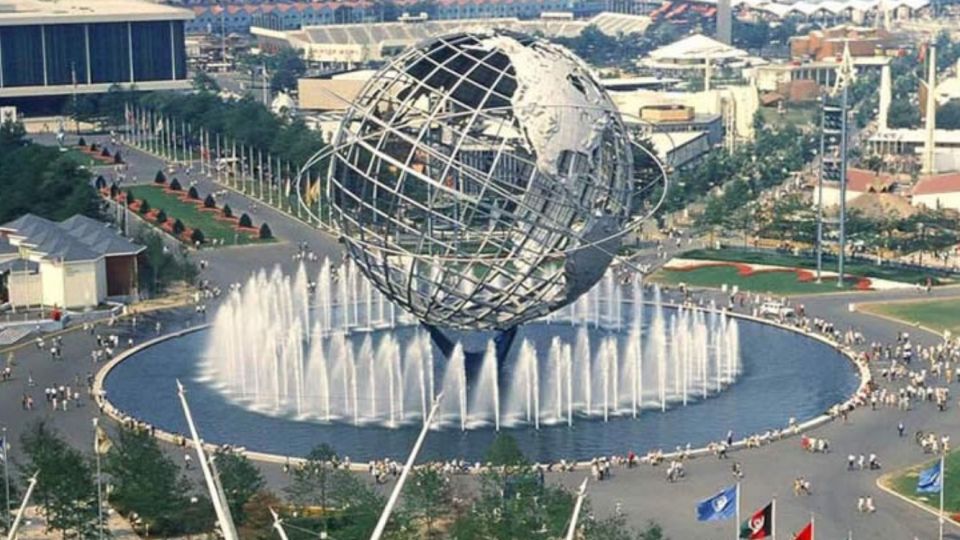
- Flushing Meadows-Corona Park: Man in Black’s globe plus stadium energy
- Queens street life: immigration and daily culture
- Williamsburg’s Jewish Quarter and your choice to end in DUMBO or Chinatown
- Ending in DUMBO: Manhattan Bridge photos and old-school Brooklyn pizza
- Ending near Chinatown and Little Italy: a quick food runway
- Logistics that actually matter on this kind of borough tour
- What to bring
- Not allowed and fitness reality
- Expect traffic and city chaos
- Vehicle comfort: bring a plan for heat
- Price and value check: what $42 buys you in 4.5 hours
- Who this tour suits best (and who might want a different plan)
- Should you book it?
- FAQ
- How long is the NYC Contrasts Tour of Harlem, The Bronx, Queens & Brooklyn?
- How much does the tour cost?
- What neighborhoods does the tour cover?
- Where does the tour end?
- Are food and drinks included?
- Is pickup included?
- What languages are the guides?
- What should I bring, and is there anything I can’t bring?
- Is the tour wheelchair accessible?
- Can the tour date be changed or canceled?
Key highlights to look for
- Movie-location photo stops: Joker steps plus Bronx and Queens cinematic scenery
- Street art with context: Big Pun and I Love the Bronx points that come with the story
- A real borough contrast circuit: Harlem to the Bronx, then Queens, then Williamsburg and Brooklyn
- Flushing Meadows-Corona Park for the film connection: the globe setting from Man in Black
- Two smart ending options: DUMBO and Brooklyn Bridge views, or Chinatown and Little Italy food time
- Guide-led timing that works: quick passes for major sights, longer stops where it counts
Why this Harlem-to-Brooklyn contrast route feels different
New York can be easy to over-plan, yet hard to really understand. This tour hits the key issue with the city: every borough has its own rhythm, accents, storefronts, and even what people pay attention to on the street. In just 4.5 hours, you get a guided look at that shift without needing trains, transfers, or a full day of logistics.
At $42 per person, the value comes from how much variety you’re buying: multiple neighborhoods, a guide, photo stops, and an air-conditioned vehicle. You’re not paying for one museum ticket and a single district; you’re paying for a structured, story-based route that moves through four boroughs.
The guide angle is also practical. The route includes short viewing windows for major landmarks and then longer time where photos and walking help. That mix matters in New York, where time disappears fast when you’re trying to find your own way.
You can also read our reviews of more tours and experiences in New York City.



Times Square start and the quick setup northbound
The day begins at a meeting point that can vary by option, with departure tied to the Manhattan Hotel area near Times Square. Then you’re on the move in an air-conditioned vehicle, with part of the ride handled by a bus/coach and then a smaller van component.
Even before you reach Harlem proper, the drive sets tone. You travel north along the Hudson, with passes by famous performance landmarks like the Cotton Club and Apollo Theater. You’ll likely notice how the guide frames these places: not as distant museum facts, but as threads in the larger New York story of music, ambition, and community.
If you’re nervous about doing borough travel on your own, this portion is a relief. You’re not figuring out routes; you’re getting oriented while the vehicle does the hard work.
Harlem passes: fast context at the Cotton Club and Apollo Theater
Harlem on this tour is mostly about seeing and hearing. You’ll get passing time, not a long walking block, and that’s a good choice for a first overview.
The Cotton Club and Apollo Theater come up because they’re shorthand for Harlem’s cultural influence. The guide’s job here is to connect those names to the neighborhoods around them, so the sights feel less like trivia and more like living history you can picture.
What to watch for: how the streets change in feel as you move from the Hudson-side views toward Harlem. Even if you only have a short window, you can pick up the way architecture, storefronts, and street activity shift block by block.
The Bronx: Joker steps, Yankee Stadium photos, and street art with receipts
This is where the tour really earns its name. The Bronx section brings you the kind of stops you can’t easily build on your own without a day-long plan, and the guide helps you connect the dots.
Joker stairs and the photo stop rhythm
You’ll visit the stairs made famous by the movie Joker. Think of this as a quick, recognizable moment that also gives you an easy entry point into the Bronx setting around it. The stop works best if you arrive ready to move fast: take a photo, check your angle, then keep walking with the group.
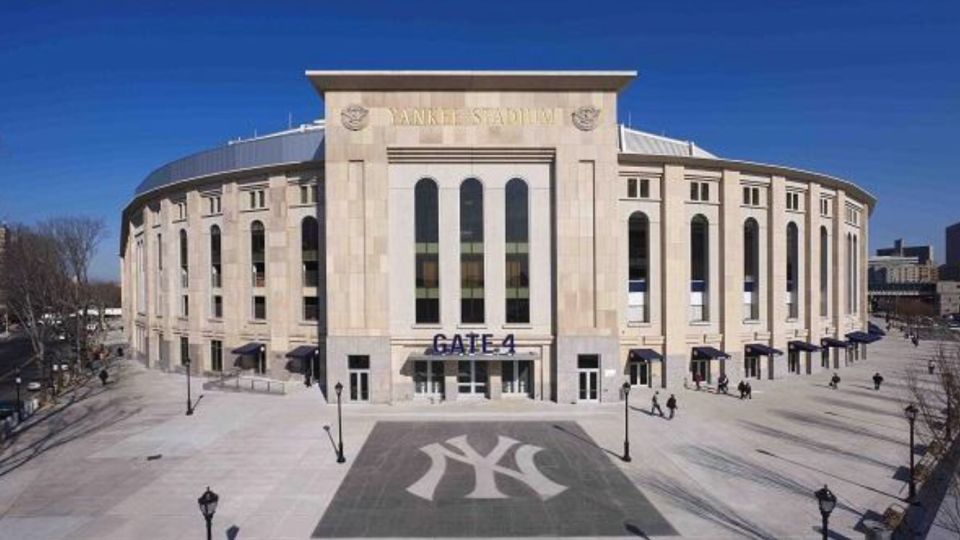
Right after, you roll into a classic New York sports and identity photo moment at Yankee Stadium. There’s free time for photos, plus time for a bathroom and reset. That pause is more useful than it sounds, because it keeps you from draining your energy too early.



Fort Apache vibes at the 42nd Precinct
Next comes a stop at the 42nd Precinct, the police station tied to Fort Apache. It’s the kind of location that feels “famous” in a movie sense, yet it also lands as a real-world anchor in the Bronx.
This is also one of those moments where you’ll get more than a description of the building. You’ll get the why: how media references become part of local identity, and how the neighborhood’s reputation gets shaped over time.
Grand Concourse to South Bronx murals: Big Pun and I Love the Bronx
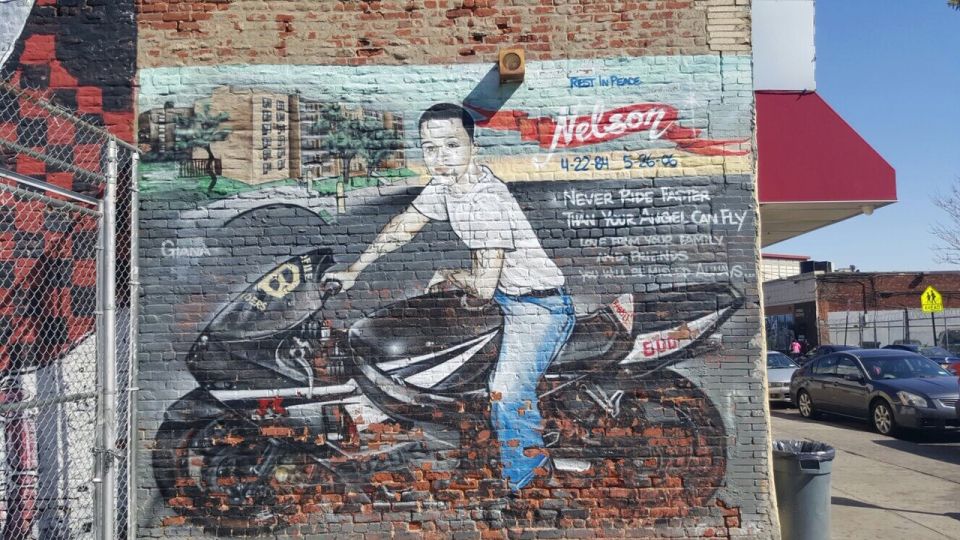
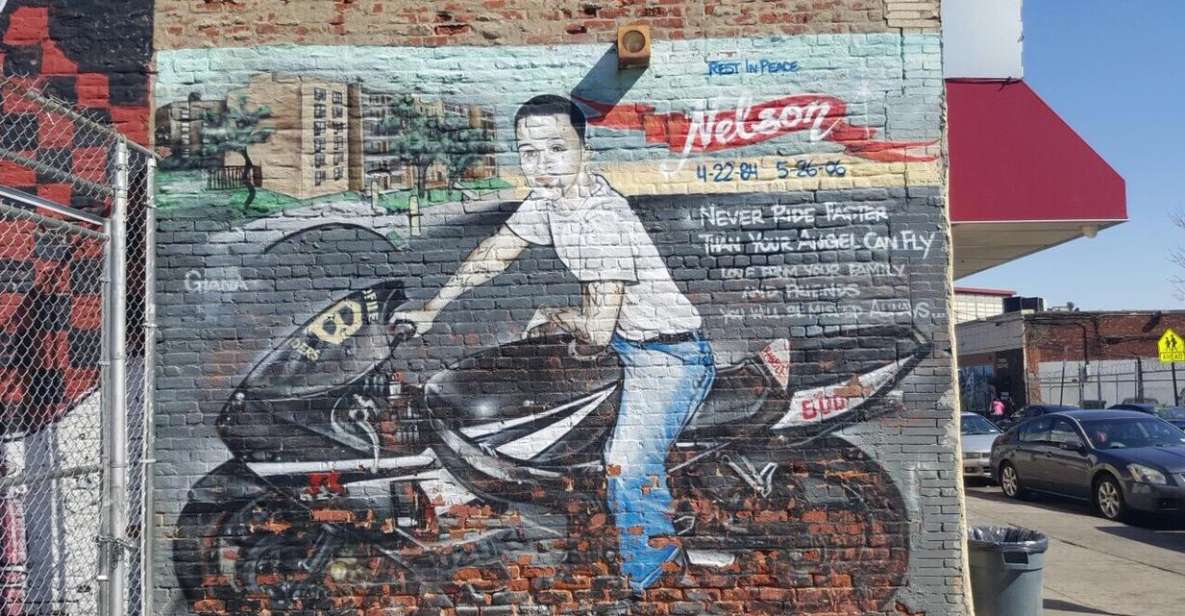
Then you hit the street-art stretch in the South Bronx. The tour slows down for specific mural stops, with breaks for coffee or short downtime built into the timing.
Key stops include:
- A mural dedicated to rapper Christopher Rios, known as Big Pun
- The I Love the Bronx mural created in 1970, with Tats Cru credited
What makes this special is the way the guide connects each piece to the era and the people behind it. You’re not just photographing walls; you’re learning how public art shows pride, memory, and identity in a neighborhood where change never pauses.
Practical note: you’ll spend time taking photos along the way, including one stop that includes a short walk. Comfortable shoes matter here more than anywhere else on the route.
Queens: Whitestone Bridge views, MALBA homes, and Flushing Meadows-Corona Park
Queens is the biggest cultural shift on the day, and the tour handles it in a smart order: first you see pockets of residential change, then you land in a major public park setting, then you return to everyday multicultural street life.
Crossing to MALBA (and why it’s such a visual contrast)
You cross the Whitestone Bridge and head to MALBA, a neighborhood developed by wealthy boaters and fishermen, now known for beautiful, mansion-like homes. Even if you’re not a real-estate nerd, the contrast hits fast: the architecture and scale feel different from what you just saw in the Bronx.
The tour passes this area rather than deep-diving it, but it still gives you a clear “this is why Queens feels different” snapshot.
Flushing Meadows-Corona Park: Man in Black’s globe plus stadium energy
Then it’s Flushing Meadows-Corona Park, one of the most famous public spaces in Queens. You’ll get photo time, plus a chance to see the Mets stadium and the USTA Billie Jean King National Tennis Center.
The movie connection matters here because it gives you a mental landmark. Seeing the globe setting from Man in Black turns the park from generic green space into something you can point to and remember.
Even without museum stops, this is a great place to look around. You can spot the scale of the venue area and feel why this part of Queens draws people from all over.
Queens street life: immigration and daily culture
The tour’s Queens portion also includes time for neighborhood flavor: multicultural shops and restaurants, built by immigration and culture staying in motion.
This isn’t a “food tour,” but it’s still useful. If you’re trying to decide where to eat later, you’ll leave with a short list of what kinds of streets and shopping areas to explore on your own.
Williamsburg’s Jewish Quarter and your choice to end in DUMBO or Chinatown
Brooklyn arrives with a new kind of contrast. You’ll reach Williamsburg and specifically the Jewish Quarter, which the tour frames as a stark difference from the trendier areas that get more screen time.
You’ll have photo time and a guided moment, plus some free time. One nice detail from past groups: people often love the pastry stops around here, so if you’re hungry, plan to grab something sweet and small before you move on.
Ending in DUMBO: Manhattan Bridge photos and old-school Brooklyn pizza
At the end, you can choose between two drop-off zones. If you pick DUMBO, you’re in position for iconic photos like the Manhattan Bridge view between buildings. You’ll also have options to eat nearby, including Time Out for a good price and Grimaldi’s, described as the oldest pizzeria in Brooklyn.
If you want more walking and better views, the tour notes the option to walk across the Brooklyn Bridge into Manhattan. It’s a solid way to stretch the day and see the skyline at close range, with the Statue of Liberty in the background.
Ending near Chinatown and Little Italy: a quick food runway
If you choose the other drop-off, the route takes you toward Chinatown and Little Italy. This ending is the practical play if you want one more neighborhood and a strong “walk-and-eat” vibe, including access to some of the best Italian food in New York.
This choice is smart because it matches how most people plan their evenings. You either want skyline views and classic Brooklyn, or you want food-first streets you can wander without needing a reservation.
Logistics that actually matter on this kind of borough tour
This tour is built for movement, and that means a few things can make or break your comfort.
What to bring
Bring comfortable shoes and an ID card (a copy is accepted). It’s a short tour in time, but you’ll do multiple photo stops and at least a few short walks.
Not allowed and fitness reality
You can’t bring pets, and you should avoid luggage or large bags. The tour also isn’t suitable for people with mobility impairments or wheelchair users.
Expect traffic and city chaos
New York can throw curveballs like parades, heavy traffic, or marathon routing. The tour notes it can be modified depending on conditions, so keep expectations flexible about exact timing and street access.
Vehicle comfort: bring a plan for heat
One concern that shows up in feedback is vehicle comfort in warm weather, especially if you end up toward the back where air flow may be weaker. If you’re visiting in summer, wear light layers and bring water.
Price and value check: what $42 buys you in 4.5 hours
For $42, you’re buying three big things: a trained guide, transportation, and structured time in four boroughs. That’s the key value point. Without a tour like this, you’d likely spend more time figuring out logistics than actually seeing the contrasts.
You also get paid-for emphasis on recognizable stops. The Joker steps are an easy win for photo memories. The Bronx street art stops are another. You’re paying not just to “see” but to understand what you’re seeing, and those details are what make the route feel worth it after the day ends.
If you’re someone who likes museums and long indoor visits, you might feel the pace is quick. But if your goal is to get oriented fast and leave with neighborhoods you can return to on your own, this is strong value.
Who this tour suits best (and who might want a different plan)
This tour fits best if you:
- Want a guided overview of Harlem, the Bronx, Queens, and Brooklyn without building your own route
- Like film-location stops and photo moments, with actual neighborhood context
- Enjoy street art and want explanations tied to names and time periods
- Prefer an easy day structure that includes short breaks instead of nonstop walking
It’s less ideal if you:
- Need wheelchair access or mobility accommodations (it’s not suitable)
- Want long time in one place for museums or deep, slow wandering
- Hate vehicle time and would rather build everything on foot
Should you book it?
I’d book this tour if you want a practical “New York, four boroughs” snapshot that leaves you with real neighborhood impressions. The biggest sell for me is the mix: street art in the Bronx with context, Queens park scale tied to a movie moment, and Williamsburg’s Jewish Quarter contrast, plus a choice to finish in a place that matches your evening vibe.
Skip it if you’re looking for a fully accessible experience or for a slow, one-neighborhood deep dive. For most people with limited time in the city, though, this is a smart way to see the contrasts that make New York feel like multiple cities wearing one skyline.
FAQ
How long is the NYC Contrasts Tour of Harlem, The Bronx, Queens & Brooklyn?
The tour lasts 4.5 hours. Starting times depend on availability.
How much does the tour cost?
The price is $42 per person (taxes are included).
What neighborhoods does the tour cover?
You’ll visit Harlem, the Bronx, Queens, and Brooklyn, with photo stops and guided time in key areas.
Where does the tour end?
You can choose where to end: DUMBO or Chinatown and Little Italy. The activity then ends back at the meeting point.
Are food and drinks included?
No. Food and drinks are not included.
Is pickup included?
Pickup is optional if your hotel is in Midtown Manhattan, but you need to contact the operator after booking to set the pickup location.
What languages are the guides?
Live tours are available in English and Spanish.
What should I bring, and is there anything I can’t bring?
Bring comfortable shoes and an ID card (a copy is accepted). Pets and luggage or large bags are not allowed.
Is the tour wheelchair accessible?
No. It is not suitable for people with mobility impairments and not suitable for wheelchair users.
Can the tour date be changed or canceled?
You can cancel up to 24 hours in advance for a full refund. You can also reserve now and pay later to keep plans flexible.