REVIEW · NEW YORK CITY
NYC Underground Subway Private Walking Tour
Book on Viator →Operated by Untapped New York · Bookable on Viator
That first stairwell down changes everything. This private NYC Underground Subway tour pairs walking with a real 6 train ride so you see how the system evolved, not just what it looks like now. You’ll start near 200 Broadway, then work your way through City Hall Park, Union Square, and station spaces even regular riders often miss.
I especially like the way the guides turn hard-to-notice details into stories. Names like Justin and Richard show up in past guest feedback, and the common thread is energy plus patience—exactly what you want when you’re learning on a moving schedule under street level. The one thing to consider: a good chunk of the tour involves standing around in stations, and in hotter months the underground can feel slow and warm, so dress and pace yourself.
In This Review
- Why 200 Broadway Sets the Tone for a Subway Tour
- City Hall Park: Finding the First Station Clues in Plain Sight
- The Brooklyn Bridge Walk-By and Tweed Courthouse Details That Matter
- Municipal Building and Union Square: Quick Stops With City-Scale Meaning
- Riding the 6 Train: Where the Tour Changes Speed
- Chambers Street and Union Station Remnants: What You’ll Actually See
- Price and Value: Is $156 Really Fair?
- Booking Smart: Timing, Heat, and How to Get Your Questions Answered
- Who This NYC Underground Tour Fits Best
- Should You Book This NYC Underground Subway Private Walking Tour?
- FAQ
- How long is the NYC Underground Subway Private Walking Tour?
- Is this tour private?
- Where does the tour meet?
- Do I need to buy subway fare separately?
- Are the stops accessible for the public?
- What language is the tour in?
- Is free cancellation available?
Why 200 Broadway Sets the Tone for a Subway Tour
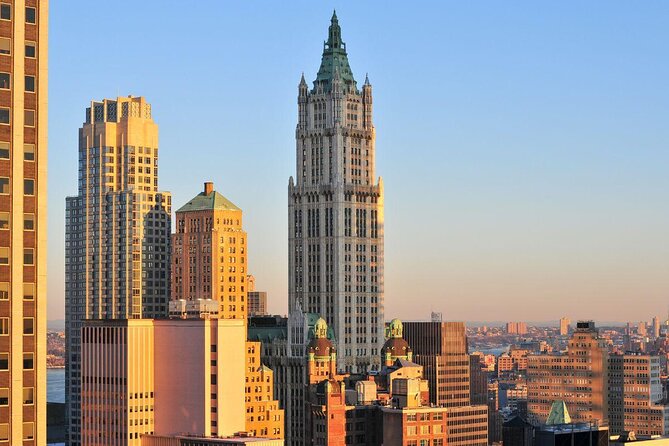
The meeting point is 200 Broadway, a classic Financial District staging area close enough to transit that you can arrive without turning it into a whole travel project. You begin at the foot of a building that used to be the world’s tallest—an instant reminder that New York’s transit story is tied to big ambitions, not just engineering.
From there, the tour shifts into a rhythm that makes sense for first-timers and lifelong riders alike. You’re not trying to read subway history off a wall label. You’re moving through spaces where the clues are literally built into the station environment: openings, corridors, platform layout, and the way older infrastructure was threaded into later expansion.
This start also matters for the tour’s main promise: you’re seeing subway history in context—how the city’s power centers lined up with where trains needed to go. If you like walking with a purpose and looking at details you’d normally ignore, this opening gives you the right mindset fast.
City Hall Park: Finding the First Station Clues in Plain Sight
City Hall Park is your early history fix, and it’s not a museum-style stop. You’re in an outdoor pocket right near New York City Hall, and you’re using the visible surroundings to connect to the idea of the very first NYC subway station.
What I like about this part is that it gives you a baseline before you go fully underground. You learn the creation story while you’re standing in the area—so when you later see traces in station spaces, they won’t feel random.
You also get the City Hall conversation, which ties transit to civic planning. The Municipal Building and City Hall are both part of the same early “this city is being redesigned” mindset, and the tour uses those nearby landmarks to make the story easier to follow.
This stop is short—about 15 minutes—but it works as orientation. If you’re the type who likes to understand how systems start, not just how they run, this is a smart first chapter.
You can also read our reviews of more walking tours in New York City



The Brooklyn Bridge Walk-By and Tweed Courthouse Details That Matter
After City Hall Park, you head toward Brooklyn Bridge and the civic-and-commerce energy of Lower Manhattan. The goal here isn’t to linger at the bridge viewpoint. It’s to set up the next theme: how the subway expanded to connect major parts of the city.
You’ll pass the famous Tweed Courthouse as part of the route. That kind of walk-by stop is useful because it places subway growth in the real geography of New York. You start to recognize that station design and expansion weren’t created in a vacuum. They were shaped by where people worked, where government sat, and how the city expected crowds to move.
If you’re a history buff, this is the kind of “small detail” portion that feels like free bonus value. If you prefer your tours to be mostly underground, this part might feel more like a warm-up than the main show—but it keeps the story grounded.
Municipal Building and Union Square: Quick Stops With City-Scale Meaning
The Municipal Building stop is another short moment (around 10 minutes) but it has a clear purpose: it connects the subway story to big institutional planning. You learn why this building mattered in the creation of the system—again, the tour keeps pulling transit history back toward the city’s power centers.
Then you swing by Union Square and focus on the 14th St Union Square Subway Station area. The time here is brief (about 5 minutes), but you’re getting a taste of how major hubs work. Union Square is one of those places where subway life feels constant. The tour helps you see it as a designed node, not just a busy transfer point.
A practical note: since these stops are short, you’ll want to be ready to move and listen at the same time. If you like taking lots of photos, do it quickly during transitions rather than during the guide’s key explanation.
Riding the 6 Train: Where the Tour Changes Speed
The heart of the tour is the 6 train portion, about 1 hour 30 minutes. This is where the experience stops being a walking lecture and becomes something closer to subway-time storytelling.
This segment matters for two reasons.
First, it lets you understand how history lives inside daily operations. You’re not just learning about stations; you’re experiencing the line as it runs now, with the guide pointing out what to notice as you move.
Second, it’s a good format for private tours. You’re with only your group, and the guide can pace the explanations to your attention span rather than feeding a generic script to a big crowd.
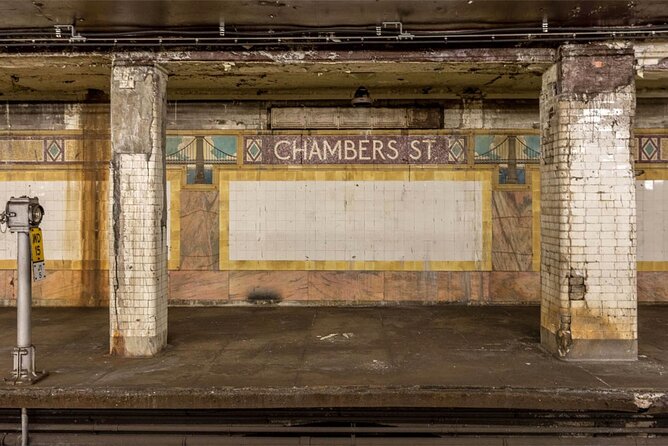
There’s also a specific payoff tied to “ghosts” in the system. The tour is designed to show architectural remnants of nearly forgotten and partially abandoned areas, including the Chambers Street station zone and remnants linked to Union Station. One key expectation: you should plan on seeing those remnants from public access and while riding, not walking into closed-off spaces.
That’s important. The idea is you view the traces in context, often briefly. You don’t need to be disappointed by the limited time in any single area—you’re getting a whole-route perspective instead. It’s history you can actually catch in motion.
Chambers Street and Union Station Remnants: What You’ll Actually See
This is the part that tends to shape the tour’s biggest impressions—either you catch the details easily or you feel you wanted more time in one spot. Here’s the honest approach to help you set expectations.
You’ll see the architectural remnants associated with Chambers Street station, described as nearly forgotten and partially abandoned. But you should anticipate a quick look rather than a long, inside-the-history moment. If you’ve ever tried to explore an abandoned place on your own, you already know how often rules and access limit what’s possible.
The same story applies to remnants connected to Union Station. You’re not expecting a curated indoor museum stop; you’re looking at traces that connect the subway system to earlier transportation patterns and older infrastructure layers.
If you’re the type who loves “blink and you’ll miss it” details, you’ll enjoy this portion. If you need long viewing time to absorb everything, you may wish the tour lingered longer in one spot—but the tradeoff is you get more of the route and fewer compliance limitations.
You can also read our reviews of more private tours in New York City






Price and Value: Is $156 Really Fair?
At $156 per person for about two hours, this is not a budget stroll. The value comes from three things you don’t get on cheap group tours.
1) It’s private, meaning your group stays together and the guide isn’t rushing to cover everyone’s questions.
2) You get a native New Yorker guide, which matters more than people expect—especially for explaining how the subway feels in real life, not just what it looked like on a blueprint.
3) The tour includes a major chunk of riding time on a specific line (the 6 train), plus multiple centrally located station stops that are publicly accessible.
There’s one more factor: you will need to pay for a subway ride separately. The tour doesn’t include a MetroCard swipe. So add at least one fare cost to your planning budget.
When I look at the price through that lens, I think it makes sense for visitors who want a focused history-and-ride experience rather than a long “grab a photo and move on” route. If you’re traveling solo and comfortable handling subway directions, you might find cheaper options. But if you want a guide to point out what matters while you’re moving, the cost starts to feel more justified.
Booking Smart: Timing, Heat, and How to Get Your Questions Answered
The tour runs at several times throughout the day, and you should treat that like a planning tool, not a detail. In warmer months, stations can be hot, and underground waiting can feel longer than it is on paper. If you’re sensitive to heat, try to pick a cooler time slot—morning or late afternoon tends to be the safer bet.
I also suggest you show up with a question style, not just a curiosity mood. The guide is there for your group, and the best moments happen when you ask something specific like how a station design changed over time or why certain lines shifted.
One caution from past experiences: some tours can feel like they move fast at the start, with more standing time before the main riding segment. If that worries you, be ready for an early “gather and listen” phase. Once you’re on the train, the pace typically becomes easier to follow.
And if you’re worried about pace at all: you can ask the guide to slow down or repeat something. Private format makes that simpler than on larger tours.
Who This NYC Underground Tour Fits Best
This tour is a strong fit if you check any of these boxes:
- You’re a history buff who likes transportation and city planning.
- You want station access that stays publicly accessible, not closed-door exploration.
- You enjoy being guided through a real commute line for a chunk of time, not just a walk past landmarks.
- You’re traveling as a group that benefits from a private pace and private answers.
It’s also a good choice if you’re a longtime New Yorker who thinks you know the subway. The whole point is that there are details you miss when you only focus on getting to your stop.
If you have limited patience for standing, choose your timing carefully and dress for comfort. Stations mean stairs, waiting, and a lot of “small shifts” as you reposition for explanations.
If you need to know about inclusions: the tour uses a mobile ticket, and service animals are allowed. Meeting back at the starting point keeps the finish simple.
Should You Book This NYC Underground Subway Private Walking Tour?
I’d recommend booking if you want a guided history route that includes actual subway riding, and you like learning through observation. This is the kind of tour where the subway stops being just a transit tool and starts acting like a story you can track block by block and platform by platform.
Skip it or choose another format if you:
- hate warm underground spaces,
- need long viewing time in one single location, or
- prefer purely above-ground sightseeing.
If you do book, I’d plan your day around comfort. Wear layers, bring water, and pick a cooler departure time when possible. Then let the guide do the heavy lifting of connecting what you see—City Hall Park, Union Square, and the 6 train—to why the system evolved the way it did.
FAQ
How long is the NYC Underground Subway Private Walking Tour?
It runs about 2 hours (approximately).
Is this tour private?
Yes. It’s a private tour/activity, so only your group participates.
Where does the tour meet?
The tour meets at 200 Broadway, New York, NY 10038, and it ends back at the meeting point.
Do I need to buy subway fare separately?
Yes. MetroCard fare (1 swipe) is not included, so you’ll need to cover the cost of a subway ride.
Are the stops accessible for the public?
Yes. The tour is designed so all stops are in stations that are publicly accessible.
What language is the tour in?
The tour information provided says it operates in English (and it notes guides can adapt by speaking more slowly when needed).
Is free cancellation available?
Yes. Free cancellation is available if you cancel up to 24 hours in advance for a full refund.