REVIEW · NEW YORK CITY
Broadway Theatre District Tour
Book on GetYourGuide →Operated by TopDogTours · Bookable on GetYourGuide
Broadway lore starts at the Majestic. This small-group stroll through the theatre district turns landmark names like the Majestic, Shubert, and Gershwin into a story you can picture, especially with actor-guides such as Patrick and Luke sharing what they know from working in the business. The one real catch: backstage and lobby access is not guaranteed, so expect sidewalk stories, not guaranteed peek-ins behind curtains.
In about two hours, you’ll hit the key stops from Phantom’s home base to Hamilton at the Richard Rogers Theatre, plus learn why Duffy Square became the crossroads of the world. It’s an all-weather tour, so the simple drawback is practical—bring comfortable shoes and dress for the conditions.
In This Review
- Key highlights worth showing up for
- Majestic Theatre to St. James: where Phantom sets the tone
- Sardi’s and Shubert Alley: the theater district’s social glue
- Shubert Theatre to 45th Street: seeing Broadway as a whole system
- Marriott Marquis and the Marquis Theatre: Broadway meets big-city real estate
- Richard Rogers to Lunt-Fontanne: Hamilton energy, then the next chapter
- Duffy Square to Palace Theatre: why Times Square became the center
- Northward walk: Edison, Barrymore, Hell’s Kitchen context
- Ambassador to New World Stages: from Broadway to Off-Broadway
- Ending at Circle in the Square and the Gershwin: Wicked’s home block
- Guides make or break it: actor-led storytelling you can feel
- Practical tips so you enjoy the 2-hour walk
- Value check: is $39 for a 2-hour Broadway walk worth it?
- Should you book this Broadway Theatre District Tour?
- FAQ
- Where does the tour start?
- How long is the Broadway Theatre District Tour?
- How much does it cost?
- What’s the group size?
- What language is the tour guide?
- Is the tour run in bad weather?
- Do we get guaranteed backstage or lobby access?
- How much walking should I expect?
- What should I bring or avoid?
Key highlights worth showing up for

- Actor-led storytelling that blends theatre business talk with show-specific insight
- A tight 2-hour route through the most famous Broadway and Times Square landmarks
- 45th Street theatre lineup: Booth, Minskoff, Schoenfeld, Jacobs, Golden, Hirschfeld, Imperial, Music Box
- Sardi’s and Shubert Alley context that explains why these places became meeting points
- A Hamilton and Wicked-friendly route without needing to plan show tickets
- Small group cap (limited to 10) that keeps questions from getting lost in the crowd
Majestic Theatre to St. James: where Phantom sets the tone
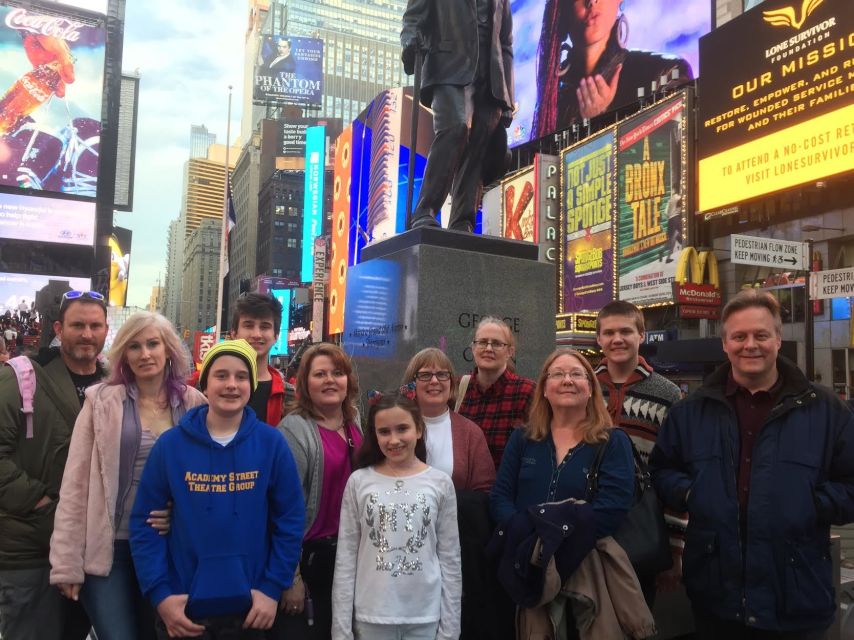
Most theatre walks start with a brochure map. This one starts with real Broadway swagger—right in front of the Majestic Theatre, home of The Phantom of the Opera. Your guide kicks off with how that mega-musical fits into the building’s legacy, and then widens out to other famous shows that opened there.
What I like here is the way the tour frames each theatre as more than a name. The Majestic becomes a starting point for understanding Broadway as a working system: productions come and go, but the theatres keep shaping what becomes possible for creators and audiences.
Then you walk to the St. James and Broadhurst theatres. These stops work because they’re close enough to keep momentum, but varied enough to show how the district isn’t just one “style” of playhouse. You start noticing patterns—who shows up where, how the blocks connect, and why location matters on a street where people are always deciding what to do next.
The practical side: this early stretch is where you settle into the pace. If you’re not great with standing and quick walking, this is still manageable, but you’ll feel the couple of hours of movement.
You can also read our reviews of more tours and experiences in New York City.



Sardi’s and Shubert Alley: the theater district’s social glue
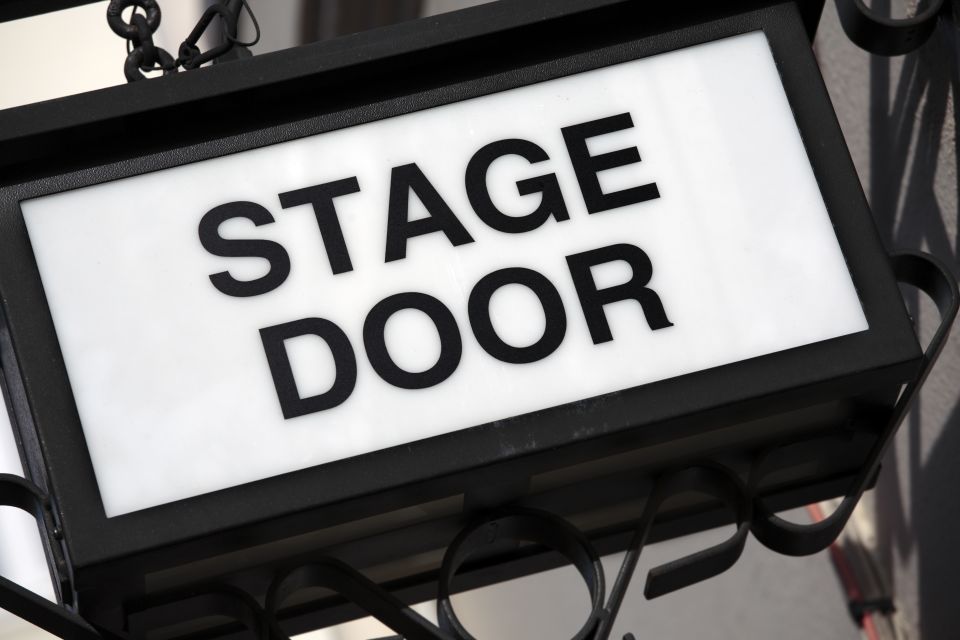
One of the smartest choices on this tour is the stop at Sardi’s. It’s not just a quick photo moment. You’ll talk about the history of this theatre-district watering hole—why it became such a recognizable meeting point for the Broadway world.
This matters because Broadway isn’t only stages and show posters. It’s relationships, rehearsals, opening nights, and the informal spaces where people swap news. Sardi’s is the shortcut to understanding that culture without needing backstage access.
From there, you head into Shubert Alley and talk about the Shubert Theatre, including history of the organization. The Shubert angle is valuable if you want more than “wow, that’s a big theatre.” You’re learning how theatre companies and venue owners helped shape what audiences could see—and how the district grew into the machine it is today.
If there’s a drawback, it’s that these storytelling stops can tempt you to linger. Try not to get stuck reading everything on the walls while your group moves on. The route is designed so each new block builds on the last one.
Shubert Theatre to 45th Street: seeing Broadway as a whole system
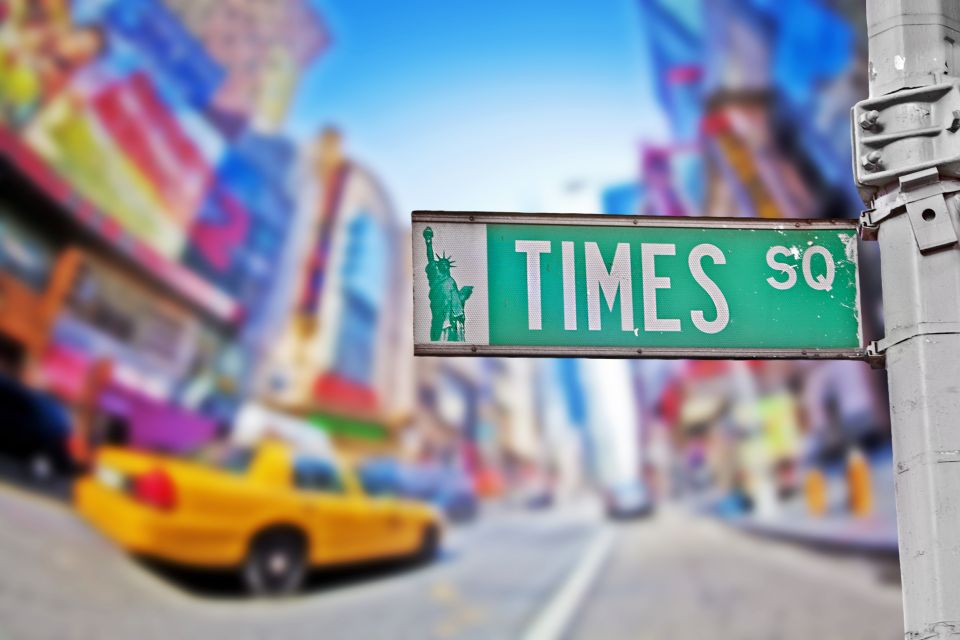
After Shubert Alley, the tour turns onto 45th Street, which the guide presents as a mecca of theatres. This section is the star map of the neighborhood, and it’s where the walking pays off: you see a long list of major venues without needing to hunt them down yourself.
You’ll get views and context connected to the Booth Theatre, Minskoff Theatre, Schoenfeld Theatre, Jacobs Theatre, Golden Theatre, Hirschfeld Theatre, Imperial Theatre, and Music Box Theatre. Even if you don’t know every title associated with each building, you’ll start noticing how Broadway’s layout creates a kind of visibility loop. One landmark cues the next. You’re basically training your eyes to read the district.
Why I think this is worth it: most people arrive in Times Square overwhelmed. This part gives you order. By the time you reach the hotel and Rogers-area theatres later, the district doesn’t feel like a random grid—it feels like a coherent corridor of stages.
This is also the section where your shoes matter most. The route is guided, but you’re still moving. If the weather is wet, you may feel a bit more slip-and-step than sightseeing. Comfort beats style here.
Marriott Marquis and the Marquis Theatre: Broadway meets big-city real estate
Next up: you’ll see the Marriott Marquis Hotel and then visit the Marquis Theatre. The tour doesn’t treat this as a casual look—it includes the history of the hotel and what used to be where it stands now.
That building-history piece is quietly useful. Times Square and Midtown are constantly changing, but Broadway venues act like memory anchors. Learning what came before helps you understand why some corners feel “forever” while other blocks reinvent themselves fast.
You also get a chance to connect the theatre experience to the larger tourist economy. The Marquis area is the kind of place where people decide to watch a show because everything else is already right there—hotels, crowds, and that intense Midtown energy. The tour helps explain how that environment supports the entertainment industry.
If you’re the type who likes architecture or urban change, you’ll probably enjoy this stop more than you expected. If you’re just here for show talk, you’ll still get enough context to keep the story line moving.
Richard Rogers to Lunt-Fontanne: Hamilton energy, then the next chapter
From the Marquis Theatre area, the route goes to the Richard Rogers Theatre, currently home to Hamilton. The guide discusses that major current hit, and then moves on to the Lunt-Fontanne Theatre.
This is one of the sections where the “insider secrets” promise feels real—not because you’ll get backstage keys, but because the guide can connect the show’s impact to what these buildings are designed to do for modern productions. Hamilton is a perfect example of Broadway in the present tense, and the tour uses it as a pivot point: from classic mega-musical scale, to today’s phenomenon-level storytelling.
I also like that the tour doesn’t stop at the hottest name. It immediately turns the page to Lunt-Fontanne, so you stay in the habit of looking beyond the headline production.




Duffy Square to Palace Theatre: why Times Square became the center
Then comes Duffy Square, described as the heart of Times Square. This is where you learn how this area became the crossroads of the world.
That lesson is more than trivia. Times Square isn’t “famous” by accident. It became a magnet because it’s positioned and organized for people to flow in and out all day. The tour uses the theatre district as the lens—helping you understand why theatres helped create the kind of place where tourists, locals, and performers all orbit the same few blocks.
After Duffy Square, you’ll see the Palace Theatre. This stop works as a visual confirmation: yes, there are theatres everywhere, and yes, they’re still part of the way the neighborhood draws people in.
If it’s hot, this stretch can feel long because Times Square is open and sun-heavy. When the weather is warmer, the tour recommends bringing water or cold beverages—take that advice seriously.
Northward walk: Edison, Barrymore, Hell’s Kitchen context
The tour heads north to visit the Edison Hotel and the Barrymore Theatre, and you’ll discuss Hell’s Kitchen history. This part helps you connect the theatre district to the bigger Midtown story, not just the performance industry.
Hell’s Kitchen is often treated like a vibe, but it’s really a neighborhood with an identity shaped over time. When the guide ties that identity to the entertainment around it, the district starts to feel less like a theme park and more like a living city.
Then you walk by the Walter Kerr Theatre and the Eugene O’Neill Theatre. Those names matter because they remind you that Broadway isn’t only about mega-musicals. It also includes the serious dramatic energy associated with long-running theatrical traditions.
This section can be the most mentally clarifying: you start seeing that Broadway’s range isn’t limited to what you already know from ads or streaming.
Ambassador to New World Stages: from Broadway to Off-Broadway
Next, you’ll pass the Ambassador Theatre, home to Chicago. Then the tour heads to New World Stages, where you’ll learn about Off-Broadway theatre.
This is a smart educational move. If you only know Broadway tickets, Off-Broadway can feel like a different world. The tour’s job is to show you that it’s still part of the same ecosystem—just with different scales and approaches.
And because Off-Broadway often gets overlooked in quick first-time visits, this stop gives your theatre knowledge a fuller shape. It also helps you decide what to look for after your tour ends: maybe you’ll branch out to smaller-scale productions when you’re ready.
Ending at Circle in the Square and the Gershwin: Wicked’s home block
The tour ends in front of Circle in the Square and the Gershwin Theatre, currently home of Wicked. Ending here makes sense because the Gershwin is modern Broadway in a way that first-timers recognize instantly.
Circle in the Square adds a nice contrast. Even though it’s right next to one of the most famous current mega-shows, it hints that the district has multiple kinds of stage energy happening side by side. The ending feels like closure, but it also sets you up to notice more than just posters once you walk away.
Guides make or break it: actor-led storytelling you can feel
The most highly praised aspect of this tour is the guiding. Guides are involved in the entertainment industry, and multiple participants specifically highlight actor-guides such as Patrick and Luke as amazing.
What I take from that: the best theatre tours don’t just recite facts. They connect dots between shows, theatres, and the business reality behind them. The result is a walk that feels like you’re hearing how the industry works from someone who actually speaks that language.
On rainy days, that energy is especially important. Luke is noted for keeping things upbeat even when it was pouring. Since the tour operates in all weather conditions, this human factor matters. If the forecast looks nasty, don’t assume your experience is automatically worse—choose a guide who knows how to keep the pace and mood steady.
Practical tips so you enjoy the 2-hour walk
This tour is short, but it’s still a lot of sidewalk in a single block of time. Here’s what I’d plan around.
Wear comfortable shoes. The route involves a decent amount of walking, and the district has lots of cross-streets and curb stops. Bring a face mask or protective covering. Bring water or other cold beverages in warmer weather.
Weather rules are straightforward: the tour operates in all weather conditions, and if cancellation happens due to poor weather, you’ll get the option of an alternative date or a full refund. Also keep expectations realistic: backstage and lobby access is not guaranteed.
One more note: there are rules around what you can bring—no pets, no weapons or sharp objects, and no oversize luggage or large bags. If you’re planning your day after the tour, keep your bag light so you’re not wrestling with it while you walk.
Value check: is $39 for a 2-hour Broadway walk worth it?
At $39 per person for a 2-hour guided tour, you’re paying for three things: an entertainment-industry guide, a structured walk through multiple major theatres, and historical context you’d otherwise have to piece together on your own.
Where this feels like good value is the density. You cover the Majestic, major stops around 45th Street, the Hamilton-area Rogers Theatre, Times Square’s Duffy Square, plus the Off-Broadway learning at New World Stages, and you end near Wicked at the Gershwin Theatre—all in one managed route.
Also, the small-group setup matters. With a limited group size (up to 10 participants), you’re more likely to actually hear the guide’s story and ask questions without the tour feeling like a moving crowd line.
If you already have deep theatre knowledge and want only names, you might feel like you’re paying for orientation. But if you want a first-time-friendly sense of where everything is and why it matters, this price feels reasonable for the payoff.
Should you book this Broadway Theatre District Tour?
Book it if you want an efficient Broadway orientation with real guide energy and a story-driven route. This is especially worth it if you love musicals and plays and you like learning the “how it all got here” stuff—how Times Square became what it is, how major theatre brands and companies shaped the district, and what Broadway’s current hits look like in context.
Skip it or reconsider if you’re hoping for guaranteed backstage access or if you dislike walking on busy streets for a full couple of hours. Also, if you’re traveling with heavy luggage or prefer a low-footprint sightseeing day, you may find the sidewalk-heavy format annoying.
If you like theatre, you’ll leave with a far clearer map of the district and a better sense of why those buildings matter beyond the show posters. And with actor-guides like Patrick and Luke setting the tone, it’s the kind of tour where the district feels understandable fast.
FAQ
Where does the tour start?
The tour begins in front of the Majestic Theatre, home of The Phantom of the Opera.
How long is the Broadway Theatre District Tour?
It lasts 2 hours.
How much does it cost?
The price is $39 per person.
What’s the group size?
It’s a small group, limited to 10 participants.
What language is the tour guide?
The tour is guided in English.
Is the tour run in bad weather?
Yes, it operates in all weather conditions. If it’s canceled due to poor weather, you’ll be given an option of an alternative date or a full refund.
Do we get guaranteed backstage or lobby access?
Backstage and lobby access is not guaranteed.
How much walking should I expect?
There is a decent amount of walking, so comfortable shoes are strongly recommended.
What should I bring or avoid?
Bring comfortable shoes and a face mask or protective covering. Pets, weapons or sharp objects, and oversize luggage or large bags are not allowed.