REVIEW · NEW YORK CITY
Official Central Park Walking Tour
Book on Viator →Operated by Central Park Conservancy · Bookable on Viator
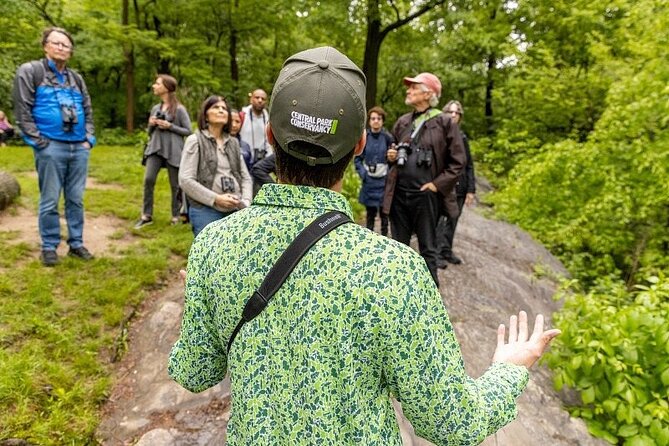
Central Park looks different with a guide in step. I like how this walk hits the Park’s biggest crowd-pleasers—especially Sheep Meadow skyline views and the photo-famous Bethesda Terrace—without feeling rushed. You also get the big-picture story of how designers turned rough, swampy ground into the Central Park most people came to see.
I also love the mix of “pretty” and “practical”: you’ll pass Greyshot Arch and Pinebank Arch, then connect the look of the structures to why they were built there. One thing to keep in mind: this is a tight, highlights-only loop that ends at Bethesda Terrace, so plan your next stop before the 90 minutes are up.
In This Review
- Key highlights you’ll care about
- Tour Snapshot: why this 90-minute walk is a good value
- Columbus Circle: the best place to start if you want orientation fast
- Greyshot Arch: a quick bridge lesson that makes the Park make sense
- Pinebank Arch and the cast-iron detail you can actually spot
- Heckscher Ballfields: how play spaces became part of the Park’s original plan
- Sheep Meadow: the skyline moment that makes Central Park feel huge
- Bethesda Terrace: fountain views, lake views, and a perfect ending point
- The design story: turning rocky and swampy land into a Park people adore
- Group size, pacing, and photo timing for a smooth 90 minutes
- Who this Central Park walk is best for
- Should you book this Central Park Highlights Walk?
- FAQ
- Where does the tour start?
- Where does the tour end?
- How long is the Central Park walking tour?
- How much does it cost per person?
- How many people can be in the group?
- Do I need a physical ticket?
- What are the main stops and sights on the walk?
- Is there an entry fee for the sights on the route?
- What happens if the weather is poor?
- How far ahead should I book?
Key highlights you’ll care about
- Columbus Circle meetup sets you up at the park’s busiest edge before you go deeper.
- Greyshot Arch gives you a classic Central Park bridge-and-arch moment early on.
- Pinebank Arch spotlights a distinctive cast-iron bridge detail in the south end.
- Heckscher Ballfields show how parts of the Park were set aside for play from the beginning.
- Sheep Meadow delivers the wide Manhattan skyline view you’ve seen in photos.
- Bethesda Terrace ends the walk with the fountain and viewpoints toward the lake and boathouse.
Tour Snapshot: why this 90-minute walk is a good value
At $33 per person for about 1 hour 30 minutes, this is priced like a “high-impact” Central Park activity. What makes it feel fair is that you’re paying for a guided route and interpretation—not paying extra for what you see along the way. The listed stops show admission ticket: free, so you’re not stuck budgeting for entrances mid-walk.
You’re also not doing this alone in a huge crowd. The tour caps at 25 travelers, which keeps the pace friendly for questions and photos. Add in the fact that you get a mobile ticket, and it’s easy to keep things simple on a day when New York already has a lot going on.
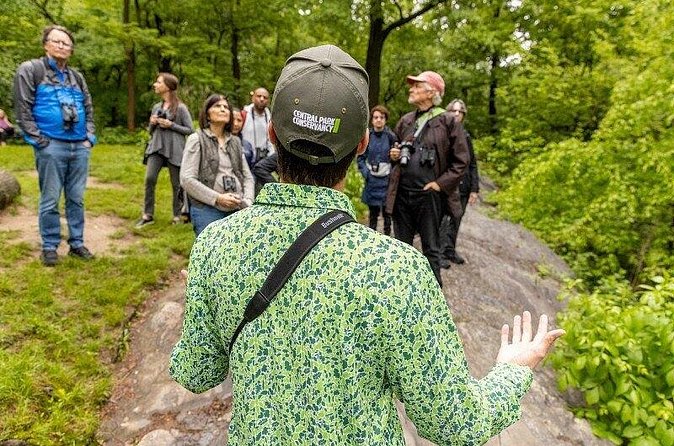
Finally, this is run by the Central Park Conservancy, the group tied closely to the Park’s care and storytelling. That connection matters: the tour focuses on why the Park looks the way it does and what it takes to maintain that design.
You can also read our reviews of more walking tours in New York City



Columbus Circle: the best place to start if you want orientation fast
You meet at Maine Monument West Side at Central Park S. That location is useful because it’s a real boundary point—where the Park stops being “an idea” and starts being something you can navigate on foot.
From here, the route quickly pulls you away from the street-noise feel and into Central Park’s internal rhythm. Even if you’ve never been inside, you’ll start to recognize the Park’s layout logic: open sightlines, then tucked details, then another big view.
This start also helps your timing. You’re not wasting your only sunny hour hunting for the right entrance or figuring out which way “south end” actually feels on the ground. You’re pointed forward, then walking step-by-step.
Tip: wear shoes you don’t mind getting a little crowded-footprint dirty. Central Park paths can be smooth, but they’re still paths—your feet will decide whether the tour feels easy or annoying.
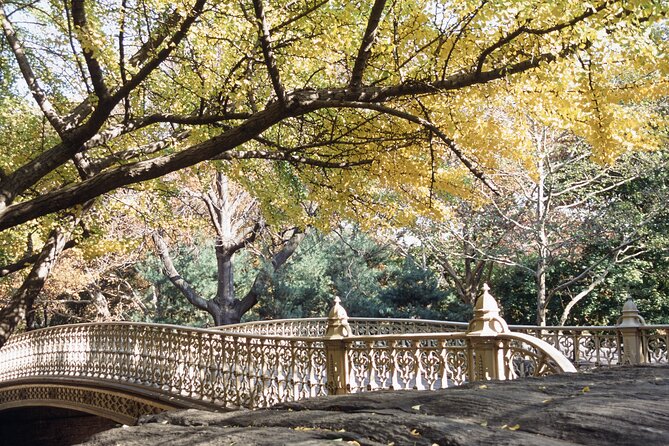
Greyshot Arch: a quick bridge lesson that makes the Park make sense
The first landmark stop is Greyshot Arch, one of the Park’s many bridges and arches. This is the kind of detail that’s easy to overlook when you’re just sightseeing, but it’s exactly what changes Central Park from a generic green space into a designed environment.
What I like about this stop is that it gives you an early “pattern recognition” moment. You see how the Park uses structures to guide movement, frame views, and create visual rhythm. In other words, it’s not random—Central Park is full of intentional choices, even in places that look purely decorative.
The time here is short—about 10 minutes—so you’ll get the story without being trapped in a single spot. And if you like photos, it’s a good early win: you’ll have time to get your camera ready before the tour hits the bigger view points.
One consideration: because it’s a popular Park, you may share space with other walkers. The good news is you’re not required to wait long; the tour’s schedule moves you along.
Pinebank Arch and the cast-iron detail you can actually spot
Next up is Pinebank Arch, described as an elegant cast-iron bridge element in the south end. This stop is where the tour leans into something you can genuinely observe instead of just hearing about.
Cast-iron details can look “technical” when you’re far away. But once you know where to look—forms, curves, and how the structure sits in the landscape—it becomes much easier to appreciate what you’re seeing. That’s the value here: you learn what the feature is, then you can judge it for yourself.
The time again is about 10 minutes, which keeps the walk flowing. You’re not dragging yourself through long explanations at every stop, and you still get enough context to feel like the route has a purpose.
If you’re someone who loves architecture and design, Pinebank Arch is a high-payoff moment. If you’re more of a “views over details” person, it still works because you’ll move from small structural beauty to larger open areas without losing momentum.
Heckscher Ballfields: how play spaces became part of the Park’s original plan
The tour then goes to Heckscher Ballfields, a playing field area reserved since the Park’s creation. This is a sneaky-important stop because it challenges the common Central Park assumption that it’s only about scenery.
Here’s what makes this piece valuable: it connects Central Park’s design to everyday use. Ballfields aren’t only practical—they reflect decisions about how the Park would function for real people over time. That gives you a more grounded feel for the Park, not just the postcard parts.
You’ll spend about 10 minutes at this stop, so it works as a pause that still keeps energy. It’s also a helpful mental break in the middle of your walking rhythm.
Drawback to expect: if you’re not interested in how the Park was allocated, you might move through this part faster than other stops. Still, it’s a good reality check and helps you understand why Central Park has both iconic monuments and functional spaces.





Sheep Meadow: the skyline moment that makes Central Park feel huge
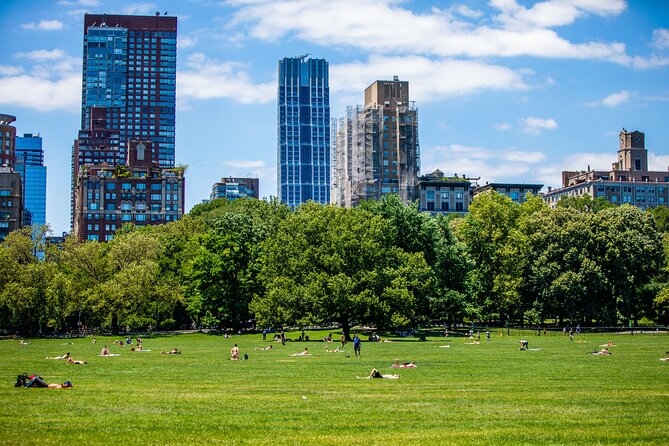
Now you get one of the Park’s best “I get it” views: Sheep Meadow with Manhattan skyline in the background. Even if you’ve seen photos before, a skyline view framed by a big open lawn feels different in person—more scale, more air, more “this is why people come.”
The tour keeps this stop to about 10 minutes, which is about right. You get time to find your angle, take pictures, and glance around, without turning the walk into a long picnic break.
What I like about starting with arches and structures and then reaching a wide view is the contrast. Greyshot Arch and Pinebank Arch teach you to notice design elements. Then Sheep Meadow lets you experience what that design produces: dramatic open space and strong sightlines.
Practical advice: bring your phone ready, but also lift your head every few photos. The view is the point, not the shot. You’ll enjoy it more if you treat the camera like a tool, not a job.
Bethesda Terrace: fountain views, lake views, and a perfect ending point
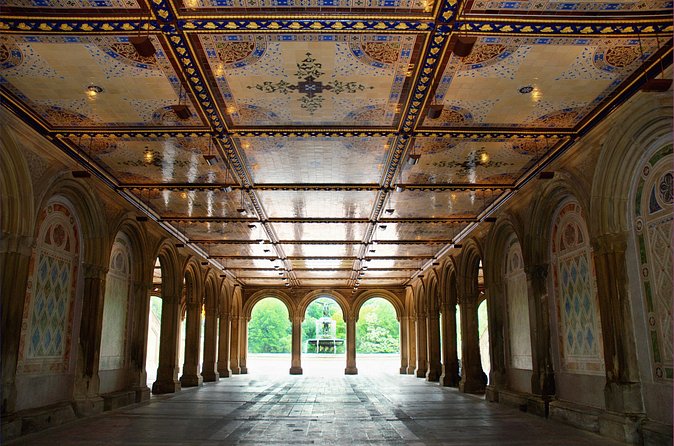
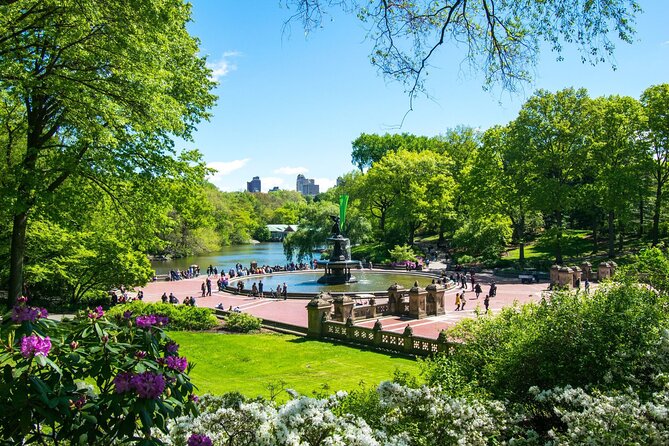
The tour ends at Bethesda Terrace around the mid-Park area at 72nd Street. This is one of Central Park’s most “movie-ready” spots, with the famous fountain and viewpoints toward the lake and boathouse.
What makes Bethesda Terrace such a strong finish is that you leave with a clear mental image of the Park’s identity. It’s not just a random stop; it’s a place people instantly recognize and a spot that ties together the walk’s earlier design lessons.
You’ll spend about 10 minutes here. That’s enough time to admire the fountain, orient yourself toward the lake, and take a final photo that looks like the Central Park you expected.
One planning point: because you end at Bethesda Terrace, decide ahead of time how you’ll get out or where you’ll continue. This finish is great for a “walk a little more on your own” style day, but it’s not a loop that returns you to Columbus Circle.
The design story: turning rocky and swampy land into a Park people adore
The tour’s biggest payoff for many people is the “how it became” explanation. You’ll hear how Central Park’s designers and architects transformed rocky and swampy land into the work of art that Central Park is today.
That matters because it changes how you look at everything you just walked through. Bridges and arches don’t feel like decoration anymore; they feel like solutions. Ballfields don’t feel incidental; they feel planned. Open lawns don’t feel like leftover space; they feel like part of a layout built to hold experiences.
I also like that this approach connects “nature” and “design.” Central Park is full of living things, but it’s also engineered and organized. When you understand that mix, the Park becomes less about luck and more about intent.
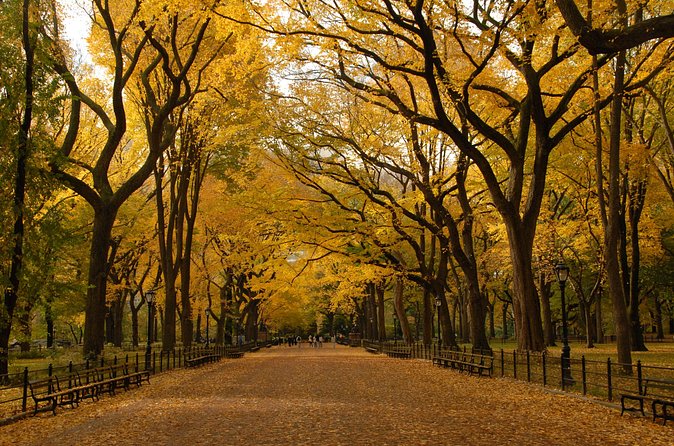
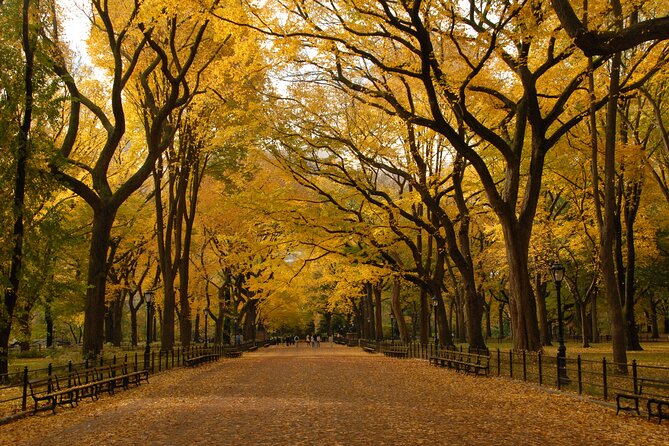
You may also notice details like American elms lining the Mall mentioned in the tour overview. Even if you don’t memorize every tree, the idea is the same: the Park’s beauty is sustained by ongoing care and thoughtful planning.
Group size, pacing, and photo timing for a smooth 90 minutes
This walk is about 1 hour 30 minutes and moves stop-to-stop with short stays. That schedule is a feature, not a flaw, because it keeps the day moving while still giving you time to stop, look, and ask questions.
With a maximum of 25 travelers, you’ll likely be able to hear your guide and still find space for photos. If you get a smaller group, the experience often feels more personal and question-friendly. Some past sessions have been run in very small groups, which is ideal if you like dialogue instead of just listening.
Here’s how to make it work for you:
- Go in knowing it’s a highlights route, not a long wandering day.
- Bring water, especially if you’re going on a warm afternoon.
- Start thinking about your “must-photo” spot early—Sheep Meadow and Bethesda Terrace are usually the big ones.
Weather matters here. The tour requires good weather, so if forecasts look rough, consider that factor when choosing a date. When the organizer cancels due to poor weather, you’re offered a different date or a full refund.
Who this Central Park walk is best for
This tour fits best if you want Central Park’s biggest hits explained clearly without spending your whole day navigating alone. It’s a strong choice for first-time visitors, and it also works for people who already know the Park but want a better story to attach to what they see.
I’d especially recommend it if you care about:
- Architecture details (arches and bridges like Greyshot and Pinebank)
- Urban design and planning (how the Park was built and set up)
- Iconic views (Sheep Meadow skyline and Bethesda Terrace fountain/Lake area)
If you’re the type who likes long nature walks, off-the-beaten-path exploration, or spending hours in one zone, you might find this route too short. But if you want a smart “Central Park orientation plus icons” day, this hits the sweet spot.
Should you book this Central Park Highlights Walk?
I think you should book it if you want an efficient, well-structured way to see Central Park’s most recognized spots and understand how the Park was shaped. The $33 price makes sense because you’re paying for interpretation and a curated route, not paid add-ons at each stop. With a smallish group limit and a clear ending at Bethesda Terrace, it’s a tidy plan that you can build the rest of your day around.
Skip it (or pair it with something else) if you’re chasing a slow, deep nature day or you dislike ending away from your starting point. Also be honest about the weather: this is a good-weather experience, and it’s not set up to handle frequent rain detours.
If you want Central Park’s greatest hits with context, this walk is an easy yes.
FAQ
Where does the tour start?
The tour meets at the Maine Monument West Side at Central Park S, New York, NY 10019.
Where does the tour end?
The tour ends at Bethesda Terrace, mid-Park at 72nd Street (New York, NY 10024).
How long is the Central Park walking tour?
It’s listed as approximately 1 hour 30 minutes.
How much does it cost per person?
The price is $33.00 per person.
How many people can be in the group?
The tour has a maximum of 25 travelers.
Do I need a physical ticket?
No. It uses a mobile ticket.
What are the main stops and sights on the walk?
The walk includes Columbus Circle, Greyshot Arch, Pinebank Arch, Heckscher Ballfields, Sheep Meadow, and ends at Bethesda Terrace with its fountain and views toward the lake and boathouse.
Is there an entry fee for the sights on the route?
The listed admission for each stop is free.
What happens if the weather is poor?
The tour requires good weather. If it’s canceled due to poor weather, you’ll be offered a different date or a full refund.
How far ahead should I book?
On average, this tour is booked about 18 days in advance. Booking earlier can help you get the slot you want.