REVIEW · NEW YORK CITY
Queens Corona’s Culinary Essentials Tour
Book on Viator →Operated by Culinary Backstreets Walks · Bookable on Viator
Queens tastes like a passport stamp. In just about 4 hours, you’ll eat your way through Corona and Jackson Heights with small-group energy and a real-feeling start at Corona Plaza. It’s a smart pick if you want NYC flavor without the crush you can find in Manhattan.
I especially like how the tour balances breakfast treats with a sit-down brunch that’s more than a quick bite. The highlight for me is the pit-roasted goat brunch served with neighborhood families, plus the sweet stops that keep coming—like cholado.
One thing to consider: the food leans heavier on pastries and sweets than some other NYC tours, so if you’re hunting for lots of big, savory entrées, you may want to manage expectations.
In This Review
- Key Points to Know Before You Go
- Why This Queens Tour Feels Different From Manhattan
- Corona Plaza Start: Easy Meeting, Local Rhythm
- The Mexican Bakery Stop: Pick Your Pastry Like a Local
- Pit-Roasted Goat Brunch: The Moment This Tour Earns Its Price
- Jackson Heights Along Roosevelt Avenue: Street Vibes Without the Hassle
- Argentinean Corner Bakery Treats: Sweet Stops With a Purpose
- Cholado: The Frozen Fruit-Style Dessert You’ll Want Again
- Veracruz Shrimp Cocktail Finale: A Small Bodega Ending With Energy
- Price and Value: What $95 Actually Buys You in Queens
- The Guide Makes the Day: Sierra and the Neighborhood Connections
- Pacing and How Much You’ll Eat (So You Don’t Regret It)
- Weather, Walking, and Comfort Tips
- Who This Tour Fits Best
- Should You Book This Queens Corona’s Culinary Essentials Tour?
- FAQ
- FAQ
- How long is the Queens Corona’s Culinary Essentials Tour?
- Where do I meet, and where does the tour end?
- What is the maximum group size?
- What food and drinks are included?
- Are there any admission tickets I need to pay?
- Is the tour offered in English?
- What should I do if the weather is bad?
- Is free cancellation available?
Key Points to Know Before You Go
- Max 7 people means less waiting and more chat with the people serving the food
- Two morning start times help you line this up with the rest of your NYC plans
- Corona Plaza is pedestrian-only, so the walk starts easy and local
- Cholado is the sweet you’ll remember: a frozen fruit salad-style treat also called a Colombian Snow Cone
- You’ll end with a Veracruz shrimp cocktail at a small bodega, not a touristy bar
Why This Queens Tour Feels Different From Manhattan
This is one of those NYC experiences where you feel the city’s variety instead of just seeing it. Corona and Jackson Heights are full of everyday food culture, and the walk keeps you in neighborhoods where people actually live and eat. That matters, because it changes the mood. You’re not constantly dodging crowds, and you get more time with the folks behind the counters.
The small group size (up to 7) is a big practical win. In a big tour, you’re often stuck in a human line and trying to hear through noise. Here, I expect you’ll move at a pace that lets you notice details—what’s on the tray, how a menu works, and what people order when they’re not performing for tourists.
And the meeting point choice helps, too. Starting at Corona Plaza gives you an easy, clear start—then you drift into side streets and local spots where the food choices feel tied to community routines.
You can also read our reviews of more tours and experiences in New York City.



Corona Plaza Start: Easy Meeting, Local Rhythm
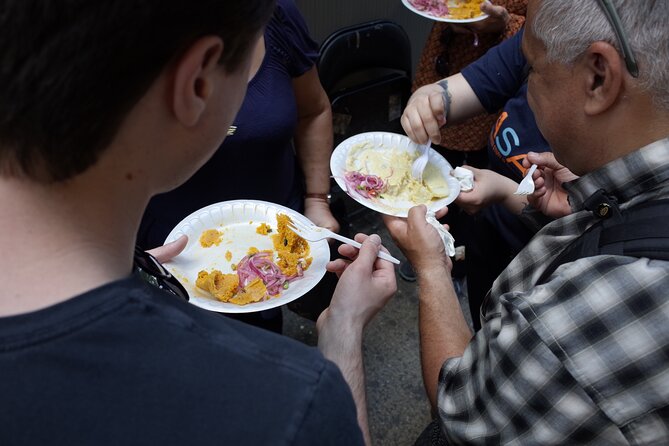
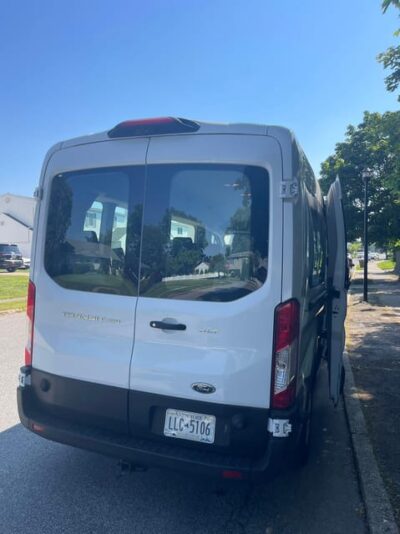
You start at Corona Plaza (40-04 National St, Corona, NY 11368). It’s pedestrian-only, which means fewer traffic headaches and a smoother beginning. For many people, that first 15–20 minutes sets the tone: you’re not sprinting from a subway exit into a loud street scene.
The tour is offered in English and uses a mobile ticket. If you like planning that’s low-stress, that’s useful. You don’t have to find paper tickets or juggle extra logistics mid-walk.
From there, you’ll head toward a family-run Mexican bakery—the kind of place where the weekend ritual matters. You can tell a lot about a neighborhood from the foods people choose when it’s not a holiday.
The Mexican Bakery Stop: Pick Your Pastry Like a Local
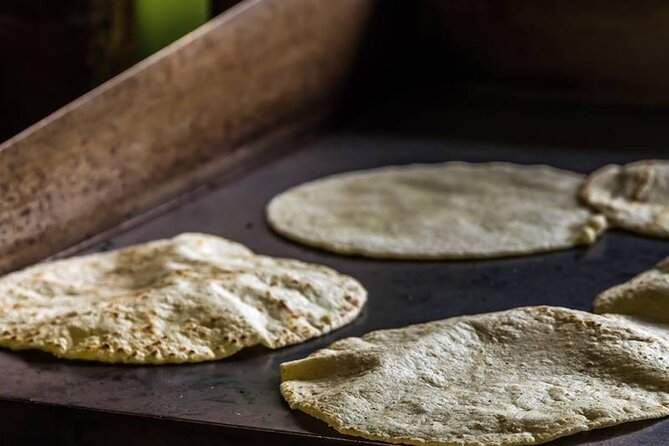
One of the best parts here is the way the morning begins: you join the weekend rhythm of selecting sweet breakfast pastries and rolls from large trays set out for customers. It’s not a cafeteria-style grab; it’s browsing, deciding, and watching what people reach for.
Why I like this kind of stop: you get a feel for the bakery’s logic without needing to read a menu like a puzzle. You can follow along with what looks popular and what fits your tastes—sweet rolls for comfort, smaller pastries for variety, and enough range to try more than one thing.
In a city where food tours sometimes start with the same generic muffins and cookies, this feels more grounded. It also sets you up for the heavier meal later, so you’re not jumping straight into full brunch mode.
If you’re sensitive to sugar, plan your selections. The point isn’t to avoid sweets; it’s to taste the range. Pick two sweet items that you actually want, then save your appetite for what comes next.
Pit-Roasted Goat Brunch: The Moment This Tour Earns Its Price
After the bakery, the tour moves to a more out-of-the-way spot where you sit down with neighborhood families for a hearty Mexican-style brunch featuring pit-roasted goat. That’s a big deal for two reasons.
First, goat isn’t something you often see on quick food tours. It signals that you’re trying food with deep local roots rather than only what’s easiest for tourists to photograph.
Second, the sit-down aspect matters. Standing around while people sample tiny bites is one thing. Sharing a meal while you’re actually seated changes the whole pacing. You get time to eat, talk, and listen—without rushing every second to reach the next stop.
Practical tip: goat can be rich. Even if you’re hungry, pace yourself. Eat what tastes best to you, and keep a little room for the later sweet treats, since those are part of the fun here.
Jackson Heights Along Roosevelt Avenue: Street Vibes Without the Hassle
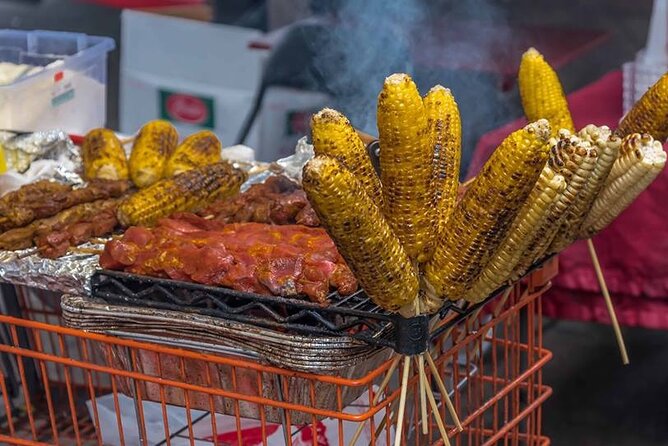
Next you head through Jackson Heights along Roosevelt Avenue. On weekends, it’s lined with street vendors from throughout Latin America, which means you’ll see a lot of food culture in a small area.
This stretch helps you understand why Queens food works so well. It’s not one cuisine painted across the neighborhood; it’s overlap. You’ll often find people shopping, chatting, and buying snacks as part of normal life—not just as a tourist activity.
Roosevelt Avenue can also mean sensory overload, so having a guided group helps. You won’t have to guess where to look or which side streets connect you to the next stop. You just follow along and let the day unfold.




Argentinean Corner Bakery Treats: Sweet Stops With a Purpose
To satisfy your sweet tooth, you’ll drop into an Argentinean corner bakery for traditional treats. Even if you’re not trying to become a pastry connoisseur, this is one of the stops that makes the tour feel like more than just Mexican food plus a random dessert.
It also breaks up the day. After goat brunch, the switch to bakery treats makes sense. You’re still eating, but the flavor pattern changes so you don’t feel like you’re repeating the same thing all morning.
What to watch for: these treats can be small, but they add up. If you’re the type who finishes everything on principle, you might end up very full by the time you reach the frozen dessert stop. If that’s you, consider choosing one item you love and one that looks interesting rather than trying to sample everything.
Cholado: The Frozen Fruit-Style Dessert You’ll Want Again
Then comes one of the signature sweet moments: cholado, a hybrid frozen dessert and fruit salad also known as the Colombian Snow Cone. It’s the kind of food that sounds simple until you taste it and realize how satisfying it can be—cold, fruity, and designed to cool you off.
Why it’s a highlight: it’s not generic. A lot of food tours in NYC end with cupcakes or chocolate bars. Cholado feels like street-food logic—simple ingredients, big flavor, and comfort food done in a local way.
Also, the timing works. By the time you reach this stop, you’ve already eaten a breakfast item and a substantial brunch. Cholado acts like a reset button. You finish it, you’re refreshed, and you’re ready for the final savory-ish celebration at the bodega.
Veracruz Shrimp Cocktail Finale: A Small Bodega Ending With Energy
The tour ends at the edge of Jackson Heights and Elmhurst, two immigrant neighborhoods that share culinary riches. Your last stop is a small bodega opened by a man from Veracruz, Mexico. Inside, you’ll enjoy a celebratory (shrimp) cocktail.
This ending is smart because it shifts the flavor direction. You’ve had pastries, brunch, Argentine bakery treats, and cholado. The shrimp cocktail gives the day a savory, celebratory close without being another random dessert.
Why I think this matters: tours sometimes end at a place that feels like a performance. A bodega feels like real life. You’re not only sampling food; you’re seeing how someone turns their shop into a community point.
Wear shoes you can walk in comfortably. You’ll likely cover enough ground that your legs notice by the end, even if the pace feels friendly.
Price and Value: What $95 Actually Buys You in Queens
At $95 per person for about 4 hours, the question isn’t whether you’re paying for food. You’re paying for access, pacing, and local connections. This tour includes breakfast, lunch, snacks, and soda/pop, and you’re also sampling multiple stops along the way.
In NYC, buying all that on your own can add up quickly—especially when you’re trying to eat across different cuisines and neighborhoods in one morning. Here, someone else handles the route, the timing, and the ordering flow at each place. That saves time and reduces the mental load of figuring out where to go and what to try.
The other value angle is the group cap of 7 people. That doesn’t just sound nice on paper. It typically means fewer interruptions and more opportunity to learn what you’re eating and why it matters to the community around it.
Could you do this day on your own for less? Maybe, but you’d be guessing your way through. This tour helps you taste widely without turning it into a scavenger hunt.
The Guide Makes the Day: Sierra and the Neighborhood Connections
A recurring theme from guide praise is the way Sierra brings the neighborhoods into the food choices—by explaining context and connecting what’s on your plate to the people and routines around it. That shows up in the details: how pastries are chosen, why certain foods fit certain moments, and what to notice as you move.
You don’t need a history lecture to enjoy a food tour, but you do want more than just a list of items. This tour’s strength seems to be pairing the food with stories that feel practical and human—like why people line up, what makes a bakery different, and how each neighborhood shapes what ends up on the menu.
In at least one experience, the group also had support from a teammate in training named Anna, who helped explain cultural differences between communities. That kind of extra explanation can make you feel more grounded, especially if you’re new to Queens food neighborhoods.
Pacing and How Much You’ll Eat (So You Don’t Regret It)
This is not a light snack crawl. You’re sampling breakfast pastries, then sitting down for a hearty brunch with pit-roasted goat, then continuing with more bakery treats and ending with a shrimp cocktail plus soda/pop.
The tour still aims for a walkable pace. That balance shows up in how you leave: full, but not completely wrecked. A big part is that the portions are spread across the stops instead of all at once.
Still, I’d go into it with the mindset of eating meals, not just grabbing bites. If you normally skip breakfast, don’t. If you tend to snack constantly, you might want to keep your day before the tour simple.
Weather, Walking, and Comfort Tips
This experience depends on good weather, and if conditions aren’t right, you’ll be offered a different date or a full refund. So, check the forecast and plan to dress for the day you actually get.
Because it’s a walking food tour in Queens neighborhoods, bring comfortable shoes. Even if the pace feels manageable, you’ll still spend a few hours moving between stops.
It also helps to bring a phone with enough battery for the mobile ticket. The meeting point is clear, and the end returns to the start, so you’ll know where to go when you’re done.
Who This Tour Fits Best
This is a strong match if you:
- Want Queens food culture with fewer crowds than Manhattan
- Prefer a small group and a guide who can talk with you, not just at you
- Like trying foods across countries and flavors, especially Mexican and Latin American staples
- Enjoy a day that mixes sweets with one real sit-down meal
It’s also a good choice if you’re visiting NYC for the first time and want a more local slice of the city. Queens often gets less attention than the classics, but it’s built for this exact kind of walk.
If you’re the type who only wants savory mains and minimal pastry, you might find the sweetness-to-savory ratio is higher than you’d expect.
Should You Book This Queens Corona’s Culinary Essentials Tour?
If you like food tours that feel like neighborhoods instead of theme parks, I’d book this. The small group size (up to 7), the Corona Plaza start, and the mix of breakfast, sit-down brunch with pit-roasted goat, and end-stage Veracruz shrimp cocktail create a day that feels complete for the money.
I’d book especially if you’re curious about cholado and want to taste more than the most obvious NYC hits. The fact that the tour includes breakfast, lunch, snacks, and soda/pop makes it easier to commit—you’re not constantly paying extra.
Skip it if you’re mainly chasing lots of big savory entrées and you dislike pastry-heavy mornings. In that case, you’ll probably do better with a tour that leans more toward soups, grilled items, and fewer sweet stops.
FAQ
FAQ
How long is the Queens Corona’s Culinary Essentials Tour?
It lasts about 4 hours.
Where do I meet, and where does the tour end?
You meet at Corona Plaza, 40-04 National St, Corona, NY 11368, and the tour ends back at the same meeting point.
What is the maximum group size?
The tour has a maximum of 7 travelers.
What food and drinks are included?
The tour includes breakfast, lunch, snacks, and soda/pop.
Are there any admission tickets I need to pay?
Admission tickets are listed as free, so you should not expect to pay extra admission during the stops.
Is the tour offered in English?
Yes, the tour is offered in English.
What should I do if the weather is bad?
The experience requires good weather. If it’s canceled due to poor weather, you’ll be offered a different date or a full refund.
Is free cancellation available?
Yes. You can cancel up to 24 hours in advance for a full refund.