REVIEW · NEW YORK CITY
Rock and Roll History and Culture Walking Tour in New York City
Book on Viator →Operated by Tourizee · Bookable on Viator
A good rock story is even better on foot. This walking tour traces how New York music shifted from the late 1960s into punk and the 1980s, using real locations as your guide. You’ll connect venues, album art spots, and musician homes to the scenes that made them famous.
I especially like the way the stops stitch together different eras—East Village rock, Village folk and studio lore, then punk energy in the West. I also like that the group is small (up to 6), which makes it easier to ask questions and get answers that match what you’re actually seeing street-side.
One thing to consider: it’s a weather-dependent walk, and you should expect a steady pace through multiple neighborhoods. If you hate long strolls or cold/wet weather, you’ll want to plan your day carefully.
In This Review
- Key highlights worth marking
- Rock-and-roll NYC in three hours, with a smart route
- Start at 101 Astor Place: you’re plugged into the East Village scene fast
- Stop 1, East Village: Fillmore East and the Warhol factor
- Stop 2, CBGB: punk’s origin point, right where the scene ignited
- Stop 3, Greenwich Village: album covers you can actually stand on
- Stop 4, Cafe Wha?: where careers got their first loud turns
- Stop 5, Washington Square Park audio segment: Beats, folk, and Buddy Holly
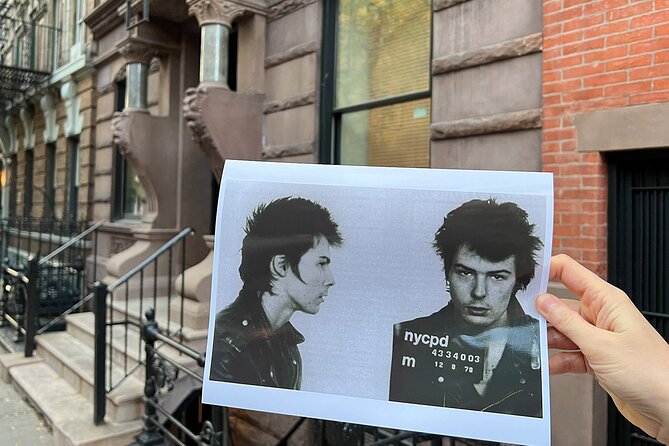
- Stop 6, West Village: Sid Vicious, John and Yoko, and the myth machine
- Stop 7, White Horse Tavern: Dylan Thomas and the last word
- Small-group touring with Tom-style storytelling
- Price and value: what $45 is really buying you
- Timing, pacing, and what to bring
- Who should book this walk
- Should you book this Rock and Roll History and Culture walking tour?
- FAQ
- How long is the Rock and Roll History and Culture Walking Tour?
- How much does the tour cost?
- Where does the tour start and end?
- What time does the tour begin?
- Is the tour in English, and do I get a mobile ticket?
- What stops are included on the itinerary?
- Are there admission fees at the stops?
- What’s the group size limit?
- Is the tour refundable if plans change?
Key highlights worth marking
- Fillmore East as the late-’60s Church of Rock and Roll and Warhol’s Exploding Plastic Inevitable era
- CBGB site where punk rock was born
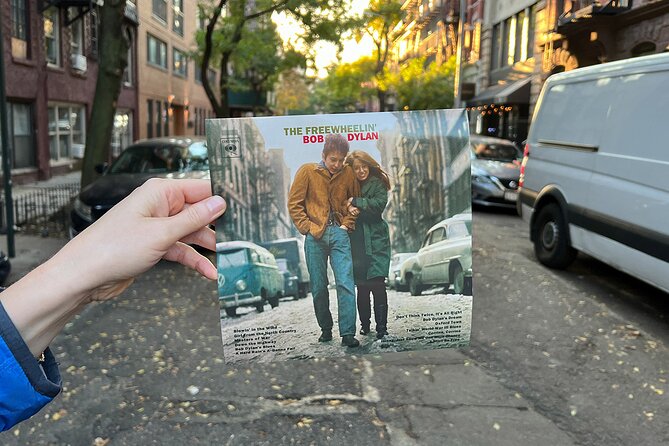
- Album cover locations tied to Bob Dylan, Ramones, and Led Zeppelin
- Cafe Wha? for the early-career launch vibes of Bob Dylan and Jimi Hendrix
- White Horse Tavern as the final stop linked to Dylan Thomas
Rock-and-roll NYC in three hours, with a smart route
This tour is built like a playlist: you start with classic rock theater energy, then turn toward punk’s birthplace, then end in spots that feel like myth made physical. The route covers the East Village, Greenwich Village, and West Village, which is perfect if you want to learn what changed in New York music without spending your whole day chained to one museum.
At $45 per person for around 3 hours, the value comes from focus. You’re not just seeing street corners; you’re getting context you can use right away—what happened here, who it connected to, and how the scene morphed over time. Also, most stops are marked free, which keeps costs predictable.
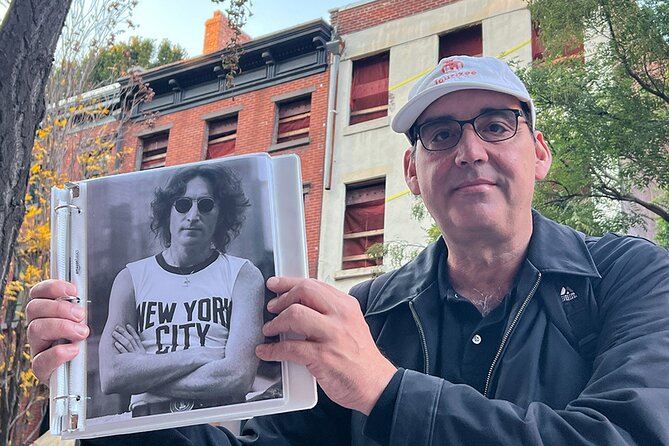
The small-group size (maximum 6) matters more than people think. You can ask follow-up questions and get a clearer “why this matters” explanation instead of just hearing a quick script. In one of the standout reports from someone who went, the guide named Tom was praised for being packed with info and using old photos to compare past versus present. That photo-and-story style is exactly what makes these stops land.
You can also read our reviews of more walking tours in New York City



Start at 101 Astor Place: you’re plugged into the East Village scene fast
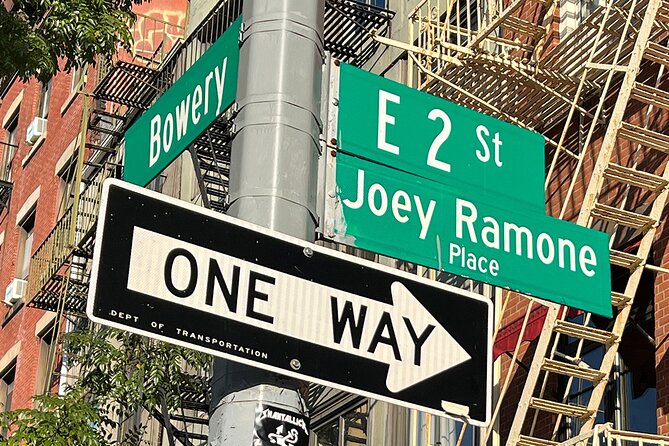
The tour meets at 101 Astor Pl (near White Horse Tavern at the end of the day, but you’ll start in the East Village area). The official start time is 1:30 pm, and it ends at White Horse Tavern, 567 Hudson St.
In practice, that mid-afternoon start is useful. You get enough daylight for reading buildings, signboards, and street context, and you’re not rushing before lunch. And because it’s near public transportation, you can usually reach the start without complicated planning.
Stop 1, East Village: Fillmore East and the Warhol factor
Your first stop hits two key ideas at once: rock performance culture and the art-world crossover that made New York feel like one big experiment.
You’ll see Fillmore East, remembered as the Church of Rock and Roll in the late 1960s. This is the kind of venue where the music wasn’t just sound—it was identity. It also sets up why the next moments in the route matter: New York didn’t just host bands; it built ecosystems around them.
Right here, the tour also points to Andy Warhol’s Exploding Plastic Inevitable tied to the Velvet Underground. Even if you’re not a Warhol expert, the big point you’ll walk away with is how tightly linked art happenings and music scenes were. It wasn’t “either music or art.” It was both, often in the same room.
Then you’ll note the Pyramid Club, where music and art converged in the 1980s. That’s a smart inclusion because it helps you understand that this story doesn’t stop after the 1960s. The East Village vibe kept evolving, and you can feel the continuity as you move.
Time on this stop is about 45 minutes, so it’s not a quick photo-op. Give your legs a moment to warm up here, because the walking starts stacking after this.
Stop 2, CBGB: punk’s origin point, right where the scene ignited
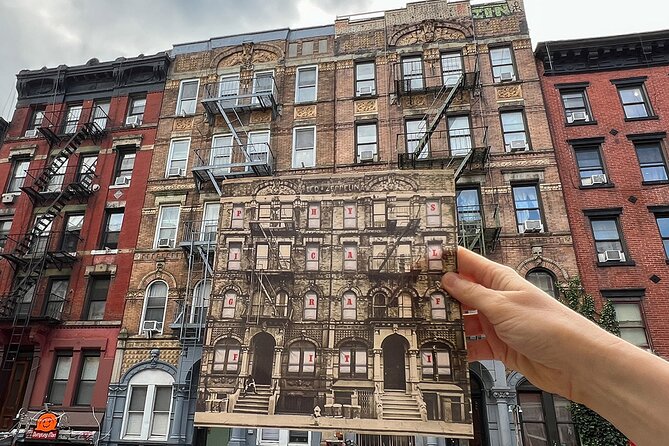
Next comes CBGB Club, visited as the site where punk rock was born. This stop is only about 20 minutes, but it’s punchy.
The value isn’t in long explanations. It’s in standing in the place and having the tour connect the name CBGB to the shift toward punk energy. You’ll leave with a clearer sense of why punk felt urgent and different—how New York gave the space for a more raw sound to take hold.
If you like your music history tied to real geography, this is one of the strongest “street-to-story” moments on the route. And because the stop time is short, it won’t drag if you’re eager to keep moving.
Stop 3, Greenwich Village: album covers you can actually stand on
Then you shift into Greenwich Village for classic album cover locations tied to Bob Dylan, Ramones, and Led Zeppelin. This is about more than nostalgia. Album covers are visual branding, and they were often tied to specific New York streets, neighborhoods, and attitudes.
About 35 minutes here gives you time to slow down and look. You’re not just learning names—you’re learning how the look of an album became part of the city’s image. If you’ve ever wondered why certain covers feel like they belong in a particular neighborhood, this stop gives you a reason.
The drawback? If you expect inside-the-venue access or museum-style displays, this is still a walking tour focused on exterior locations and context. The payoff is that the photos and stories help you notice details you’d normally zip past.
You can also read our reviews of more city tours in New York City






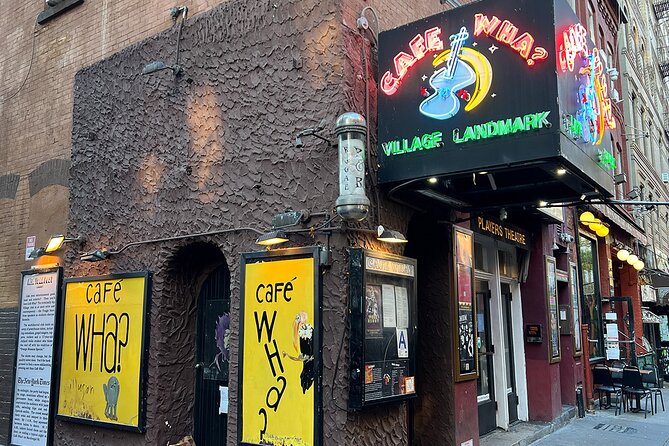
Stop 4, Cafe Wha?: where careers got their first loud turns
At Cafe Wha?, the tour focuses on the venues where Bob Dylan and Jimi Hendrix launched their careers. This is a 20-minute stop.
Admission here is not included, so plan on that if you want to go inside during the time window. Even if you don’t pay for entry, the exterior stop is still meant to connect the names to the physical place. But if you do care about stepping in, budget for the ticket since the tour data is clear that this one is different from the others.
This stop is especially good if you’re building a “first careers” theme in your head—how New York venues became stepping stones instead of just final destinations.
Stop 5, Washington Square Park audio segment: Beats, folk, and Buddy Holly
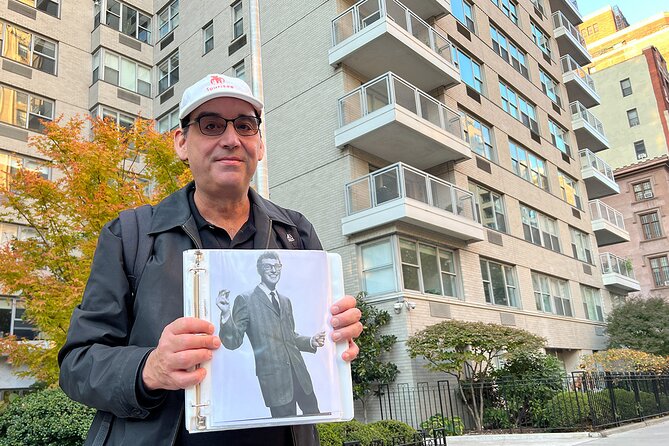
Next you’ll do Washington Square Park with an audio tour element (also listed as free). The walking portion here is about 20 minutes.
This stop works because it’s about the kind of public music culture that can’t be fully replicated indoors. The tour frames the area as a gathering place where Beats and folk musicians mixed, which helps you understand the streets as stages.
You’ll also see the last home of Buddy Holly, a detail that gives the stop extra bite. It’s the sort of fact that makes a casual park walk feel like part of a larger narrative. You’re not just in a pretty square; you’re in a timeline.
If you tend to multi-task while touring, this is where you should pay attention. Audio segments are great, but only if you’re actually listening while you walk.
Stop 6, West Village: Sid Vicious, John and Yoko, and the myth machine
Then you move into the West Village, where the tour points to darker, more dramatic rock-and-roll lore: where Sid Vicious died, plus the first home of John and Yoko in New York.
This is about 30 minutes, which is long enough to let the stories breathe. That time matters because these are the kinds of topics where details shape meaning. You’ll get a clearer sense of how the West Village image shifted depending on which era you’re talking about—and how quickly fame can turn a neighborhood into legend.
This stop also balances the earlier glamor of famous venues. You see that rock history isn’t only about big stages. It’s also about the personal side of fame: where people lived, where things happened, and how those places became shorthand for whole chapters of music culture.
Stop 7, White Horse Tavern: Dylan Thomas and the last word
You end at White Horse Tavern in about 10 minutes. It’s an easy ending in terms of walking, but not in terms of vibe.
The tour links the tavern to poet Dylan Thomas, famously associated with drinking himself to death. That’s a heavy storyline, and the tour’s point isn’t to sensationalize. It’s to remind you that New York’s creative scenes often ran on intensity—music, writing, performance, and the cost some people paid for the life they chased.
Ending here makes sense because the tavern functions like a final “scene cut.” You’ve been moving through venues and homes; now you land somewhere that still feels like a classic meeting point.
Small-group touring with Tom-style storytelling
A big reason this tour earns a high rating is the guide experience. In reports from past guests, Tom came up repeatedly as the person who brings the history to life, with lots of info and strong pacing. People also liked the use of old pictures to compare the past with what you see now.
That approach helps because New York changes fast, and your brain needs anchors. If you’re staring at a street with no “then and now” cues, music history can feel abstract. With photos and specific details, it clicks.
The private/small-group feel (maximum 6) also means the tour isn’t just one-way storytelling. If you have a question—about a band, a venue name, or an era shift—you’re more likely to get an answer that stays on-topic for what you’re standing beside.
Price and value: what $45 is really buying you
Let’s talk straight about value. $45 for about 3 hours is fair when you consider two things:
1) You’re paying for interpretation, not just walking. Most stops are free, but the “free” isn’t the point. The point is how the tour turns those locations into a coherent timeline across the 1960s, punk birth period, and later cultural overlap.
2) You get time. Many tours rush you through photo stops. Here, you spend real time at the East Village, a substantial chunk at Greenwich Village and West Village, and you still fit in the CBGB and other punchy moments.
The only extra cost caveat is Cafe Wha?, where admission is explicitly not included. If you plan to go in, treat it as a small add-on.
Timing, pacing, and what to bring
With a route spanning three neighborhoods, comfort matters. Wear shoes that can handle city sidewalk walking. Bring a water bottle if it’s warm, and a light layer if the evening gets chilly.
Because the tour requires good weather, check forecasts the day of. If weather is rough, the plan can shift. That’s not a reason to skip the tour. It’s just a reason to pick a day when you’re not gambling your entire afternoon on weather luck.
Also, grab the mobile ticket when you book. It’s listed as part of the experience, and it helps keep things smooth at the start point.
Who should book this walk
This is a great choice if you’re the type of person who likes music history with street-level grounding. You’ll get a lot out of it if you enjoy connecting bands and album art to real places—and if you want a route that covers the East Village to the West Village without feeling scattered.
You’ll also like it if you care about both eras, not just one. The mix of late-’60s rock venue culture, punk’s origin spot, and album cover landmarks makes it more than a one-genre trip.
I’d skip it (or go in with lower expectations) if you only want inside venues and long museum-style stops. This tour is about exterior locations, context, and audio.
Should you book this Rock and Roll History and Culture walking tour?
I’d book it if your ideal NYC day includes walking with a clear theme and leaving with a timeline in your head. The price feels right for a focused 3-hour route, and the small group size helps you get real answers instead of generic facts.
If you’re sensitive to weather and you hate walking between neighborhoods, choose your day carefully. And if Cafe Wha? is a must for you personally, plan for the fact that admission isn’t included.
FAQ
How long is the Rock and Roll History and Culture Walking Tour?
It runs for about 3 hours (approximately).
How much does the tour cost?
The price is $45.00 per person.
Where does the tour start and end?
It starts at 101 Astor Pl, New York, NY 10003 and ends at White Horse Tavern, 567 Hudson St, New York, NY 10014.
What time does the tour begin?
The start time is 1:30 pm.
Is the tour in English, and do I get a mobile ticket?
Yes, it’s offered in English, and you receive a mobile ticket.
What stops are included on the itinerary?
The tour includes stops at the Fillmore East area in the East Village, the CBGB site, album cover locations in Greenwich Village, Cafe Wha?, Washington Square Park audio section, West Village sites including John and Yoko’s first home and Sid Vicious’s location, and a final stop at White Horse Tavern.
Are there admission fees at the stops?
Most stops are listed as free. Cafe Wha? is listed with admission not included.
What’s the group size limit?
The tour has a maximum of 6 people.
Is the tour refundable if plans change?
Cancellation is free. You can cancel up to 24 hours in advance for a full refund. The experience requires good weather, and if it’s canceled due to poor weather, you’ll be offered a different date or a full refund.