REVIEW · NEW YORK CITY
Washington Heights – Sugar Hill North Harlem Walking Tour
Book on Viator →Operated by Harlem One Stop Inc. · Bookable on Viator
Harlem hides in plain sight. This walking tour through Sugar Hill and North Harlem turns a regular neighborhood stroll into a guided timeline, from mid-1700s country-house roots to the Harlem Renaissance era and today’s Dominican community. I especially like the small-group pace that keeps the walk relaxed and photo stops unhurried, and I also like how the route mixes major landmarks with street-level details you’d miss on your own. One thing to consider: it is still a walking tour, and it may be moderately difficult for people with limited mobility.
You start at 1000–1002 St Nicholas Ave at 10:00 am and end near Hamilton Grange National Memorial and the Alexander Hamilton National Monument area by W 141st and St Nicholas Ave, with the A/B/C/D trains around the 145th Street Station nearby. The guide is a licensed tour leader and a Harlem resident, so you get neighborhood history plus practical local context on how people actually live and move through the area.
In This Review
- Key Highlights You’ll Actually Notice
- Washington Heights Meets Sugar Hill: Why This Area Feels Different
- Meeting Point at St Nicholas Ave and the 2.5-Hour Reality Check
- Morris-Jumel Mansion: Federal-Style Architecture and the One Paid Stop
- Hispanic Society of America: Free Admission with Arts-and-Research Context
- North Harlem on Foot: From Estates and Revolution to Today’s Dominican Community
- Bailey House and Street-Level Architecture: Details You’d Miss Without a Guide
- When Your Guide Is William: Local Tips That Make the Walk More Fun
- What to Bring, What to Wear, and How to Plan Your Morning
- Price and Value: How $30 Works When You Factor in Free Entry and One Ticket
- Who This Tour Fits Best (and Who Might Want a Different Option)
- Should You Book Washington Heights – Sugar Hill North Harlem?
- FAQ
- How long is the walking tour?
- How much does it cost?
- Is the Hispanic Society of America admission free?
- Is admission included for the Morris-Jumel Mansion?
- Where do I meet the guide?
- What if the tour is canceled because of low registration?
Key Highlights You’ll Actually Notice
- Morris-Jumel Mansion stop with historic Federal-style roots, and you’ll want to plan for the museum admission since it is not included
- Free entry at the Hispanic Society of America, plus context on its Spain and Portugal arts and research focus
- A map-free guided walk through Sugar Hill and Washington Heights that connects architecture to real community change
- Street-level observations like the Bailey House (Barnum and Bailey Circus association) and the Church of the Intercession & Trinity Cemetery area
- A maximum of 15 travelers, which helps the guide slow down and answer questions without rushing
Washington Heights Meets Sugar Hill: Why This Area Feels Different
Washington Heights and North Harlem can look like they blend into one big Manhattan block from afar. Up close, they have distinct rhythms. This tour is built around that shift—turning corners so you notice how architecture, street patterns, and landmark placement hint at what the neighborhood was doing at different points in time.
I like that the walk is not just about naming famous buildings. It also gives you a sense of how the area developed: starting from a time when the northern part of Manhattan had the feel of rural countryside and estates, then moving through the Revolutionary War era, and arriving at today’s dominant Dominican community culture. That story makes it easier to understand why certain buildings and institutions exist where they do.
You also get a practical benefit: instead of trying to decode the neighborhood with a paper map, a guide points out what to look for, so you can stay present and actually enjoy the streets. That matters in Manhattan, where it is easy to walk fast and miss what makes a place feel like itself.
You can also read our reviews of more walking tours in New York City



Meeting Point at St Nicholas Ave and the 2.5-Hour Reality Check
You meet at 1000–1002 St Nicholas Ave at 10:00 am. The tour runs about 2 hours 30 minutes, and it ends at the Alexander Hamilton National Monument Avenue area near W 141st and St Nicholas Avenue, close to the 145th Street Station (A, B, C, and D trains).
Two practical notes for your planning:
- It uses a mobile ticket, so have your phone charged enough to show it at the start.
- Comfortable shoes really matter. The tour is a walking experience, and it may be moderately difficult for some guests with limited mobility.
This is also a small-group format with a maximum of 15 travelers. That number sounds modest, but on the ground it changes the mood. You are less likely to get stuck behind a crowd at the exact moment you want to take a photo or ask a question.
Morris-Jumel Mansion: Federal-Style Architecture and the One Paid Stop

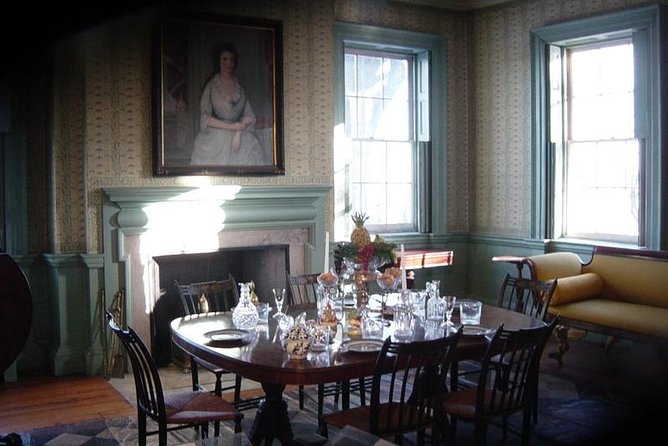
The tour’s first major landmark is Morris-Jumel Mansion, a Federal-style museum home with mid-eighteenth-century roots. Even if you do not go inside, the mansion gives you a strong visual anchor because it feels like a preserved remnant from an older Manhattan—something that contrasts sharply with the surrounding density.
Here is the one cost consideration you should plan for: the admission ticket is not included. That does not make the stop worse—it just means you should decide ahead of time whether you want to budget for entry. If you do, you’ll get the benefit of seeing how a historic home is interpreted as a museum.
What makes this stop valuable on a neighborhood-history tour is simple: it turns a sweeping story into something you can stand in front of. You can connect the guide’s talk about early northern Manhattan to a real structure, not just an abstract timeline.
Hispanic Society of America: Free Admission with Arts-and-Research Context
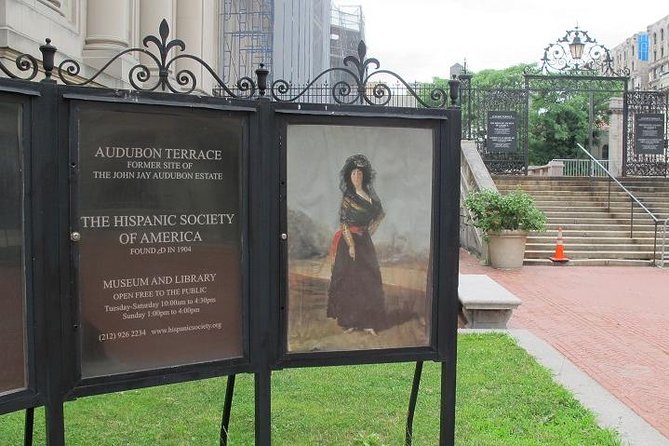
Next comes the Hispanic Society of America, where the admission is free. This is not a typical quick stop. It is a museum and reference library focused on the arts and cultures of Spain and Portugal, along with their former colonies in Latin America, the Philippines, and Portuguese India.
If you care about how institutions reflect cultural identity, this stop is a meaningful one. On a walking tour like this, it helps to have a place where the learning is not only about local streets. The Hispanic Society widens the frame and gives you a sense that Harlem’s story sits within broader Atlantic and global histories.
Timing matters a bit here. You typically get around 10 minutes at this stop. That is enough time to orient yourself and notice the types of displays and the museum vibe, but it is not long enough for a deep reading or a full gallery session. If you like museums, this is a great “primer” stop that can send you back later for a longer visit.
North Harlem on Foot: From Estates and Revolution to Today’s Dominican Community
Between landmarks, the guide does the important work: connecting the neighborhood’s past to the streets you are actually standing on. You hear how North Harlem developed from countryside and estates to a site tied to the Revolutionary War, and how the area later became what it is known for today—now a major center of New York’s Dominican community.
I find this kind of storytelling especially helpful in Harlem because the neighborhood’s identity shows up in layers. If you only focus on one era, it is easy to miss how continuity and change coexist. The guided walk helps you track those shifts without feeling like you’re reading a history textbook while trying to cross the street.
You also pass the Church of the Intercession & Trinity Cemetery area, which is described as a resting place for some of New York City’s aristocracy and politicos who helped shape the city. Even without stepping inside a church or doing a music-focused component, the cemetery-adjacent context encourages you to look at the neighborhood as a long-term stage where influential lives left physical footprints.
The route also includes street-level viewing moments—things you might walk past without noticing—so you get more than a lecture. You see how the environment carries meaning.






Bailey House and Street-Level Architecture: Details You’d Miss Without a Guide
One of the tour’s payoffs is how often you slow down just to look. For example, you get views of the Bailey House, described as a castle-like residence built for James Bailey connected to the Barnum and Bailey Circus.
That is the kind of detail that makes Harlem feel like more than a generic stop on a Manhattan map. It also makes the architecture feel personal. Instead of thinking of buildings as fixed scenery, you start to see them as artifacts tied to real people, entertainment, and ambition.
This is also where the guide’s role matters most. A good guide points out the little cues: design choices, building shapes, and the way structures sit in relation to the street. If you are the type who likes to take photos, this is a friendly route because the landmarks and interesting facades show up right where you can frame them.
I’ll add one practical tip from real-world guidance style: have your phone or camera ready. You will see enough exterior photo moments that you’ll want quick access rather than fumbling through settings mid-walk.
When Your Guide Is William: Local Tips That Make the Walk More Fun
If you happen to get a guide like William, the tour experience can feel extra personal. One account highlighted that he was excited to talk about Harlem history and went above and beyond by taking guests inside nearby places such as Audubon and CUNY.
Not every tour will run exactly like that, and you should treat it as an example of what strong guiding looks like. Still, it’s a useful reminder: a great Harlem guide often shares practical local knowledge too—like how to order a sandwich at a neighborhood deli and where to go for lunch after the walk.
That kind of tip is worth something. It turns a morning activity into a day plan you can use immediately, without guessing.
What to Bring, What to Wear, and How to Plan Your Morning
This tour is designed for walking, so pack like you’re doing a neighborhood hike—not a museum day with a lot of sitting. Here’s what will help:
- Comfortable shoes you can wear for a couple of hours outdoors
- A charged phone for your mobile ticket and photos
- Weather-appropriate clothing, since you’ll be outside for long stretches
Also, keep expectations aligned with what is included. The tour focuses on neighborhood history. It does not include a visit to the church or music. The cemetery is part of the route you pass by, and you learn about it, but you should not plan on a formal church visit during this experience.
Price and Value: How $30 Works When You Factor in Free Entry and One Ticket
At $30 per person, this is positioned as an affordable guided introduction to a part of Manhattan that many first-time visitors skip. The price covers the licensed tour guide and a small-group neighborhood walkthrough.
Where the math gets interesting is in the stop mix:
- Hispanic Society of America: free admission, so you’re not paying extra just to enter
- Morris-Jumel Mansion: admission ticket is not included, so you may want to budget for that if you plan to go inside
So is it good value? For me, yes—because the tour is doing two jobs at once. You get direction and historical context while walking, and you also get a couple of anchor points that can turn into future visits. Even if you skip the paid museum admission at Morris-Jumel Mansion, the walk still gives you a guided way to read the neighborhood.
Booking is also relatively popular. On average it is booked about 15 days in advance, so if you want a specific day, you should not wait until the last minute.
Who This Tour Fits Best (and Who Might Want a Different Option)
This walking tour is a solid match if you:
- Want a neighborhood history experience rather than a checklist of big-city icons
- Like architecture with context, not just photos
- Prefer a smaller group atmosphere
- Enjoy learning how communities change over time
It may be less ideal if you:
- Need a fully seated experience, since it is a walking route and may be moderately difficult for the physically challenged
- Want a long museum time. Stop durations are short, so this is not a replacement for a full gallery visit
If you like to travel with a morning plan that helps your bearings, this works well. It ends near strong subway access, which makes it easy to continue exploring afterward.
Should You Book Washington Heights – Sugar Hill North Harlem?
If you want a guided way to understand Harlem beyond the postcard version, I’d book this. The biggest reasons are practical: you get a small-group walk, a licensed Harlem resident guide, and a route that links landmark architecture to community change without making you study a map.
It is also a smart value play because one museum stop is free and the paid stop is clearly identified ahead of time. You can decide how much you want to pay for entry depending on your interests and schedule.
Just go in with the right mindset. This is not a church-and-music experience, and it is not a long museum marathon. It is a guided neighborhood story you can feel in your feet.
FAQ
How long is the walking tour?
The tour lasts about 2 hours 30 minutes.
How much does it cost?
It costs $30.00 per person.
Is the Hispanic Society of America admission free?
Yes. Admission to the Hispanic Society of America is listed as free.
Is admission included for the Morris-Jumel Mansion?
No. Admission for Morris-Jumel Mansion is not included, so you should plan for a separate ticket if you want to go in.
Where do I meet the guide?
You start at 1000–1002 St Nicholas Ave, New York, NY 10032.
What if the tour is canceled because of low registration?
The experience can be canceled if a minimum number of travelers isn’t met. If that happens, you’ll be offered a different date/experience or a full refund.