REVIEW · BROOKLYN
Street Art Tour in New York City with Local Expert Guide
Book on Viator →Operated by Friendly Local Guides · Bookable on Viator
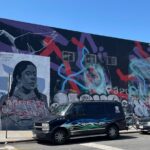
Street art is the city’s loudest classroom. This is a focused 2-hour walk through real public walls in multiple neighborhoods, with a local expert guide who explains what you’re actually looking at.
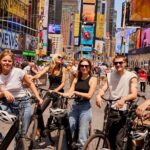
I especially like the small size: it’s capped at 10 people, so you’re not yelling over each other while trying to see details. I also love that you’ll get specific photo spots and practical advice on what to see and do next after the tour.
One thing to consider: expect a lot of walking, and the art mix includes everything from painted murals to tag-style street expression (plus some stops can involve transit between neighborhoods).
In This Review
- Key Things You’ll Notice on This Street Art Tour
- Price and Logistics: What You Pay for in This 2-Hour Walk
- Stop 1: Dumbo Walls at 20 Jay St #510 (and the Brooklyn Bridge Energy)
- What to watch for
- Stop 2: Little Italy’s L.I.S.A Project on Mulberry St (Public Art Meets Old Streets)
- Potential drawback
- Stop 3: Freeman Alley’s Brick Facade and James Goldcrown’s Love Wall
- Quick win
- Stop 4: Bowery Mural at 76 E Houston St (Keith Haring’s Legacy)
- Photo tip
- Stop 5: First Street Green Cultural Park at 33 E First St (Open-Air Wall Space)
- Practical consideration
- Stop 6: Centre-Fuge Public Art Project on E First St (Art on Construction Trailers)
- What you’ll learn from this stop
- Stop 7: SoHo’s Hip-Hop Tribute (Graffiti, Rap, and Break Dancing History)
- Stop 8: High Line Art on the West Side (JR and Kobra by the Elevated Park)
- Photo-friendly strategy
- How the Local Guide Makes the Walls Make Sense
- Who This Tour Fits Best (and Who Might Want to Adjust Expectations)
- Should You Book This Street Art Tour in New York City?
- FAQ
- How long is the street art tour?
- What time does the tour start?
- Is pickup offered?
- Is the tour only for English speakers?
- What does the $159 price include?
- Can I cancel for a full refund?
Key Things You’ll Notice on This Street Art Tour
- DUMBO Walls at 20 Jay St #510: a full eight-wall street art space tied to the DUMBO Improvement District and major mural names like CAM, DALeast, Eltono, Shepard Fairey, Faith47, MOMO, Stefan Sagmeister, and Yuko Shimizu
- Bowery Mural at 76 E Houston St: started with Keith Haring, then grown into a long-running public art program involving Os Gemeos, Shepard Fairey, Kenny Scharf, Ron English, and more
- Lower East Side stops with alley-scale art: Freeman Alley features brick facade work by artists like ASVP and Army of One, plus James Goldcrown’s Love Wall of spray-painted hearts
- Officially designed public art projects: First Street Green Cultural Park (open art space since 2008) and Centre-Fuge Public Art Project (turning construction trailers into canvases)
- High Line Art near the elevated walkway: murals connected to art-world names and projects like JR’s Inside Out Project and Kobra’s V-J Day mural
Price and Logistics: What You Pay for in This 2-Hour Walk
At $159 per person for about 2 hours, you’re not paying for a bus tour. You’re paying for a guide-led route that jumps boroughs fast, hits multiple public art “hubs,” and keeps the group small enough to actually see and hear.
This matters in New York. Street art lives at sidewalk distance and changes over time. A small group makes the stops work: you can get close, linger where you care, and ask questions without getting swept along. The tour is offered in English, starts at 9:00 am, and uses a mobile ticket. Pickup is offered too, which can help if you don’t want to hunt down transit connections on day one.
One practical note: the tour has a moderate fitness level, so plan for steady walking. Also, even with an expert route, you should expect some neighborhood-to-neighborhood movement. A recent concern from a previous participant was that subway rides and costs weren’t clearly explained. So I’d treat transit as part of the experience unless the pickup option clearly removes it for you.
Booking is also competitive. It’s been booked about 160 days in advance on average, so if you want a specific day, lock it in sooner rather than later.
You can also read our reviews of more guided tours in Brooklyn
Stop 1: Dumbo Walls at 20 Jay St #510 (and the Brooklyn Bridge Energy)
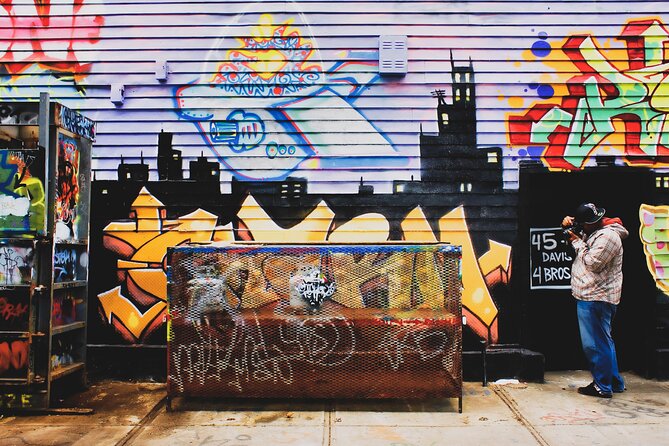
You start in Dumbo, at 20 Jay St #510, at DUMBO Walls—an eight-wall street art space created with local partners like the DUMBO Improvement District and Two Trees Management Co. The big reason I’d send you here is scale and names. You’re not just seeing one mural and moving on. You’re stepping into a set of walls that have hosted major artists across styles and generations.
Artists connected to the project include CAM, DALeast, Eltono, Shepard Fairey, Faith47, MOMO, Stefan Sagmeister, and Yuko Shimizu. That list alone tells you the goal: this is public art as a neighborhood identity, not a random wall with leftover paint.
Nearby, the pacing makes sense. You’ll have time to look around before heading toward the next area, and the route is designed so you can move between Brooklyn and Manhattan bridge directions. Also, Brooklyn Flea is listed as a nearby break option. Even if you don’t plan to shop, it’s useful to watch real daily life—families, tourists, local browsers—all without making your tour feel like a showroom.
What to watch for
Look for how styles change from wall to wall. The guide’s job here is to help you read street art as a language: who painted what, how the style fits the wall, and what the mural is communicating through color and lettering choices.
Stop 2: Little Italy’s L.I.S.A Project on Mulberry St (Public Art Meets Old Streets)
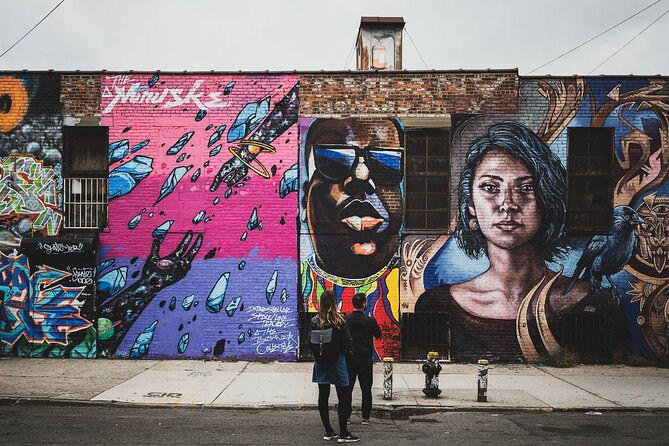
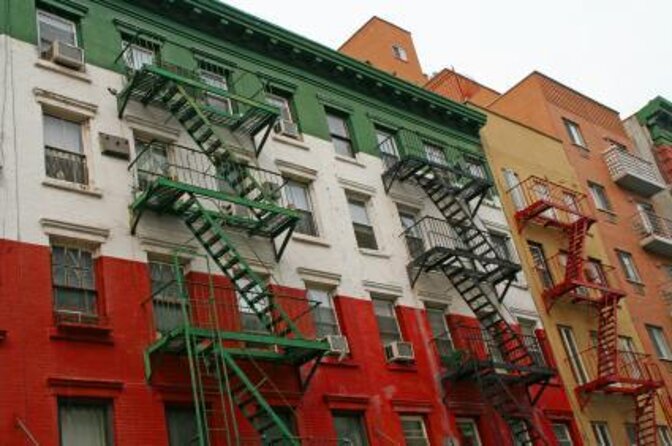
Next you head to L.I.S.A Project on Mulberry St in Little Italy, where artists have been commissioned for public works for years. The L.I.S.A Project NYC has brought street artists from across the globe into the neighborhood, and it’s supported alongside the Merchants Association of Little Italy.
You’ll see works connected to artists including Sonny Sundancer, Nick Walker, GATS, KaNOkid, Crash, and BKFOXX. The key value for you: this is street art that’s been given space to become part of the street. You’re not just chasing graffiti; you’re seeing how public murals interact with a neighborhood that already has its own identity.
On the way, two nearby museum options are mentioned: the Tenement Museum and the International Center of Photography Museum. That’s a smart planning detail for you if you want to extend the day. A street art tour can leave you hungry for more context—tenement stories for the Lower East Side vibe, and photography if you want a different lens on the city’s visuals.
Potential drawback
If you only want large, polished murals and prefer to avoid tagging and vandalism, you should know this tour’s world includes all of it. This stop leans toward commissioned works, but the broader route mixes styles.
You can also read our reviews of more city tours in Brooklyn




Stop 3: Freeman Alley’s Brick Facade and James Goldcrown’s Love Wall
Freeman Alley is the kind of place you’d miss if you were just walking without a plan. It’s in the heart of the Lower East Side and described as a spot full of graffiti-style work layered over time.
This is where I like to recalibrate expectations in a useful way. You’ll see artwork on the brick facade of buildings along a narrow pathway—works connected with artists like ASVP, Army of One, and even Hanksy. The alley format changes the experience: you’re moving slower, looking closer, and noticing how layers coexist.
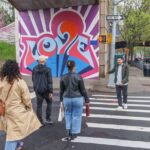
The most recent mural highlighted here is James Goldcrown’s Love Wall, featuring colorful collage of spray-painted hearts. That’s a strong emotional counterpoint to more hardcore tag visuals, and it’s exactly the kind of contrast that makes a street art tour feel like more than walking from one mural to another.
Quick win
Use this stop to slow down. If you take photos, shoot a few close-ups of paint texture and lettering edges. Alley art rewards detail.
Stop 4: Bowery Mural at 76 E Houston St (Keith Haring’s Legacy)
At 76 E Houston St you’ll be at the Bowery Mural, a major New York street art landmark. The story starts nearly 40 years ago with Keith Haring placing his artwork on the wall. Then, the concrete canvas was repeatedly vandalized with graffiti tags—so it became messy, messy in a very New York way.
What’s interesting is what happened next. Curator Jeffrey Deitch teamed up with the late Tony Goldman of Goldman Global Arts (the company that owns the wall) to bring in acclaimed artists to produce new work for a public art program.
Artists tied to this program include Os Gemeos, Shepard Fairey, Kenny Scharf, and Ron English. For you, the payoff is perspective. You see how street art can be both contested and collaborative—how a single wall can evolve from an artist’s statement to a community surface and then into an organized public platform.
Photo tip
Stand back first, then move closer. The wall often reads differently once you switch from sidewalk distance to close viewing.
Stop 5: First Street Green Cultural Park at 33 E First St (Open-Air Wall Space)
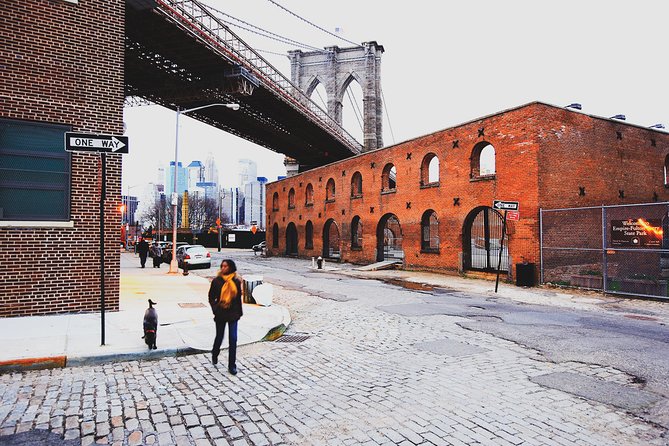
Next comes First Street Green Cultural Park at 33 E First St. Founded in 2008, it’s described as an open art space on the Lower East Side where you can see both local and international artistic styles in public view.
The list of artists connected to mural competitions there includes Vernon O’Meally, Karlis Rekevics, Jeromy Velasco, Alexis Duque, Emily Noelle Lambert, Justin Rodier, Marc Pelletier, Paul Paddock, Robert Plater, Phlegm, and See One. That’s useful because it signals variety: you’re less likely to get stuck in one visual sub-style.
For you, parks are a reset button. Compared to narrow alleys and long walls, this is space to breathe while still seeing art at eye level.
Practical consideration
Since you’ll be walking between stops, park time helps you regroup. Bring water if you’re sensitive to heat; the tour doesn’t list drinks as included.
Stop 6: Centre-Fuge Public Art Project on E First St (Art on Construction Trailers)
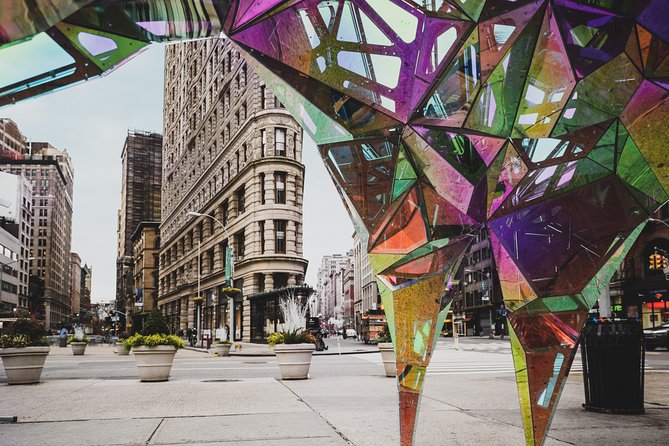
On E First St, you’ll hit the Centre-Fuge Public Art Project, started in 2011 by Jonathan Neville and Pebbles Russell. Their goal was to transform construction sites—specifically construction trailers—into canvases for spray-painted murals.
Instead of fencing and blank metal being the default, you’ll see exterior walls of construction trailers turned into art surfaces. Recent contributors named include Cycle 21, Julia Cocuzza, Mike Kuhn, Damien Miksza, Col Wallnuts, and Kwue Molly.
This stop is valuable because it connects street art to city development. You’re watching how the city manages growth and how artists respond in real time, not in some distant gallery timeline.
What you’ll learn from this stop
You start to see street art as part of the city’s feedback loop: it comments on place, traffic, work zones, and public space changes.
Stop 7: SoHo’s Hip-Hop Tribute (Graffiti, Rap, and Break Dancing History)
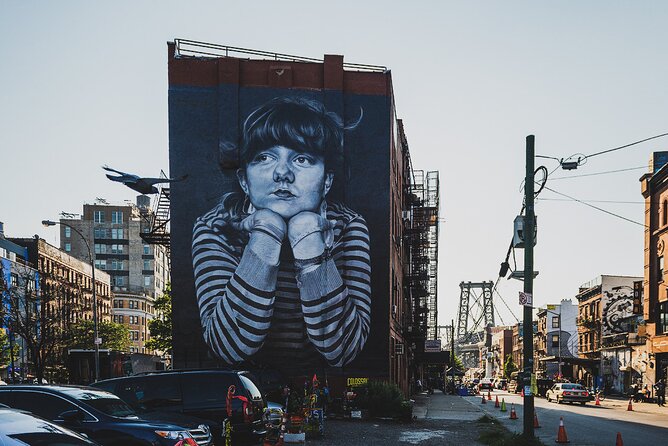
Then you head toward SoHo for a mural that honors people keeping real hip-hop alive, with a specific nod to the 1970s New York break-dancing era and the graffiti and rap culture around it.
You’ll notice the details designed for cultural storytelling. The cap is embellished with a graffiti-bombed subway train, and a boombox plays “Planet Rock” by Afrika Bambaataa. There’s also a Mugsy pin painted by Rock Steady Crew member Doze Green attached to an old-school tracksuit top.
The best way to experience this one: don’t just read it as a picture. Read it as a timeline. Street art often works like a “caption you can walk through,” and this mural uses objects and references that act like wayfinding for people who already know the culture.
Near this area, the tour also notes that major art stops are close together, including the Whitney Museum of American Art, Ground Zero Museum Workshop, and David Zwirner art gallery. So even though the tour is street-first, you’ll be positioned like a short walking radius day trip from more traditional museum-style culture.
Stop 8: High Line Art on the West Side (JR and Kobra by the Elevated Park)
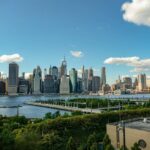
You wrap up at the High Line Art area along the High Line’s Linear Park on the West Side. The High Line is an elevated park with views over lower Manhattan—and the art is part of how the route feels like a moving exhibit.
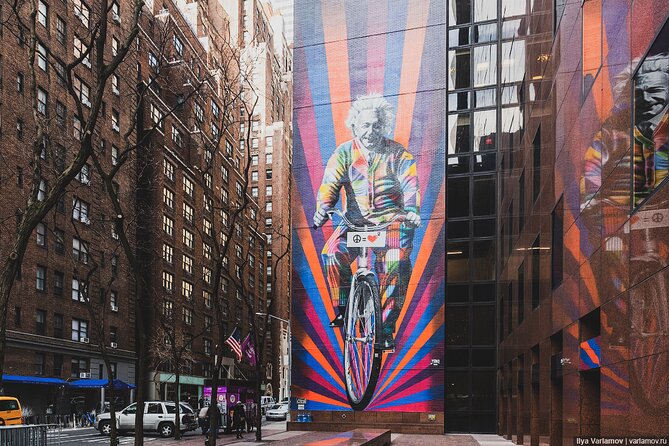
The Friends of the High Line have invited artists from around the world to place artwork on walls of buildings near the walkway. Two named projects are JR’s large-scale mural portrait tied to the Inside Out Project (2011) and Kobra’s colorful mural inspired by Alfred Eisenstaedt’s 1945 photograph, called V-J Day (2012).
This last stretch changes the vibe. You start on street corners and alley bricks, then end with elevated park views. For your photos and your headspace, it’s a clean finish: wide sky, distant streets, and walls that feel larger than life.
Photo-friendly strategy
Get one wide shot from the walkway direction, then circle back for wall details once you’ve got the overall composition.
How the Local Guide Makes the Walls Make Sense
The difference between just walking and having a tour is the translation layer. A good guide helps you spot what you’d otherwise overlook: why an artist used that color combo, why a reference matters, and how one wall connects to a bigger urban art story.
The tour also benefits from the fact that it stays small. With up to 10 participants, you can hear your guide and get closer to the art without getting pushed back. In one example, a guide named Adam was described as friendly, city-smart, and someone who helped people see both street art and the neighborhoods themselves. That’s a strong sign of how the tour can feel: not just art facts, but city context.
You’ll also get recommendations for what to see and do after the tour. That’s a quiet value-add. Street art can lead to more street art, but it can also lead to photography, design stores, and neighborhood walks—if you know where to head next.
Who This Tour Fits Best (and Who Might Want to Adjust Expectations)
This tour is a good match if you want:
- Public art on foot across multiple neighborhoods
- A small group and a guide who helps you read what you’re seeing
- A mix of street expression: graffiti, painted murals, and art projects tied to city spaces
It may not be ideal if you only want museum-polished murals. One concern raised was that a large portion of what’s seen can lean toward tagging and vandalism rather than strictly planned mural art. If that matters to you, calibrate your expectations before you book.
Also be honest about walking. The tour’s pacing works best if you’re comfortable moving continuously for about 2 hours.
Should You Book This Street Art Tour in New York City?
Yes, if you want a structured way to see street art where it actually lives—Dumbo Walls, Freeman Alley, the Bowery Mural, and the High Line Art route. The mix of organized projects (like L.I.S.A and Centre-Fuge) and smaller street-scale surfaces helps you understand how New York street art works as a system, not just a few famous paintings.
Book it sooner if you can. The average lead time is long, and a small group format means availability can vanish. If you’re sensitive to walking or transit costs, message before you go and clarify the neighborhood-to-neighborhood travel plan—so you’re not surprised mid-tour.
If you like street culture and want real city context in one morning, this is a solid value at $159, especially because the guide time is concentrated and the group size keeps the experience focused.
FAQ
How long is the street art tour?
It runs for about 2 hours.
What time does the tour start?
The start time is 9:00 am.
Is pickup offered?
Yes, pickup is offered.
Is the tour only for English speakers?
The tour is offered in English.
What does the $159 price include?
It includes all fees and taxes, a friendly local guide, must-see and off-the-beaten-path stops, iconic photo shoot places, and expert advice on what to do after the tour. Entrance fees (if any), food and drinks, and gratuities are not included.
Can I cancel for a full refund?
Yes. Free cancellation is available up to 24 hours before the experience starts for a full refund. If you cancel less than 24 hours before, you won’t receive a refund.