REVIEW · NEW YORK CITY
Central Park New York Guided Walking Tour Semi-Private 12ppl Max
Book on Viator →Operated by Babylon Tours New York City · Bookable on Viator
Central Park has a talent for hiding its best stories. This semi-private Central Park guided walking tour (max 12) strings together the park’s headline sights, from Gapstow Bridge and Bethesda Terrace to Strawberry Fields and the Dakota, with city views along the way. It’s the kind of route that helps you see more than you’d catch solo in the same time.
I love the small-group feel. With a maximum of 12 people, you can actually hear your guide and ask questions, instead of drifting along like a human backpack conveyor belt. I also like how the guide connects what you see—statues like Bolivar and Marti, playful Balto, Alice in Wonderland details—to why the park looks the way it does. Guides such as Mark (Babylon Tours) are known for mixing local lore, even a stop to listen to a soprano busker in the Bethesda Arcade, and natural history; Jeff is noted for sharing construction-era photos so you can picture how parts of the park changed.
One consideration: this is a walking-heavy, mostly outside experience. Some attractions can’t be entered from the inside due to security, and the Central Park Zoo stop ends at the zoo without including admission—so if you want to go in, you’ll need to plan for that ticket.
In This Review
- Key things you’ll notice on this Central Park walk
- A small-group Central Park tour that feels like a guide, not a lecture
- Where you meet and how the walking pace works
- Central Park’s 19th-century core: statues, the Mall, Bethesda Terrace, and the bridges
- John Lennon’s Central Park: Strawberry Fields and the Dakota in one connected loop
- Bow Bridge and Turtle Pond: the calm moments you actually remember
- Skyline peeks: 432 Park Avenue’s fountain and Time Warner Center’s atrium
- Ending at the Central Park Zoo and Central Park West
- Price and value: is $51.94 worth it for a 2.5-hour walk?
- Who this tour fits best (and who might want a different plan)
- Should you book this Central Park walking tour?
- FAQ
- How long is the Central Park guided walking tour?
- What’s the group size limit?
- Where does the tour start and where does it end?
- Is the tour rain or shine?
- What language is the tour offered in?
- Is Central Park Zoo admission included?
- Do I need moderate fitness to join?
- Are children allowed?
- Are there any luggage limits?
- Can I cancel for a full refund?
Key things you’ll notice on this Central Park walk
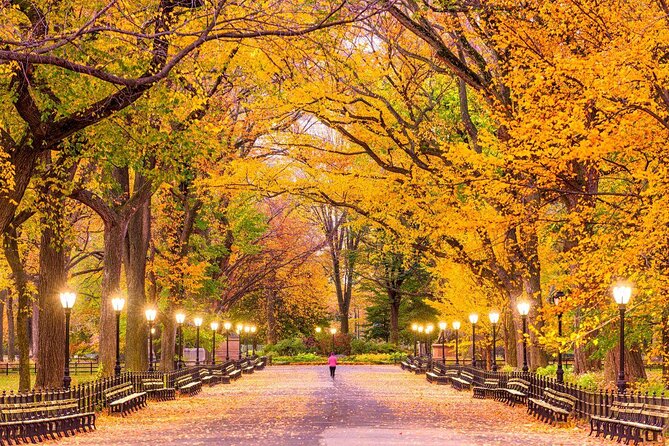
- Max 12-person semi-private group keeps the pace personal and the narration clear
- Bridges plus big-name viewpoints (Gapstow, Bow Bridge) make great photo moments with context
- John Lennon stops with calm atmosphere at Strawberry Fields and the Dakota area
- Park-edge skyline views from spots near 432 Park Avenue and Time Warner Center
- History tied to art and maintenance via guide explanations (statues, design choices, park care)
- Ends at Central Park Zoo so you can linger or head to the subway with your guide
A small-group Central Park tour that feels like a guide, not a lecture
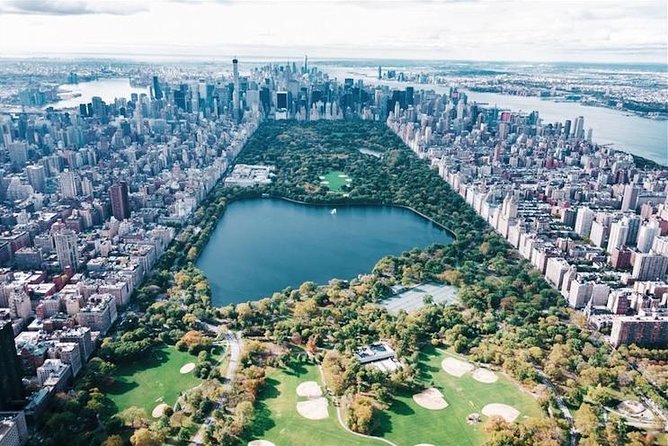
Central Park is huge, and the park can feel like a maze if you’re only using your phone map. This tour keeps the group to 12 people max, so you stay oriented. You’re on a walking route designed to hit a lot of famous places without you constantly backtracking.
At about 2.5 hours, you get a satisfying sweep of contrasts: 19th-century park design, bridges with specific architectural details, and quiet corners tied to John Lennon. The tour runs rain or shine, which matters because Central Park weather can flip fast. For many people, paying for a guide here is less about convenience and more about understanding what you’re looking at while you walk.
Price-wise, you’re paying $51.94 per person for a professional guide and a route that includes landmark viewing across multiple Central Park “zones,” with many stops listed as admission-free. That’s not a small amount, but it starts to look like good value when you consider how much time you save and how much context you gain—especially if it’s your first (or only) Central Park walking day.
You can also read our reviews of more walking tours in New York City



Where you meet and how the walking pace works
You start at Central Park South and end at Central Park West. One part of the route cues you to meet near the Latin America History equestrian statues at the corner of 6th Avenue and 59th Street. From there, the day becomes a steady walk that threads through major Central Park landmarks.
This is rated for moderate physical fitness, and the notes are pretty straightforward: wear comfortable shoes, bring water, and pack an umbrella for rain. In summer, a hat helps. Also, keep your bag situation simple: no large bags or suitcases are allowed on this tour.
Because you’ll be moving between bridges, terraces, and viewpoints, it helps to plan around your energy level. If you’re expecting long stops with lots of sitting, you may feel a little “on the go.” But if you like walking and getting quick, well-placed explanations, the pacing suits you well.
Central Park’s 19th-century core: statues, the Mall, Bethesda Terrace, and the bridges
The best way to understand Central Park is to see how its designers used paths, water, and landmarks to make the park feel like separate worlds. Your walk begins in the park’s historic spirit—an escape built for city dwellers in the 1800s.
You’ll look at statues of prominent figures such as Bolivar and Marti, plus lighter, pop-culture nods like Balto the sled-dog and details tied to Alice in Wonderland. That mix matters because Central Park isn’t only “serious monument.” It’s also playful, and the guide helps you spot the references you’d otherwise miss.
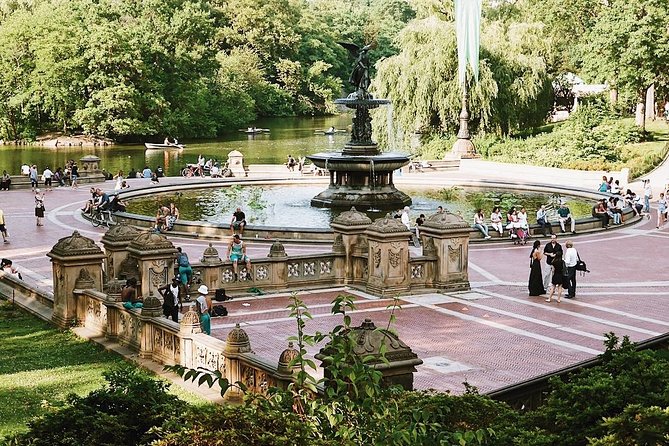
Then comes a string of “you know this place” moments. You’ll cross Gapstow Bridge on the way toward the Central Park Zoo area. Later, you’ll also pass by Bethesda Terrace and Fountain, where the Angel of Bethesda sits. The guide explains that this angel became New York City’s first major piece of public art commissioned from a woman—one of those facts that turns a familiar scene into something you see differently.
The walk also includes time along the Mall, where you can discuss the literary figures associated with the park’s design. If you love books or want your vacation photos to come with a story, this part delivers.
A small note: bridges and terraces are usually where you’ll get the best sightlines, but they’re also where crowds can bunch up. Going with a guide helps you keep moving and find the best angle without you doing detective work.
John Lennon’s Central Park: Strawberry Fields and the Dakota in one connected loop
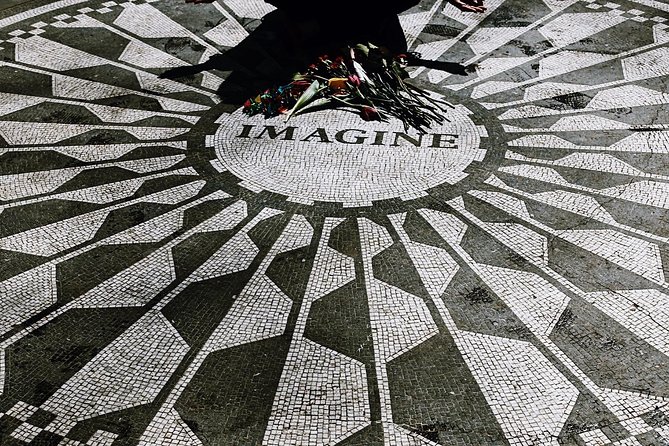
If you’re even a little curious about music history, this portion of the walk is a must. You’ll cross toward Strawberry Fields, a 2.5-acre memorial space dedicated to John Lennon. It’s designed as a quiet area, lined with elm trees, shrubs, flowers, and rocks, which gives it that “stop and listen” feeling even while you’re in the middle of Manhattan.
From there, the route connects you to the Dakota, arguably one of the most famous residential buildings in New York. Constructed in 1884, it still keeps much of its original character. The guide points out John Lennon’s connection: he lived there until his death in 1980, with that tragic story often tied to the building’s archway.
This pairing is valuable because it doesn’t treat the memorial and the building like separate trivia. You experience them as two parts of the same emotional geography of Central Park: a planted, peaceful tribute nearby a place with famous gravity.
You’ll also pass Tavern on the Green and can decide later whether to plan dinner there. That’s not part of the tour cost, but it’s a handy “what’s next” option if you want to make the day feel connected rather than ending abruptly after the walk.
Bow Bridge and Turtle Pond: the calm moments you actually remember
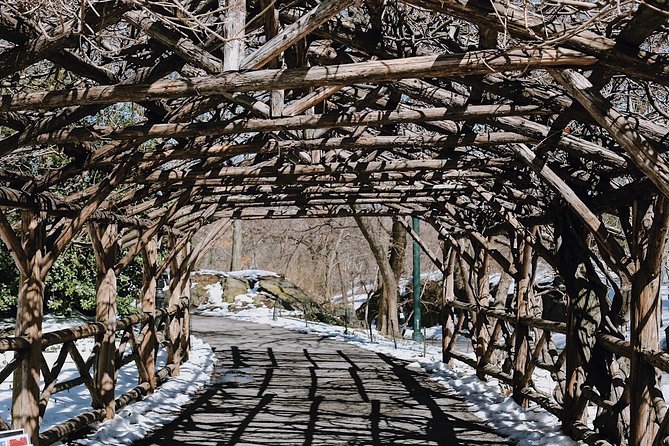
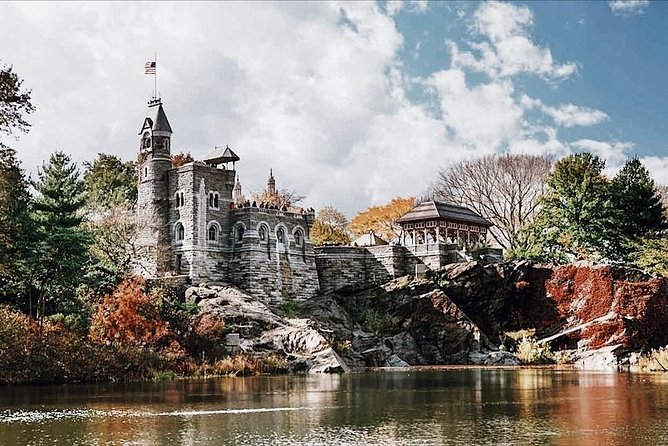
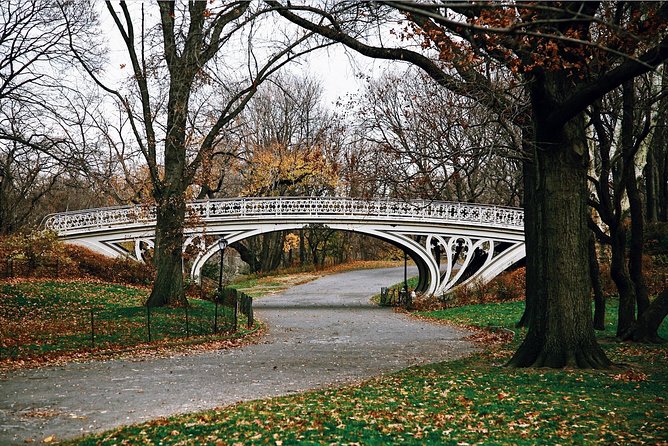
Central Park is full of dramatic spots, but the memories often come from the quieter ones. The tour includes Bow Bridge, the largest bridge in the park, made of cast iron and decorated with Classical Greek refinement. The guide shows you why it’s more decorative than many other bridges—especially the interlocking circles banister and intricate details under the arch span.
You’ll also spend time near Turtle Pond. If you’ve seen turtles in zoos, this is a different vibe: in the park, it feels like nature doing its own thing while you’re surrounded by city energy. Close by, you’re near the Great Lawn, a 55-acre area that’s famous for picnics in spring and sunbathing in summer. Even if you’re walking through, the guide’s context helps you picture how people use these spaces year-round.
This section is a good reality check. The day isn’t only about famous buildings and iconic bridges. It’s about learning how Central Park functions as a “daily park,” not just a museum of landmarks.
You can also read our reviews of more guided tours in New York City






Skyline peeks: 432 Park Avenue’s fountain and Time Warner Center’s atrium
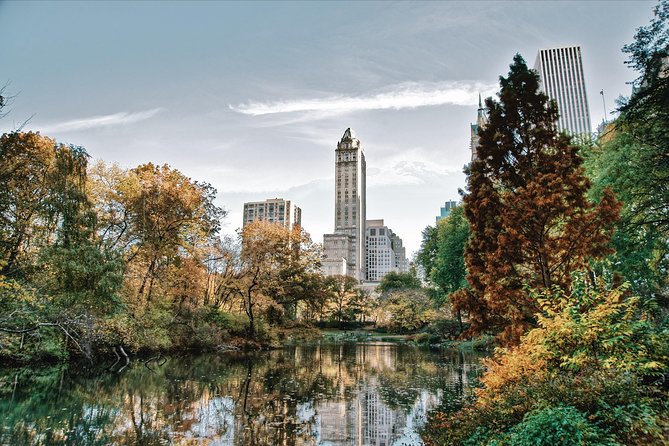
One smart thing this tour does is mix in the urban context around the park. You’ll visit viewpoints near 432 Park Avenue, where you can see residential skyscrapers that line up dramatically with greenery. The guide points out that 432 Park Avenue is the second tallest building in New York, behind One World Trade Center.
Then comes a detail that turns a skyline stop into a story: you’ll spot the surviving ASPCA horse drinking fountain dated 1912. It represents the only place in the city where someone can bring a horse to drink water if they happen to have one. It’s a small relic, but it’s the kind of thing you’d never notice without someone pointing it out.
From there, you pass Time Warner Center, a mixed-use complex with two towers bridged by a multi-story atrium. The tour notes mention upscale retail, plus office and residential flats. Even if you don’t plan to go inside, it’s a strong visual contrast—Central Park’s curated pathways next to a heavily designed city complex.
If you like your sightseeing to include “why this fits here,” this urban-edge segment is a satisfying break from only walking through greenery.
Ending at the Central Park Zoo and Central Park West
The tour finishes at the Central Park Zoo, located in the southeast corner of the park. The guide helps you decide what to do next: you can stay and enjoy the park’s zoo-area surroundings, or your guide can accompany you to the nearest subway.
One clear point: the zoo stop is not included with admission. So if you want to see animals inside, you’ll want to plan for tickets separately. If your goal is the Central Park sights themselves, you may still enjoy the ending because the surrounding pathways are part of the park experience.
Your day closes at Central Park West, which is useful because it puts you on the western side with easy transit connections to keep your day moving.
Price and value: is $51.94 worth it for a 2.5-hour walk?
For $51.94 per person, you’re buying three things: guided navigation, interpretation, and time savings. In Central Park, “figuring it out” can eat up your day fast. With a planned route that targets major landmarks—bridges, Bethesda Terrace, Strawberry Fields, the Dakota, plus the skyline edge—you can spend less time deciding and more time seeing.
You’re also getting a professional guide for about 2 hours 30 minutes, and the stops are mostly presented as admission-free (with the zoo being the exception). That means your money goes toward expertise and route design, not a stack of paid museum tickets.
The only tradeoff is that you should expect it to be a walking tour, not a sit-down experience. And for anyone who’s hoping to enter every attraction from the inside: the tour notes say some places can’t be visited inside due to security. If that’s your priority, you’d likely add separate stops on your own.
Where it shines is for first-time Central Park visitors and anyone who wants the park’s details—statues, architectural touches, and stories—while they walk.
Who this tour fits best (and who might want a different plan)
This is a great fit if you want a semi-private, English-language Central Park walk that covers both famous sights and the in-between details. It also works well if you like learning from guides who add texture beyond captions—like Mark’s mix of lore, natural history, and a music stop in Bethesda Arcade, or Jeff’s use of construction-era photos to explain how the park evolved.
It’s less ideal if you want a totally flexible wandering day with no structure, or if your group is carrying lots of luggage (large bags and suitcases aren’t allowed). If you’re traveling with young kids, the tour data says children must be accompanied by an adult, and the route covers enough ground to think ahead about breaks.
Should you book this Central Park walking tour?
I’d book it if your goal is to see Central Park’s big hits in a smart order, with a guide who helps you understand what you’re looking at. The combination of bridges (Gapstow and Bow), Bethesda Terrace, Strawberry Fields, and the Dakota gives you a memorable Central Park sweep that’s hard to assemble on your own without doubling back.
Also, the semi-private size is a real quality factor. You’re not getting a crowd show; you’re getting a route you can actually follow and hear.
Skip or reconsider if you care most about inside access at major sites, or if you’re not interested in ending near the zoo (since admission isn’t included). If you’re flexible and want a day that makes Central Park feel like a story instead of a map, this is a strong choice.
FAQ
How long is the Central Park guided walking tour?
It’s about 2 hours 30 minutes.
What’s the group size limit?
The tour is semi-private with a maximum of 12 people.
Where does the tour start and where does it end?
It starts at Central Park South and ends at Central Park West.
Is the tour rain or shine?
Yes, the tour runs rain or shine.
What language is the tour offered in?
The tour is offered in English.
Is Central Park Zoo admission included?
No. The tour ends at the Central Park Zoo, but zoo admission is not included.
Do I need moderate fitness to join?
You should have a moderate physical fitness level.
Are children allowed?
Children must be accompanied by an adult.
Are there any luggage limits?
No large bags or suitcases are allowed.
Can I cancel for a full refund?
Yes. Free cancellation is available if you cancel up to 24 hours in advance for a full refund.