REVIEW · NEW YORK CITY
Tenement History and Immigrant Life in the Lower East Side
Book on Viator →Operated by Manhattan Unlocked Historical and Architectural Walking Tours · Bookable on Viator
Tenements taught New York to house everyone. This tour makes the Lower East Side feel legible, showing how immigrant neighborhoods and tenement laws shaped daily life street by street. You’ll follow the block patterns that still influence how the area works today.
I especially love how Rob (Manhattan Unlocked) uses photos and maps to explain what you’re seeing in front of you. And I love the rooftop finish at Hotel Indigo, where you can look down and match the buildings you walked past to different eras.
One consideration: it’s a walking tour, and you should expect a steady pace with moderate effort. Bring comfortable walking shoes and plan for good weather since it runs only when conditions are decent.
In This Review
- Key things that make this tenement tour work
- The Lower East Side is a classroom, not a museum
- Foley Square: starting at Five Points and Mulberry Bend
- Columbus Park and Jacob Riis: how photos create street-level empathy
- Lower East Side blocks: tenement types and how laws changed everything
- East Broadway view stops: Municipal Building to Woolworth Building
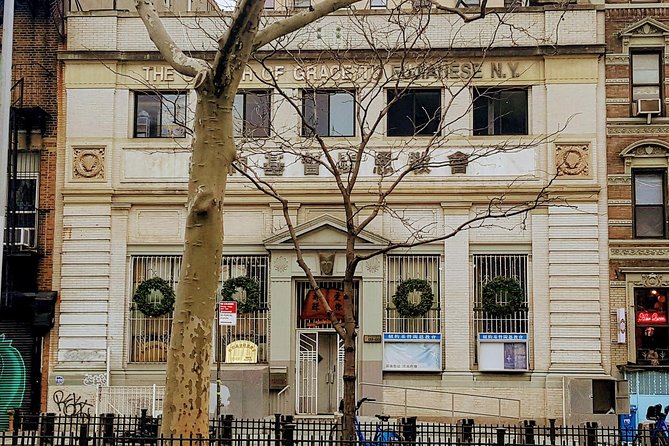
- Eldridge Street Synagogue: the Jewish story shaped by immigration
- Old parks and old media: Riis photos and a Jewish community newspaper
- Tenement life replicas and what you can learn by walking past
- DeLancey Street and Allen Street bath house: daily survival infrastructure
- Ending on Hotel Indigo’s rooftop: sort the tenement eras from above
- Price and time: is $59 a good deal?
- Who should book this tour
- Should you book this Lower East Side tenement history walk?
- FAQ
- How long is the tenement history tour?
- Where does the tour start and end?
- Is there a choice of tour time like morning or afternoon?
- What’s the group size limit?
- What language is the tour offered in?
- What’s included in the price?
- What ticket type do I receive?
- Is the tour suitable if I have moderate physical fitness?
- Are service animals allowed?
- Is the tour run in any weather?
- Do I need to bring anything?
Key things that make this tenement tour work
- Small group size (max 5) means you get real back-and-forth instead of talking to a headset.
- Tenement evolution by law: you’re not just seeing old buildings, you’re learning how regulations changed what people could afford and how they lived.
- Immigrant neighborhoods, not one ethnicity: Jewish, Italian, and Chinese history get woven into the same streetscape.
- Stops are chosen for context: Five Points and Mulberry Bend are explained before you ever step into the Lower East Side blocks.
- Architecture + street life in the same route: from East Broadway views to Chinatown’s street scene.
- Rooftop ending: you finish with a bird’s-eye way to sort the housing eras.
The Lower East Side is a classroom, not a museum
If you want New York history that actually sticks, this is the kind of tour that makes the city feel like a living document. You’re walking through a neighborhood that grew fast, absorbed waves of people, and kept changing the rules of housing as the population surged.
What I like most is that the tour doesn’t treat tenements as one sad snapshot. Instead, you’ll see the long arc—from early purpose-built housing for working-class families to later tenement types shaped by changing laws. That approach helps you understand why certain blocks look the way they do now.
The small-group format also matters. With a maximum of five people, the guide can slow down when you’re curious, and speed up when you’re not. That balance is rare in big group tours.
You can also read our reviews of more historical tours in New York City



Foley Square: starting at Five Points and Mulberry Bend
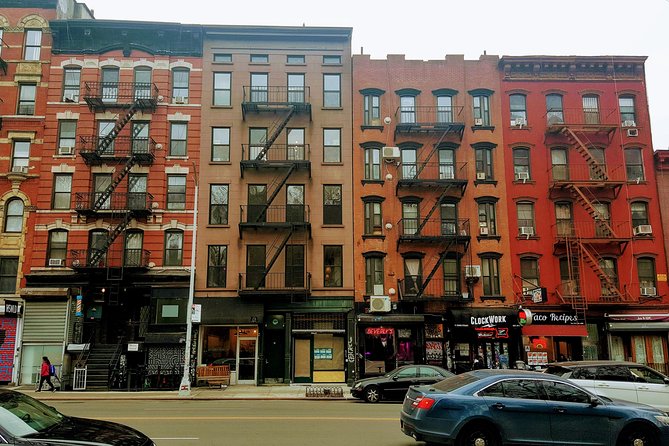
You begin at Foley Square, starting the story where New York’s infamous early slum reputation was forming. The guide connects the setting to the former Five Points neighborhood and Mulberry Bend, which were known for extreme poverty and overcrowding.
This first stop is useful because it sets expectations. If you show up without context, tenement buildings can feel like generic old brick. Here, you learn to read them as an early solution to a brutal problem: how a fast-growing city housed working-class immigrants with limited space and limited money.
You won’t spend long here—about 15 minutes—but the point is big-picture framing. From there, the tour starts moving from reputation to reality: what “tenement life” actually meant in different time periods.
Columbus Park and Jacob Riis: how photos create street-level empathy
Next comes Columbus Park, tucked between Chinatown and the Court District. This stop uses the work of Jacob Riis, especially How the Other Half Lives, to explain what outsiders saw when they looked at crowded tenement life.
Even if you’ve heard the name Riis before, this is where it becomes practical. You’ll see how photography and reporting were used to tell the truth about housing conditions—at a time when many people either ignored the problem or didn’t want to look.
There’s also a nice “time travel” effect here. The park today is public space and a place to pause. But Riis’s work helps the guide translate what the land and streets used to hold, so you’re not just strolling—you’re rebuilding the past in your mind.
Lower East Side blocks: tenement types and how laws changed everything
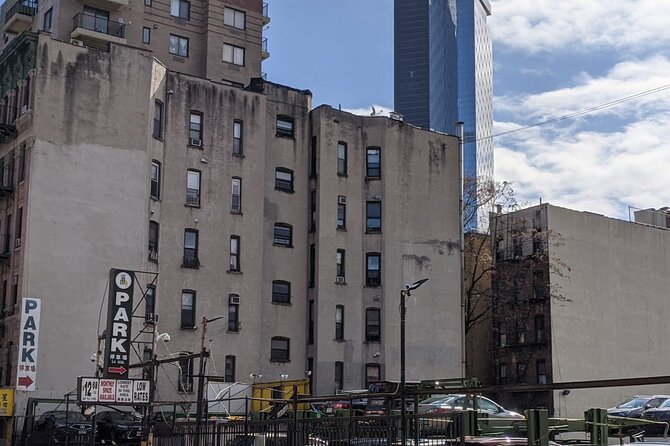
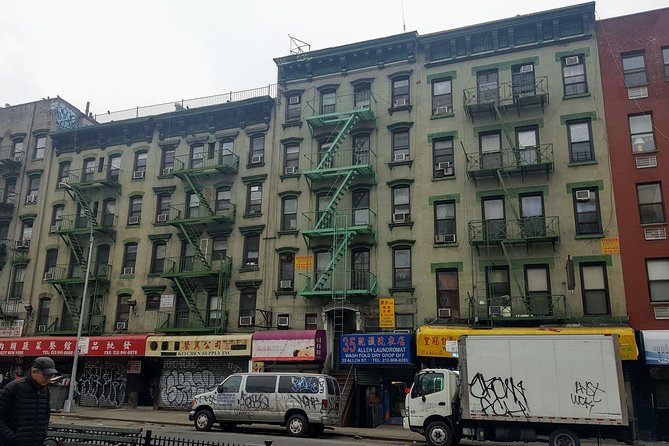
This is the tour’s core. The guide spends the bulk of the walking time along Lower East Side blocks lined with non-stop tenement buildings from the mid-1800s into the early 1900s.
Here’s what makes this part worth your time: you learn to distinguish tenement types by era. The tour explains that not every tenement was tied to the worst slum stories, but living conditions could still be harsh. Then it connects those conditions to a decades-long evolution of tenement regulations.
If you’ve ever wondered why New York has certain building layouts—courtyards, window placement, and the way apartments stack—you’ll start getting answers. The guide’s framing turns “old buildings” into “designed outcomes,” shaped by law, landlord economics, and crowding.
Practical note: this segment is mostly outside and moving. Pace matters. The guide can match your group’s speed, so if you need frequent pauses, this is a good tour to choose. Just remember you’re walking.
East Broadway view stops: Municipal Building to Woolworth Building
The route also includes a standout view segment. You’ll get a look toward the Municipal Building and the Woolworth Building, with the conversation shifting to East Broadway and the way major structures frame neighborhood streets.
You’ll also spend time near one of Chinatown’s most active streetscapes, with historic details tucked into plain sight. The guide points these out as you walk, rather than asking you to spot them cold. It’s a great reminder that good architecture and good storytelling often share the same corners.
This part works well for mixed-interest groups. If some of your group is more into buildings and city design, this is where they can “see” the story.
And yes, the walking continues—but the stops give your eyes a break from a constant wall of buildings.





Eldridge Street Synagogue: the Jewish story shaped by immigration
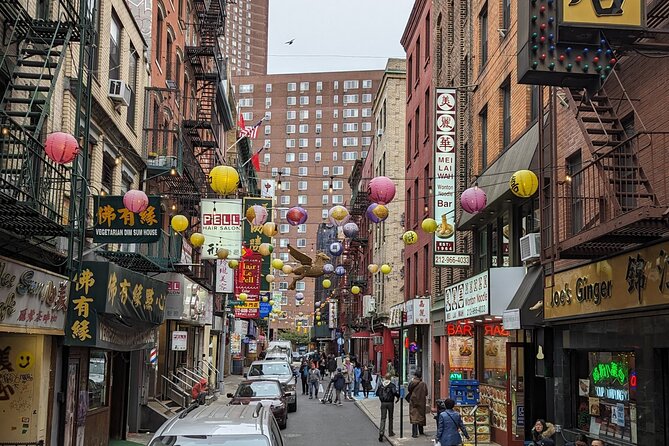
One of the most memorable stops is the Eldridge Street Synagogue. The guide uses it to explain the Jewish experience in the Lower East Side—especially how new immigrants built communities, not just apartments.
This isn’t taught like a textbook stop. It’s framed as a living neighborhood story. The synagogue becomes a marker for how people organized their identity, worship, and daily networks while the city continued to change around them.
Given the tour’s focus on how housing and law worked, this stop also helps connect an important dot: housing wasn’t only a physical problem. It affected family life, community institutions, and how people survived long enough to stabilize.
If you’ve seen Ellis Island before, this stop is a helpful complement. It shows what happened next—inside Manhattan’s neighborhoods, not just at the entry point.
Old parks and old media: Riis photos and a Jewish community newspaper
The tour brings you past a park area where the guide explains how the neighborhood responded when it opened—so crowded it was standing room only. The guide also uses the Riis How the Other Half Lives photos to bring the past to life again.
Then you’ll hear about a newspaper that was an institution for the Jewish community. The tour uses this to show how information and language helped immigrant communities connect, argue, and organize their future.
These stops might sound softer than “tenement law,” but they matter. Housing keeps people physically packed. Newspapers and public spaces help people form shared narratives. That combo is part of why the Lower East Side became such a powerful engine for community identity.
Tenement life replicas and what you can learn by walking past
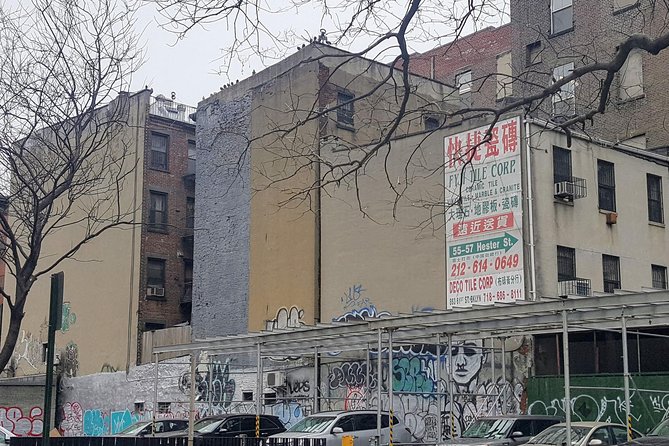
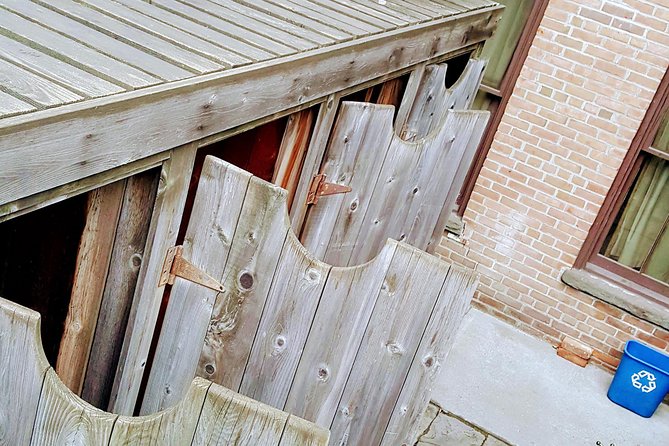
There’s a pass by a museum area where the experience replicates tenement life, including details like outhouses and clothes lines. You’re not sitting inside a ticketed experience for this tour segment. You’re using it as a visual reference point while you walk.
That works well because the tour is already teaching you how to read tenement-era features. Seeing replicas from the sidewalk and surrounding blocks helps you connect what you learn about regulations and layouts to what daily routines might have looked like.
If you’re someone who likes authenticity, this stop also nudges you to think about what’s preserved versus what’s reconstructed. It’s a subtle but important distinction.
DeLancey Street and Allen Street bath house: daily survival infrastructure
DeLancey Street comes next, explained as a former clothing discount outlet center. It’s one of those street-level details that makes the neighborhood feel real. People didn’t just live in tenements—they also shopped there, worked there, and stretched their money wherever they could.
Then comes a major practical-life stop: the Allen Street bath house. The tour notes it operated as a bath house from 1905 until 1975, when it was converted into a church. This is one of those “you’ll never forget it” details because it highlights how basic needs were handled.
Bath houses mattered in dense housing. When you have overcrowding, personal hygiene becomes a community-scale issue, not a private one. Learning this on the street makes the history feel less abstract.
This portion is also a reminder that immigrant neighborhoods weren’t only about hardship. They were also about systems—places that helped people keep going.
Ending on Hotel Indigo’s rooftop: sort the tenement eras from above
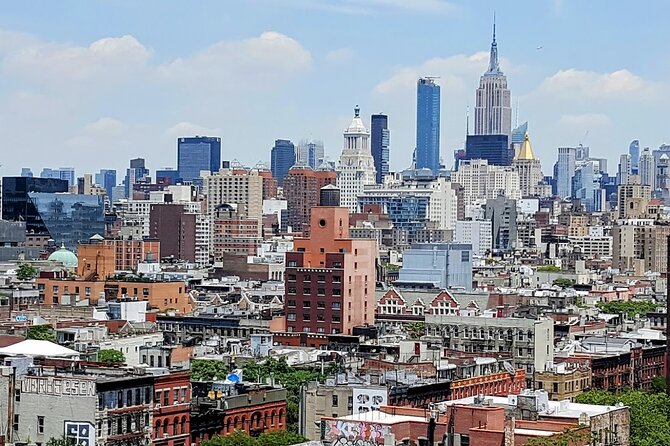
The tour ends on the rooftop of Hotel Indigo Lower East Side by IHG, overlooking the streets you walked. The guide uses this high vantage point to help you identify different tenement types—and to see how the neighborhood fits into the wider city view.
You’ll also get a spectacular line of sight toward Midtown. That contrast is part of the payoff. From street level, the Lower East Side can feel dense and self-contained. From above, you see how it sits in relation to modern New York’s bigger scale.
This rooftop ending is where your mental map clicks. By then, you’ve been learning tenement evolution by law. Looking down helps you connect that explanation to actual building shapes.
Price and time: is $59 a good deal?
For $59 per person, you’re getting a 2 to 3 hour guided walking tour with a local guide and professional guide format, built around a small group capped at five people. In plain terms, the value comes from (1) focused storytelling, (2) the ability to ask questions without feeling rushed, and (3) the rooftop wrap-up that ties the whole thing together.
If your goal is to read the city with more depth, this is a strong buy. It’s not just pass-and-snap photos. It’s learning how housing and immigration shaped the neighborhood’s physical layout.
If you’re short on time or you hate walking, you might feel the pace. But if you’re comfortable with a few hours of movement and you wear good shoes, it’s a smart way to get a lot of meaning out of one neighborhood.
Who should book this tour
This one fits best if you:
- want a neighborhood-level immigrant history (Jewish, Italian, and Chinese) tied to real buildings
- enjoy architecture and city design, but also want the human side
- like tours where the guide uses maps or photos to explain what you’re seeing
- want a small-group experience instead of a crowd-control shuffle
It’s also a great companion tour if you’re doing Ellis Island and want the next chapter: what immigrants faced after arrival, inside Manhattan’s housing and community institutions.
Should you book this Lower East Side tenement history walk?
Yes—if you want history you can see and interpret as you walk. The tour’s best feature is the way it links immigrant life to tenement design and long-term changes in housing law. That gives you a framework that lasts beyond the tour.
I’d skip it only if walking for two to three hours in the city feels like a hassle or if you need a very hands-on indoor museum experience instead. Otherwise, book it, show up with good shoes, and bring a willingness to look up at details you’d normally miss.
FAQ
How long is the tenement history tour?
It runs about 2 to 3 hours.
Where does the tour start and end?
It starts at Foley Square around Lafayette Street and Worth Street, near Centre St, and it ends at Hotel Indigo Lower East Side by IHG at 171 Ludlow St.
Is there a choice of tour time like morning or afternoon?
Yes. The tour offers morning or afternoon options.
What’s the group size limit?
The maximum group size is 5 travelers.
What language is the tour offered in?
The tour is offered in English.
What’s included in the price?
You get a local guide and a professional guide.
What ticket type do I receive?
You receive a mobile ticket.
Is the tour suitable if I have moderate physical fitness?
The tour is listed for travelers with a moderate physical fitness level, and it involves walking, so you should plan on staying on your feet for the duration.
Are service animals allowed?
Yes, service animals are allowed.
Is the tour run in any weather?
It requires good weather. If it’s canceled due to poor weather, you’ll be offered another date or a full refund.
Do I need to bring anything?
The tour info recommends bringing snacks and water to help you feel good during the walk.