REVIEW · NEW YORK CITY
The Outlaws Who Built NYC: Financial District Tour
Book on Viator →Operated by Purefinder New York · Bookable on Viator
NYC was built by schemers, not saints. I love the fast-paced storytelling and how it turns famous places like Wall Street into clues about profit, power, and trouble; I also like the small group cap of 15 travelers. The only catch is the schedule is tight, so if you want slow museum browsing, this walk-and-talk pace may feel a bit rushed.
This is the kind of tour where your brain stays switched on. You get a sequence of short stops, quick explanations, and practical photo breaks that keep you moving without losing the thread of the story.
You’ll meet in Lower Manhattan and end right in the Financial District. It’s an easy setup if you like history you can see and touch, not just read on a screen.
In This Review
- Key takeaways before you go
- Why this Financial District tour feels different
- Where you meet and how the route keeps things easy
- A two-hour game plan: short stops, real context
- Lower Manhattan to the Oculus: privateers and ships under your feet
- 9/11 Memorial & Museum: two very different stories in one place
- Trinity Church and the Freedom of the Press story
- Wall Street bombing and the Manhattan Company: money, chaos, and control
- East River waterfront views: Brooklyn Bridge and corrupt origins
- First Precinct and Hanover Square: police corruption and Captain Kidd
- White Horse Tavern on Bridge St: New Amsterdam law-breakers and the city elite
- Price and value: why $40 makes sense for what you get
- Who should book (and who might not)
- Should you book The Outlaws Who Built NYC?
- FAQ
- Is this tour in English?
- How much does the tour cost?
- How long is the tour?
- What time does it start and where does it end?
- How large is the group?
- Do I need to pay admission at the stops?
- Do I get a mobile ticket?
- Is it easy to reach with public transportation?
Key takeaways before you go
- A 15-person maximum keeps the vibe personal, with time for questions.
- Short, scheduled photo stops help you capture the sights without waiting around.
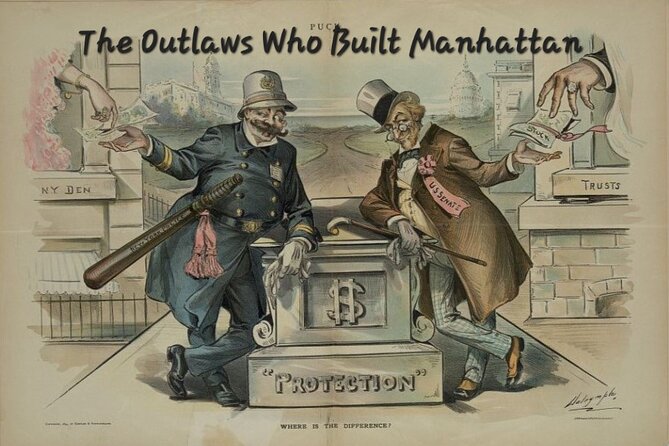
- Crime-adjacent NYC: piracy, bribery, police corruption, and financial schemes are the plot.
- Free admission tickets for the featured sites mean you’re paying for the tour, not entrances.
- English guide, mobile ticket makes it simple to show up and go.
Why this Financial District tour feels different
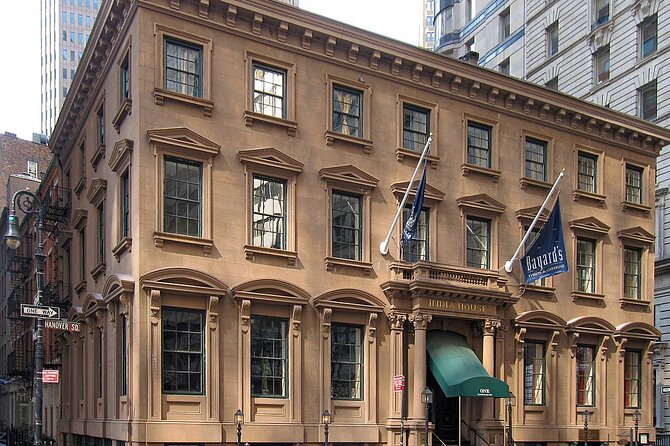
If you’ve only seen the Financial District as glossy towers and Wall Street postcards, this tour changes the lens fast. The theme is blunt: NYC was shaped by ambitious outsiders, sharp elbows, and people who didn’t mind breaking rules to get results.
I like that the stories stay grounded in real locations. You’re not just hearing names. You’re standing where decisions were made, where deals happened, and where the city’s power system started taking shape. Even when the details turn dark, they connect to something practical: money, control, and how communities got organized.
Another big plus is the tone. It’s not a grim lecture. The guide mixes clear explanation with humor and momentum, so you leave with facts you can remember, not a list you forget on the subway ride home. And because the group stays small, it feels less like being herded and more like doing a focused walk with fellow history nerds.
One realistic note: with a tour time of about two hours, the pacing is quick. You’ll get highlights and context, not deep solo research time at every stop.
You can also read our reviews of more tours and experiences in New York City.



Where you meet and how the route keeps things easy
You start at the M Social Hotel New York Downtown, at 55 Church St. The key detail here is location: you’ll meet outside the hotel entrance, then the guide escorts you to the first stop.
The end point is the White Horse Tavern on Bridge St, at 25 Bridge St. That’s handy because it puts you right by Bowling Green and near South Ferry/Whitehall Street, where you can connect to multiple subway lines and ferry options.
The tour’s format also makes logistics easier. Each stop is short, so you’re not stuck in one place for long. When you’re in Lower Manhattan, that matters. Weather changes fast. Streets can get crowded. A route that keeps moving helps you stay comfortable and still see a lot.
A two-hour game plan: short stops, real context
This experience is designed around many brief stops rather than a few long ones. The typical stop length runs around five to eight minutes. That structure forces the guide to pick what matters and explain it with speed and clarity.
For you, that means:
- You’ll get a steady chain of stories instead of random facts.
- You’ll see more ground in less time.
- You should treat photo moments like part of the plan, not an afterthought.
If you’re the kind of traveler who likes to linger, this might not be your ideal format. But if you want the highlights of Lower Manhattan history in a single outing, the pacing is exactly why it works.
Lower Manhattan to the Oculus: privateers and ships under your feet
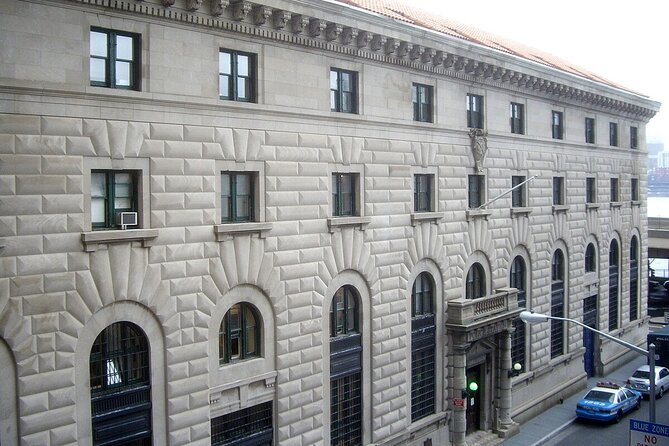
The tour begins in Lower Manhattan, then moves toward the Oculus World Trade Center. At this stop, you hear about the first privateers in the NYC area and what’s tied to the remains of ships embedded in the earth.
That’s a powerful pairing: a modern landmark above, with older maritime activity implied underneath. It helps you understand that NYC’s early economy wasn’t only banking and shipping paperwork. It was also conflict and opportunism at sea, with private ventures tied to larger national interests.
This stop also sets the tone for the whole tour: history as a mix of legitimate enterprise and shady margins. It’s not presented as pure villainy for entertainment. It’s shown as how people used the system as it existed, then pushed it in their favor.
9/11 Memorial & Museum: two very different stories in one place
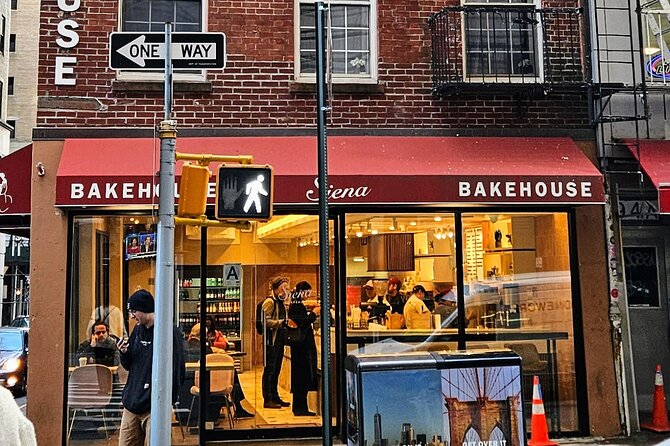
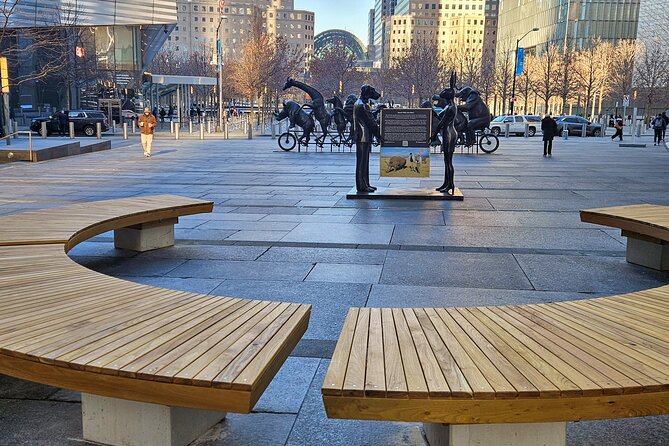
You’ll spend time at the National 9/11 Memorial & Museum area, and you’ll hear about two past sites located there.
First, you learn about the former business of Madame Restell. Second, you hear about the former home of New York City’s first black millionaire.
Here’s why this matters for your understanding of the Financial District story. This part of NYC’s timeline is layered. The area holds tragedies, but it also holds evidence of earlier lives, businesses, and wealth—some of it controversial, some of it groundbreaking, all of it part of how the city worked.
Because the tour uses short stops, you won’t get a full museum-style experience at this location. You’ll get the narrative thread that links people and power in a way that’s easy to grasp while you stand outside.



Trinity Church and the Freedom of the Press story
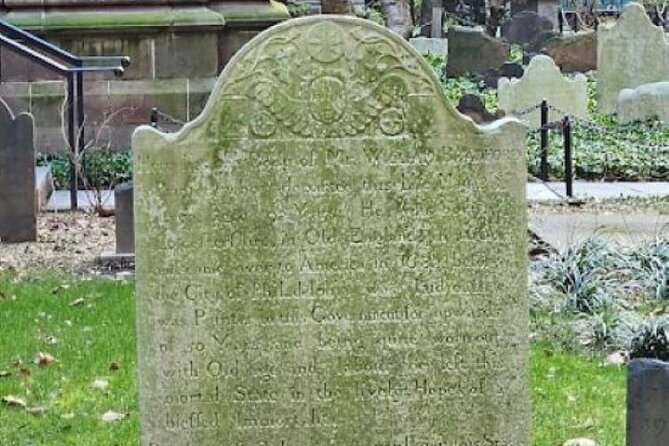
Next up is Trinity Church NYC. The focus here is a trial that established Freedom of the Press.
Even if you think you know the general idea of free speech protections, this stop adds a location-based angle. It reminds you that the rights people talk about today were argued over in real time, with real stakes, and tied to power structures.
If you care about how law and business mix, you’ll enjoy this segment. It’s one of those stops where the guide helps you connect civic principle to practical consequence, rather than treating it as a museum plaque moment.
Wall Street bombing and the Manhattan Company: money, chaos, and control
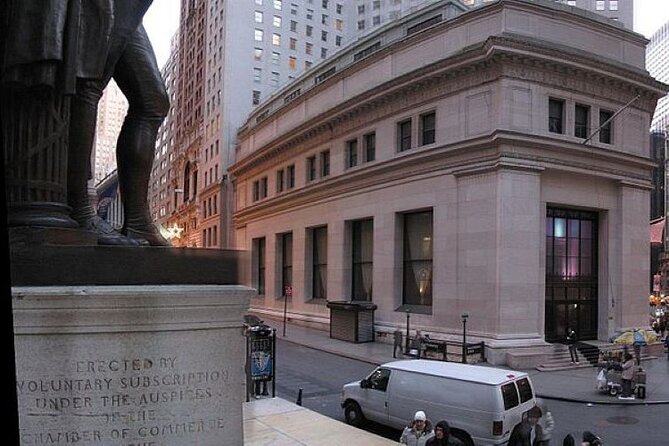
Wall Street shows up twice, and both stops are about power under pressure.
At the first Wall Street moment, the story centers on the 1920 Wall Street bombing. This isn’t just a crime recap. It’s a reminder that financial districts have always been targets, not just places where deals get made.
At the second Wall Street stop, the tour shifts to the Manhattan Company and its role related to NYC’s water supply and bank formation. That’s a great example of how the city’s big systems didn’t grow in neat, modern ways. They were built through institutions that served multiple purposes and often blurred the line between public need and private advantage.
If you’re the kind of traveler who likes to understand the “how did that system start” question, this is one of the stronger stretches. You’ll leave thinking differently about what banks and infrastructure actually mean in a city like New York.
East River waterfront views: Brooklyn Bridge and corrupt origins
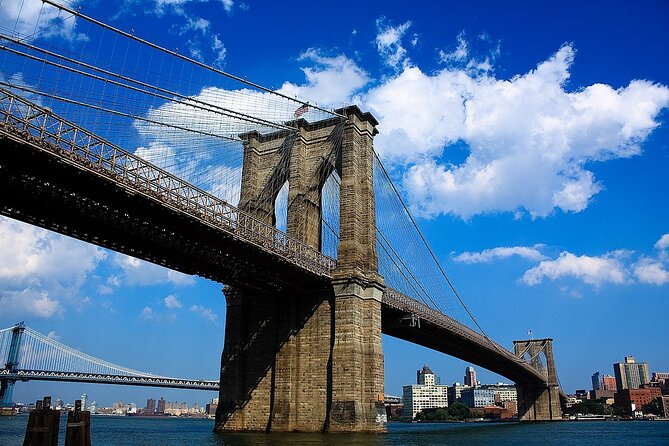
You’ll head to the East River Waterfront Esplanade for a birds-eye view of the Brooklyn Bridge. The story here is about its corrupt beginnings.
It’s a clever stop because it combines a view with a critique. You look at a landmark that’s usually celebrated for engineering and design, then you hear how ambition and influence shaped the outcome. The contrast makes the history stick.
Practical tip: if you want photos, this is a good place to pause and frame your shots before the group moves on. The tour is built for quick turns, so grab your angles when you have them.
First Precinct and Hanover Square: police corruption and Captain Kidd
Back in the Financial District, you’ll stop at the First Precinct and learn about 1970s police corruption. Then you’ll move to Hanover Square for a story about Captain Kidd.
Yes, Captain Kidd. The tour frames him as a local resident and criminal who had a hand in developing the colony.
This two-part stretch gives you a sense of continuity. The city keeps changing, but the forces underneath—control, enforcement, and money—keep returning in new forms. Police corruption in the 1970s and pirate-era legends connected to early development are far apart on a timeline, yet they fit the tour’s theme: NYC runs on people who exploit systems, not only people who obey them.
If you like connections across centuries, you’ll appreciate how the guide keeps the plot coherent.
White Horse Tavern on Bridge St: New Amsterdam law-breakers and the city elite
The tour ends at the White Horse Tavern, right on Bridge St. The final story spotlights New Amsterdam law-breakers and how they helped create the elite of New York City.
That ending works well because it lands you in a real, recognizable place tied to the city’s early character. The message isn’t that every founder was a crook. It’s that the city’s rise was built by rule-benders and power players who learned how to operate in messy conditions.
Plus, ending here feels convenient. You’re done, you’re still in the center of things, and you can easily keep exploring nearby without needing extra transfers.
Price and value: why $40 makes sense for what you get
At $40 per person for about two hours, the value depends on how you travel.
If you like structured storytelling with a guide, this price is reasonable because you’re buying:
- A tight route through multiple major and minor-known sites
- A guide who stitches the theme into a clear narrative
- A small group size, capped at 15
- Admission tickets that are listed as free for the featured stops
You’re also paying for efficiency. Lower Manhattan history can be overwhelming on your own. The tour reduces the search work and gives you a curated set of stops with context you won’t easily pull together by wandering.
That said, if you prefer long, independent time at museums and churches, you might feel like two hours is not enough. This is a walking history briefing, not a full-day immersion.
Who should book (and who might not)
This tour is ideal if you:
- Want a different take on NYC than the usual skyline speeches
- Like crime-adjacent history when it’s tied to real places
- Enjoy a fast, entertaining guide style
- Appreciate smaller groups for questions and attention
- Are comfortable walking through Lower Manhattan for about two hours
You might choose something else if you:
- Want lots of seated time at museums
- Dislike quick stopovers and prefer slow pacing
- Expect a purely academic lecture with minimal humor
Should you book The Outlaws Who Built NYC?
If you’re on a short NYC break and want a story-driven way to see the Financial District beyond the surface, I’d book this. It’s good value for time, and the format keeps the history moving instead of bogging down.
One more reason to say yes: the theme isn’t random. It connects piracy-era hustle, legal battles over free speech, Wall Street chaos, infrastructure-and-finance origins, and later corruption into one believable arc of how NYC gained power.
If that kind of messy origin story sounds like your idea of a great afternoon, this is an easy choice.
FAQ
Is this tour in English?
Yes. The tour is offered in English.
How much does the tour cost?
It costs $40.00 per person.
How long is the tour?
It runs for about 2 hours.
What time does it start and where does it end?
It starts at 3:00 pm. You meet outside the M Social Hotel New York Downtown at 55 Church St and end at the White Horse Tavern at 25 Bridge St.
How large is the group?
The tour has a maximum of 15 travelers.
Do I need to pay admission at the stops?
Admission tickets are listed as free for the included stops.
Do I get a mobile ticket?
Yes. The tour includes a mobile ticket.
Is it easy to reach with public transportation?
Yes. It’s near public transportation, and you’ll end close to Bowling Green and South Ferry/Whitehall Street stations, plus ferry services.