REVIEW · NEW YORK CITY
The Story Behind NY’s Evolving Skyline An Architectural Journey Through History
Book on Viator →Operated by Kitt Garrett New York Sites & Insights · Bookable on Viator
Look up; the skyline tells time. This on-demand video and self-guided walk turns New York into a long-running architecture timeline, from early Dutch-era roots to today’s zoning-shaped city. You get a clear sense of how neighborhoods, parks, and transit evolved alongside the buildings.
I love the methodical, organized narration by Kitt Garrett, because it doesn’t just name styles. It also points you toward the details you can actually spot on the street—design choices, building materials, and what those changes were responding to. I also love the downloadable document you can keep on your device, so the walking part stays connected to the stories instead of turning into guesswork.
One consideration: it’s not a live, turn-by-turn guide. You’re doing more of the pacing yourself with a self-guided walk, so if you want someone to physically herd you between stops, you’ll need to pay closer attention to the suggested locations.
In This Review
- Key points before you start your skyline walk
- Turning New York’s skyline into a usable story
- On-demand video plus a self-guided walk: how it works in real life
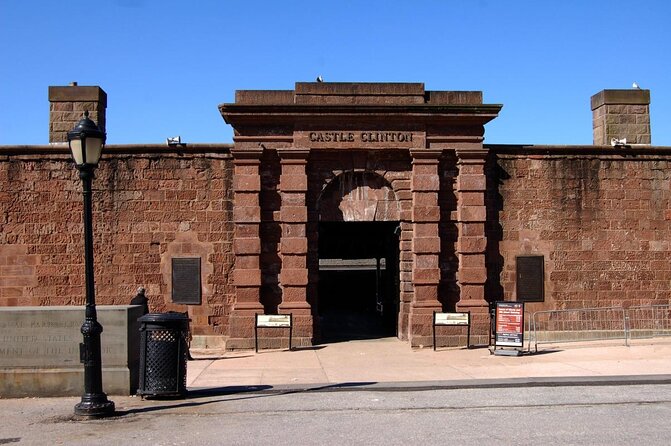
- Start at Castle Clinton: where New York’s waterfront energy begins
- How to spot architectural styles (without needing an architecture degree)
- From zoning to towers: understanding the forces behind the skyline
- The route’s endpoint: finishing at 20 Hudson Yards
- Using the downloadable PDF like a street-side cheat sheet
- Price and value: $25 per group up to 15
- Who this tour fits best (and who might want a different style)
- Should you book this Architectural Journey Through History?
- FAQ
- How long is the experience?
- What is the price and group size?
- Where does the tour start and end?
- Is the ticket mobile?
- Is this a live guided tour?
- Can I download anything to my device?
- Is there an admission fee at Castle Clinton?
- Can I cancel and get a refund?
Key points before you start your skyline walk
- Self-guided pace: you move when you want, then refer back to the video/PDF as you look up.
- Architecture style spotting: you learn what to notice in facades, forms, and materials—not just dates.
- Urban planning made practical: zoning and the needs of people working and living side by side show up as real forces behind skyline change.
- Waterfront transformation stories: the tour connects trade-era New York to a later shift toward recreational waterfronts.
- Strong value for groups: $25 per group (up to 15) makes it easy to do with friends without each person buying separately.
Turning New York’s skyline into a usable story
New York’s skyline can feel like a lot of “cool buildings over there.” This experience makes it make sense. You’re not just looking at big shapes. You’re learning why those shapes appeared when they did, and how they relate to the city around them.
I like the angle that combines architecture with planning. You get the human side of the city too: people working downtown, residents living nearby, and the rules that decide what can rise where. That’s the difference between seeing a skyscraper as a photo-op and understanding it as a solution to space, light, access, and economics.
Also, the city timeline covers a wide span of design vocabulary—from Georgian and Federal through Greek Revival, Gothic Revival, Queen Anne, Neo-Classical, and then into the modern period. It gives you a way to read the city like a book with chapters.
You can also read our reviews of more historical tours in New York City



On-demand video plus a self-guided walk: how it works in real life

This is built as an on-demand video tour paired with a self-guided walking route. The duration is about 1 hour 58 minutes (approx.), but your actual time outdoors may vary depending on how often you pause for photos and close reads of details.
Here’s what that format means for you:
- You can watch first, then walk with clearer eyes.
- Or you can break it up—watch part, walk part, return later—since the content is yours to replay.
- You won’t be stuck on a fixed schedule that moves as fast as the slowest person in the group.
A practical perk is the mobile ticket. That reduces the “where’s my paperwork” stress, especially if you’re coordinating with a small group.
Start at Castle Clinton: where New York’s waterfront energy begins

Your journey begins at Castle Clinton National Monument (10 minutes shown), starting at the address: New York, NY 10004. The big win here is that you’re launching from a place tied to the earliest story of the city as a hub of trade and commerce.
From that starting point, the tour frames how architectural styles shift over more than 400 years. You’re essentially standing near an origin moment—then being guided to understand how the skyline kept changing as New York’s economy, population, and ambitions evolved.
You also get a clear connection between waterfront history and city identity. The waterfront doesn’t stay stuck in the industrial past. Instead, the story moves neighborhood by neighborhood toward recreation and new destinations, shaped by public and private partnerships. That’s helpful because it explains why modern waterfront areas feel different from older industrial edges.
One more practical detail: Castle Clinton’s admission ticket is free (as listed). Even if you spend only a short time at the starting point, it helps you get the “why here” feeling before you start walking.
How to spot architectural styles (without needing an architecture degree)
This experience trains your eyes, and that’s where it earns its reputation. Instead of floating past buildings, it helps you identify architectural designs and building materials, so you can connect what you’re seeing to the style names you hear in the narration.
When the tour references eras like:
- Georgian and Federal (early formal roots),
- Greek Revival and Gothic Revival (very recognizable shapes and details),
- Italianate and Renaissance Revival (often about ornament and form),
- Queen Anne and Neo-Classical (distinctive silhouettes and proportions),
- and then the modern period,
…it’s aiming at a simple skill: you should be able to look up and say, This building is speaking in that style language.
You’ll also get a better sense of architectural choices as a response to the city’s needs. Styles aren’t just decoration. They reflect taste, technology, economics, and what kind of city leaders thought New York should become.
From zoning to towers: understanding the forces behind the skyline

One of the smartest parts is that the tour doesn’t treat the skyline like it’s just an artist’s gallery. It frames the future using zoning and the needs of people who live and work in the same urban area.
That matters because skyscrapers and landmarked neighborhoods don’t happen by accident. Zoning influences height, density, street-level activity, and how buildings relate to transit and pedestrian life. When you hear this explained in plain terms, you start noticing how today’s “wow” buildings are tied to rules and planning decisions.
You’re also encouraged to connect public realm change with private development. The waterfront story is one example: industrial-to-recreational change doesn’t happen by magic. It involves deals, partnerships, and long-term planning that reshapes what neighborhoods become.






The route’s endpoint: finishing at 20 Hudson Yards
The tour’s meeting points list an ending at 20 Hudson Yards, 10001. This is useful as a practical finish line. It’s also a modern environment, which fits the tour’s arc toward the contemporary skyline and the planning decisions that shape it.
The guidance here includes a real-world convenience note: 20 Hudson Yards is a good point to stop with shopping, restaurants, and restrooms. So even if you’re not ready to call it a day after the video finishes, you’re not stuck hunting for basic needs.
If you’re trying to squeeze this into a day with other plans, treating Hudson Yards as the “landing pad” can keep your schedule sane. And if you want to keep exploring after, you’ve ended up in a zone where you can transition naturally into other sights.
Using the downloadable PDF like a street-side cheat sheet
A highlight is that you can download a document of the virtual tour to your device. For a self-guided experience, this is more than a nice extra. It turns the tour into something you can re-check while you’re standing in front of the buildings.
What I find valuable about this:
- It helps you connect what you just learned to what you’re about to see.
- It reduces the mental overhead of trying to remember names, styles, and locations on the fly.
- It’s great for photography. You can aim your camera with purpose instead of hoping something looks impressive later.
My advice: download it before you head out, then use it like a map for looking up. If you’re with a small group, this also helps avoid the classic “wait, what was that building again?” loop.
Price and value: $25 per group up to 15
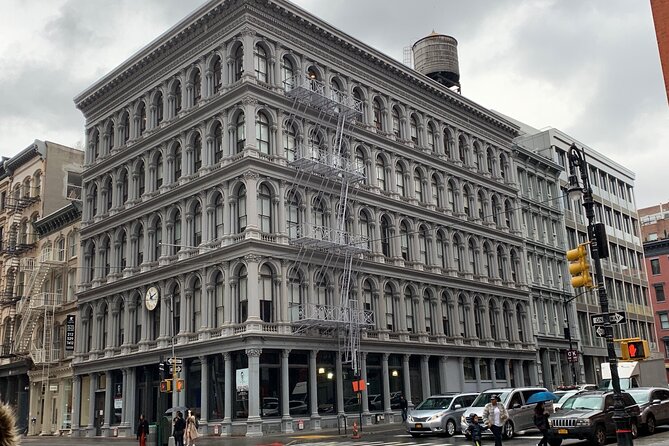
At $25.00 per group (up to 15), the math works out best when you’re not traveling solo. If you’re even a pair of people, you’re paying far less than most guided architectural walks, and you get the advantage of replaying the on-demand parts when you want.
For groups, the price structure is the point. Instead of each person buying their own ticket, you keep it simple as a shared experience. That makes it a good fit for:
- friends who want an architecture lesson without booking a private guide,
- couples who like walking at their own speed,
- and families who can split attention between the story and the street.
One more value angle: the tour teaches skills. Once you learn how to notice architectural style clues, you’ll likely carry that skill into future walks around other parts of New York.
Who this tour fits best (and who might want a different style)
This experience is ideal if you want more meaning from your skyline time. If you like history that connects to what you can physically see, you’ll enjoy the pacing and the planning framework.
It also works well for:
- first-time visitors who want a fast way to understand why New York keeps reinventing itself,
- and local New Yorkers who want a fresh lens on buildings they’ve passed for years.
The format is also a plus if you like flexibility. Because it’s on-demand, it can fit into travel days when your schedule is messy.
If you’re the type who prefers a live guide who corrects you in real time, you might find the self-guided approach requires a little self-management. But if you’re comfortable following an organized narrative and using the PDF as your anchor, you’ll be fine.
Should you book this Architectural Journey Through History?
Yes, if your goal is to look at NYC architecture with better tools, not just bigger photos. This is a strong choice for people who enjoy story-driven city walks and want a practical way to spot styles, understand planning forces like zoning, and connect the waterfront’s evolution to the skyline you see today.
It’s especially worth booking if you’re coming with a small group and want value per person. Just be honest with yourself about the style: you’re buying an on-demand story plus a self-guided walk. If that matches how you like to travel, you’ll get a lot out of your time looking up.
FAQ
How long is the experience?
It runs about 1 hour 58 minutes (approx.).
What is the price and group size?
It costs $25.00 per group, with up to 15 people included.
Where does the tour start and end?
It starts at Castle Clinton National Monument (New York, NY 10004) and ends at 20 Hudson Yards (New York, NY 10001).
Is the ticket mobile?
Yes. It includes a mobile ticket.
Is this a live guided tour?
No. It’s an on-demand video tour with a self-guided walking route.
Can I download anything to my device?
Yes. A document of the virtual tour can be downloaded to your device.
Is there an admission fee at Castle Clinton?
Castle Clinton National Monument lists admission ticket free for this stop.
Can I cancel and get a refund?
No. This experience is non-refundable and cannot be changed for any reason.