REVIEW · NEW YORK CITY
The Story of the High Line Elevated Park and Hudson Yards
Book on Viator →Operated by Kitt Garrett New York Sites & Insights · Bookable on Viator
The High Line has a secret past. This virtual video talk follows NYC’s switch from rail service to public park, then links it to the big Hudson Yards era, with a PDF you can use outside while you walk. I especially love how clearly the rail story is explained, from how goods moved in Manhattan to why the tracks were later treated like a civic resource.
I also like that you get a detailed map with addresses, so the High Line stops make sense later, not just in the video. One potential drawback: if your connection has trouble with the video link, you may not get the full experience unless you test it early or get a working link.
In This Review
- Key takeaways before you watch
- Why this High Line and Hudson Yards talk feels different than a normal video
- How the route maps from Gansevoort Street to 20 Hudson Yards
- The High Line as a Manhattan trade tool, then a public park
- Meatpacking District to Chelsea: the neighborhood shifts you can actually spot
- The people behind the park: artists, architects, and design decisions
- Hudson Yards: why the story doesn’t stop at the park
- Use the PDF map to turn the video into a real self-guided walk
- What to expect during the virtual portion (and how to avoid a bad viewing day)
- Who this fits best (and who might want something else)
- Practicalities: tickets, timing, and private group time
- Should you book this High Line and Hudson Yards tour?
- FAQ
- How long is the High Line and Hudson Yards tour?
- How much does it cost, and how big is the group?
- Is this a virtual experience, or do I walk on-site?
- Where do the start and end points connect on the ground?
- Is it private for my group?
- Is the experience refundable if I cancel?
- Is it allowed for service animals?
Key takeaways before you watch
- Block-by-block storytelling helps you understand what you’re looking at instead of just seeing it.
- Meatpacking District and Chelsea context makes the walk feel like a neighborhood story, not a photo spot.
- Design thinking you can notice in real life comes through via talk of artists and architects shaping the park.
- Hudson Yards joins the narrative, including how it ties into major private development.
- A PDF map with addresses turns the video into a usable self-guided plan for when you’re on your feet.
Why this High Line and Hudson Yards talk feels different than a normal video

The best NYC tours give you two things: a sense of place and a reason to slow down. This one works because it’s built around how the High Line changed over time, then it hands you a map so you can keep going on your own afterward.
I like that the format isn’t just sightseeing. You’re learning the logic of the city—trade routes, building patterns, and the neighborhood shifts that set up the park’s popularity. And when the story reaches Hudson Yards, it’s not random trivia; it connects to the same Manhattan growth engine.
You can also read our reviews of more walking tours in New York City



How the route maps from Gansevoort Street to 20 Hudson Yards
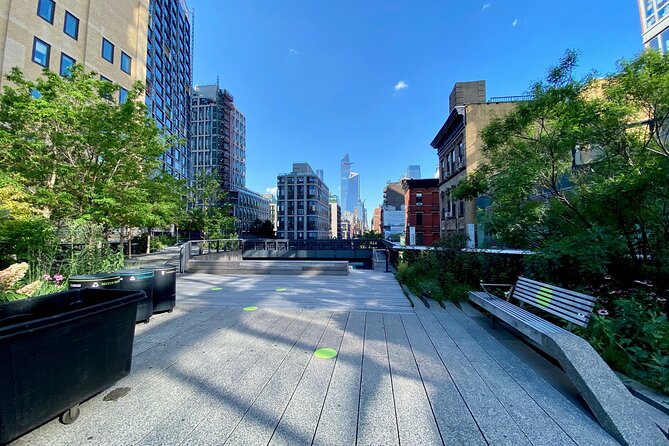
Even though you’re watching a virtual talk, you’re still oriented to a real walking line. The starting point is on Gansevoort Street, in the Meatpacking District area, and the route “ends” at 20 Hudson Yards in the Hudson Yards neighborhood, where you’ll also find shops, restaurants, and restrooms.
That end point matters. Hudson Yards can feel like its own planet once you’re there, so having a built-in narrative bridge helps you connect the architecture and street life to what you saw on the High Line.
Also, the timing fits real life. The talk runs about 1 hour 48 minutes, which is long enough to build understanding but short enough that you’re not locked into a whole afternoon of screen time.
The High Line as a Manhattan trade tool, then a public park
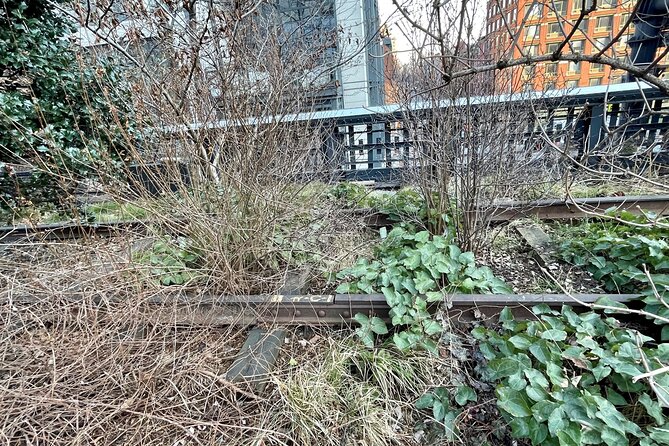
The tour starts with an idea that’s easy to miss if you only think of the High Line as views: it began as a working piece of Manhattan. Goods arrived and moved through the city in a way that tied rail to everyday life, and you learn how that system mattered to residents.
Then you zoom out. The story tracks why the line was later taken upward and then eventually abandoned, which is where things get interesting for urban nerds and casual walkers alike. Once you understand the “why,” the park stops being a pretty accident and becomes a thoughtful reuse of infrastructure.
I found it helpful that the talk doesn’t treat the park as one moment. It frames the High Line as a long shift—rail to neglect to reinvention—so when you’re standing on it later, you’ll notice the park’s design choices feel intentional, not just decorative.
Meatpacking District to Chelsea: the neighborhood shifts you can actually spot
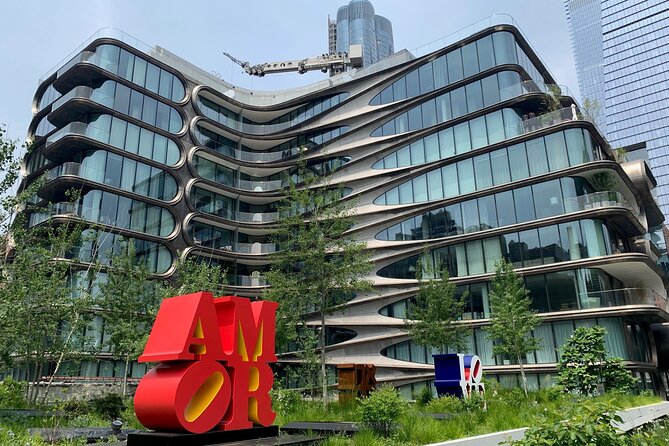
The High Line isn’t one straight corridor of sameness. It threads through the Meatpacking District and then into Chelsea, and the talk explains why that matters for what you see.
Here’s what you’ll get out of this part: a mental map of how neighborhoods evolve when transportation and development change. You learn why the rail line became a kind of spine for the area, and how the park helped reshape what people thought that space could be.
In practice, this means you’ll walk slower. Instead of only scanning for skyline photos, you’ll start reading the mix: street grids below, building styles around you, and how the High Line’s route influences what comes next.
The people behind the park: artists, architects, and design decisions
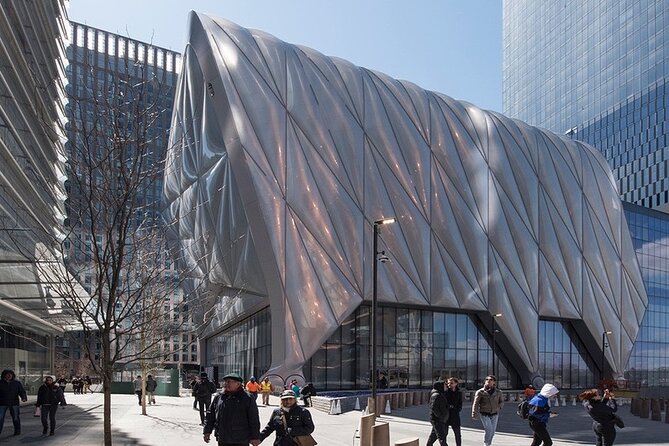
A big reason the High Line feels special is that it’s not a generic “green rooftop.” The talk highlights the artists and architects who helped define what the park became, and it connects their work to the experience under your feet (and your eyes up in the air).
This is where you’ll learn how design choices affect mood. For example, the High Line experience changes based on what’s framed, what’s planted, and how sections transition. Once you understand the creative intent, you’ll recognize patterns on your walk—places that feel quiet, places that open up, and spots where the skyline view is basically being engineered for you.
If you care about engineering and design—materials, sightlines, and how “old structures” get reused—this part is a strong match. You’ll come away with enough context to talk about the park in more than Instagram captions.





Hudson Yards: why the story doesn’t stop at the park
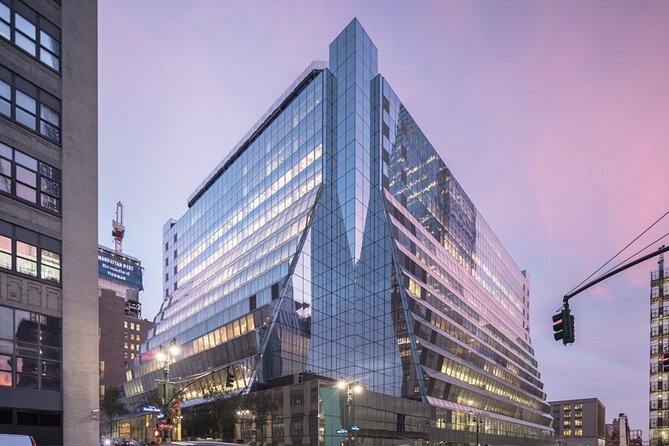
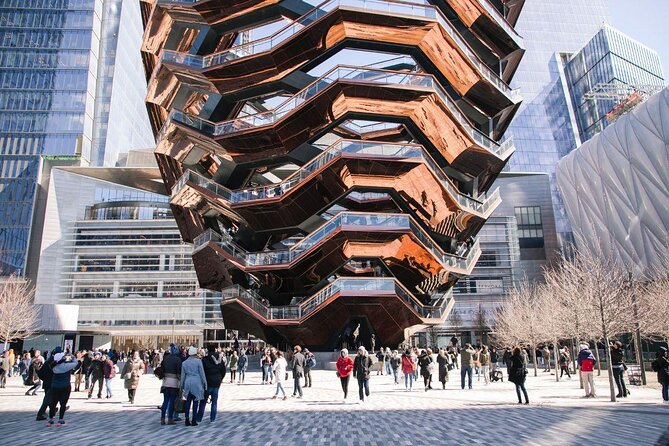
One of the clever parts of this experience is that it doesn’t end when the High Line ends. It carries you into Hudson Yards, including the claim that it became the largest private construction project in U.S. history.
That connection helps you understand what’s happened to the city around the park. The High Line brought attention and foot traffic, but Hudson Yards represents the next wave of Manhattan ambition—big construction, big branding, and a new district built to pull people in.
So if you’ve ever felt like Hudson Yards is hard to read from the street, this helps. You’ll see it as the continuation of the same growth story you started learning near Gansevoort Street.
Use the PDF map to turn the video into a real self-guided walk
The PDF download is one of the most practical parts of this experience. It’s built to help you explore the site on your own, with addresses and details so you can find the right building views and photo points later.
This is the difference between watching something and getting value from it. You can re-watch specific sections, then use the map to look for what the talk points out—without needing an internet connection while you wander.
One more idea from the experience: it encourages you to photograph what you learn and organize it into a memory book experience using Tripcast. That’s especially helpful if you want to remember specific stops and stories instead of just collecting a folder of similar photos.
What to expect during the virtual portion (and how to avoid a bad viewing day)
You’re essentially joining a private video-based talk, and your group watches it together. Your ticket is mobile, and it’s structured like a virtual walkthrough that explains the High Line area block by block, then ties it into Hudson Yards.
Because one technical glitch happened for at least one person—where a video link kept repeating—my advice is simple. Test the video link before you settle in for the full 1 hour 48 minutes. Use decent Wi‑Fi, and if you’re watching on a phone, consider plugging in power so you don’t lose time mid-story.
If you do run into trouble, the provider did respond and offered a fix with refund in that one case. That doesn’t mean every issue will be identical, but it’s a sign that they take access problems seriously.
Who this fits best (and who might want something else)
I’d book this if you like getting context while you’re traveling. It’s a strong fit for first-timers to the High Line, but it’s also great if you’ve walked the park before and felt like you were missing the “why.”
It also works well if you enjoy architecture, engineering, and city planning as stories. The talk isn’t just about famous sights; it explains how trade routes, neighborhood changes, and creative design choices shaped what you see.
If you want a live, on-the-ground guide walking beside you at street level, this won’t replace that. This is more about giving you the map in your head first, then letting you enjoy the physical park on your own pace afterward.
Practicalities: tickets, timing, and private group time
This is set up as a private activity for your group only. That’s helpful if you’re traveling with family or friends and want to watch without being mixed into a larger group dynamic.
In terms of schedule, the access window shown runs daily from 12:00 AM to 11:30 PM. The tour is designed to be flexible, and you don’t have to worry about a narrow time slot.
Price is $25 per group (up to 15 people). That makes it easy to split costs if you’re traveling with a few people, and it’s also a good way to keep things affordable while still getting a guided-style experience.
Accessibility notes are limited in the information provided, but it does say most travelers can participate and service animals are allowed. It also indicates it’s near public transportation, which can matter if you plan to pair the video with time spent in the neighborhoods afterward.
Should you book this High Line and Hudson Yards tour?
Book it if you want a High Line visit that feels smarter and slower. The combination of the video walkthrough, the PDF map with addresses, and the neighborhood-to-development bridge into Hudson Yards gives you value that lasts beyond the screen.
Skip it or consider another option if you only want quick visual sightseeing. If you’re already the type who happily wanders without needing context, you might not use the PDF as much.
My final take: this is a great “story starter.” It turns the High Line from a place you’ve seen into a place you understand, then sets you up to read Hudson Yards with better eyes when you reach 20 Hudson Yards.
FAQ
How long is the High Line and Hudson Yards tour?
The tour lasts about 1 hour 48 minutes.
How much does it cost, and how big is the group?
It costs $25.00 per group, up to 15 people.
Is this a virtual experience, or do I walk on-site?
It is a virtual video talk, and it includes a PDF you can use for a self-guided walk afterward.
Where do the start and end points connect on the ground?
It starts at Gansevoort Street in New York City and ends at 20 Hudson Yards.
Is it private for my group?
Yes. Only your group participates.
Is the experience refundable if I cancel?
No. It is non-refundable and cannot be changed for any reason.
Is it allowed for service animals?
Yes. Service animals are allowed.