REVIEW · NEW YORK CITY
Two-Hour NYC LGBTQ+ History Walking Tour
Book on Viator →Operated by Christopher Street Tours · Bookable on Viator
Queer NYC history comes with a street-level view.
This two-hour walk through Greenwich Village packs major LGBTQ+ moments into a tight route, with an engaging guide who answers questions along the way. I especially liked the small-group feel and the way the stories connect—from early organizing to Stonewall and the AIDS movement. One consideration: it’s a walking tour, so if you’re sensitive to crowds or time on your feet, plan for steady pacing rather than long breaks.
You’ll start near Washington Square’s edge and work your way toward the LGBT Community Center, stopping at places where public memory shows up in concrete, signage, and street names. You’ll also get practical photo moments, including time at the Stonewall Inn area. The ending at the Center is a strong bonus if you want to keep the learning going after the walk.
In This Review
- Key highlights at a glance
- Walking Greenwich Village with context, not trivia
- Price and what you’re really paying for
- Start location: getting oriented near Charles Street
- Julius’ and the 1966 Sip-In: early organizing before Stonewall
- Greenwich Letterpress and the power of LGBTQ+ publishing
- Gay Street: a quick photo stop with a real backstory
- Stonewall National Monument: symbols, origins, and why they last
- The Stonewall Inn: the night that changed the world
- Stonewall National Monument Visitor Center: the part you might otherwise miss
- Gay Liberation Monument: public art as a memory tool
- The Lesbian, Gay, Bisexual & Transgender Community Center: history you can still use
- NYC AIDS Memorial: activism that became global
- The guide matters: what I’d look for in the real experience
- Logistics that affect your day (without getting in your way)
- Should you book this two-hour LGBTQ+ history walk?
- FAQ
- How long is the Two-Hour NYC LGBTQ+ History Walking Tour?
- How much does the tour cost?
- Where does the tour start and end?
- Is the tour offered in English?
- Do I need a physical ticket?
- How large are the groups?
- Is the tour mostly indoors or outdoors?
- Are service animals allowed?
- Can I cancel for a refund?
Key highlights at a glance
- Julius’ and the 1966 Sip-In: a pre-Stonewall protest tied to the Mattachine Society
- Greenwich Letterpress site: a nod to an early east-coast LGBTQ+ bookstore and literature
- Gay Street photo stop: short, visual, and actually meaningful in context
- Stonewall National Monument and Visitor Center: symbols plus exhibits that explain the why
- Stonewall Inn story: firsthand accounts and the 1969 riots’ global impact
- NYC AIDS Memorial: activism that spread from New York to the world
Walking Greenwich Village with context, not trivia
New York can feel like a museum you’re always walking through. This tour helps you read the neighborhood instead of just looking at it. The route focuses on Greenwich Village, where LGBTQ+ life and organizing have been visible in one form or another for decades—and where the streets still carry that history.
What makes the experience work is the balance between specific sites and clear storytelling. You don’t just hear names and dates. You learn why each stop matters, and how later movements grew out of earlier efforts. A good example is the shift from early organizing (like the Mattachine Society) to Stonewall-era public resistance—and then onward to the AIDS crisis and activism.
Also, it’s priced reasonably for what you get. For $49 per person, you’re paying for a guided, two-hour route through multiple landmarks, plus on-street photo opportunities. Many “history walks” charge close to this range but give you far fewer concrete, place-based stops. Here, the stop list is built around what’s still there to see.
You can also read our reviews of more walking tours in New York City



Price and what you’re really paying for
At $49 for about 2 hours, you’re not buying entry into a single museum. You’re buying a focused walk with a guide, plus time at several major points of LGBTQ+ history in Greenwich Village and nearby. The value comes from the guidance—how the guide frames what you see, and how you’re encouraged to ask questions as you go.
Another value point: multiple stops note admission as free, which matters on a walking route. You’re not likely to hit surprise ticket costs along the way, and you can spend your money where it counts: comfortable shoes, water, and subway fare.
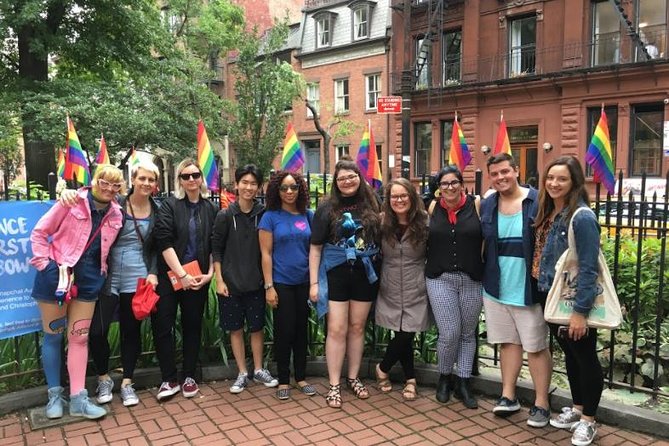
Group size also affects value. With a maximum of 20 people, you usually get better back-and-forth than on big crowd tours. That matters when you want context, not just a script.
Start location: getting oriented near Charles Street

The tour begins at McCarthy Square at Charles St & Waverly Pl. This is an easy starting point because it’s central to Greenwich Village and close to public transportation. If you’re coming in from midtown or downtown, you’ll likely find it straightforward to reach.
I like the start here because you’re immediately in the neighborhood you came for. No long preamble. You’re already surrounded by the streets and blocks that shaped LGBTQ+ life over time.
If you arrive early, use the extra minutes to get your bearings. This walk can feel tight on a map, but once you’re on the sidewalk with the guide’s pacing, it reads clearly.
Julius’ and the 1966 Sip-In: early organizing before Stonewall
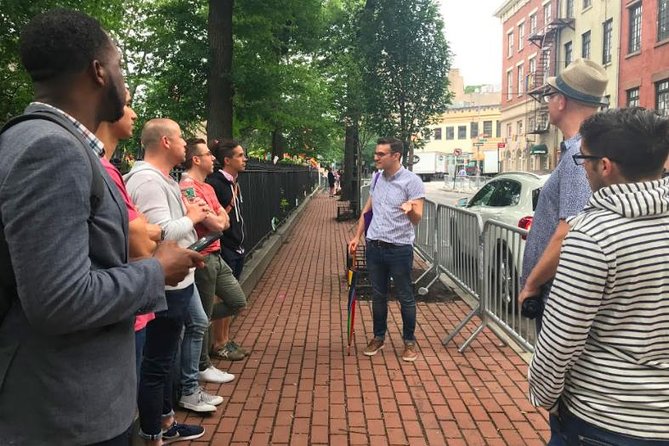
The first stop is Julius’, with a focus on the 1966 Sip-In organized by the Mattachine Society. This is a smart opener. It sets up the idea that Stonewall didn’t happen in a vacuum. People had been organizing, resisting, and testing boundaries long before 1969 became a turning point.
Why this matters for you: if your only mental image of LGBTQ+ history is the late 1960s and beyond, this start broadens the timeline fast. You’re learning that activism often looks like careful pressure and community courage, not just one famous riot.
It’s also a short stop, about 15 minutes, so you get the story without losing momentum. You’ll likely want to pause for photos, but the main goal is understanding the method: organized collective action before mainstream visibility.
Greenwich Letterpress and the power of LGBTQ+ publishing
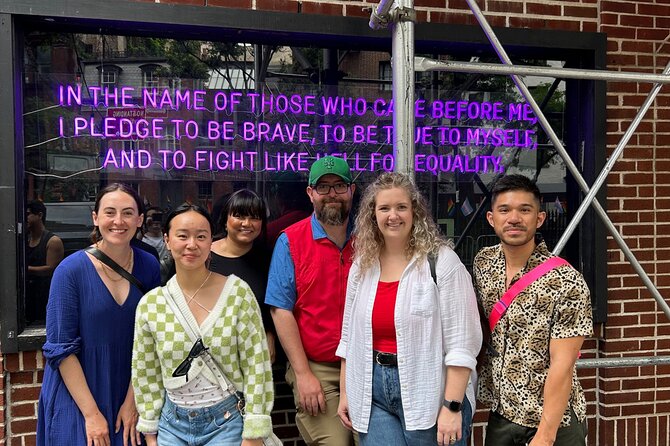
Next is the Greenwich Letterpress stop, tied to the former site of what’s described as the first LGBTQ+ bookstore on the east coast. Even if you don’t think of bookstores as “political,” LGBTQ+ literature often functions like infrastructure. It builds language, community memory, and shared ideas—especially when public life wasn’t welcoming.
What you should take away: this stop reframes visibility. Sometimes resistance shows up in ink, not just in street signs. When you learn about early LGBTQ+ publishing, it’s easier to understand later organizing efforts and why community centers, advocacy groups, and cultural spaces matter.
This stop is around 10 minutes, so again, it stays focused. You’ll get enough context to connect the bookstore story to the bigger themes of identity, expression, and community support.
You can also read our reviews of more historical tours in New York City






Gay Street: a quick photo stop with a real backstory
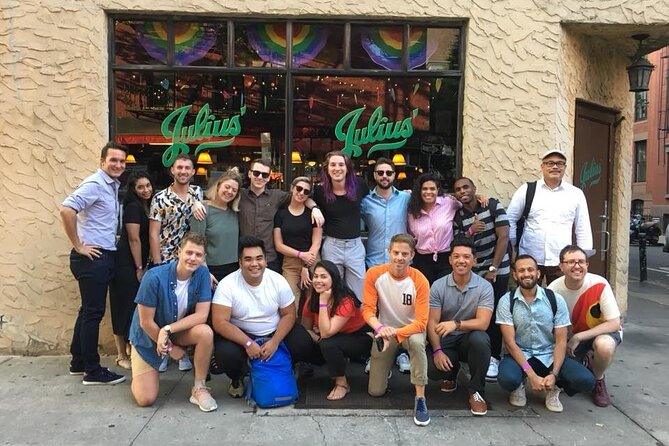
Then you reach Gay Street—a short 10-minute stop designed for photos and explanation. Yes, it’s an obvious photo moment. But the point isn’t just the name on the street; it’s how public naming reflects changing visibility and social permission over time.
If you’re a first-timer, this stop helps you “feel” how history is written into daily life. You’re walking past something that sounds simple, but it’s tied to a longer fight for recognition.
Practical note: keep your camera ready, but don’t rush the explanation. A five-minute street-name story can be the difference between a snapshot and a remembered lesson.
Stonewall National Monument: symbols, origins, and why they last
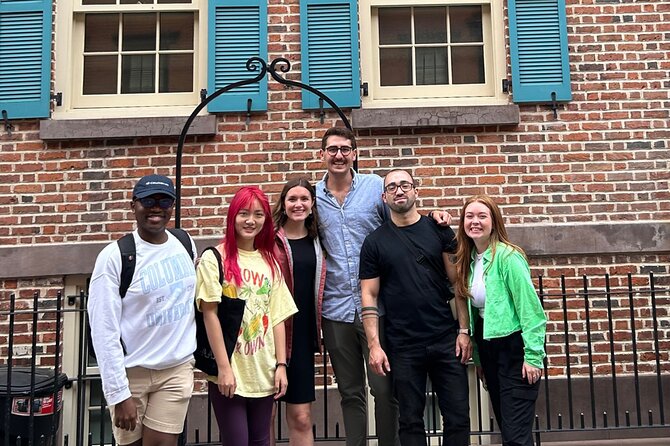
The tour then moves toward Stonewall National Monument. You’ll spend about 5 minutes here, with attention on the original 1978 Gilbert Baker rainbow flag and how it became a lasting symbol of pride and resistance.
This is a short stop, but it’s heavy on meaning. The rainbow flag isn’t just a design you see at parades. It’s part of a language of resistance—how a community marks itself in public and turns visibility into power.
Why it works on a walking tour: you’re right in the area, so the symbolism feels less abstract. You can look at the physical location and connect it to the flag’s origin story.
The Stonewall Inn: the night that changed the world
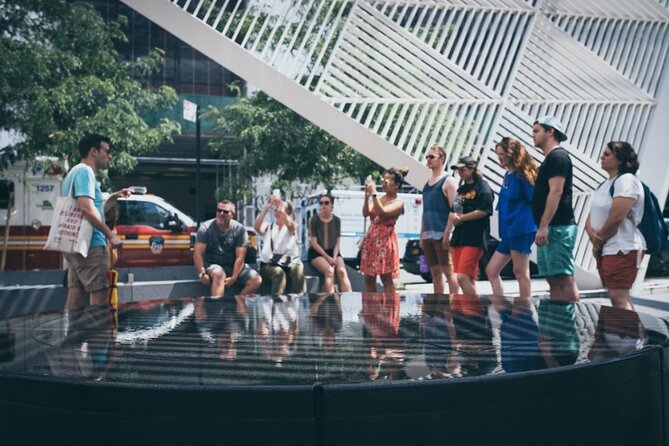
After that comes the highlight most people come for: The Stonewall Inn. You’ll get about 15 minutes here, with stories tied to the Stonewall Riots of 1969, including key figures and accounts of what happened and why it became globally important.
What I like about how this is handled is that it treats the moment like more than a headline. The guide focuses on the human side—people, choices, and consequences. That makes the story feel less like a museum label and more like a turning point shaped by real resistance.
The Stonewall Inn stop also includes photo opportunities, which is useful because this location attracts attention. If you plan to photograph, have your timing realistic: you’ll want time for a clear shot but also for the guide’s story.
Stonewall National Monument Visitor Center: the part you might otherwise miss
From there, you’ll visit the Stonewall National Monument Visitor Center for around 10 minutes. This is where the walk shifts from street storytelling to an exhibit-based explanation of what the monument preserves.
I like that there’s a space for context right here. Outdoors, you can see the setting. Indoors, you get the “how we know” and “what it meant” pieces. Even a short stop helps, because it gives you a better framework for the rest of the area.
If you enjoy learning through displays rather than only through narration, this Visitor Center moment is a strong value add in a two-hour format.
Gay Liberation Monument: public art as a memory tool
Next is the Gay Liberation Monument, about 10 minutes, with discussion of its meaning and its dedication in 1992. This stop is a good reminder that LGBTQ+ history is not only about riots and protests. It’s also about how communities decide to memorialize and keep stories in public sight.
Public art like this can feel decorative if you don’t know what it’s pointing to. With the guide’s framing, you’ll read it as a record. It’s a signal to future generations that this story was worth preserving, not forgetting.
If you’re the type who usually walks right past statues and walls, this is one that changes your pace.
The Lesbian, Gay, Bisexual & Transgender Community Center: history you can still use
The walk continues to The Lesbian, Gay, Bisexual & Transgender Community Center for about 10 minutes. This isn’t just a historical stop. You’ll learn about the Center’s role in the fight for LGBTQ+ rights, and how it continues to support the community through programs and events.
You’ll also see rotating art and history displays. That matters because it means the Center isn’t stuck in one year. It’s a living space tied to ongoing community work.
Practical bonus at the end: you may also get time to view an original Keith Haring mural and browse an LGBTQ+-owned bookshop. That’s a nice way to keep your momentum going even after the guide-led walk ends.
If your goal is to understand LGBTQ+ life as something beyond landmark moments—this stop is where the tour reminds you that support systems still exist.
NYC AIDS Memorial: activism that became global
One of the more emotionally grounded parts of the route is the New York City Aids Memorial. Expect about 15 minutes here, focused on the history of the memorial and the AIDS activism that began in New York and expanded into a global movement.
This is where the tour connects past to present in a practical way. Even if you don’t know the details ahead of time, the memorial context can help you understand that activism was not a vague idea. It was organized response, community care, and public pressure.
If you want to be respectful: slow down at this stop and let the explanation land. This is not the place for quick snapshots unless the guide suggests it. The value is in understanding the story, not racing through it.
The guide matters: what I’d look for in the real experience
A big part of why this tour earns a perfect rating is the guide quality. One review called the tour enlightening and praised the guide’s role in making the history understandable for LGBTQ+ teens. Another highlighted that the pacing felt right through a beautiful neighborhood of significant spots.
In plain terms: you’re not just getting facts. You’re getting an explanation that helps you interpret the meaning of what you see. That’s what turns a walk past landmarks into an experience you can carry home.
I’d recommend you come in with at least a few questions. Ask about what you’ve heard of Stonewall, or ask how earlier organizing connects to what came after. If the guide is doing their job well, they’ll steer you into clearer understanding fast.
Logistics that affect your day (without getting in your way)
This is a walking tour with a total time of around two hours. The itinerary is designed so each stop stays short, which keeps energy steady. You’ll also be on foot through Greenwich Village, so comfortable shoes are the real ticket.
Service animals are allowed, and the route is near public transportation, which helps if you want to mix the tour with other neighborhood plans later.
Weather matters here. The experience requires good weather, so if rain is in the forecast, plan your flexibility. Good for your comfort, too—standing around waiting for drizzle doesn’t add value.
And with a maximum of 20 travelers, you should feel like a group, not a swarm.
Should you book this two-hour LGBTQ+ history walk?
I’d book it if you want LGBTQ+ history you can see, not just read. This tour is especially strong if you’re visiting Greenwich Village for the first time and want your bearings fast—where to look, what to notice, and why those places still matter.
It’s also a good pick if you like guided context. The route covers major touchstones—Mattachine Society’s Sip-In, Stonewall landmarks, the AIDS memorial, and the LGBT Community Center—without turning the day into a long museum marathon.
The only reason to pause: if walking is hard for you or you hate being outside for most of a two-hour block, choose a different format. Otherwise, this is a solid use of time in New York, and the price feels reasonable for the story density you get.
FAQ
How long is the Two-Hour NYC LGBTQ+ History Walking Tour?
It runs for about 2 hours.
How much does the tour cost?
The price is $49.00 per person.
Where does the tour start and end?
It starts at McCarthy Square, Charles St & Waverly Pl, New York, NY 10014 and ends at the Lesbian, Gay, Bisexual & Transgender Community Center, 208 W 13th St, New York, NY 10011.
Is the tour offered in English?
Yes, it’s offered in English.
Do I need a physical ticket?
You’ll have a mobile ticket.
How large are the groups?
The tour has a maximum of 20 travelers.
Is the tour mostly indoors or outdoors?
It’s a walking tour, and it requires good weather.
Are service animals allowed?
Yes, service animals are allowed.
Can I cancel for a refund?
Yes. You can cancel for a full refund up to 24 hours in advance. If you cancel less than 24 hours before the start time, the amount paid is not refunded.