REVIEW · NEW YORK CITY
Village Nights: Greenwich Village Food & History Walk
Book on Viator →Operated by Sidewalk Alchemy · Bookable on Viator
A three-hour stroll with food and big stories. That is the real draw of this Greenwich Village Food & History Walk: you get night-walk energy plus neighborhood context, and you do it in a way that feels like a night out with friends. The route bounces from Astor Place down through classic Village blocks, with history stops that explain why these streets matter, not just what they look like.
Two things I really like: you’ll try New York-style comfort foods across 4 to 5 different places (so you actually eat, not just snack), and you’re guided by someone licensed to handle both the story and the pacing. Plus, the experience is capped at 8 people, so the vibe stays relaxed instead of herding anyone along.
One possible consideration: there’s no headset system, so you’ll want to listen closely when the group pauses. And since it runs in the evening on foot, wear shoes you’d use for a real walk, especially if the weather is iffy.
In This Review
- Key highlights worth planning for
- Why this Village food-and-history walk feels different at 6:00 pm
- The $99 value: tastings, water, and time with a real guide
- Getting to Astor Place and ending near Christopher Park
- Stop-by-stop: Astor Place, McSorley’s, Donut Pub, and the Shirtwaist site
- Astor Place: where gathering came before Europeans
- McSorley’s Old Ale House: cheese plate and historic beer
- St. Mark’s Place: the street as a living stage
- The Donut Pub: 24 hours since 1964
- Triangle Shirtwaist Factory Memorial: tragedy that changed labor
- Washington Square, MacDougal Street, and Mamoun’s falafel
- Washington Square Park: why this park became a hub
- MacDougal Street: songs, stories, stand-up
- Mamoun’s Falafel: 1971 and still a late-night favorite
- Two Boots, Bleecker Street, and Taco Mahal fusion food
- Two Boots Pizza West Village: not your usual slice
- Bleecker Street: bars, boutiques, and famous faces
- Taco Mahal: Latin/Indian fusion with great music
- Marie’s Crisis, Janie’s cookies, and the Stonewall National Monument
- Marie’s Crisis Cafe: subterranean sing-along piano
- Janie’s Life Changing Baked Goods: pie-crust cookies
- Stonewall National Monument: the 1969 uprising that changed history
- How the guide’s style keeps it fun, not forced
- Who should book this Greenwich Village night walk
- Practical tips so your night goes smoothly
- Should you book Village Nights: Greenwich Village Food & History Walk?
Key highlights worth planning for
- 4–5 food stops that keep the night from feeling repetitive or underfed
- Small group cap of 8, which makes it easier to ask questions and keep moving at a human pace
- A water bottle is included, a small thing that makes a big difference mid-walk
- No branding and no headsets, so you look like a normal group hanging out, not a tour parade
- History stops that land emotionally, including the Triangle Shirtwaist Factory Memorial and the Stonewall National Monument
- Flexible routing, since the guide takes input and can swap options from a big set of choices
Why this Village food-and-history walk feels different at 6:00 pm
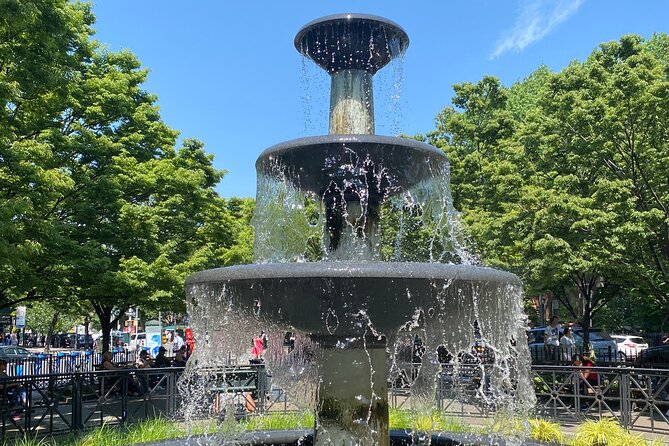
Night is when Greenwich Village stops looking like a postcard and starts acting like a neighborhood. At around 6:00 pm, you’ll catch street life in motion: people spilling out of bars, restaurants doing their daily rhythm, and the kind of sidewalk buzz that’s hard to replicate during daytime sightseeing.
This matters because the stories you hear are tied to the street. Astor Place doesn’t just become a point on a map—it becomes a place where you understand the long sweep of who lived, gathered, and fought for space. Then you move into older institutions like McSorley’s Old Ale House, and suddenly history is not a distant concept. It’s literally part of the walls.
Also, the pace is designed to feel social. One of the best parts of this tour is the idea that the guide is planning an evening that feels comfortable—like friends wandering with a smart local in the mix—rather than a strict, scripted checklist.
You can also read our reviews of more walking tours in New York City



The $99 value: tastings, water, and time with a real guide
At $99 per person for about 3 hours, this is priced like a “serious night out,” but in a good way. You’re not paying for views and photos alone. You’re paying for a guided walking path plus food from 4–5 quality spots, which typically saves you from the hassle of choosing meals while you’re hungry and figuring out which places are worth it.
A few value boosters are built in:
- Water is included, so you’re less likely to get dehydrated halfway through the walk.
- The guide is licensed and professional, meaning you’re getting both storytelling and restaurant knowledge, not just someone reading facts.
- The group is limited to 8, so you’ll actually be part of the conversation and not stuck waiting behind a crowd.
One thing to keep in mind: drinks aren’t included. That’s not a flaw—it’s actually useful—because you can decide what you want at your own pace. If you like beer, a bar stop like McSorley’s can shape the night. If you’d rather keep it light, you can.
Getting to Astor Place and ending near Christopher Park
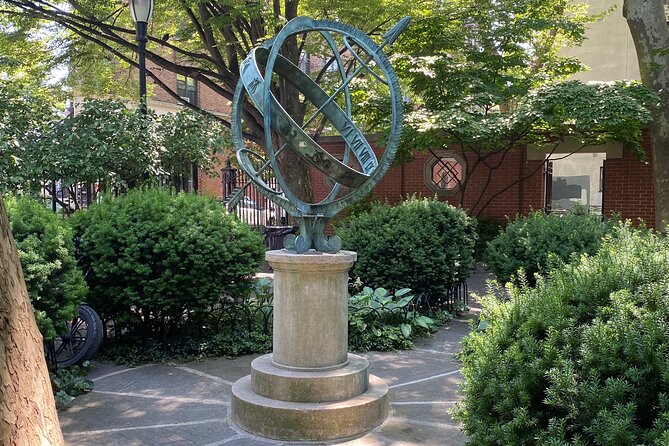
You start at Astor Place (Astor Pl, New York, NY 10003) around 6:00 pm, and you end near Christopher Park (38-64 Christopher St, New York, NY 10014). The end point can vary slightly, but it’s positioned near bars and a convenient subway connection.
This layout is practical: you’re walking through the core of Greenwich Village and ending close to West Village nightlife, so you’re not stranded far from dinner plans or public transit. Since the tour is near public transportation, it’s easier to arrive early and regroup without stressing over complicated logistics.
Also important for comfort: the tour is described as requiring moderate physical fitness, which is normal for a 3-hour walking route. You’ll be moving between stops, not sitting through a museum-style timeline.
Stop-by-stop: Astor Place, McSorley’s, Donut Pub, and the Shirtwaist site
This walk is built like a story with chapters. The early part sets context and tone, then it starts feeding you.
Astor Place: where gathering came before Europeans
You begin at Astor Place, described as the historical heart of Manhattan where the Lenape congregated for hundreds of years before European arrival. The point here isn’t just to name the past—it’s to give you a lens. When you later notice street layout, parks, and landmark buildings, you’ll be able to ask better questions about why this neighborhood developed the way it did.
You can also read our reviews of more food & drink experiences in New York City



McSorley’s Old Ale House: cheese plate and historic beer
Next is McSorley’s Old Ale House, one of the oldest continuously operating bars in New York. You’ll start with a cheese plate and a beer, and you’ll hear why the place feels different: it has lots of artifacts and the walls haven’t been stripped down since 1910. The story about Abraham Lincoln drinking here adds weight, too.
Practical note: this stop is a good example of the tour’s style. You’re not rushed, and you get the chance to settle your feet before continuing.
St. Mark’s Place: the street as a living stage
From McSorley’s, you stroll toward St. Mark’s Place, a corridor known for constant restaurant options and street activity. This is where the walk shifts from “big history” to “how a neighborhood actually feels day to day.”
The Donut Pub: 24 hours since 1964
Then comes Donut Pub, serving donuts 24 hours a day since 1964. It’s a quick stop, but it works because it’s both New York-coded and energy-friendly. If you’re walking and eating a lot, you want a simple, satisfying bite that keeps you moving.
Triangle Shirtwaist Factory Memorial: tragedy that changed labor
One of the most significant stops is the Triangle Shirtwaist Factory Memorial. Here you visit the site of the 1911 fire that killed 146 garment workers. The tour ties the tragedy to a lasting effect: it helped transform labor practices in the United States.
This stop can be emotionally heavy. It’s also why the tour is more than a snack crawl. You leave understanding that the West Village’s culture and activism didn’t appear out of thin air.
Washington Square, MacDougal Street, and Mamoun’s falafel
After the memorial, the route settles into “Village classics.” This is the part where you can feel why people keep coming back to this area again and again.
Washington Square Park: why this park became a hub
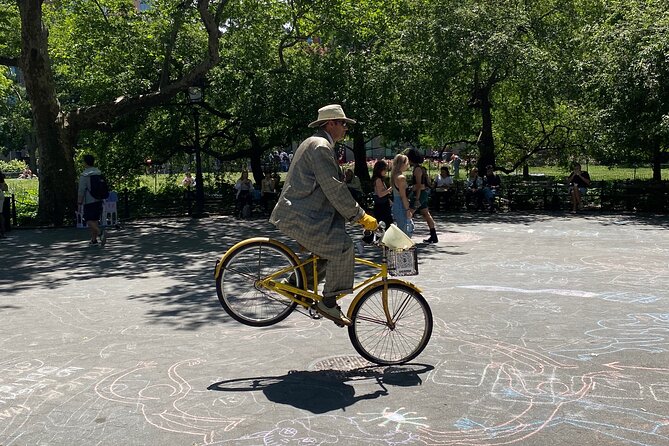
At Washington Square Park, you may hang out and learn the history of one of America’s important city parks. This isn’t a quick photo stop. It’s time to slow down and notice what a park does for a neighborhood—how it gathers people, shapes street life, and becomes part of the local rhythm.
MacDougal Street: songs, stories, stand-up
Then it’s a stroll down MacDougal Street, described as a place where songs, stories, and stand-up have bubbled up. This stop is about cultural energy—how nightlife and art don’t live only in theaters. They show up on sidewalks and in the spaces between.
Mamoun’s Falafel: 1971 and still a late-night favorite
Your next food moment is Mamoun’s Falafel, said to be the first falafel spot in NYC, opened in 1971 by Mamoun, a Syrian man. Today it’s run by his sons, but the tour framing makes the key point: 50 years later, it still delivers.
What you should expect: a fast, satisfying bite that fits the flow of the walk. If you’ve ever passed a place like this and wondered whether it’s worth the line, this is the kind of stop that turns curiosity into a yes.
Two Boots, Bleecker Street, and Taco Mahal fusion food
Now you’re deep in the West Village flavor zone—more dining variety, more personality, and more reasons to look up at storefronts while you walk.
Two Boots Pizza West Village: not your usual slice
At Two Boots Pizza, you’re told it’s not a standard slice experience. The shop is in a space that used to house a lesbian bar that refused to serve men, and today Two Boots welcomes everybody. That blend of past and present is part of the point: the neighborhood’s identity keeps shifting, but the spirit of it doesn’t vanish.
Food-wise, this is a stop that’s ideal if you want something filling without making the evening feel like a formal sit-down meal.
Bleecker Street: bars, boutiques, and famous faces
Then the walk moves along Bleecker Street, described as a mix of bars, boutiques, and beautiful people. The tour note that you might see a world-famous face walking past is part of the local vibe—not something you should plan your whole night around, but a reminder that this area still draws attention.
Taco Mahal: Latin/Indian fusion with great music
The tour ends up at Taco Mahal, a Latin/Indian fusion spot owned by a woman with a Puerto Rican mom and an Indian father, with a largely Nepali crew. The story matters because it matches what you get: innovation mixed with tradition, and food that feels colorful and deliberate. The stop also includes mention of great music, which helps you relax before the final stretch.
Marie’s Crisis, Janie’s cookies, and the Stonewall National Monument
The final portion is where the night turns into memory. You’re switching from “eat and walk” to “slow down and feel.”
Marie’s Crisis Cafe: subterranean sing-along piano
You end at Marie’s Crisis Cafe, a subterranean bar where you can sing along with a live piano player performing show tunes. Even if Broadway isn’t your main interest, the idea here is simple: music ties the room together, and you’re already in the right mood from the earlier stops.
This is also a good moment to catch your breath. You’ve been moving for hours, and this is where you stop and enjoy the payoff.
Janie’s Life Changing Baked Goods: pie-crust cookies
Before the final landmark, you visit Janie’s Life Changing Baked Goods for cookies, described as truly life-changing, plus an upbeat story of overcoming obstacles. The standout detail here is the staff and the specific type of cookie: amazing pie-crust cookies.
Stonewall National Monument: the 1969 uprising that changed history
Finally, you visit the Stonewall National Monument. The tour presents it as a must-visit in the West Village and references the 1969 uprising that galvanized the modern gay rights movement. You might also soak up the vibe at Christopher Park if the timing fits.
This is where the tour’s emotional arc lands. You’ve tasted comfort foods and walked past nightlife, but now the story clarifies the stakes: people fought for rights in these streets, not just in abstract places.
How the guide’s style keeps it fun, not forced
A big reason this walk earns such strong ratings is the way the guide handles the evening.
The tour uses input from the group, then pulls from a big bag of options so that not every outing feels identical. That flexibility means you’re more likely to get stops that fit your interests, rather than the same rigid route for everyone.
The guides also aim for interaction. Names you’ll see linked to this experience include Morgan, David, and Dan. Across those examples, the common theme is a friendly, not-stuffy approach, with guides checking in to make sure the group is doing well and keeping the conversation flowing.
And one practical design choice matters more than it sounds: there’s no branding and no headsets. You’ll blend in with other groups in the neighborhood. It also means you’ll need to stay alert when you gather, but it helps the experience feel normal and street-level.
Who should book this Greenwich Village night walk
I’d point this tour toward people who want:
- A first-time orientation to Greenwich Village and the West Village, built around food and real places
- A night activity that doesn’t feel like a museum lecture, because you’re eating and walking
- A way to learn why landmarks matter, including places tied to labor history and civil rights
- A group size that stays small and conversational (max 8)
It also makes sense for people who live in New York, or close to it, who think they already know the area. The route is designed to hit places you might walk by often without understanding what’s behind them.
If your main goal is long, sit-down meals, this likely won’t be your best match. This is a walking food night, with quick but meaningful stops and tastings that keep you moving.
Practical tips so your night goes smoothly
Here’s how to set yourself up for an easy win:
- Wear comfortable walking shoes. You’ll be on your feet for hours.
- Come hungry but not starving. The tastings add up across 4–5 spots, plus you may get beer at McSorley’s depending on your choices.
- Bring a layer. Evening weather can shift fast in NYC.
- If you want to drink, plan it for your own pace since drinks aren’t included.
- Since it runs on good weather, keep an eye on conditions so you don’t get stuck in a last-minute change.
Also, because there are no headsets, it helps to stand close during explanation moments. If you’re the type who likes to read signs slowly, you’ll still get moments to look—just don’t expect every stop to be a self-paced wandering window.
Should you book Village Nights: Greenwich Village Food & History Walk?
I think this is a smart booking if you want a guided Greenwich Village night that mixes comfort food with the kind of neighborhood history that actually explains the present. The price makes sense when you factor in food at multiple stops, water included, and a small group size that keeps the experience human.
Book it if:
- you like walking and want context along the way
- you want tastings at places you might not pick on your own
- you enjoy history that connects to real activism and real neighborhoods
Skip it if:
- you need a fully “informational” museum-style format
- you hate walking in the evening or get uncomfortable in crowds
- you strongly prefer private dining over quick tastings
If you’re choosing one evening plan in this part of Manhattan, this is the kind of tour that gives you both full stomach and a better understanding of where you are.