REVIEW · NEW YORK CITY
NYC: Chinatown & Little Italy Food Tour with 7 Flavorful Tastings
Book on Viator →Operated by Secret Food Tours · Bookable on Viator
Seven bites, two neighborhoods, one walking plan. This Chinatown & Little Italy food tour is a tight three-hour route that mixes street-level history with real restaurant stops, plus a guide who keeps the story flowing while you eat. It’s built for people who want more than a photo walk: you’ll cover Chinatown, Little Italy, and a swing through Nolita, with seven included tastings that range from dumplings to cheesecake.
I like that the value is simple and concrete: at $99, you’re not just paying for narration. You’re paying for seven specific bites that actually fill you up, including crispy handmade dumplings, a freshly baked roast pork bun, mochi donut holes, mini cannoli, brick-oven pizza, New York cheesecake, and a signature secret dish. Guides like Lauren, Grace, Dena, and Renee also show up in the reviews as a big part of the win, with their humor, warmth, and how they explain what you’re eating and why it matters.
One thing to consider: it’s a walking tour, and it can be cold or rainy since it’s outdoors-based. A review also flagged that early on in Chinatown there may be limited restroom options until you get farther toward Little Italy, so plan your timing and dress for the weather.
In This Review
- Key Highlights to Know Before You Go
- Why This Tour Works: Food, Context, and a Manageable Pace
- Start at Columbus Park: Gangs of New York’s Shadow on a Real Sidewalk
- Chinatown on the Ground: Canal Street as the Big Crossroads
- Little Italy: A Neighborhood That Still Shows Its Boundaries
- Nolita: When the Walk Ends in Trendier Streets
- The Seven Tastings: What You’ll Eat (and Why the Mix Makes Sense)
- Guides Matter: Why Lauren, Grace, Renee, and More Show Up So Often
- Logistics You Should Plan for: Shoes, Weather, and Restrooms
- Is It Worth $99? The Value Math for Food, Time, and Local Insight
- Who This Tour Fits Best (and Who Might Skip It)
- Should You Book This Chinatown & Little Italy Food Tour?
- FAQ
- What does the tour cost and how long is it?
- How many tastings are included?
- Where does the tour start and end?
- Is transportation included?
- How big is the group?
- Can you handle dietary requirements?
- Is the tour okay in bad weather?
Key Highlights to Know Before You Go
- Small group feel (up to 12 people) keeps the pace friendly and questions easy to answer
- Seven included tastings cover both savory and sweet, so you’ll likely skip (or shrink) dinner
- Chinatown to Little Italy to Nolita gives you three neighborhood moods in one afternoon
- History tied to real streets: you’ll hear why Columbus Park matters and how Canal Street became a crossroads
- Guides set the tone: names like Grace, Renee, Amanda, and David come up often for energy and clarity
Why This Tour Works: Food, Context, and a Manageable Pace
New York has plenty of food tours. What makes this one stand out is the balance between taste and understanding. You’re not just checking off dumplings, pizza, and sweets. You’re also getting the story of why these neighborhoods look and taste the way they do, and how the immigrant waves shaped the streets you’re standing on.
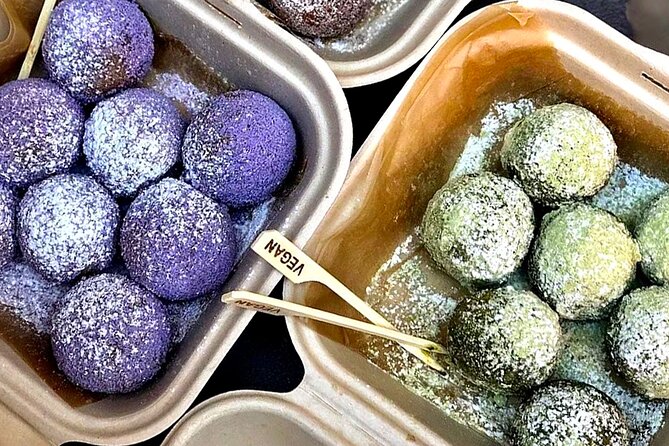
The seven included foods do a lot of heavy lifting for value. The menu isn’t just random variety—it’s a smart spread: dumplings and roast pork bun give you the classic savory start, mochi donut holes and mini cannoli bring the chewy-sweet contrast, and then you round out with brick-oven pizza and creamy cheesecake. By the end, most people are comfortably stuffed, not hopping onto a second meal immediately.
And the pacing tends to feel real-world. It’s about three hours, with walking between distinct areas of Lower Manhattan. Multiple reviews mention the route feels manageable and never drags. That matters because the streets here can be tricky for the feet and for the cold—so a guide who keeps moving at the right speed can make or break the experience.
You can also read our reviews of more food & drink experiences in New York City


Start at Columbus Park: Gangs of New York’s Shadow on a Real Sidewalk
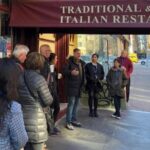
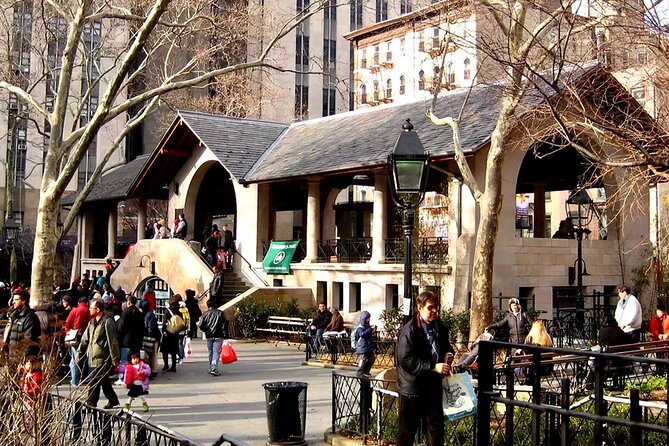
You’ll begin at 42 Mulberry St, then your first neighborhood stop is Columbus Park. This park has had a few names over time, and it sits in an area that was once one of the most dangerous immigrant zones in 19th-century New York. You may recognize the area through the cultural references that people commonly make when they talk about Lower Manhattan’s past.
Why this stop is useful: it sets the tone for the entire walk. You’ll see how today’s chess tables and Tai Chi practice exist right on top of a history that includes poverty, tension, and survival. That context helps the rest of the tour click. When you later taste food that reflects different communities, you’re not just sampling—you’re connecting it to real neighborhoods with real change over time.
Also, since this is an outdoor park, it’s a good reminder to dress appropriately. On cold days, a walking tour can feel longer. One guest specifically mentioned the guide worked to keep the group warm, so layers are a smart move even if the forecast looks mild when you book.
Chinatown on the Ground: Canal Street as the Big Crossroads
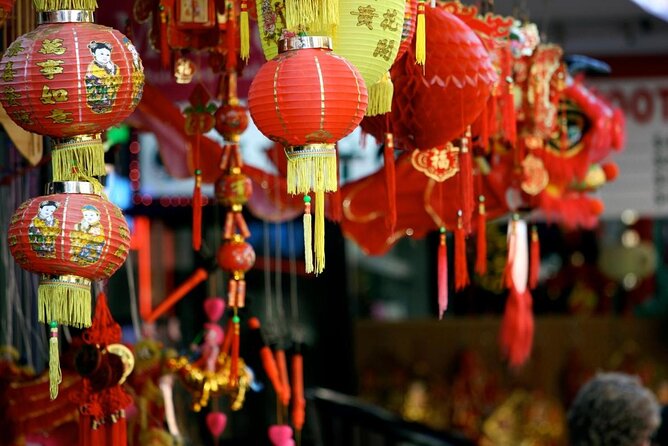
From Columbus Park, you’ll move through Chinatown, where you’ll run into the everyday machinery of the neighborhood: dumpling shops, pork buns, and noodle places that line up with how people actually eat here. The sidewalks are packed with markets and specialty stores, which is part of why this area is so fun even between food stops.
A key street in the story is Canal Street, described as a place where cultures collide, and also a main artery that connects neighborhoods like Chinatown, Little Italy, SoHo, and Tribeca. You’ll feel that shift as you walk: the focus moves from specialty storefronts and food signage to the broader mix of Lower Manhattan shopping energy.
If you care about how neighborhoods work, this is where you’ll notice it. Chinatown isn’t just one “attraction.” It’s an interlocking set of streets, businesses, and routines. The guide’s role is to help you read what’s in front of you instead of treating it like a theme park.
Little Italy: A Neighborhood That Still Shows Its Boundaries
Then you’ll head into Little Italy, the Lower Manhattan neighborhood known for its large Italian community. It’s bordered by other areas, including Tribeca/SoHo to the west and the Bowery/Lower East Side to the east—boundaries that help explain why it can feel like the streets shift character block by block.
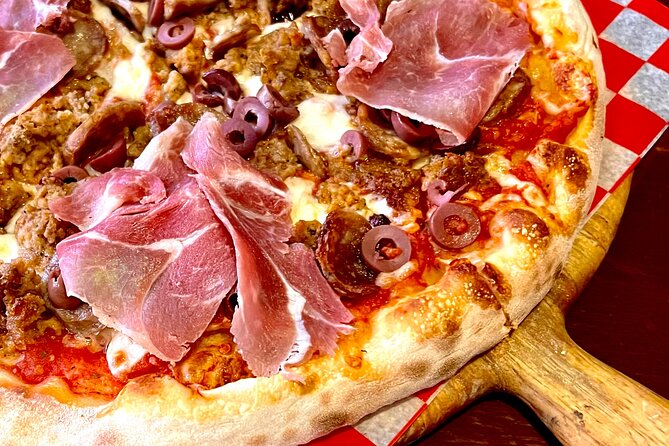
This is where the tour’s food mix starts to make extra sense. When you land on Italian staples like mini cannoli and brick-oven pizza, you’re tasting flavors that reflect a community that shaped this part of the city for decades. Even if your knowledge of Italian-American history is light, you’ll get enough context to see why these foods belong here.
One practical note: compared with Chinatown, Little Italy may feel a little easier to “move through,” but it’s still Manhattan. Wear shoes you can walk in for three hours without worrying about blisters.
Nolita: When the Walk Ends in Trendier Streets
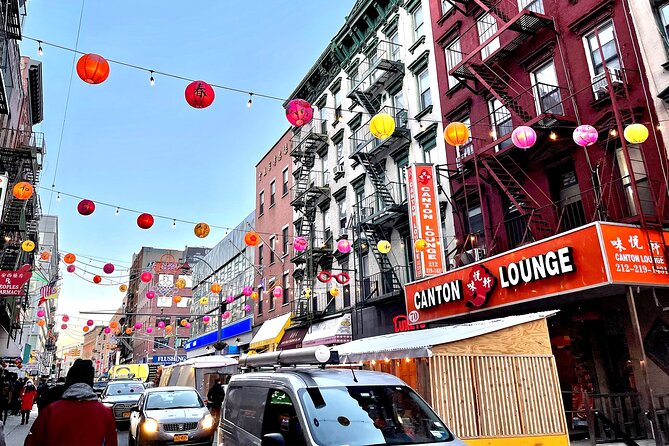
After Little Italy, the tour continues into Nolita, a more upscale, trend-forward pocket with designer jewelry shops, boutiques, and sidewalk cafes. The vibe can feel different from Chinatown and Little Italy in a way that makes the overall day feel like a real cross-section of Lower Manhattan.
Nolita also helps you understand how Lower Manhattan keeps changing. You’re seeing how neighborhoods evolve while keeping traces of their past—sometimes in the architecture, sometimes in the businesses nearby, and sometimes in how the street life flows.
If you like neighborhoods that feel more like you could stumble into them while shopping or people-watching, Nolita is a nice landing zone. It’s a good place to keep walking after the tour, especially if you want a smooth transition from food-sampling mode into exploring mode.
You can also read our reviews of more tours and experiences in New York City

The Seven Tastings: What You’ll Eat (and Why the Mix Makes Sense)
This tour is built around seven included foods—you don’t need to plan lunch. Here’s what to expect from the menu items you’ll actually be offered:
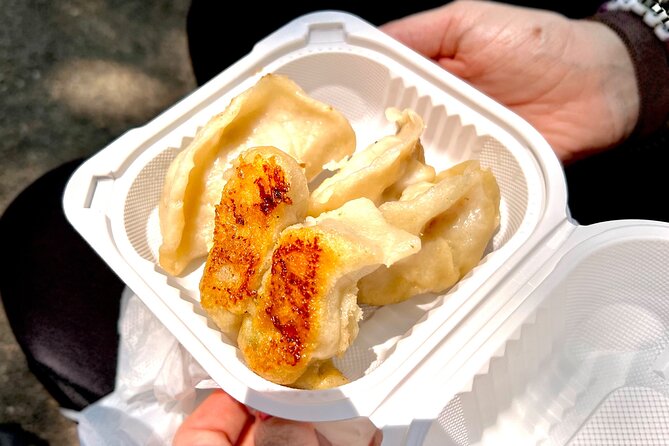
- Crispy handmade dumplings
Usually the kind of bite that turns into an immediate favorite because of the texture contrast: crisp outside, tender inside. These set your savory baseline for the rest of the day.
- Freshly baked roast pork bun
This is a comfort-food stop that keeps things classic for Chinatown. One guest singled out the bun as a standout, and that matches what people tend to love about this kind of item: it’s warm, filling, and flavorful.
- Sweet mochi donut holes
The tour doesn’t keep dessert until the end. Mochi donut holes bring chew and sweetness, and they also reset your palate before you move back into other savory flavors.
- Classic mini cannoli
Cannoli is a crowd-pleaser for a reason: creamy filling plus a crisp shell. The mini size is smart because you still have other tastings left, and you’re less likely to feel overwhelmed by sugar.
- Hot brick-oven pizza
This is a practical payoff in the middle of your day. Brick-oven pizza tends to give you a better crust story—char edges, a firm chew, and a more intense flavor than generic slices.
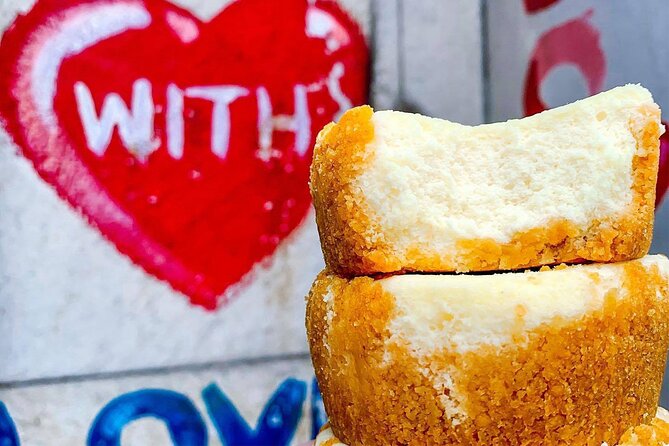
- Creamy New York cheesecake
The cheesecake shows up as the familiar, comforting finale dessert style. If you’re a classic New York sweets person, this one lands well.
- Our signature Secret Dish
This is the “save room” mystery component. Even though the exact item can vary day to day, the point is consistent: you’ll get at least one taste that feels a little less obvious than the standard dumpling/pizza/cheesecake combo.
Because the menu moves between savory and sweet, you don’t end up with one note for three hours. You’ll also likely discover one item you’d never seek out on your own.
Guides Matter: Why Lauren, Grace, Renee, and More Show Up So Often
In the reviews, the biggest repeated theme is that the guide changes the whole experience. Names like Lauren, Grace, Dena, Hannah, Amanda, Renee, Zachary, Noelle, and David come up again and again for doing two things well:
1) Making the walking feel like a story, not a list of stops
2) Explaining the food so you understand what to look for in the next bite
On cold or snowy days, guides are also praised for keeping the group comfortable. One review mentioned being on the coldest day of the year and how the guide tried to get everyone warmed up without letting the tour turn into an endless park bench lecture.
If you want a strong “eat + learn” experience, this is the part you should care about most. A great guide helps you connect the dots between streets, people, and food.
Logistics You Should Plan for: Shoes, Weather, and Restrooms
This is a walking tour with a duration of about three hours. You’ll want comfortable shoes because Lower Manhattan sidewalks don’t always cooperate with sightseeing pace—especially when the weather turns.
Weather matters. The tour is described as requiring good weather, and if it gets canceled due to poor weather, you’ll either be offered a different date or a full refund. That’s helpful because food tours can get miserable fast in rain.
Restrooms are the only real operational question mark I’d flag. One review pointed out that early stops in Chinatown may not have convenient restrooms until later in the route, and park restroom options can be rough. So: if you’re someone who needs frequent stops, I’d treat restroom planning as part of the itinerary. Try to go before the tour starts, then check in with the guide if you have a timing concern.
One small money tip: one guest mentioned bringing cash to tip. That’s not listed as a requirement, but it’s a practical habit in case tips are handled that way for your guide.
Is It Worth $99? The Value Math for Food, Time, and Local Insight
At $99 per person, the price makes sense if you look at what you’re getting:
- Seven tastings are included, not counted as extras you might skip.
- You’re spending about three hours with someone who guides you through streets that can be confusing if you’re just wandering.
- The group size caps at 12, which usually means you’re not shouting across a crowd and you can actually ask questions.
The biggest “cost” beyond ticket price is time and comfort. Transportation is not included, so you’ll want to budget for subway or taxi to get to 42 Mulberry St and back from roughly Lafayette Street & Cleveland Place.
If you like food but also want the neighborhood story, it’s a strong deal. If you’re already an expert on Lower Manhattan food history and you hate structured group walks, you might feel like the guidance portion is more than you need. Most people are happy because the tastings carry the weight—and the guide makes them land in the right context.
Who This Tour Fits Best (and Who Might Skip It)
This tour fits best if you want:
- a first-time Lower Manhattan experience that doesn’t feel overwhelming
- classic neighborhood foods plus one surprise tasting
- a guide who helps you understand what you’re eating
- a small-group format that feels like a guided walk, not a bus tour
It’s also a solid option for groups with teenagers, since the route is short enough to keep energy up and the food variety tends to reach different tastes.
You might consider skipping if:
- you don’t want to walk much (this is still a walking tour)
- you need frequent restrooms and want a tour with guaranteed facilities at every stop
- you’re extremely picky about specific dietary needs (the tour notes that dietary requirements should be discussed in advance)
Should You Book This Chinatown & Little Italy Food Tour?
Book it if you want an easy win in Lower Manhattan: seven included tastings, a short guided route, and stories that help you see why these neighborhoods look the way they do. The standout in the feedback is the guide energy—people come away saying they felt fed, oriented, and entertained.
Consider another option if you hate outdoor walking in cold weather or if restroom access is a top priority for you. In that case, plan extra buffers and dress for winter.
If you’re deciding between “wandering on your own” and “a guided food loop,” this tour leans toward the guided side for a reason: the route connects three neighborhoods fast, and the food choices do enough variety that you won’t feel stuck eating the same type of bite all day.
FAQ
What does the tour cost and how long is it?
The tour costs $99 per person and runs for about 3 hours.
How many tastings are included?
You’ll receive seven foods as part of the tour: dumplings, a roast pork bun, mochi donut holes, mini cannoli, brick-oven pizza, New York cheesecake, and a signature secret dish.
Where does the tour start and end?
It starts at 42 Mulberry St, New York, NY 10013, and ends around Lafayette Street & Cleveland Place (near Lt. Petrosino Square).
Is transportation included?
No. Transportation is not included, so you’ll need to plan how to get to the meeting point.
How big is the group?
The maximum group size is 12 travelers.
Can you handle dietary requirements?
You should contact the team in advance about dietary requirements so they can cater as best as possible.
Is the tour okay in bad weather?
The tour is described as requiring good weather. If it’s canceled due to poor weather, you’ll be offered a different date or a full refund.