REVIEW · NEW YORK CITY
Wall Street and Financial District Walking Tour
Book on Viator →Operated by New York Tours · Bookable on Viator
Wall Street makes sense fast. For $34.95, you get a two-hour small-group walk through Lower Manhattan with a licensed guide, big visuals, and the kind of stories that connect money, politics, and famous names. It’s a great way to orient yourself in New York without getting lost in trivia or architecture staring contests.
I especially like the way the tour turns finance history into something you can follow—Standard Oil, Rockefeller-era power, and Warren Buffett’s rise all get explained in plain language. I also like the practical touch: guide Richard brings laminated info sheets and keeps the pace lively, plus photo moments for the group. One possible drawback: this is a fast-paced walk, so if you want slow strolling and long pauses at every corner, you may need extra time on your own after.
In This Review
- Highlights Worth Showing Up For (Quick Hit)
- Price and Value: $34.95 for a Story-Driven Wall Street Primer
- Starting at 20 Dey St: How the Guide Sets the Tone Early
- Federal Hall: Where Politics, Religion, and Finance All Touch
- The Personalities Behind the Money: Rockefeller, Buffett, and Standard Oil
- A Strange, Memorable Finish: National Museum of the American Indian and the Bankruptcy Court
- Photos, Laminated Sheets, and the Small-Group Advantage
- Liberty Upgrade: Statue of Liberty and Ellis Island Made Part of the Same Day
- Who Should Book This Tour (and Who Might Prefer Something Else)
- Should You Book This Wall Street Walking Tour?
- FAQ
- What is the duration of the Wall Street and Financial District Walking Tour?
- How much does the tour cost?
- Where is the meeting point and when does the tour start?
- Is this a small group tour?
- What is included in the tour price?
- What sights are covered on the main walking portion?
- What does the Statue of Liberty and Ellis Island upgrade include?
- Is the Liberty upgrade wheelchair accessible?
- Are service animals allowed and can children join?
- Are gratuities included, and what is the cancellation policy?
Highlights Worth Showing Up For (Quick Hit)
- Extra Large Visuals make Wall Street history easier to grasp on the move
- Federal Hall moments tie George Washington’s oath to the birth of American democracy
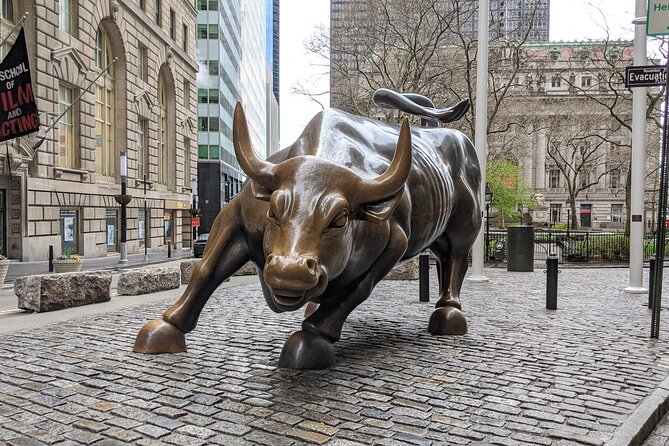
- Icon statues with context: Fearless Girl and Charging Bull, explained instead of just spotted
- Trinity Church links Hamilton and Fulton to the city’s early power players
- An unusual finish inside the National Museum of the American Indian, where a U.S. bankruptcy court sits—connected to the Bernie Madoff case
- Optional Statue of Liberty + Ellis Island upgrade with a free headset and ferry seating options
Price and Value: $34.95 for a Story-Driven Wall Street Primer
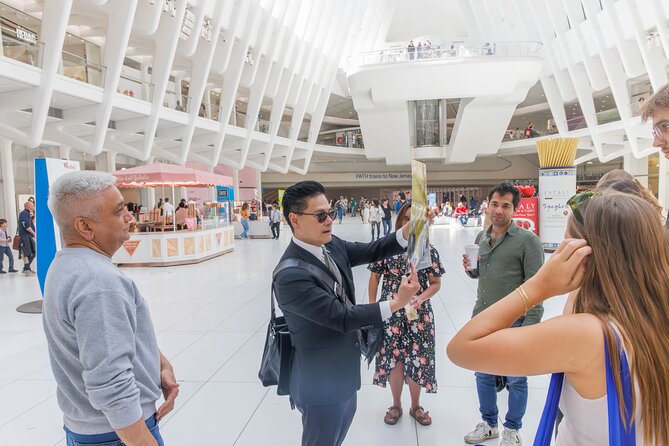
At $34.95 for about two hours, this tour sits in the sweet spot for first-time NYC trips: not so cheap that it feels like a bare-bones walk, and not so expensive that you need to justify every minute. The value comes from structure. You’re not just seeing Wall Street—you’re getting the “how it became this” behind it, with stops that explain why certain buildings, statues, and institutions matter.
I like that the tour is designed for understanding, not just observation. The included Extra Large Visuals and the laminated sheets used by guide Richard help you read the story even if you’re not a finance person. If you’ve ever stared at skyscraper names and thought, okay, but who actually built this and why—this format helps.
It also helps that the experience is capped at 15 travelers. That small cap matters more than people think. You’re more likely to get answers to questions and less likely to lose the thread when you pause to look at something.
You can also read our reviews of more walking tours in New York City



Starting at 20 Dey St: How the Guide Sets the Tone Early
You meet at 20 Dey St in Lower Manhattan, with a 2:30 pm start time, and the walk is paced like a guided news segment: fast enough to keep momentum, clear enough to follow. The route is built around a single theme—Wall Street becoming the world’s financial center—and it doesn’t waste time.
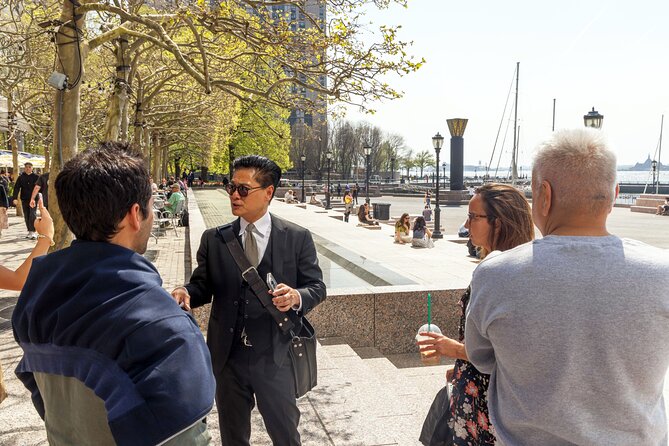
Within the opening stretch, guide Richard uses the neighborhood itself as the textbook. You start with the origin story of the New York Stock Exchange, then broaden quickly into the personalities and power systems that made Wall Street move markets. The payoff here is clarity. Instead of treating finance history like an abstract topic, you see it as a chain of decisions, laws, and business empires.
A fun detail from how the guide works: he’s energetic, and the conversation stays high. Several people describe it as high-octane but thoughtful, and you can feel the difference between a lecture and a walk with room for back-and-forth.
Federal Hall: Where Politics, Religion, and Finance All Touch
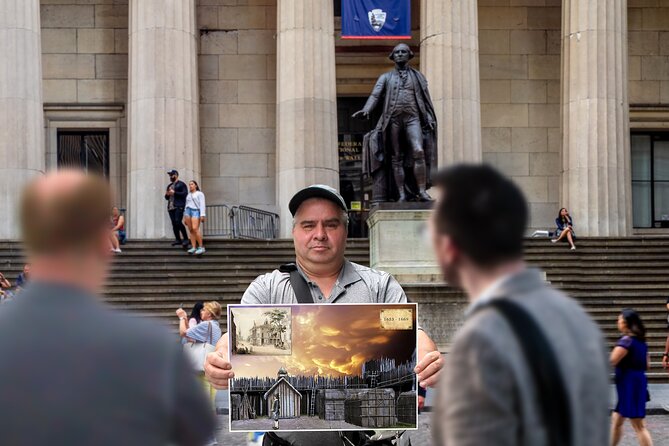
One of the best parts of the tour is how it anchors big Wall Street ideas in specific civic moments. In the Federal Hall area, you’ll connect the idea of American democracy to the people and institutions that later shaped the country’s economic power.
This is where you visit Federal Hall, described as the birthplace of American democracy. You also stand where George Washington took the Oath of Office—a detail that instantly changes the mood. Wall Street is often framed as purely money and markets, but Washington’s oath puts the focus back on governance and legitimacy.
The tour then threads from there into other landmark anchors nearby:
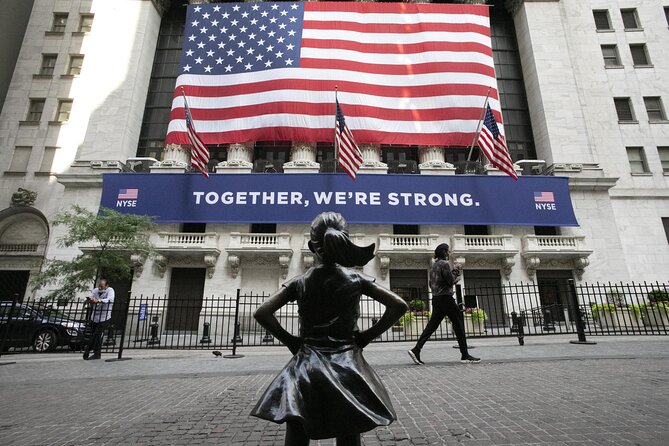
- Fearless Girl: you’re not just told where to stand for a photo. You get meaning behind the statue and the message it was designed to project.
- Charging Bull: same deal. It becomes a story point, not a random sculpture stop.
- Trinity Church: you visit the final resting place of Alexander Hamilton and Robert Fulton, which ties the city’s financial and technological roots together.
Why I like this sequence: it forces you to see that Wall Street didn’t rise in a vacuum. It grows next to founding stories, early political power, and the institutions that helped the young U.S. function. Even if you don’t care about stocks, those connections make the area feel less like an office park and more like a living history lesson.
The Personalities Behind the Money: Rockefeller, Buffett, and Standard Oil
Wall Street history is full of names, but a tour can easily turn them into a memorization exercise. This one avoids that. It uses the stories of major business figures to explain how power gets built—and how it can get controlled or challenged.
You’ll hear about the rise of the New York Stock Exchange and how it grew into the world’s largest exchange, noted here as valued at $20 trillion. From there, the guide turns to the larger ecosystem: empires and dynasties, and how one company’s behavior can reshape the rules.
A standout theme is Standard Oil and the story of how it became an illegal monopoly. That single thread gives you context for how American society has repeatedly tried to balance business growth with competition and law. The tour doesn’t get stuck on dates; it links the monopoly story to what it means for finance and regulation.
Then it pivots to Warren Buffett, including the famous arc from paperboy to the founder of Berkshire Hathaway. That’s a powerful contrast to the oil-era story. It’s not just “big companies win.” It’s how different eras produce different paths to power—some built on industrial consolidation, some on long-term investing and business patience.
If you’re visiting from outside the U.S. or you’re not steeped in American business lore, this is a helpful bridge. If you already know some names, you’ll still get the connecting logic that makes everything click faster.
A Strange, Memorable Finish: National Museum of the American Indian and the Bankruptcy Court

Most Wall Street tours end with a photo and a goodbye. This one adds a left turn—one that makes the whole experience stick in your memory.
The tour finishes inside the National Museum of the American Indian. That building is more than an arts and culture stop in this context, because it currently houses the U.S. bankruptcy court of New York—and the guide points out that the Bernie Madoff case was heard there.
This is the kind of detail that changes how you see a place. Wall Street can feel like pure aspiration and future wealth when you’re looking at it from a distance. Ending in a bankruptcy court makes the story real. It reminds you that finance also creates fallout—legal, personal, and public.
It also gives you a satisfying “full circle” feeling: you started with democracy and institutions, learned how money systems grew, and ended with the system’s consequences when things go wrong.





Photos, Laminated Sheets, and the Small-Group Advantage

Guide Richard is a big reason this tour works as a first pick. The style you’ll feel is humor plus structure, and it’s built for different learning speeds. He brings laminated sheets that help you keep up without squinting at tiny print or trying to remember everything while walking.
You’ll also get photo attention. Several people note that Richard takes group pictures and chooses strong photo spots along the route. That matters because Lower Manhattan can be chaotic and wind-whipped. Having someone who knows where to stand—and does it without making it awkward—saves you time and stress.
The group size limit (max 15) supports all of that. It’s easier to ask a question when the group isn’t too large, and the walk stays more personal. That’s one reason the reviews rate this so highly—people aren’t just getting a transcript; they’re getting interaction.
Liberty Upgrade: Statue of Liberty and Ellis Island Made Part of the Same Day
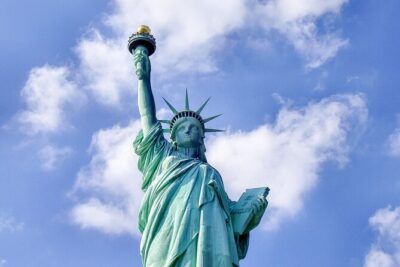
If you want more than Wall Street, the Statue of Liberty upgrade connects perfectly. You get general admission to the Statue of Liberty and Ellis Island, and the guide presents your tickets at the end of the tour.
Here’s what’s useful to know before you add it:
- Ferries offer inside or outside seating
- Wheelchair accessible is explicitly included for this upgrade
- On Liberty Island, there are free headsets available for self-guided tours
- You also get access to Ellis Island, with immigration artifacts from 1892 and 1954
- Concessions and souvenirs are available on board the ferries
The free headset tip is practical. It means you’re not locked into waiting for narration all day. You can go at your pace once you’re there.
This upgrade also keeps the day coherent. Wall Street is about money and power; Liberty and Ellis Island are about identity, migration, and the human side of American history. Put together, it makes a full Lower Manhattan story, not just a checklist of landmarks.
Who Should Book This Tour (and Who Might Prefer Something Else)
This walk is a good fit if:
- you’re in NYC for a short time and want Wall Street context fast
- you’re curious about American business history without wading through textbooks
- you want a tour with active guide energy and frequent chance to ask questions
- you’d like photo help and printed-style info while walking
It might be less ideal if:
- you want an unhurried, slow-moving sightseeing day
- you’re the type who hates standing still for explanations
- you’re only interested in architecture and want zero discussion about money, markets, and legal history
For many people, the biggest benefit is that it helps you understand what you’re seeing. After two hours, the financial district feels less random. Names and symbols start to mean something, and you’ll likely feel more confident navigating on your own.
Should You Book This Wall Street Walking Tour?
Yes, if your goal is to get oriented and learn the story behind Wall Street in a way that actually sticks. The price is reasonable for what you get: a guided, structured walk with Extra Large Visuals, landmark stops that connect politics to business, and a guide like Richard who brings both humor and real-world experience from the financial district. The finish inside the National Museum of the American Indian—and the link to the bankruptcy court and the Bernie Madoff case—adds a memorable edge.
If you’re doing a classic NYC highlights day, consider adding the Liberty upgrade. It turns your afternoon into a two-part history story: how America built economic power, and how America built its people through migration.
FAQ
What is the duration of the Wall Street and Financial District Walking Tour?
The tour lasts about 2 hours.
How much does the tour cost?
It costs $34.95 per person.
Where is the meeting point and when does the tour start?
The start is at 20 Dey St, New York, NY 10007, and the start time listed is 2:30 pm.
Is this a small group tour?
Yes. The experience has a maximum of 15 travelers.
What is included in the tour price?
The tour includes a narrated 2-hour walking tour using Extra Large Visuals and a licensed professional tour guide. You also receive a mobile ticket and the tour is offered in English.
What sights are covered on the main walking portion?
You’ll see Federal Hall, Fearless Girl and Charging Bull, the area tied to George Washington’s Oath of Office, Trinity Church, and the tour finishes inside the National Museum of the American Indian. The guide also points out that the museum building houses the U.S. bankruptcy court of New York, connected to the Bernie Madoff case.
What does the Statue of Liberty and Ellis Island upgrade include?
The Liberty upgrade includes general admission to the Statue of Liberty and Ellis Island. The guide presents the tickets at the end of the tour, and ferries have inside or outside seating. There are also free headsets available for self-guided tours on Liberty Island.
Is the Liberty upgrade wheelchair accessible?
Yes. The upgrade includes wheelchair accessibility.
Are service animals allowed and can children join?
Service animals are allowed. Children must be accompanied by an adult.
Are gratuities included, and what is the cancellation policy?
Gratuities are not included; they are welcomed and appreciated. You can cancel for a full refund if you cancel up to 24 hours in advance; within 24 hours, no refund is available.