REVIEW · NEW YORK CITY
World Trade Center 911 and Ground Zero Walking Tour
Book on Viator →Operated by New York Tours · Bookable on Viator
A walk that makes Ground Zero make sense. This World Trade Center 9/11 walking tour pairs a private local guide with extra-large visual aids, so the story clicks while you’re looking at the memorial and new towers. The route is designed for real understanding, not just photo stops.
I also like the FDNY connection right at the start, with Captain John Jonas and his team Dragon Fighters, plus the option to add museum time or go up to One World Observatory at your own pace. One consideration: it can run toward 5 hours and you’ll be walking, so bring patience for crowds and real comfort for your feet.
In This Review
- Key highlights at a glance
- Getting oriented at the Oculus, plus the FDNY start
- Memorial Plaza overlooks: seeing the whole complex at once
- Brookfield Place and Battery Park City: Operation Aegis in plain language
- Winter Garden’s glass pavilion and the Eleven Tears Memorial
- World Trade Center complex: design choices, Building Four, and the Survivor Tree
- Upgrading to the 9/11 Memorial Museum: when self-guided time helps
- Upgrading to One World Observatory: the 100th-floor views and the 47-second ride
- Pace, comfort, and how to make the walk feel doable
- Value check: does $34.95 make sense here?
- Who should book this tour (and who might want to think twice)
- Should you book this World Trade Center and 9/11 tour?
- FAQ
- Where does the tour start and where does it end?
- How long is the walking tour?
- Is the tour offered in English?
- What is included in the base tour price?
- Can I upgrade to visit the 9/11 Memorial Museum?
- Can I upgrade to visit One World Observatory?
- Is the museum or observatory part self-guided?
- What does the One World Observatory package include?
- Can I get a full refund if I cancel?
- Are service animals and children allowed?
Key highlights at a glance
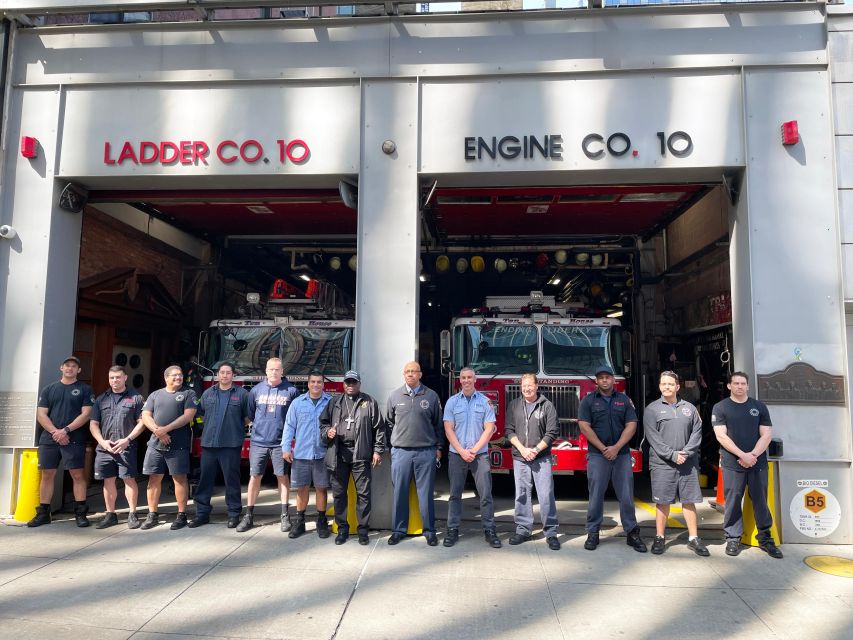
- FDNY-led context from the start with Captain John Jonas and the Dragon Fighters team
- Extra-large visuals that turn today’s skyline into a timeline
- Operation Aegis explained clearly with the huge sea evacuation scale (over 500,000 people)
- Winter Garden and Eleven Tears Memorial for human-scale stories amid the architecture
- Upgrade options for museum and observatory with preferred access and self-guided time
- Smart pacing with question time so you’re not stuck listening without a chance to process
Getting oriented at the Oculus, plus the FDNY start
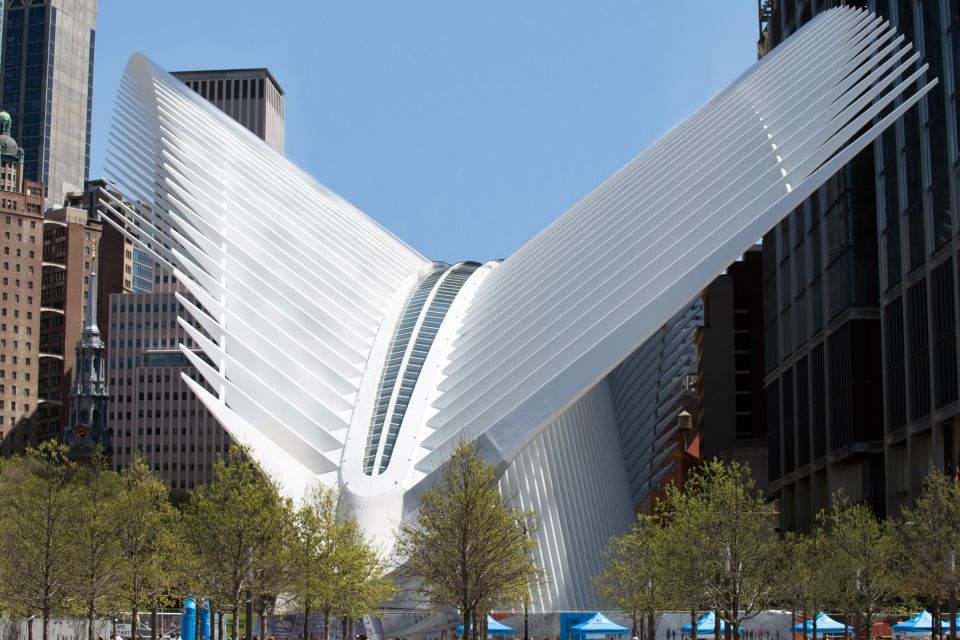
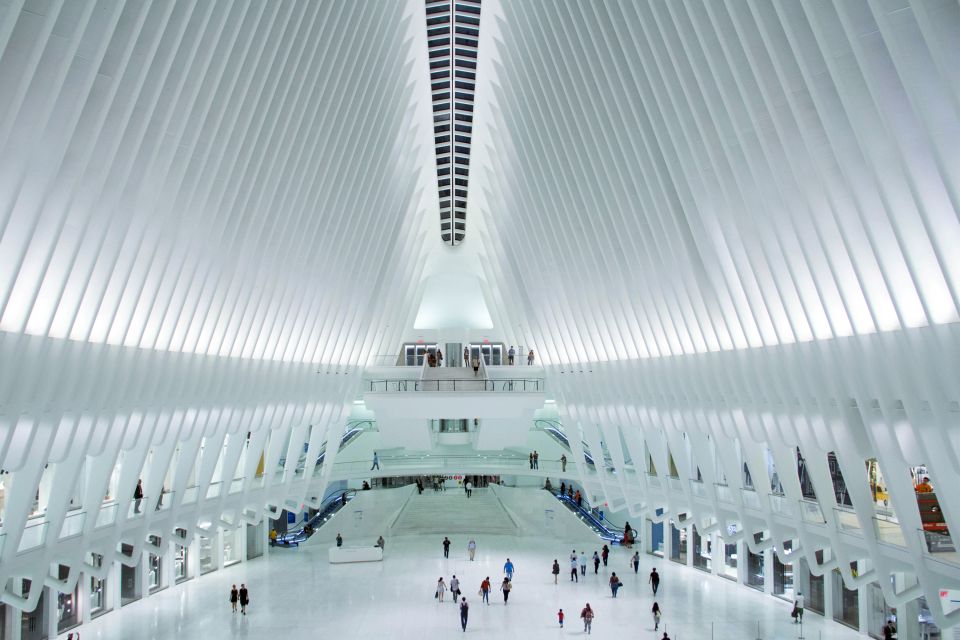
The tour meets at 20 Dey St, New York, and check-in happens near the 9/11 Memorial area. From there, you head to the Oculus zone, with the first stop timed around the Starbucks across the street. It’s a practical way to begin: you get your bearings fast, and you’re already in the heart of the Lower Manhattan rebuild.
A standout moment is the FDNY connection. You’ll be introduced to Captain John Jonas from the New York City Fire Department, along with his team, the Dragon Fighters. It sets the tone for the whole walk. You’re not just touring buildings. You’re learning how people responded, what responders faced, and how the evacuation and aftermath unfolded.
Even the Oculus stop has a value beyond “getting your photo.” The area is known for being a major transit hub, and it gives you a chance to orient yourself before the tour starts pointing out sightlines toward the memorial and One World Trade Center.
You can also read our reviews of more walking tours in New York City



Memorial Plaza overlooks: seeing the whole complex at once
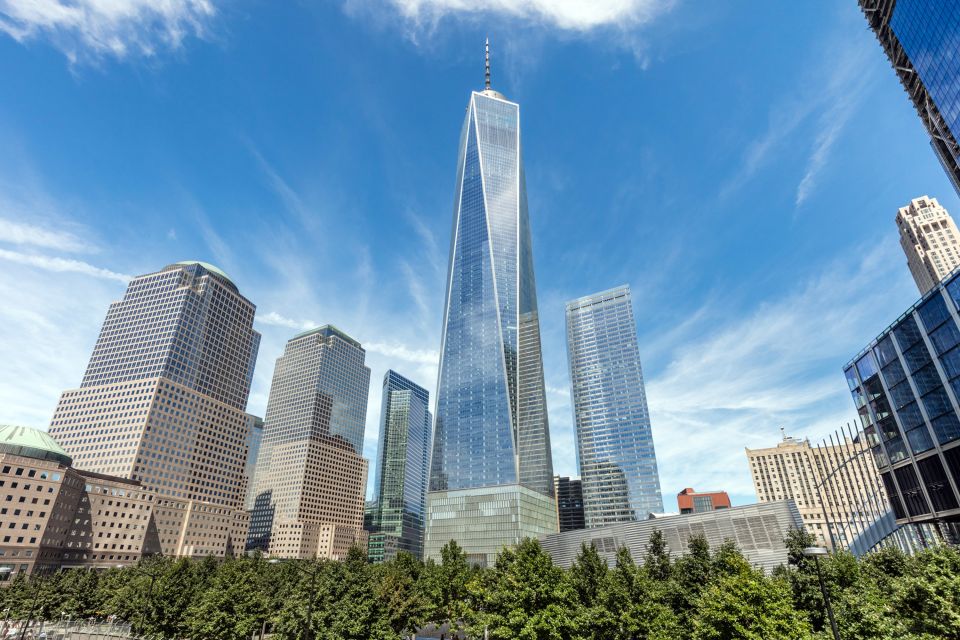
Next you’ll move to an overlook where you can take in the memorial’s main features. From this viewpoint, you can see the broader layout: One World Trade Center, the Reflecting Pools, and the 9/11 Museum footprint. This is where a guided story really matters. If you walk the site on your own, you may understand where things are, but not why the pieces were rebuilt the way they were.
The guide uses extra-large visual aids, which helps a lot here. When you’re standing among sleek structures, it’s easy for your brain to treat it as just another Manhattan scene. Big visuals anchor you back to the chronology and scale of what changed.
You’ll also get time to ask questions. That sounds basic, but it’s huge on a topic like this. You can stop and clarify, and you can ask the kinds of questions that don’t pop into your head until you’re standing in the exact place where something happened.
Brookfield Place and Battery Park City: Operation Aegis in plain language
From the memorial overlook, the route moves toward the World Financial Center area and Brookfield Place/Battery Park City. This is a smart pivot. It gets you out of the immediate “memorial only” focus and into the response that happened beyond the site itself.
This is where you learn about Operation Aegis, described as the greatest maritime evacuation in history. The most striking part is the scale: over 500,000 civilians were evacuated by watercraft of all sizes. Hearing it in context matters. From the waterfront, you can better picture why ships were part of the rescue plan and what “evacuation by sea” actually meant in real-world terms.
This stop is also valuable because it broadens the story. Many people remember the towers falling. Fewer people remember how the city tried to move people to safety once parts of the skyline and transport routes were overwhelmed. A good guide keeps that from becoming a random fact and turns it into a real mental picture you carry with you.
Winter Garden’s glass pavilion and the Eleven Tears Memorial
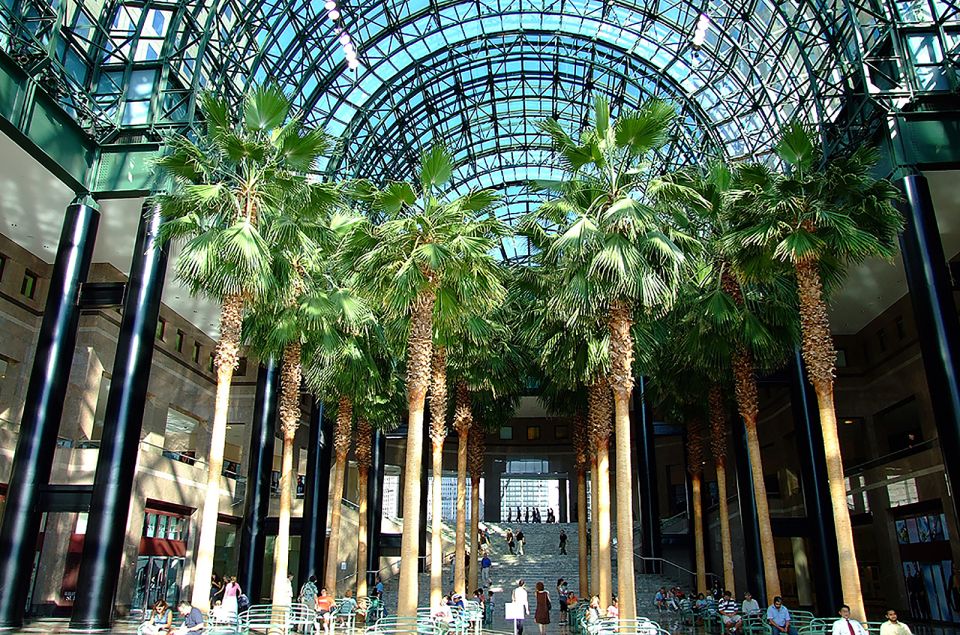
The tour then heads to the reconstructed Winter Garden, a major visual and emotional stop. This isn’t a quick glance. You’ll see the space as a symbol of recovery: a ten-story glass pavilion that was devastated during the attacks and rebuilt at an estimated $60 million.
Why I like this part of the route: it gives you a pause from the hardest details and lets you see how the site’s designers chose to rebuild a public interior. Even if you’re not into architecture, this place helps you process the shift from tragedy to rebuilding without skipping the seriousness.
Next comes the Eleven Tears Memorial, dedicated to the eleven American Express employees who were lost. This is where the story turns sharper and more personal. Memorials like this work best when you understand who is being remembered and why that matters to the community that called that workplace home.
If your group is quiet, it’s the kind of stop where you’ll feel it. If your group is talkative, it’s still worth it, because the guide’s job is to keep facts tied to real meaning.
World Trade Center complex: design choices, Building Four, and the Survivor Tree
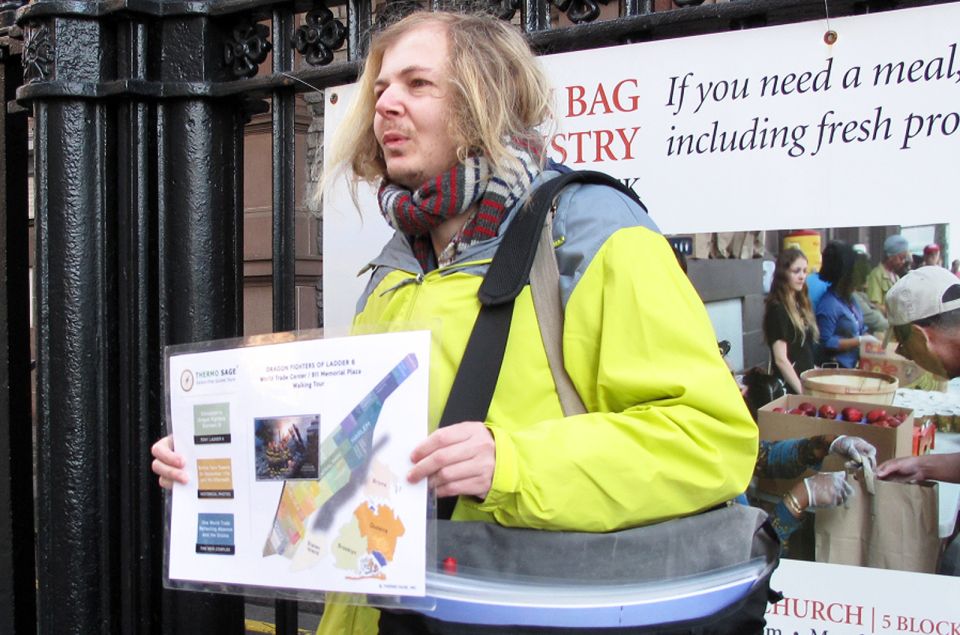
As the walk continues, you reach the World Trade Center complex area and the guide connects what you’re seeing to design and construction decisions. You’ll also hear the story of the mystery of the lost gold and silver reserves of Building Four.
That might sound like a detour, but it’s actually a useful kind of detail. It reminds you that the site wasn’t just buildings and people in a headline moment. There were systems, resources, and financial realities tied to the towers and the larger complex—some of which became part of the post-attack questions.
Then there’s the Survivor Tree. This is one of the stops where a guide can make your time here feel meaningful instead of purely symbolic. The guide explains its resilience, survival, and rebirth, and that frames the tree as more than a photo prop.
If you’re someone who likes to understand why places look the way they do, this section is for you. You leave with a clearer sense of how the rebuild tried to balance security, function, and remembrance.




Upgrading to the 9/11 Memorial Museum: when self-guided time helps
If you choose the 9/11 Memorial Museum package, you get preferred access and entry. The museum portion is self-guided, typically giving you up to about 2 hours. That’s a good setup because the museum has enough artifacts and personal items to keep you busy, and pacing yourself matters.
The museum itself includes historical artifacts and donated personal items connected to the attacks. The “self-guided” format is a real advantage here. You can linger over what hits you most. You can also skip faster through sections that feel less relevant to your questions.
One practical tip: if your mind starts to get crowded, take short resets. Step back, regroup, and then return. A guided walk helps you frame what you’re seeing, but the museum is where you do the emotional and intellectual processing on your own terms.
Upgrading to One World Observatory: the 100th-floor views and the 47-second ride
If you pick the One World Observatory package instead, the tour handles preferred access and you’ll head up with HyperSpeed elevators. The elevator ride lasts about 47 seconds, and during that ride you’ll see a transformation timeline of Manhattan.
This matters because the observatory view is more powerful when you understand the “before and after” layer. You’re looking at Lower Manhattan from a height, but your brain needs context for why the skyline changed and what parts represent recovery.
At the top, you get views of four different states. The self-guided time (around 1 hour) is helpful. You can watch the city shift in the distance, find the angles you care about, and take your time with photos and quiet moments.
This upgrade is a strong choice if you want a clean wrap-up at the end of the emotional story. It doesn’t erase anything. It just gives you a sense of scale and perspective over a place that keeps reinventing itself.
Pace, comfort, and how to make the walk feel doable
A common theme in how this tour is described: it’s well organized, and your guide is expected to keep moving while still leaving time for questions. Still, the route spans about 2 to 5 hours, depending on whether you add the museum or observatory.
So plan for real walking. Wear comfortable shoes. The meeting area and the route around the memorial can get cold and windy, especially in cooler months, and that’s not the kind of thing you want to fight through without layers.
If you’re sensitive to fast pacing, this is your heads-up. One smooth way to handle it: commit to asking questions as you go. When the guide checks in with the group and you get answers early, later stops feel less like information overload.
Also, the tour is private to your group, so you’re not stuck with random pacing from other people. That’s a big quality-of-life win, especially when the topic is emotionally heavy and you want your own group rhythm.
Value check: does $34.95 make sense here?
The base price is $34.95 per person, and the tour includes the narrated walking experience with extra-large visuals, plus all fees and taxes. The practical value here is that the guide compresses a lot of context into a route that you might find hard to stitch together on your own—especially when you’re trying to understand what you’re seeing in the exact order it happened.
The “watch your wallet” part: the museum and observatory are upgrades. Admission to the National 9/11 Memorial & Museum and One World Observatory isn’t included in the base walking tour, so you’ll want to budget for the add-ons if those are central to your plan.
But even with upgrades in mind, the structure is efficient. You get a guided framework during the walk, then you choose whether you want museum artifacts and personal items or an observatory view with the timeline ride and four-state panorama. Either way, you’re not paying for just transportation and standing around.
Finally, it’s typically booked around 39 days in advance on average. If you’re traveling in peak season or around major dates, don’t wait until the last week to lock it in.
Who should book this tour (and who might want to think twice)
Book this if you want:
- A guided explanation of what you’re looking at across the memorial, waterfront response story, and the rebuild
- Big visual aids that help you connect today’s spaces to what happened
- A route that ends in the 9/11 Memorial area so you can continue at your own pace after
Consider another approach if:
- Your group needs lots of frequent breaks. Even with question time, this is still a walking tour.
- You prefer a strictly self-guided museum-first day. This tour’s value comes from the walk’s storytelling structure.
If you like guides who move with energy and keep the group engaged, you’ll likely feel the difference. Many guides are described as empathetic, respectful, and good at answering questions. One name you might hear in examples is Chris, and another is David, both praised for clarity and patience; Richard and Christopher are also mentioned for keeping the experience moving with strong explanations.
Should you book this World Trade Center and 9/11 tour?
Yes, I’d book it if this is your first serious look at Ground Zero. For the money, you’re buying time-saving context and a guided route that connects the dots between locations people often see as separate. The optional museum and observatory add-ons give you two different ways to deepen the visit—artifacts and personal items inside, or city-scale perspective above.
Just go in with realistic expectations: you’ll be walking, you’ll be learning, and you’ll be facing a subject that asks you to slow down mentally at times. If you’re ready for that, this tour is one of the most practical ways to understand the site without missing the key stories.
FAQ
Where does the tour start and where does it end?
The tour starts at 20 Dey St, New York, NY 10007 and ends near 180 Greenwich St, New York, NY 10006, at the 9/11 Memorial area.
How long is the walking tour?
The duration is about 2 to 5 hours (approx.), depending on which parts you add and how you pace your stops.
Is the tour offered in English?
Yes. It’s offered in English.
What is included in the base tour price?
The base includes a narrated walking tour with extra-large visual aids, plus all fees and taxes. Museum and observatory admission are available as upgrades.
Can I upgrade to visit the 9/11 Memorial Museum?
Yes. There is a 9/11 Memorial Museum upgrade with preferred access. Museum admission is not included.
Can I upgrade to visit One World Observatory?
Yes. There is a One World Observatory upgrade with preferred access. Observatory admission is not included.
Is the museum or observatory part self-guided?
Both the 9/11 Memorial Museum and One World Observatory portions are self-guided, and you can explore until closing.
What does the One World Observatory package include?
You’ll take the HyperSpeed elevators to the 100th-floor observatory, including a 47-second ride with a timeline transformation of Manhattan, plus about 1 hour for self-guided viewing.
Can I get a full refund if I cancel?
Yes. You can get free cancellation with a full refund if you cancel up to 24 hours in advance. If you cancel less than 24 hours before the start time, you won’t receive a refund.
Are service animals and children allowed?
Service animals are allowed. Children must be accompanied by an adult.