REVIEW · NEW YORK CITY
Best of Brooklyn Walking Tour: Historic Bridge, DUMBO & Heights
Book on Viator →Operated by Revolutionary Tours NYC · Bookable on Viator
One borough, one big walk, and a skyline reward at the halfway point. This tour strings together historic Brooklyn Bridge views, DUMBO streets, and Brooklyn Heights Promenade in about three hours with a licensed NYC guide. I like that the pacing is built for both photos and facts, including Revolutionary War context, plus lots of real-world Brooklyn character from start to finish. The only drawback to plan around is the outdoor, moderate walk with some inclines, and the fact that you really must arrive on time.
I’m also a fan of the small group format, max 15 people, which keeps questions flowing and the route easy to follow. The tour is led by guides known for their energy—names like Bruce show up often—and that matters when you’re covering key stops like the Bridge and Plymouth Church. Just keep one consideration in mind: it runs in rain/snow when it’s scheduled, and there’s no reschedule right up until 24 hours before the start.
In This Review
- Key Things I’d Pay Attention To
- Why This Brooklyn Route Works: Bridge to Heights in One Tidy Loop
- Price and What You’re Really Paying For
- Meet at Tweed Courthouse, Finish at Plymouth Church: Timing You Can Plan
- Stop 1: Brooklyn Bridge Walk and What to Look For Above the Traffic
- Stop 2: Brooklyn Bridge Park—Easy Views and Quick Photo Wins
- Stop 3: DUMBO—Brick Streets, Big Views, and Resident-Story Fun
- Stop 4 & 5: Brooklyn Heights Promenade and Neighborhood Blocks
- Stop 6: Plymouth Church and the Henry Ward Beecher Connection
- Guide Style: Why Bruce-Run Tours Feel So Easy to Follow
- Comfort and Practical Tips for a 3-Mile, Moderate Walk
- Should You Book This Brooklyn Bridge, DUMBO & Heights Walking Tour?
- FAQ
- What time does the tour start?
- Where do I meet the group?
- How long is the walking tour?
- How big is the group?
- Is food or drinks included?
- Does the tour go inside Plymouth Church?
- What public transportation is closest to the end of the tour?
Key Things I’d Pay Attention To
- A Bridge-to-Heights route that stays focused, not random wandering
- Small group size (max 15) for easier listening and tighter pacing
- Skyline moments from the Brooklyn Bridge and Brooklyn Heights Promenade
- DUMBO + Brooklyn Heights on the same walk so you can compare neighborhoods back-to-back
- Revolutionary War storytelling plus fun resident anecdotes as you move through town
- No need to buy admissions at stops; the route is designed for free viewing
Why This Brooklyn Route Works: Bridge to Heights in One Tidy Loop
This is the kind of walking tour that helps you get oriented fast. Instead of treating Brooklyn Bridge and DUMBO like separate trips, you connect them while you still have momentum (and good light, if you time your visit well).
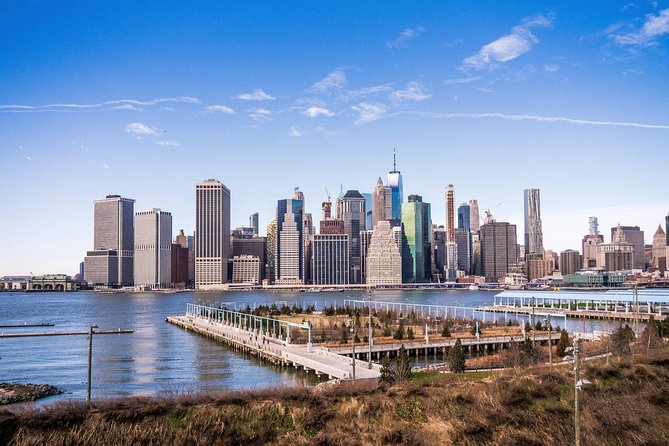
The route makes practical sense, too. You start in Lower Manhattan, cross the entire Brooklyn Bridge toward Brooklyn, and then work your way through the viewpoints and neighborhoods people actually use every day. By the time you’re on the Brooklyn Heights Promenade, you’re ready for the wide views and the calmer, residential feel.
Also: the tour is built around story beats. As you pass from one landmark to the next, you get Revolutionary War context and “wait, really?” moments about famous Brooklyn residents. That mix keeps it from becoming a stop-and-go slideshow.
You can also read our reviews of more walking tours in New York City



Price and What You’re Really Paying For
At $52.95 per person for about 3 hours and roughly 3 miles of walking, you’re paying mainly for three things: a licensed NYC guide, a structured route, and time-efficient access to the best viewing spots on foot.
The good part is that you’re not stuck adding more ticket fees. The itinerary is made for free outdoor viewing—Brooklyn Bridge, Brooklyn Bridge Park areas, DUMBO streets, Brooklyn Heights Promenade, and Brooklyn Heights blocks—so your money goes toward interpretation, not entry lines.
Value-wise, the small group matters. With up to 15 people, you get more back-and-forth than you would on big coach-style tours. If you like asking questions while you’re standing at the exact place something happened (or the exact angle where the city looks best), this format tends to pay off.
Meet at Tweed Courthouse, Finish at Plymouth Church: Timing You Can Plan
The tour starts at 52 Chambers St near the Tweed Courthouse in Manhattan at 12:00 pm. It ends at Plymouth Church, 57 Orange St, Brooklyn. That end point is helpful because you’re not trapped figuring out your whole route from scratch—public transit is nearby (the A, C High Street station is close, and the 2/3 Clark Street station is within walking distance).
The schedule is also realistic. The whole walk is about 3 hours, with shorter stops built in so you can catch your breath and photos without losing the thread. Still, this is an “outdoors the whole time” experience, so plan your day like a walk, not like a museum visit.
One logistics note that’s not optional: arrive about 10 minutes early. Once the group leaves the meeting point on the Bridge, it’s hard to track them. If you’re even a bit late, you could end up spending the rest of your lunch trying to locate strangers on a busy landmark.
Stop 1: Brooklyn Bridge Walk and What to Look For Above the Traffic
This is where the tour earns its name. You generally walk over the entire Brooklyn Bridge, from Manhattan to Brooklyn, and it takes about 1 hour 5 minutes. That’s plenty of time to do more than just “cross the bridge”—you’ll learn what to notice as the views open up.
What you should look for: the way the bridge frames the skyline as you move across, and how the city’s layers shift—old street grids, new skyline silhouettes, and the waterfront geometry of Brooklyn. The guide’s job here is to connect those visuals to history, so you’re not just sightseeing from a moving spot.
You’ll also get early Revolutionary War context during this crossing. Even if your eyes are mostly on the view, the story angle helps you understand why this part of Brooklyn mattered long before it was a photo backdrop.
Practical tip: wear shoes that can handle uneven pavement and steady walking. The bridge walk includes some inclined walkways/sidewalks along the route, so it’s not a “stroll and forget” kind of outing.
Stop 2: Brooklyn Bridge Park—Easy Views and Quick Photo Wins
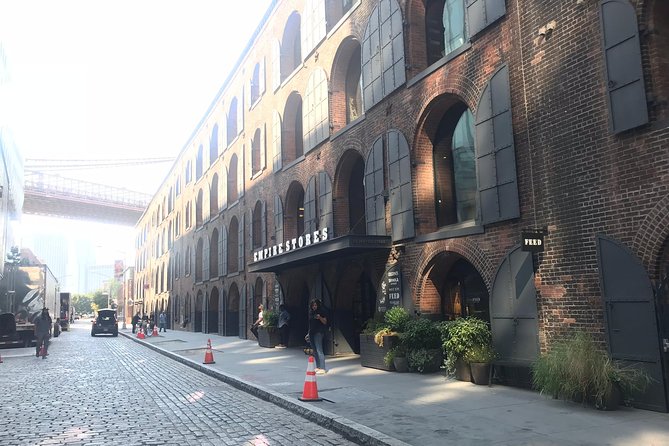
After the bridge, you pass through Brooklyn Bridge Park for about 25 minutes. This is a calmer rhythm break: more open space, more time to look around, and more room for photos.
From a value point of view, this stop works well because you get park views without needing a separate plan. You see much of the park area from above, and you can connect what you’re seeing to the surrounding neighborhoods. If you care about how Brooklyn uses its waterfront, this is one of the best “on the way” sections you’ll get.
Drawback to consider: 25 minutes sounds short, and it is. If you want to roam deeply through every path or playground, you won’t. But for a highlights tour, this is exactly the right amount of time to enjoy without stretching your whole day.
You can also read our reviews of more historical tours in New York City






Stop 3: DUMBO—Brick Streets, Big Views, and Resident-Story Fun
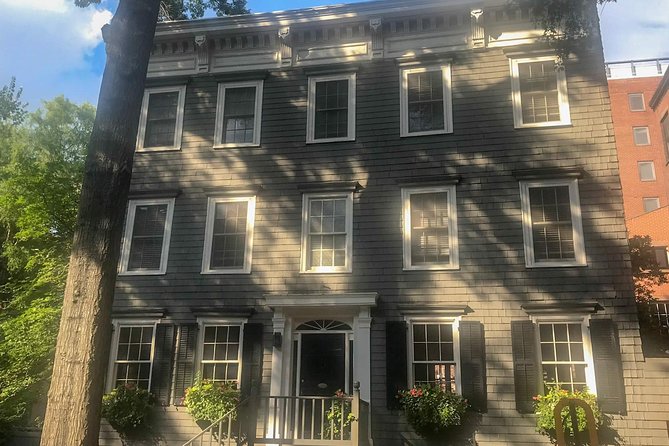
DUMBO is next for about 40 minutes. This is where the tour shifts from landmark views to neighborhood flavor. You walk through much of DUMBO, so you get the street-level feel—brick-and-street texture, people moving around, and the sense that this is a real working neighborhood, not a theme zone.
This stop is also where the guide’s storytelling tends to shine. You’ll hear historic anecdotes about Brooklyn’s most famous residents, plus fun facts that make the area feel lived-in and specific. One theme you may notice is how the guide connects places to popular culture as well as to the historical timeline.
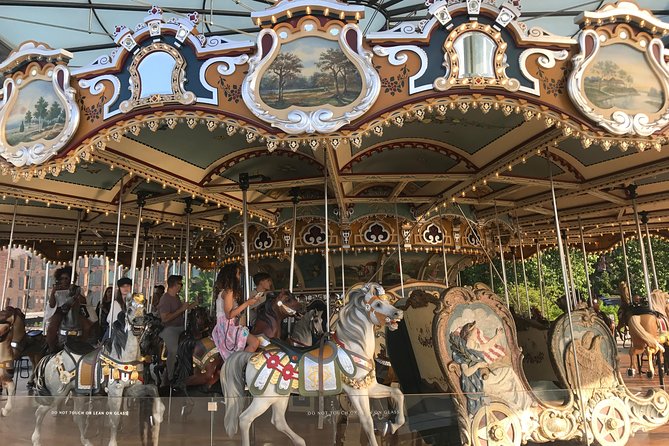
If you’re a fan of quick “favorite spot” recommendations, pay attention here. In at least some departures, the guide has been known to add quick looks and suggestions around DUMBO’s food-and-sweets scene—think a favorite chocolatier and well-known sights like Jane’s Carousel. The tour itself doesn’t include food or drinks, but your guide may point you toward what locals like.
Tiny practical note: DUMBO can mean lots of foot traffic depending on the time of day. Stay close to the group and you’ll keep the pace without stress.
Stop 4 & 5: Brooklyn Heights Promenade and Neighborhood Blocks
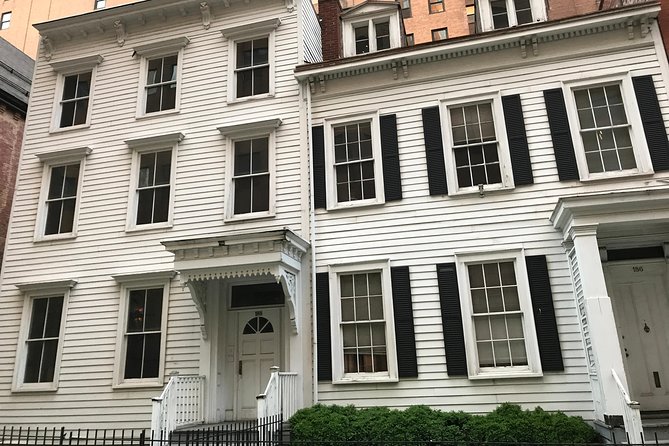
Then you land in the part of Brooklyn that feels like it’s wearing its best outfit. First is the Brooklyn Heights Promenade for about 10 minutes, followed by Brooklyn Heights blocks for about 20 minutes.
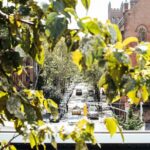
The Promenade segment is built for views. It’s the classic “stop walking and look” moment—skyline perspectives and that satisfying sense of height and framing that you only get when the city opens outward. If you love photos, this is where you’ll want to slow down and actually compose shots instead of snapping while walking.
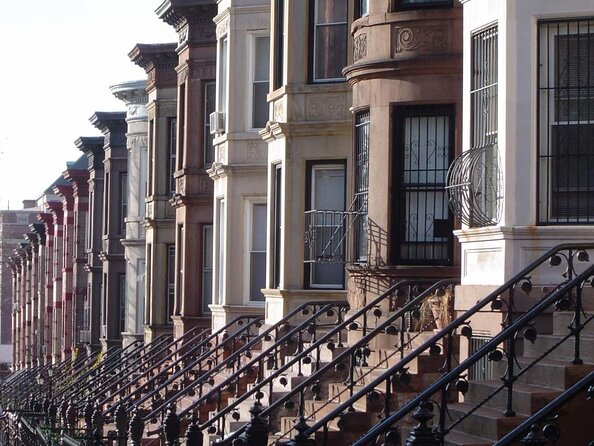
After that, the tour moves into Brooklyn Heights neighborhood blocks. This is not about one single monument—it’s about understanding the vibe. You’ll see streetscapes and building character, and the guide’s commentary helps you read the neighborhood like a timeline.
A realistic consideration: if you’re expecting long time to explore shops or sit down for a snack, this part is too short for that. The tour gives you orientation and standout streets, not hours of drifting.
Stop 6: Plymouth Church and the Henry Ward Beecher Connection
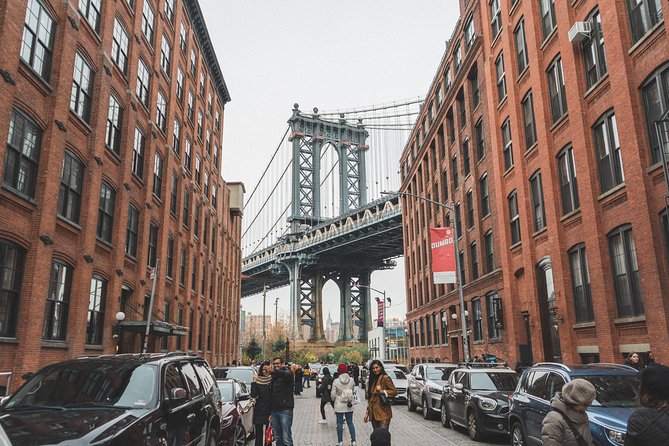
The final stop is Plymouth Church for about 10 minutes, and importantly, you do not go inside. You’ll discover the importance of Henry Ward Beecher and Plymouth Church of the Pilgrims as part of the borough’s story.
This is a smart way to close the loop. You’ve spent hours moving through skyline viewpoints and neighborhood textures. Ending at a church with named historical figures gives the tour a “here’s why this place matters” finish.
What you can expect is a focused exterior stop: the guide ties the church’s relevance to Brooklyn’s broader story and helps you make sense of why this location gets referenced in historical conversations.
Guide Style: Why Bruce-Run Tours Feel So Easy to Follow
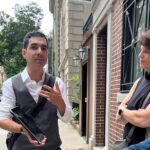
A lot of walking tours live or die by the guide’s rhythm. This one is led by a licensed NYC tour guide, and the small group format supports real conversation.
From what I can gather about the guide experience (names like Bruce come up repeatedly), the approach is practical and story-driven: he tends to connect what you’re seeing to the bigger historical arc, while also keeping the tone upbeat. In reviews, people also note that the time can feel like it flies—often because the guide doesn’t just recite dates. He gives you a reason to look, then a reason to care.
There’s also a useful benefit for first-timers: if you’re unsure how to get back out of the area, the guide’s support can help. One theme you’ll see is “we figured it out faster because of the guide,” which matters in a city where one wrong subway turn can turn lunch into a puzzle.
Comfort and Practical Tips for a 3-Mile, Moderate Walk
This walk is about 3 miles and described as moderate difficulty due to inclined walkways/sidewalks. That doesn’t mean it’s hard-core hiking, but you should treat it like a solid walking day.
Here’s what I’d do to make the experience smoother:
- Wear comfortable, supportive shoes (no brand-new sneakers on a long route).
- Dress for weather because the tour runs rain, snow, and shine when scheduled. If the sky looks rough, bring a hat or light rain layer.
- Pack a little flexibility: the outdoors schedule can’t bend around every cloud.
- Bring your own water if you want it. No food or drinks are included, so you’ll need to plan your post-tour snack.
- Plan your photo timing: if you stop too long in one spot, you’ll feel rushed in the later neighborhood sections.
And the biggest rule: don’t be late. Arriving late can turn a fun walk into a stressful scavenger hunt.
Should You Book This Brooklyn Bridge, DUMBO & Heights Walking Tour?
If you want one easy-to-follow Brooklyn highlights route with great viewpoints and enough history to feel meaningful, I think this tour is a strong pick. The pricing makes sense when you factor in the licensed guide, the structured path, and the fact that you’re not paying extra admissions at each stop. The small group size also helps if you care about questions and pacing.
Book it especially if:
- You’re short on time and want Bridge + DUMBO + Brooklyn Heights in one sweep.
- You like history that’s explained in the context of what you’re standing in front of.
- You want a skyline experience with a story thread, not just a photo walk.
Skip it (or think twice) if:
- You hate outdoor walking with some inclines.
- You need long free time at each neighborhood. This tour is designed for highlights, not deep self-guided wandering.
- You’re the type who often runs late. The group moves, and you’ll need to keep up.
FAQ
What time does the tour start?
The tour starts at 12:00 pm.
Where do I meet the group?
You meet at 52 Chambers St, New York, NY 10007, near the Tweed Courthouse.
How long is the walking tour?
It’s approximately 3 hours.
How big is the group?
The group is limited to a maximum of 15 travelers.
Is food or drinks included?
No. There are no food or drinks included.
Does the tour go inside Plymouth Church?
No. The tour discovers Plymouth Church’s importance, but you do not go inside.
What public transportation is closest to the end of the tour?
The closest subway near the end in Brooklyn is A, C High Street. The 2, 3 Clark Street station is also within walking distance.