REVIEW · NEW YORK CITY
Central Park and Upper East Side Walking Tour
Book on Viator →Operated by The Street Teacher · Bookable on Viator
Central Park and the Upper East Side, neatly packaged. This Central Park to Upper East Side route turns a big city into a manageable, story-filled loop you can enjoy at walking speed. You’ll start midmorning inside the park area, then move into the grand residential streets around Madison Avenue.
I love how small this group stays (max 12), because it keeps the pace human and makes it easier to ask questions. I also love the guide-led storytelling, from Pulitzer Fountain’s meaning to the park design details at Bethesda Terrace.
One possible drawback: you’re still walking, so the plan is best if you’re happy with sights and short stops, not long detours. If you want extra time inside big-ticket attractions like the Met, you’ll need separate plans, and on crowded bike days you may want the guide’s quieter footpaths.
In This Review
- Key things I’d plan around
- Entering at Doris C Freedman Place: A tour that starts in the right mood
- Pulitzer Fountain to the Plaza Hotel edge: a 10-minute history warm-up
- Central Park at walking speed: how you avoid overwhelm
- Wollman Rink in every season: when the park turns playful
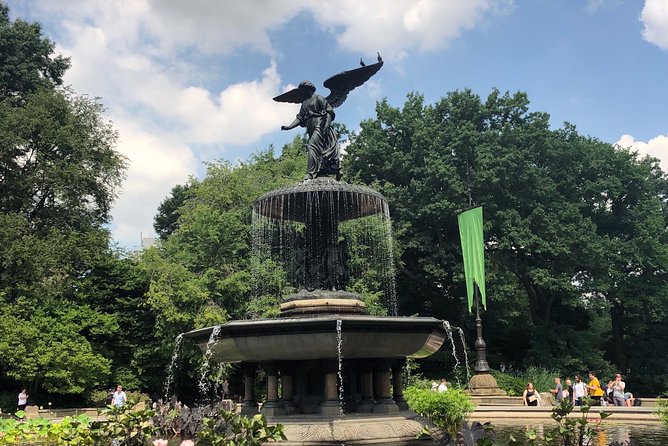
- Bethesda Terrace: the sculpture detail you’ll actually remember
- Belvedere Castle and Turtle Pond: the park’s smaller scale magic
- Upper East Side after the park: Cook Block, townhouses, and real neighborhood texture
- New York Society Library: small stop, big story about being a reader
- The Met’s neighborhood presence: seeing the scale without buying museum time
- Value and pacing: why free admissions plus a guide can be a smart buy
- Who this tour suits best (and who should pick another plan)
- Getting the most out of your walk: practical tips before you go
- FAQ
- How long is the Central Park and Upper East Side walking tour?
- How many people are in the group?
- Is admission included for the stops?
- Where do I meet the guide and where does the tour end?
- What time does the tour start?
- Is hotel pickup included?
- Can I bring a service animal?
- What should I know about Covid-19 distance measures?
- Should you book this Central Park and Upper East Side walking tour?
Key things I’d plan around
- Max 12 people keeps the tour from feeling like a herd
- Midmorning start gives you a better chance of calmer park paths
- Free-to-see stops mean your money goes to the guide and routing, not admissions
- Central Park design stops like Bethesda Terrace and Belvedere Castle explain what you’re looking at
- Upper East Side context focuses on neighborhood life and institutions, not just big buildings
Entering at Doris C Freedman Place: A tour that starts in the right mood
The tour begins at 764 Doris C Freedman Pl, right where you can ease into the park without fighting the city first. A 10:00 am start also helps: you’re usually already past the worst morning crush, but still early enough to feel the park as a break.
You’ll meet your guide near there, and the plan is built for a relaxed walk with frequent orientation points. The whole experience runs about 2 hours 30 minutes, and it’s designed for moderate physical fitness—comfortable walking, with enough stops to catch your breath.
Also worth noting: there’s no hotel pickup or drop-off. That’s fine, but plan to arrive a bit early and use public transit to get yourself to the meeting point without stress.
You can also read our reviews of more walking tours in New York City



Pulitzer Fountain to the Plaza Hotel edge: a 10-minute history warm-up
The first stop is Pulitzer Fountain, a quick introduction that works like a key turning in a lock. You’ll look at the statue, and your guide will explain its history and meaning, plus call out what major building was near it.
Why I like this kind of opener: it trains your eyes for what comes next. Instead of just walking through Central Park like a postcard, you start understanding how pieces of the city tell stories.
This stop is free to access, and it’s short—about 10 minutes—so it doesn’t burn time before the real walking begins. It’s also a nice chance to settle in with your guide’s style and pace.
Central Park at walking speed: how you avoid overwhelm
Central Park is huge—843 acres—and that’s exactly why a guided route is so helpful. Without a plan, first-timers often bounce between a few famous spots and still feel like they missed everything important. With a guide leading, you get a route through the park’s most memorable pockets without feeling rushed.
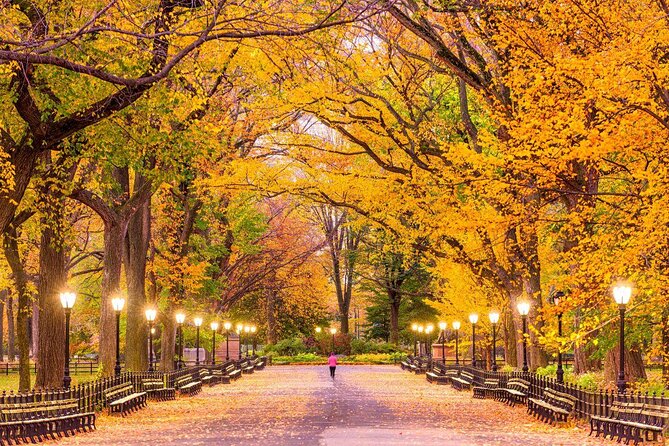
The tour is built around the idea that Central Park is both a retreat and a stage. You’ll pass locals doing typical Sunday things—picnicking, bicycling, jogging, and, depending on season, ice skating—so the park feels alive rather than staged.
Your guide should also point out preservation and design choices, which matters more than you might think. When you understand why certain paths curve, why landmarks sit where they do, and how different areas function, the park becomes easier to navigate later on your own.
A practical note: park crowds can spike near popular entrances and filming-famous spots. The advantage here is that the guide can steer you toward areas you might miss if you’re just following big-name landmarks.
Wollman Rink in every season: when the park turns playful

Wollman Rink is one of those places where Central Park shows you its two faces: quiet scenery and big-city energy. Depending on the time of year, you might see skaters, or you might see kids and carnival-style rides if the season allows it.
This stop is about 15 minutes, and the point isn’t just the view. Your guide will also talk about the rink’s colorful history, giving you a reason to look beyond the obvious.
If you’re traveling in winter, Wollman Rink can be a big part of why people love the park then. In warmer months, it still works because it keeps the tour from turning into one long “walk through pretty scenery.”
Bethesda Terrace: the sculpture detail you’ll actually remember

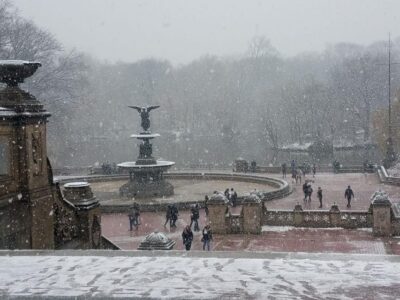
Bethesda Terrace is a must because you can see it even when you don’t fully understand it yet. The tour focuses on Bethesda Terrace’s role and its design, including a standout fact: it’s the only sculpture in the park’s original design.
You’ll also get a sense of why this area functions as a meeting place. That matters because Bethesda Terrace isn’t just a photo spot—it’s where people naturally gather, slow down, and take in the space.
At roughly 15 minutes, it’s a good time investment. You’ll leave knowing what you saw and why it matters, not just that you saw something pretty.






Belvedere Castle and Turtle Pond: the park’s smaller scale magic

After more walking, the tour heads toward Belvedere Castle. The description includes a walk that feels like woods—really—so you get that Central Park illusion: a nature pause inside an ultra-urban city.
Belvedere Castle is a restored “folly” linked to Calvert Vaux, and the tour highlights it for a reason. You’ll look out over Turtle Pond and get a magnificent view toward the Great Lawn area, which is the kind of payoff you can only appreciate once you’ve actually climbed the park pathways.
This stop is also about 15 minutes. If you’re the type who likes architecture and clever landscape design tricks, you’ll enjoy this segment because the view and the story connect.
If you’re visiting in bright weather, this part can be especially satisfying. The castle area gives you a higher vantage that helps you mentally map Central Park instead of just wandering.
Upper East Side after the park: Cook Block, townhouses, and real neighborhood texture
Once Central Park time winds down, you step outside into the Upper East Side, and the vibe changes fast. This is one of Manhattan’s older and more upscale neighborhoods, but it’s not just about expensive-looking buildings.
Your guide explains neighborhood history and how the area evolved. You’ll admire stately apartments and hotels along broad avenues, and you’ll learn how the neighborhood is shaped by people and institutions as much as by architecture.
A specific highlight here is the Cook Block, plus a look at townhouses—some that remain, and some that are gone. This matters because it gives you a sense of change, not just preservation.
The Upper East Side portion is about 30 minutes, so it’s a focused taste rather than an all-day deep dive. On days when you want to move fast and still cover ground, that’s perfect; if you want to linger at facades forever, you may wish the park-to-neighborhood switch lasted a bit longer.
New York Society Library: small stop, big story about being a reader
The New York Society Library is another short stop at about 15 minutes, but it adds a different flavor to the day. You’ll hear that the Society Library was established in 1754 on Nassau Street, and that it’s in its third location now.
The tour also emphasizes what it meant to borrow books and manage the overdue-book reality of earlier times. That kind of story is memorable because it connects the building to everyday behavior, not just prestige.
Even if you’re not a big museum person, these smaller stops are what make a walking tour feel human. They give you variety: park design, neighborhood streets, then an institution that ties back to reading culture.
The Met’s neighborhood presence: seeing the scale without buying museum time
Later, you’ll also take in the Metropolitan Museum of Art as part of the neighborhood finish. The tour framing notes that the Met holds the largest collection of art in the Western Hemisphere, and it’s second in size only to the Louvre.
This isn’t presented as a museum ticket moment, though. The value here is orientation—helping you connect what you’re seeing on the streets to why this neighborhood is treated like a cultural center.
If you do plan to go inside later, you’ll probably appreciate it more. You’ll already understand the Met’s scale context, and you’ll have a stronger mental map of how it sits in this Upper East Side world.
Value and pacing: why free admissions plus a guide can be a smart buy
All the listed stops are admission ticket free, so you’re not paying to enter the sights themselves. What you pay for is the guide’s route planning, timing, and interpretation—plus the small-group attention that helps you actually understand what you’re looking at while you walk.
Pacing is a big part of value here. In real use, this kind of morning tour can be comfortably shaded for most of the park time, which helps on hot days, and the route is built to avoid missing the key stops even if you’re not rushing.
It’s also a good bet if you prefer quality time over “see everything” chaos. Central Park can feel like a maze, but with the guide leading you through famous landmarks and lesser-known paths, you end up with a complete day’s worth of highlights without the planning headache.
One caution: bike traffic can be intense in the park. You’ll likely appreciate having the guide manage where you walk, because bike tours can cut through the areas you might otherwise use as a slower footpath.
Who this tour suits best (and who should pick another plan)
This is a great fit for first-time visitors who want bearings fast. It also suits history lovers who enjoy learning why places look the way they do—especially through design details and local neighborhood context.
If you’re traveling with older relatives, the guided rhythm can work well because there are multiple short stops and a relaxed flow. In at least one case, the tour even ran as a private experience when only a single attendee signed up, which shows the operator is willing to adapt to small group situations.
If you’re a younger traveler who likes lots of modern visuals or very updated storytelling styles, you might find the approach more traditional. Also, if your main goal is deep museum time, this is more about orientation and street-level understanding than long indoor experiences.
Getting the most out of your walk: practical tips before you go
Wear walking shoes you trust. This is a park-and-streets day where you’ll cover ground, and the tour expects moderate fitness.
Plan for weather. A morning start helps, but you still want sunscreen, water, and something light for shade breaks—especially since Central Park and the surrounding streets can be exposed in sections.
If you’re using a phone or need help staying connected, note the tour may use a teleconferencing program during Covid-19 to keep distance. In that case, you’re asked to bring an earpiece to use with your cellphone.
And if you like a clean start, arrive a little early at Doris C Freedman Pl. When everyone’s settled, you waste less time at the first look at Pulitzer Fountain and you get more park time for the same 2.5 hours.
FAQ
How long is the Central Park and Upper East Side walking tour?
It runs about 2 hours 30 minutes, approximately.
How many people are in the group?
The tour has a maximum of 12 travelers.
Is admission included for the stops?
Admission to the listed stops is free.
Where do I meet the guide and where does the tour end?
You start at 764 Doris C Freedman Pl, New York, NY 10019, and it ends at 960 Madison Ave, New York, NY 10021 (the end point may change as the neighborhood is discussed).
What time does the tour start?
The start time is 10:00 am.
Is hotel pickup included?
No, there is no hotel pickup or drop-off.
Can I bring a service animal?
Yes, service animals are allowed.
What should I know about Covid-19 distance measures?
During this time, a teleconferencing program can be used to keep your distance, and you should bring an earpiece to use with your cellphone.
Should you book this Central Park and Upper East Side walking tour?
Book it if you want a smooth way to see Central Park’s best-known places plus neighborhood context without spending hours planning the route. The mix of park design stops (like Bethesda Terrace and Belvedere Castle) with a short Upper East Side slice makes it a strong “get oriented and learn something real” choice.
Skip it if you want long indoor time at museums or you’re hoping for a deep, no-stops-removed neighborhood tour. And if you’re sensitive to crowds, be aware that park areas can get busy, especially with bike traffic, so arriving ready to walk and follow your guide’s path is key.