REVIEW · NEW YORK CITY
Fan Tribute: Taylor Swift in New York Walking Tour
Book on GetYourGuide →Operated by Skyscrapers and Stories · Bookable on GetYourGuide
Taylor Swift and New York in one walk. This is a fan-created walking tour that follows the places connected to her life and art, from Cornelia Street to her favorite recording studio and beyond. I love how guide Matthew ties Taylor’s “eras” to the actual neighborhoods you’re standing in, and I like the mix of big-name locations with the smaller, easily missed corners that make the city feel personal. One consideration: the tour is not officially endorsed or affiliated with Taylor Swift or her team, even though it’s designed with care and includes a clear “fan tribute” disclaimer.
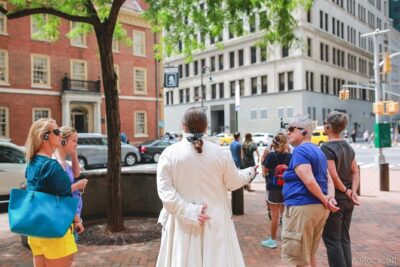
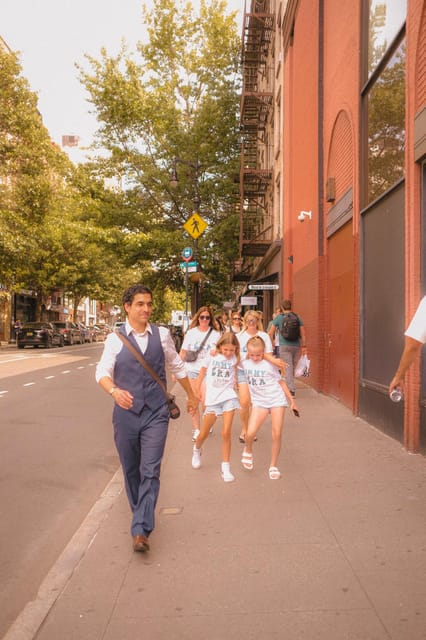
Meet up at NYU’s Lipton Hall and you’re off on a 2-hour route built for stories as much as sightseeing. The small group size (limited to 10) keeps it conversational, and the tour format uses a guide with visual/audio support so you’re not just hearing dates and names while walking. The best part for many people is that the context works for Swifties and non-Swifties alike, but the “fan service” level means it helps if you’re ready to think about Taylor through a New York lens.
If you’re bringing kids, teens, or a multi-generational group, this kind of paced, stop-and-talk walk is usually a good fit. It’s wheelchair accessible, and it’s a true lower-Manhattan style experience: you’ll be on your feet, looking up, and leaning into details as the day moves neighborhood to neighborhood.
In This Review
- Key takeaways
- Entering the tour at NYU Lipton Hall
- How the 2-hour walk stays fun (and not exhausting)
- Greenwich Village to the East Village: Taylor’s city, seen by foot
- SoHo’s shops and the “where she shopped” stops
- Tribeca: current properties, the studio thread, and era-to-era links
- Cornelia Street: why one address hits so hard
- A bakery-and-bookstore rhythm you can actually enjoy
- The riot bar stop and the human-rights thread
- A bookshop moment, plus the university campus stop
- Favorite TV show building: how the guide turns a clue into a stop
- Price and value: $40 for a focused, story-heavy 2 hours
- Who this tour fits best (and who should reconsider)
- Practical tips to get the most out of your Swiftie walk
- Should you book the Taylor Swift in New York Walking Tour?
- FAQ
- How long is the Taylor Swift in New York walking tour?
- Where does the tour start and end?
- How much does it cost?
- Is it a small group?
- What language is the tour in?
- Can I get a refund if my plans change?
Key takeaways
- Start at NYU’s Lipton Hall and end back at the same meeting point, so you avoid transit stress.
- Small group of 10 keeps questions flowing and makes the tour feel personal.
- Eras-style neighborhood hopping turns streets into a timeline you can follow on foot.
- Photo and video support helps you connect Taylor’s songs and moments to the places.
- Stops include homes and the favorite recording studio, plus a bakery and bookstore where she has shopped.
- Cornelia Street and current Tribeca properties anchor the walk with real-life locations.
Entering the tour at NYU Lipton Hall
The tour starts at NYU’s Lipton Hall, which is a smart launching point. You’re already in a neighborhood with constant movement and a student energy, so the first minutes don’t feel like dead time. It also helps that the route is designed as a walk that connects Taylor Swift’s NYC story to the wider story of the city around it.
From the start, you get the tone: this isn’t a simple sightseeing loop with a few Taylor mentions. You’re working through “eras” of New York—neighborhoods and time periods framed through Taylor’s life and artistic arc. That framing matters because it changes how you look at buildings. The city stops being random scenery and becomes a timeline you can track with your own feet.
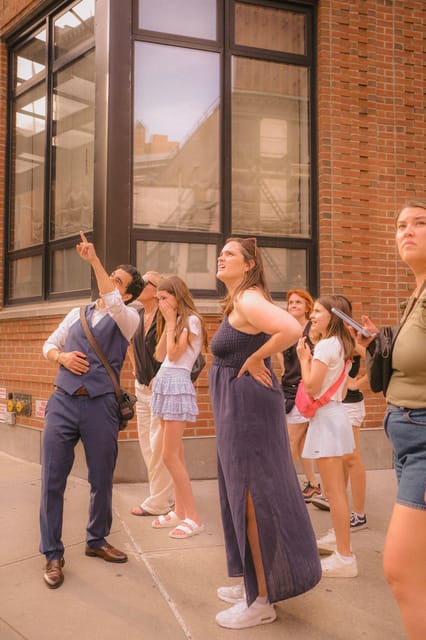
You’ll also see quickly that the guide, Matthew (often referred to as Matt), brings a lot of preparation. People highlight that he uses visuals—photos and videos—along with audio support, which makes the walk easier to follow and more fun when you’re trying to connect a location to a lyric, an era, or a media moment.
You can also read our reviews of more walking tours in New York City



How the 2-hour walk stays fun (and not exhausting)

A lot of tours claim to be “easy,” but this one is built around a realistic walking-window: 2 hours. That’s long enough to feel like you actually got somewhere, and short enough that you’re unlikely to drag yourself through the whole city. It’s the right length for a themed walk, especially if you’re also planning museums or a Broadway night.
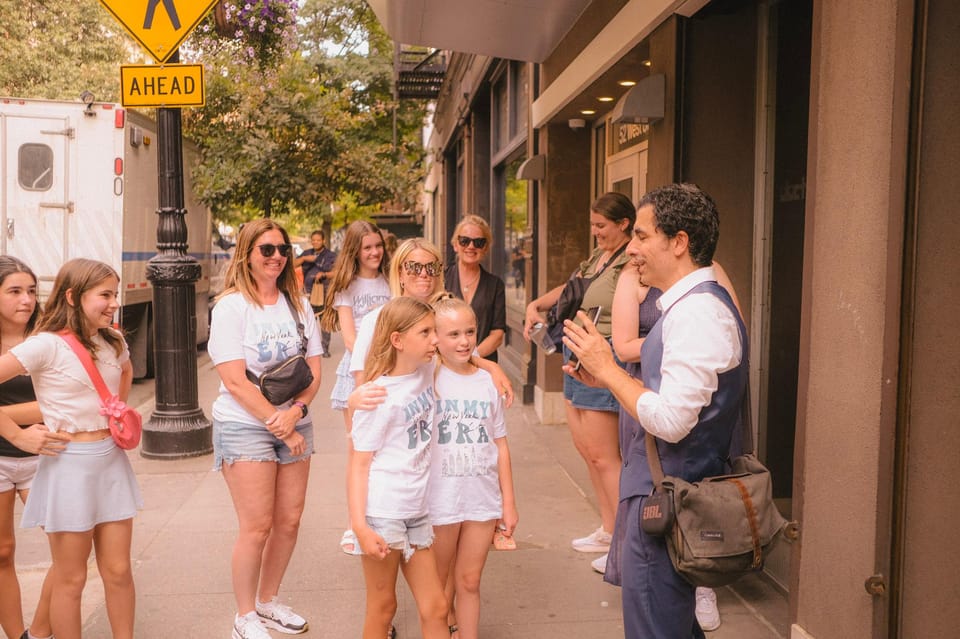
Because the group is capped at 10, you’re not stuck waiting behind a big cluster at every corner. In a small group, you can ask questions and keep momentum. That matters in New York, where sidewalks can get crowded fast and you don’t want to lose the rhythm of a story.
Also, the pace can work well across ages. Some people specifically mention bringing kids and even multi-generational groups, and the comments point to a calm, engaging structure rather than a lecture that runs too long. If you’re hoping for a “family Swiftie” outing that doesn’t feel like it’s only for hardcore fans, this is one of the better formats for that.
Greenwich Village to the East Village: Taylor’s city, seen by foot

Lower Manhattan is where the tour really comes alive, and you’ll feel that as the walk moves through neighborhoods tied to different parts of her NYC life. Greenwich Village and the East Village are perfect for this because the architecture and street layouts still support the idea of a real person navigating real daily life. It’s not just flashy skyline views.
This part of the walk is about context. You’re looking at what the neighborhoods offer—streets, storefronts, and the texture of the area—then layering in Taylor-related meaning. That’s where the tour’s “Swifty perspective” approach clicks. You start noticing the details that you’d normally skip: how a block feels, how the commercial mix changes from street to street, and why certain streets became part of the city’s cultural identity.
If you’ve visited NYC before and stuck to the usual big-ticket stops, this is one of the main reasons the tour gets high marks. It helps you appreciate parts of the city you might have ignored on past trips. Instead of trying to win you over with nostalgia, it uses the neighborhood itself as evidence.
SoHo’s shops and the “where she shopped” stops

SoHo is built for theme walking, and this tour uses that. You’re not only passing through; you’re heading toward places tied to Taylor’s personal taste—specifically a bakery and bookstore where she has previously shopped.
These stops are valuable for a simple reason: you can connect fandom to normal life. It’s one thing to see a famous building from the outside. It’s another to smell the pastries or browse shelves in a place that fits a story of everyday choices. Even if you don’t buy anything, the experience of being inside a familiar setting tends to make the whole walk more tangible.
For practical planning, think of these as your “pause” moments. You’ll likely have time to look around and take photos, but keep your expectations flexible. If it’s busy, you might spend a little longer standing and timing your photo from the sidewalk. That’s just New York.
If you like themed tours but hate the feeling of being rushed, pay attention to how the shop stops slow the route down in a good way.
Tribeca: current properties, the studio thread, and era-to-era links
Tribeca is the other major anchor of the tour, and it’s a smart choice for a Swift-themed route. People highlight that you’ll see current properties in Tribeca, plus connections to her recording process. Tribeca also gives you a different visual vibe than Village streets—more polished, more spacious in feel—so the “eras” approach feels real, not forced.
This is where you start noticing how the tour links place to creative output. The favorite recording studio stop is one of the key moments. The tour doesn’t just point at a location; it explains why studios matter in an artist’s work—how the setting supports production, experimentation, and the process of turning life into songs.
Also, expect the guide to use visuals here. Multiple comments mention iPad and external speaker use, with audio/video clips that make the connection clearer. That support is especially helpful for people who are strong fans but might not know every NYC-specific detail. It also helps non-Swifties understand that this is not random sightseeing; the guide is trying to show you how Taylor’s art links to the city.






Cornelia Street: why one address hits so hard

Cornelia Street is one of the most emotionally charged stops on the kind of Taylor NYC experience people dream about, and this tour includes it. Even if you don’t know every lyrical reference, you’ll feel why an address becomes iconic once it’s part of a personal timeline.
What I like about how this tour uses Cornelia Street is the balance. It’s not only fan-flavored. The guide works to place the street into its neighborhood reality. You’re not only thinking about lyrics; you’re thinking about location, community feel, and the “lived-in” aspect of NYC addresses.
If you love photography, this is also the kind of stop where your best shots might not be the postcard angles. Look for perspective from the right corner, and take a second to check how the buildings line up along the block. In a themed walk, those small framing choices make your photos look like they belong to the story you’re hearing.
A bakery-and-bookstore rhythm you can actually enjoy

The tour includes both a bakery stop and a bookstore stop where Taylor has shopped. That combination is simple but smart. It gives you variety: one place is about sensory comfort (smell, sweets, the feeling of a normal NYC treat), and the other is about reading culture and personal taste.
These are also a good opportunity to slow down and do the thing you usually skip on walking tours: stand still for a minute. Step out of tour-mode. Let the space reset your brain. Then when the guide speaks again, the story lands better because you’re re-centering around a physical experience.
I also like that the tour encourages that mix of fandom and everyday life. It’s easy to turn celebrity tours into pure star-chasing. Here, you’re in places that feel like they could be visited by regular people, which makes the whole outing feel more grounded.
The riot bar stop and the human-rights thread
One of the more memorable segments is the stop at a bar where a riot broke out, connected to Taylor’s desire to stand up for human rights. This is a good reminder that the tour isn’t only about aesthetics and cute nostalgia.
When a themed tour includes moments tied to activism, it helps you understand an artist as something more than a brand. Even if you come for Taylor’s songs, you leave with a broader lens on public life—how people show up, how places become symbols, and how a city absorbs and amplifies social tension.
This kind of stop also adds contrast. After visiting homes, studios, and shopping spots, you get a different feeling: a reminder that NYC has always been a stage for real-world events, and that cultural figures don’t exist in a vacuum.
A bookshop moment, plus the university campus stop

The tour features a bookshop Taylor has shopped in. That stop pairs naturally with the city-walk concept because bookstores are both local and personal. You can relate to the idea of discovering stories in a place you can visit again.
Then you also get something unusual: the campus of the first university to offer a Taylor Swift class. That detail matters because it signals how far beyond pop culture Taylor Swift has moved. It’s no longer only about fandom meeting celebrity; it’s about fandom meeting education, debate, and institutional interest.
If you love the intersection of culture and place, you’ll appreciate that the tour isn’t afraid to be a little nerdy. It uses a pop-culture subject to talk about how universities, arts, and media shape ideas.
Favorite TV show building: how the guide turns a clue into a stop
The route includes an apartment building tied to Taylor’s favorite TV show, plus another key location from that TV world. Even if you’re not sure what those connections are before you start, the tour approach makes them click.
The best part is how the guide handles it: the building isn’t treated like a random trivia item. It becomes a visual cue that the guide ties to story meaning—why that show mattered, and how certain images and narratives show up in an artist’s life and creative thinking.
This is also where you’ll likely use the guide’s visuals. People mention audio/video and photo support that helps connect a location to what you’re hearing. That makes the tour feel more like a guided experience and less like an outline of addresses.
Price and value: $40 for a focused, story-heavy 2 hours
At $40 per person for about 2 hours, the value comes from three places: time, group size, and preparation.
First, 2 hours is a sweet spot for a walking tour. You get enough stops to build a real arc (homes, studio, shops, a few cultural anchors), but you don’t burn an entire day on one theme.
Second, small-group pacing matters. A cap at 10 means you’re not fighting the crowd at every corner, and the guide can keep answering questions without the tour turning into a moving line.
Third, the guide’s presentation seems to be a big part of the appeal: iPad/audio/video support, plus a deep amount of planning. That’s a real cost for a tour organizer, and when it’s done well, it makes the $40 feel less like a ticket and more like a guided experience you can’t replicate as easily on your own.
If you’re a casual Swift fan, you’ll still get the NYC neighborhood context, but you’ll likely enjoy more if you know her eras at least generally. This is built for people who like linking songs and stories to places.
Who this tour fits best (and who should reconsider)
This tour is a strong match if you:
- Love Taylor Swift and want NYC locations tied to her life to feel like more than names
- Enjoy guided storytelling that blends pop culture with neighborhood context
- Like small-group tours with time for questions and stop-and-look moments
- Want an outing that can work for kids and adults at the same time
It may be less ideal if you:
- Only want official, celebrity-endorsed experiences (this one is explicitly fan-created)
- Prefer self-guided walking where you don’t have to follow a narrative
- Want a tour that focuses only on skyline views or classic tourist landmarks
Also, since it’s a walking tour, you’ll want practical shoes. It’s not described as a sit-down attraction, so plan for standing and walking between stops.
Practical tips to get the most out of your Swiftie walk
Here’s how to make this tour feel worth every step:
- Bring comfortable walking shoes. This is a neighborhood route, not a museum line.
- Have your phone charged. The guide uses visuals and audio support, and you’ll likely want to take photos.
- Ask questions early. In a group capped at 10, you’ll get better answers and the guide can steer the story to what you’re most curious about.
- Dress for the weather. People even mention small helpful touches like hand warmers on cold days, but you should still come prepared.
- Don’t rush your shop stops. If you’re there for the bakery and bookstore, give yourself permission to pause and actually look.
Should you book the Taylor Swift in New York Walking Tour?
Book it if you want a themed walk that treats Taylor Swift’s NYC footprint like a storytelling method. The route mixes recognizable fan favorites with neighborhood context, and the small-group size keeps it lively rather than chaotic. With a guide like Matthew, plus visual/audio support along the way, you’ll feel the city’s meaning instead of just collecting photos.
Skip it only if you’re looking for an official, sponsored celebrity experience or if you don’t enjoy walking-and-talking tours. If you’re okay with a fan-created tribute that focuses on place, memory, and era-by-era connections, this is a strong use of a couple of hours in New York.
FAQ
How long is the Taylor Swift in New York walking tour?
The tour lasts about 2 hours.
Where does the tour start and end?
You meet your guide at NYU’s Lipton Hall. The tour ends back at the same meeting point.
How much does it cost?
The price is $40 per person.
Is it a small group?
Yes. It’s limited to 10 participants and the tour is wheelchair accessible.
What language is the tour in?
The live guide provides the tour in English.
Can I get a refund if my plans change?
Yes. Free cancellation is available up to 24 hours in advance for a full refund.