REVIEW · NEW YORK CITY
Greenwich Village Walking Tour
Book on Viator →Operated by True Tales of NYC Walking Tours · Bookable on Viator
The Village feels like a maze with stories. On this Greenwich Village Walking Tour, you get a guided route through key Beat-era and folk-revival spots, instead of wandering and hoping you guessed right. I like that it’s built for getting bearings fast and learning why this neighborhood mattered.
My favorite part is the small group size (max 10), which keeps the pace human and the questions coming. I also love the guide-led mix of history plus funny anecdotes, the kind that makes the stops feel like scenes, not facts from a textbook.
One consideration: this experience expects good weather, and you’ll be doing a solid walk for about 3 hours on uneven, irregular Village streets.
In This Review
- Key takeaways before you go
- Greenwich Village’s irregular streets make a guide worth it
- Starting at Washington Square Park: the arch, the Picasso, and the darker edges
- Beat-era and folk-revival stops you’ll actually understand on a walk
- The tiny lots in the Village that prove how New York works
- Places tied to social movements and a colorful mayor
- What the 3-hour pace feels like in real life
- Price and value: $40 for a guide-led Village story
- The guides matter: Krikor and Evan’s history-plus-humor style
- Getting the most from your walk: timing, comfort, and attention
- Who should book this Greenwich Village walking tour?
- Should you book it?
- FAQ
- How long is the Greenwich Village Walking Tour?
- What is the price per person?
- Where does the tour start?
- Where does the tour end?
- Is this tour ticketed or does it use a mobile ticket?
- How large is the group?
- What’s included in the price?
- Are service animals allowed?
- What happens if the tour can’t run due to poor weather?
Key takeaways before you go
- Max 10 people keeps it intimate and easier to hear your guide without shouting.
- Washington Square Park first gives you instant context, starting with the arch and the park’s surprising past.
- Picasso shows up early in a way that feels like you earned it, not like a postcard stop.
- Beat and folk landmarks are woven into the route, including clubs tied to musicians and comedians.
- Small lots, big stories: you’ll spot two of New York’s smallest pieces of property during the walk.
Greenwich Village’s irregular streets make a guide worth it
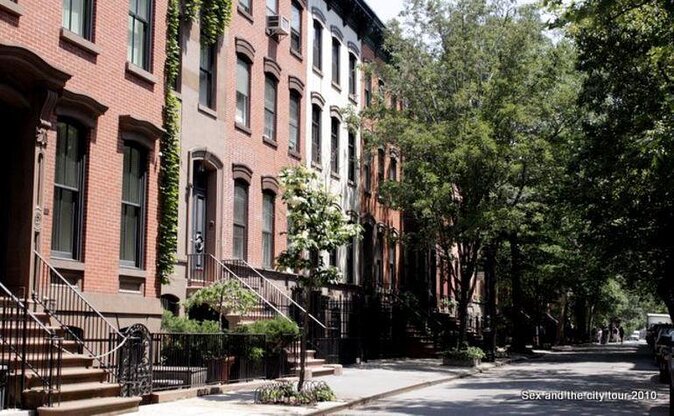
Greenwich Village is famous for being different, and the street grid never fully shows up the way you expect in Manhattan. You can try to power-walk your way through it, but it’s the kind of place where getting slightly turned around can cost you real time.
With a guide, I find the “maze” becomes part of the fun. You’re not just walking from one landmark sign to the next; you’re being taught how the neighborhood’s layout shaped where people went, gathered, and performed. That matters especially here, because the Village wasn’t only a set of buildings—it was a magnet for movements, artists, and local characters.
This tour is also designed around focus. After a quick ramp-up at the start, you spend roughly 2.5 hours exploring the neighborhood with a set of meaningful stops. The guide doesn’t just point out what’s there; they connect the dots between the place and the era—specifically the ‘50s Beat movement and the ‘60s folk revival that made Greenwich Village a cultural center.
And the group size helps. With a maximum of 10 travelers, you’re not swallowed by a crowd at every corner. You can actually look up, step aside when the guide stops, and hear the story without competing with other voices.
You can also read our reviews of more walking tours in New York City



Starting at Washington Square Park: the arch, the Picasso, and the darker edges
The tour begins at 20 Washington Square N at the Washington Square Park area. The first stop is a Washington Square Park audio tour, and it works like a quick orientation spell: you get a short overview of what to expect, then you’re brought up to speed on the park’s history—especially the famous arch.
What I like about starting here is that it gives you a baseline. Washington Square Park is recognizable, but the tour frames it with details that change how you see the space. The park’s history includes some darker or grisly moments, and when your guide points those out, the whole area feels less like a scenic pause and more like a stage that has seen a lot over time.
Then there’s the Picasso element, described as something you can find without it being obvious. That’s a great Village trick: you learn to notice how art can be sitting there in plain sight while regular foot traffic keeps moving. It’s the kind of stop that makes you slow down, look around, and realize you’re walking through layers—not just across streets.
The timing also helps. Once you understand the park’s context, the rest of the walk feels more purposeful. Instead of memorizing random addresses, you’re learning the neighborhood’s logic: what drew people in, what changed, and why the Village became a stage for creativity.
Beat-era and folk-revival stops you’ll actually understand on a walk
Greenwich Village is strongly linked with two major creative waves: the ‘50s Beat movement and the ‘60s folk revival. If you go solo, you might spot a venue sign or a building facade—but you’re unlikely to know what those places meant in their time, or how they connect to famous artists and public moments.
This tour is built to correct that. As you continue beyond Washington Square Park, you’ll see significant venues and homes, plus key sights connected to those eras. The highlights specifically include clubs that launched the careers of many famous musicians and comedians. Even if you don’t know every name, the guide’s job is to translate the scene into something you can picture: who went, why the space mattered, and what made it part of the neighborhood’s reputation.
There’s also a theme of humor and personality—something the reviews consistently mention in a positive way. Guides like Krikor and Evan are described as super prepared and able to deliver a cool mix of historical facts and funny anecdotes. That approach matters here, because the Village’s story is full of characters. If your guide treats the neighborhood like a cast list, it sticks.
One practical benefit: a guided route also helps you avoid the common solo mistake—walking past the important stuff while thinking you’ve already seen it. In a place with winding, irregular blocks, “I’ll just wander” can become “I’m lost.”
The tiny lots in the Village that prove how New York works
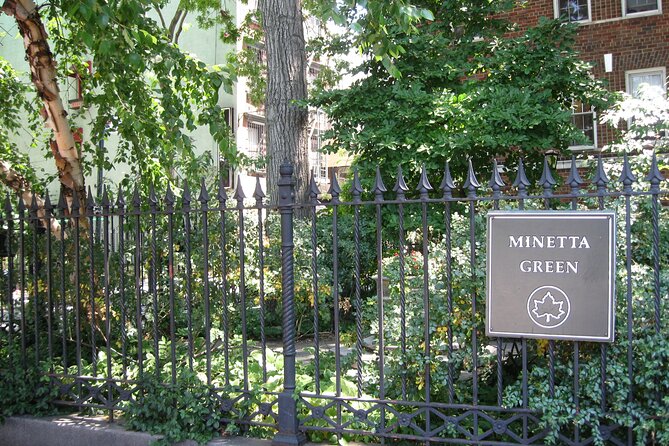
One of the more interesting tour highlights is the mention of two of New York’s smallest pieces of property. That sounds like a fun trivia detour at first, but it actually points to something important about how cities grow.
New York’s neighborhood character often comes down to what fits—and what doesn’t. Tiny parcels, odd setbacks, and squeezed-in spaces show up because history, ownership, and development don’t always follow a clean plan. In Greenwich Village, those odd shapes add up to a physical reminder that this place evolved in real time, not by uniform blueprint.
When a guide brings you to these small properties, you start to connect city design to social life. Where there’s room, people gather. Where there’s not, a building might become something else later. The Village’s “irregular” vibe isn’t only aesthetic—it’s structural, and it shaped who could afford space, how businesses operated, and where cultural activity concentrated.
If you love walking and noticing details, these tiny-lot stops can be some of the most memorable parts of the tour. They turn the neighborhood from a collection of streets into a real, living puzzle.
Places tied to social movements and a colorful mayor
The walk also includes two story arcs that feel very Village: an unlikely birthplace of a social movement, and the former home of what may have been New York’s most colorful mayor.
I’ll keep this balanced. The tour doesn’t need to overwhelm you with names to make the point. What matters is the way your guide uses these locations to explain why the Village became a magnet for change and public debate. Even without deep prior knowledge, you’ll get the sense that people weren’t only making art here—they were organizing their ideas in public, and the neighborhood provided the setting.
And the mayor home detail is a classic Village move: it’s the intersection of politics, personality, and street-level life. A former home stop like this helps you see that the Village has never been only about artists. It has always attracted power, influence, and strong personalities too.
The takeaway for you: these kinds of stops add texture. They help you understand the Village as a place where cultural and civic life rubbed shoulders.





What the 3-hour pace feels like in real life
This tour runs for about 3 hours. After the initial Washington Square Park audio orientation, you spend the next roughly two and a half hours exploring the neighborhood on foot.
That length is usually a sweet spot for NYC walking tours. Long enough to see multiple meaningful places, short enough that you’re not stuck for the whole day. The maximum group size (up to 10) also affects pace. With fewer people, you spend less time waiting at corners and more time moving with context.
Because the route focuses on significant venues, homes, and sights, you shouldn’t expect a stop every few minutes like a bus tour would do. Instead, it’s more like a guided stroll with pauses that matter—especially when your guide points out visual clues, explains historical context, or shares the humorous anecdotes that turn the story into something you’ll remember later.
One small practical note: this is a walking experience in a neighborhood known for irregular street planning. Wear shoes you trust. You’ll be happier if you treat this like a comfortable walk, not a sprint between photos.
Price and value: $40 for a guide-led Village story
At $40 per person for around 3 hours, the value here is mainly about the guide and the structure. You’re paying for interpretation: how the ‘50s Beat movement and the ‘60s folk revival connect to the actual street-level places you’ll see, and why certain locations matter.
You’re also paying for an efficient route. In a neighborhood where the street grid doesn’t make things easy, a guided path can save you time and help you avoid walking in circles. The small group cap makes that pay off even more because you’re not just part of a big crowd—you’re in the group your guide can actually manage.
Add in the mobile ticket detail, and the experience feels designed for real travelers. You don’t have to fuss with paperwork on arrival, and you can focus on getting started.
The guides matter: Krikor and Evan’s history-plus-humor style
The reviews emphasize that the guides are prepared and able to keep the walk lively. Krikor and Evan both come up as standout guides, with descriptions like super knowledgeable and able to combine historical facts with jokes and funny anecdotes.
That combination is more important than it sounds. Greenwich Village’s story can be heavy if you approach it like a lecture. But when the facts arrive with personality, you start paying attention to details instead of just collecting dates. That’s how you end up remembering the Picasso connection in Washington Square, or why a specific venue mattered to musicians and comedians.
There’s also a real-world reliability note. One review describes a situation where bad weather led to a cancellation, and the guide helped rearrange the tour for the next morning. That’s not guaranteed for every outing, but it signals that the operator takes the experience seriously and tries to work with you when conditions don’t cooperate.
Getting the most from your walk: timing, comfort, and attention
Since the tour requires good weather, aim for a day when you’re not gambling on nonstop rain. If the forecast looks unreliable, pick a backup day on your itinerary.
Bring basics that make a guided walk better:
- Comfortable walking shoes (Village streets can be uneven and surprising)
- A light layer you can adjust as the day changes
- A charged phone for your mobile ticket and photos
Then do one simple thing: don’t rush ahead for pictures. If you move too fast, you’ll miss the clues your guide points out—especially the ones that explain why a place matters more than you’d guess just from looking at it.
If you’re new to NYC, you’ll probably appreciate the guide’s help getting oriented fast. If you’re returning to the city after years away, this tour can also act like a reset, helping you see familiar streets with new context.
Who should book this Greenwich Village walking tour?
I think this tour is a strong fit if you want:
- A guided route through Greenwich Village that avoids confusion on the streets
- Stories tied to the Beat movement and folk revival rather than generic sightseeing
- A small-group experience (max 10) where you can hear and ask questions
- The mix of history and fun anecdotes that makes neighborhood stories stick
It might be less ideal if you dislike walking for about 3 hours, or if you’re only in NYC for a super tight schedule. Also, if you already have deep knowledge of the Village and want only specific niche facts, you might find you want to pair this with targeted reading or another focused tour. For most people, though, the guide-driven “why this matters” approach is exactly the point.
Should you book it?
Yes, if you want Greenwich Village to feel like more than scenery. This tour is built to connect the street-level sights—Washington Square Park, the Picasso presence, clubs linked to musicians and comedians, and those oddly sized parcels and personal homes—to the bigger story of why the neighborhood became a cultural engine.
At $40 with a small group and a guide included, it’s a practical value play. You get structure, context, and the kind of storytelling that makes you look around instead of scrolling through photos.
If the weather is good and you’re comfortable walking, I’d book it.
FAQ
How long is the Greenwich Village Walking Tour?
It’s approximately 3 hours.
What is the price per person?
The price is $40.00 per person.
Where does the tour start?
The meeting point is 20 Washington Square N, New York, NY 10003, USA.
Where does the tour end?
The activity ends back at the meeting point.
Is this tour ticketed or does it use a mobile ticket?
It uses a mobile ticket.
How large is the group?
The maximum group size is 10 travelers.
What’s included in the price?
A tour guide is included.
Are service animals allowed?
Yes, service animals are allowed.
What happens if the tour can’t run due to poor weather?
If it’s canceled due to poor weather, you’ll be offered a different date or a full refund.