REVIEW · NEW YORK CITY
Central Park Walking Tour
Book on Viator →Operated by Custom NYC Tours · Bookable on Viator
First you step into New York’s most famous park, then you stop guessing. This Central Park walking tour is a guide-led way to take in the big sights without wrestling with maps, and you end in a great neighborhood for what’s next. I like the small group size (up to 15) and the way the guide turns design and history into something you can actually picture, not just recite. One drawback to plan for: this is still real walking on park paths, and you’ll want comfortable shoes and a moderate fitness level.
You’ll start by the General William Tecumseh Sherman Monument and move through classic Central Park scenery such as Grand Army Plaza and Strawberry Fields, plus the show-stopping Bethesda Terrace/Lake area. I also like that the tour is paced for enjoying the views in every season, with frequent chances to pause for photos and questions. Finish time lands you near the Upper West Side, so you’re not stuck staring at the same entrance point when the tour ends.
In This Review
- Key Points to Know Before You Go
- Why Central Park Feels Huge, and This Tour Fixes That
- Starting at the Sherman Monument: Orientation Without Stress
- Grand Army Plaza to Strawberry Fields: Big Feelings, Clean Sightlines
- Bethesda Terrace and the Lake Area: Where the Park Shows Off
- The Rest of the Walk: Learning the Park as a Design Story
- Finishing Near The Dakota: Great Place to Continue on Your Own
- Value, Pace, and What This Tour Costs You in Time
- Who This Tour Fits Best (and Who Might Want Something Different)
- Booking Smarter: Weather and Comfort Tips That Matter
- Should You Book This Central Park Walking Tour?
- FAQ
- Where do you meet and where does the tour end?
- How long is the Central Park walking tour?
- What’s included in the price?
- Is hotel pickup or drop-off included?
- How big is the group?
- What happens if weather is poor or I need to cancel?
Key Points to Know Before You Go
Small group (15 max) keeps the walk conversational and makes it easier to ask questions.
Guide-led highlights route means you’re not doing navigation homework in a huge park.
Landmarks with story like Strawberry Fields and Bethesda Terrace connect the scenes to the park’s planning.
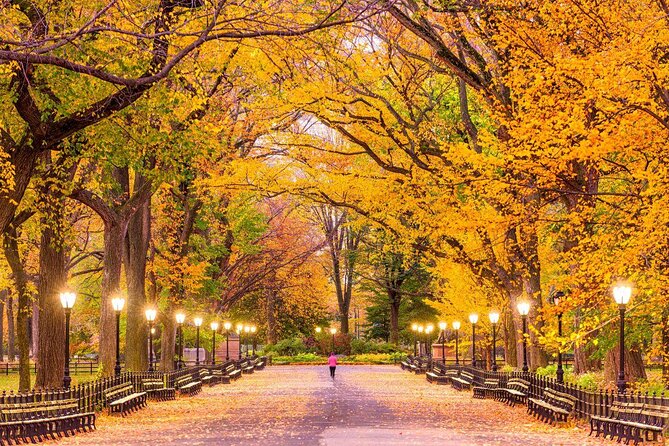
Seasonal perspective gives different scenery year-round, not just one-time summer glamour.
Ends in the Upper West Side so you can keep going with your own plans.
Why Central Park Feels Huge, and This Tour Fixes That
Central Park is one of those places that looks simple on a map and feels giant in real life. The paths twist. The landmarks sit at angles you don’t expect. And if you arrive with a short list, you can end up zig-zagging like a tourist with a headache.
This tour solves that with a guided route that focuses on the most meaningful highlights and the nearby context around them. You get the park as a system, not just a series of photo stops. The guide also helps you notice details you’d probably skip on your own—materials, sightlines, and the planning choices that make the park feel intentional instead of random.
And for what it costs, $35 is a straightforward value play. You’re paying for interpretation, pacing, and local navigation help, not admissions or transportation fees. If you’ve got limited time in New York, it’s one of the better ways to get oriented fast without feeling rushed.
You can also read our reviews of more walking tours in New York City



Starting at the Sherman Monument: Orientation Without Stress
The tour starts at the General William Tecumseh Sherman Monument at 764 Doris C Freedman Pl (10:00 am). That’s a smart anchor point. It’s easy to recognize, and you’re positioned to begin moving through the park’s core story.
What I like about this kind of start is the setup. Before you reach the headline scenes, the guide can help you understand how Central Park was laid out and why certain areas feel dramatically different from others. That makes the rest of the walk click. Even if you’ve visited Central Park before, you’ll often realize you were seeing the park as scenery, not as design.
You’re also close to public transportation, and the tour includes a mobile ticket, which keeps things simple—no paper hunt, no last-minute scramble.
Practical tip: start with your energy intact. The tour is about 2 hours 30 minutes, and even at a leisurely pace, Central Park paths add up.
Grand Army Plaza to Strawberry Fields: Big Feelings, Clean Sightlines
The first main landmark stop is Grand Army Plaza, where the tour begins to set tone. It’s one of those areas where you can feel the park connecting to the city around it. The guide’s job here is to point your attention beyond the obvious architecture—so you understand how this park fits into a broader New York plan.
Then you head to Strawberry Fields and the John Lennon Memorial. This stop isn’t just a famous name you take a picture at. It’s a place with emotional weight, and the guide can frame it in a way that makes it feel grounded instead of overly sentimental. You also get time to slow down and absorb what you’re looking at, not just speed through.
One small consideration: this is a very popular area, so you’ll want to keep your patience for crowded pedestrian flow. The tour pace helps, but it still helps to be mentally ready for the park’s busiest moments.
If you’re visiting in a season when plantings and colors pop, Strawberry Fields often feels extra photogenic. Even in colder months, the memorial area can still feel powerful—more quiet, and more reflective.
Bethesda Terrace and the Lake Area: Where the Park Shows Off
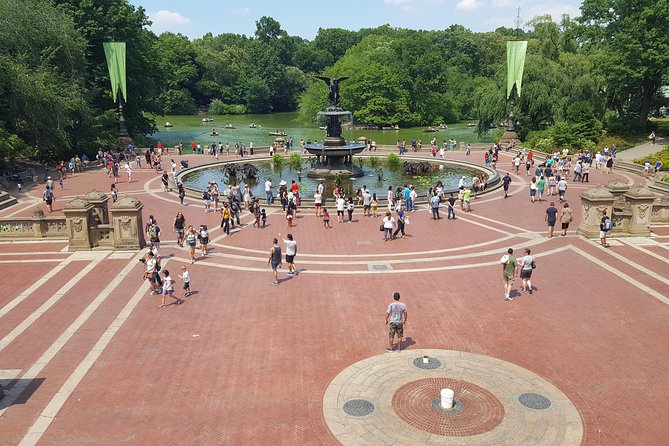
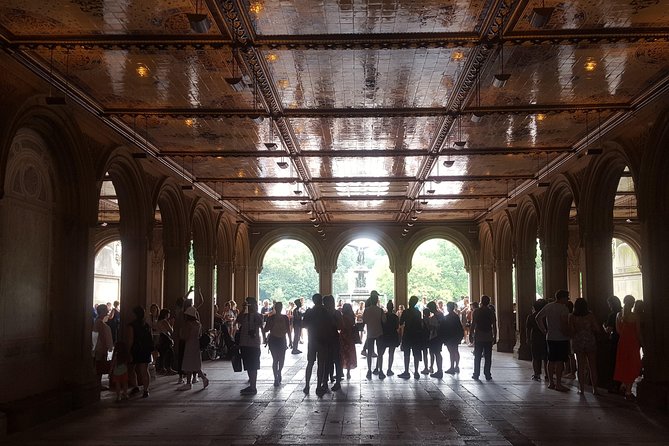
Next comes Bethesda Terrace, one of Central Park’s most recognizable, dramatic spots. The Terrace sits beside the water, so the views have that classic Central Park combo: architecture + landscape + reflective atmosphere. It’s the kind of place that makes you understand why people call the park a masterpiece of urban planning.
The time at this stop is brief (about 10 minutes in the schedule), but it’s enough for a focused look if you’re not sprinting. The guide helps you understand what you’re seeing—how this area functions visually and why it’s positioned the way it is.
A real-world note from recent walkers: the bathrooms around Bethesda Terrace can be a mixed experience. If you need to use facilities, do it before you reach this stretch when possible. That way you keep the tour comfortable instead of spending your best park minutes hunting for something acceptable.
Also, expect the park to include at least a few gentle slopes. One review mentioned hills, and that matches the reality of walking Central Park. Nothing extreme, but if you show up in worn-out sneakers, you’ll feel it.
The Rest of the Walk: Learning the Park as a Design Story
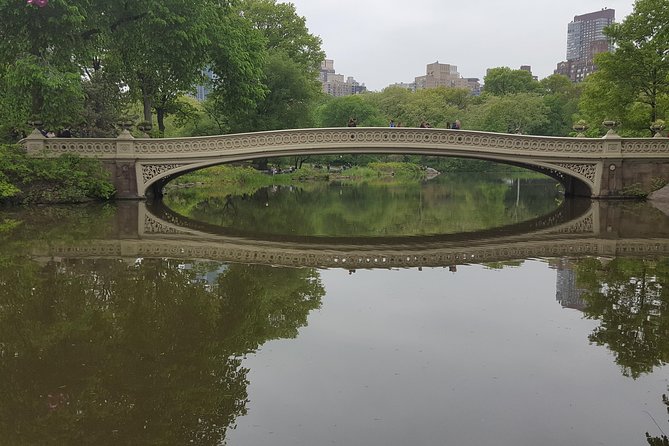
After the big landmark hits, the guide keeps the theme going: Central Park isn’t just beautiful because it’s green. It’s beautiful because it’s planned, with sightlines, paths, and focal points that guide your movement.
This is where a good guide changes the experience. Without a map, you’re still making progress. With the guide’s context, you’re also learning what to look for:
- why certain paths feel open while others feel enclosed
- how the park’s layout directs your attention
- what makes certain bridges and lakeside views feel like set pieces rather than random scenery
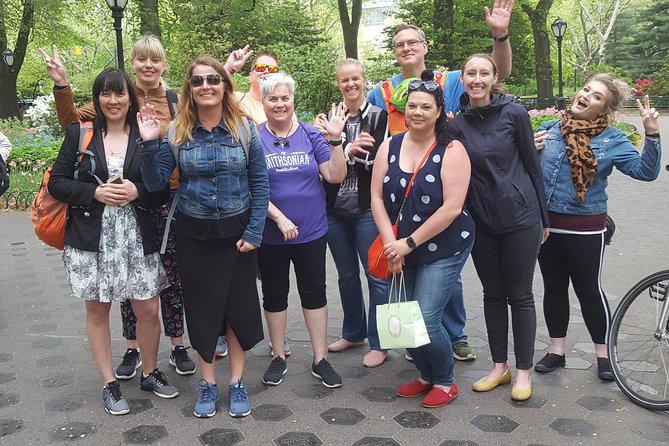
The “leisurely pace” matters here. If you’re in a group of up to 15, you can actually ask questions without feeling like you’re interrupting a machine. You get photo time too, so you’re not forced to choose between learning and seeing.
And because Central Park looks different in every season, you get a sense of how the same spaces shift with weather and foliage. Winter walks feel sharper and quieter. Spring and summer add softness and color. Fall gives you that golden-photo look without changing the underlying structure.





Finishing Near The Dakota: Great Place to Continue on Your Own
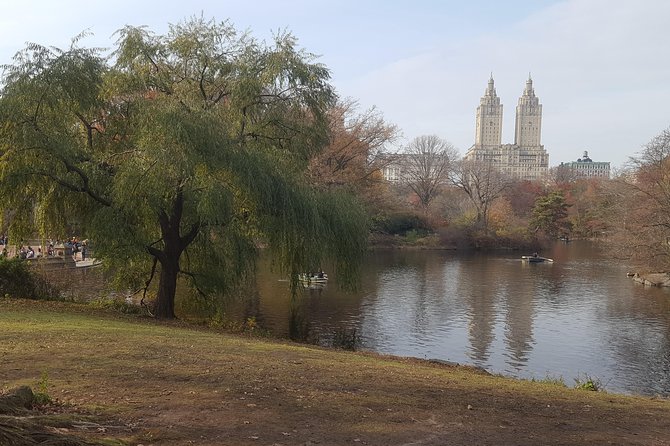
Your tour ends at The Dakota, 1 W 72nd St, in the Upper West Side. That’s a very practical finish. You step out into an area that’s lively, easy to explore, and well-suited to whatever your next plan is—brunch, a museum stop, a casual stroll, or just grabbing a view from street level.
You also get free time after the tour to explore on your own. That’s not a throwaway detail. Ending in a strong neighborhood gives you options instead of forcing you to go back the way you came.
If you like planning your day with flexibility, this structure works well. You get the guided orientation and landmark connections, then you choose the pace and the direction.
Value, Pace, and What This Tour Costs You in Time
Let’s talk $35. You’re paying for a professional guide and a guided walking experience that runs about 2 hours 30 minutes. There’s no hotel pickup or drop-off, so you’re responsible for getting to the meeting point (which is doable because it’s near public transportation).
That’s the value equation:
- If you want to self-navigate and already know Central Park’s highlights, you might skip the guide.
- If you want to understand the park’s story and save time figuring out where to go next, $35 is reasonable.
The tour’s structure also helps you feel efficient. You see major landmarks like Grand Army Plaza and Strawberry Fields, then you reach Bethesda Terrace. Even if you don’t see every corner of the park (because it’s enormous), you get a high-impact route that makes your future solo exploring easier.
Pace-wise, it’s described as leisurely. You’re walking at a comfortable speed, and the guide is there to keep things moving without rushing you through the scenes.
Who This Tour Fits Best (and Who Might Want Something Different)
This tour is a solid match if you:
- want to see the Central Park highlights without navigating on your phone
- enjoy history and design details that explain what you’re seeing
- want a relaxed, small-group experience with room for questions
- have limited time and want an efficient plan for a first Central Park visit
Comfort level-wise, the tour recommends moderate physical fitness. You’re not doing a hike, but you are walking on paths with some hills and uneven terrain in typical park conditions.
If you have very limited mobility or you don’t handle hills well, you might consider a different format (like shorter rides or a segmented plan). The tour doesn’t advertise accessibility accommodations beyond general guidance, so you’ll want to be realistic about the walking component.
Booking Smarter: Weather and Comfort Tips That Matter
This experience requires good weather. If conditions aren’t right, you’ll be offered a different date or a full refund. In practice, that’s a big deal for Central Park because a rainy day can make walking less fun fast.
So I’d treat the weather forecast like part of your itinerary. If it’s looking iffy, check closer to your start time and don’t assume you’ll get perfect conditions.
Also bring:
- comfortable shoes you can walk in for 2.5 hours
- layers if you’re traveling in shoulder season
- water or a small snack if you know you get hungry on walks
And since the tour ends near the Upper West Side, it helps to have a rough idea of what you’ll do next. That way, your “free time” is actually useful, not just time waiting for inspiration.
Should You Book This Central Park Walking Tour?
Yes, if you want a high-value, guide-led way to see Central Park’s most memorable spots and understand the park’s planning behind the scenes. For $35, you’re buying orientation, interpretation, and a relaxed route that finishes in a convenient neighborhood.
Skip it or look for an alternative if you’re dead set on a solo wandering day with no need for history context. Central Park rewards that style too. But if you’re trying to make your limited time count, this tour is one of the easier ways to do it right.
If you book, show up ready to walk, be patient near the most famous areas, and take advantage of the guide time. You’ll leave with a much clearer sense of where everything is—and why the park feels the way it does.
FAQ
Where do you meet and where does the tour end?
You start at the General William Tecumseh Sherman Monument, 764 Doris C Freedman Pl, New York, NY 10019. The tour ends at The Dakota, 1 W 72nd St, New York, NY 10023.
How long is the Central Park walking tour?
The tour lasts about 2 hours 30 minutes.
What’s included in the price?
The price includes a professional guide.
Is hotel pickup or drop-off included?
No. Hotel pickup and drop-off are not included.
How big is the group?
The tour has a maximum of 15 travelers.
What happens if weather is poor or I need to cancel?
The experience requires good weather. If it’s canceled due to poor weather, you’ll be offered a different date or a full refund. You can also cancel for a full refund up to 24 hours in advance of the start time.