REVIEW · NEW YORK CITY
Guided Central Park Bike Tour 2 Hours
Book on Viator →Operated by Cycle Park NYC · Bookable on Viator
Central Park turns into a guided ride fast. You zip between standout sights on provided bikes, then pause for short stops built for photos and quick context, from Columbus Circle to Sheep Meadow. Bike-first pacing makes it a solid choice when you want the big hits without spending your whole day planning.
I love how the route strings together the park’s most recognizable moments—Bethesda Fountain, Conservatory Garden, Bow Bridge, and Strawberry Fields—so you get your bearings fast. I also love the human factor: guides like Martin, JJ, Darrell/Darryl, Solomon, Nikos, Leo, and Yuri bring stories plus a practical sense of when to slow down for safety, and the group stays small (max 15). Small groups are a big part of the feel.
One possible drawback: noise. Central Park can get loud with traffic, carriages, and other cyclists, and if the group spreads out you may have trouble hearing the guide at every stop—so staying near the front helps.
In This Review
- Key Things You’ll Notice Right Away
- Central Park in 2.5 Hours: What This Bike Tour Really Gives You
- 240 W 56th St Start Point: Bikes, Helmets, and the First Roll
- From Columbus Circle to the Gar Pond: Getting Oriented Fast
- The Mall, Bethesda Fountain, and the Big-Icon Photo Stops
- Conservatory Water to Great Lawn: Gardens, Water, and Open Space
- Swedish Cottage Marionette Theatre and Belvedere Castle: Timed Stops That Add Meaning
- Bow Bridge, Shakespeare Garden, and Strawberry Fields: Icons With Easy Targets
- The Sheep Meadow Finish: A Big Ending With Room to Breathe
- Guides Make the Difference: Stories, Flexibility, and Safety Talk
- Bike Comfort, Hills, and Crowds: How to Prep So It Feels Fun
- Price Check: Is $45 Worth It for a Guided Park Loop?
- Who This Tour Fits Best (and Who Should Consider Alternatives)
- Should You Book This Central Park Bike Tour?
- FAQ
- How long is the Guided Central Park Bike Tour?
- What does the tour cost?
- Are bikes and helmets provided?
- What language is the tour offered in?
- Do you have different start times during the day?
- How large is the group?
- Where does the tour start?
Key Things You’ll Notice Right Away
- A 2.5-hour sprint through the classics: Timed photo and info stops add up fast, without feeling like a nonstop blur.
- A guided loop with ticketed stops built in: The schedule lists admission tickets included on the stops where they apply.
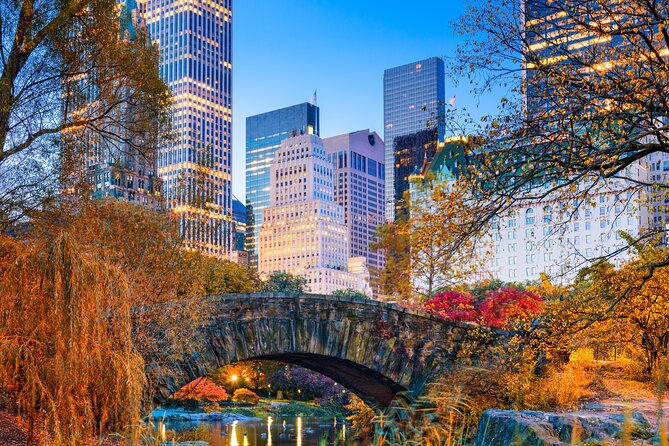
- Bow Bridge shows up twice: You get two separate photo moments for a reason—timing and angles.
- Guides who match your pace: When the group is small, routes can flex a bit and guides tend to slow down for pictures.
- Safety is part of the job: Bikes and helmets are provided, and guides emphasize smart riding in a busy park.
- Morning or afternoon start options: Pick the timing that best matches your energy and your itinerary.
Central Park in 2.5 Hours: What This Bike Tour Really Gives You
If Central Park feels huge, that’s normal. This tour helps you solve the “where do I even start?” problem by routing you through the most recognizable sections in a compact time window. You’re not trying to cover the whole park—this is about choosing the best-known landmarks and making them make sense as you ride.
You’ll likely enjoy the rhythm: short intro from the guide, then a few minutes to look around and take photos, then back on the bike. The total stop time is about 2 hours and the rest is the riding between sights, so you spend less time stuck and more time moving.
This is also a good match for first-timers. After a ride like this, you’ll know where the key areas are, which makes the next day of walking or revisiting easier.
You can also read our reviews of more cycling tours in New York City



240 W 56th St Start Point: Bikes, Helmets, and the First Roll
You meet at 240 W 56th St in Manhattan. The tour ends back at the same starting area, which is convenient when you’re stacking this with other city plans.
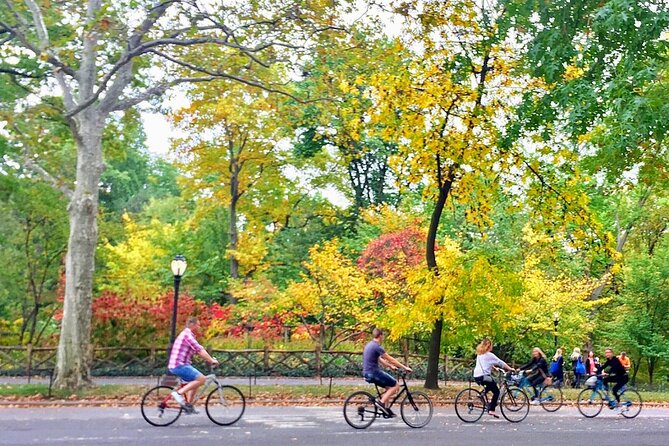
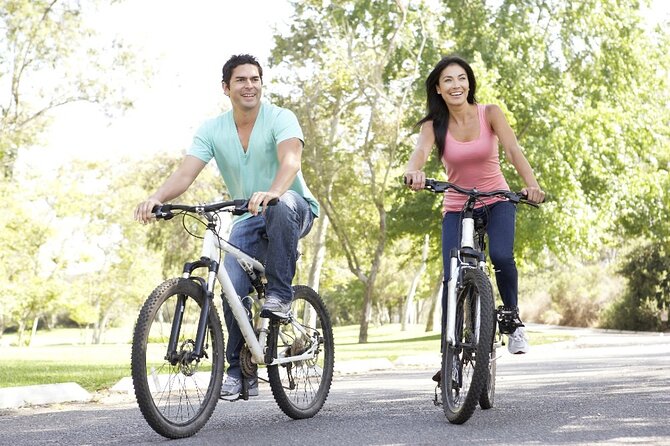
Bikes and helmets are provided for your safety and convenience. That matters more than people think: Central Park riding isn’t just about speed, it’s about comfort and control. A properly set-up bike helps you stay confident on little climbs and tight turns.
The process is also designed to be smooth for a guided experience: you’ll get a mobile ticket, and confirmation comes at the time of booking. It’s offered in English, and the company keeps group size capped at 15, which helps everyone stay together.
One practical note: it’s often booked about a month ahead, so if you’re traveling in a busy season, locking in your time sooner is smart.
From Columbus Circle to the Gar Pond: Getting Oriented Fast
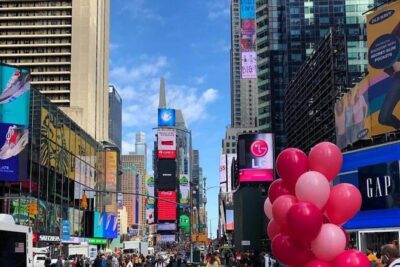
Your first stop is Columbus Circle for info, a quick look, and photos. This is a strong opener because it gives you a sense of the park’s edge and the surrounding city grid. You’ll understand where you are in relation to Manhattan before you ride deeper.
Next you head to the Gar Pond. This is where the park starts to feel more “park” and less “city block with trees.” Even during a short stop, you’ll get the guide’s take on what you can see around the water and how this part of the park works visually.
Then you move to The Mall and Literary Walk, a classic Central Park corridor. The value here is that the guide points out the details you might miss when you’re just passing through: what lines up, what landmarks matter, and why those paths became popular.
The whole sequence is about bearings. When you know what you’re looking at, the rest of the ride feels easier and more rewarding.
The Mall, Bethesda Fountain, and the Big-Icon Photo Stops
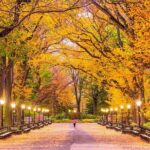
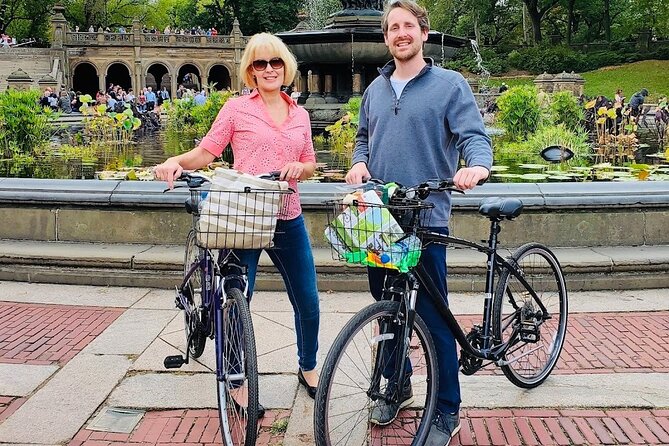
From the Literary Walk area, the tour hits Bethesda Fountain next, with time to explore and take photos. Bethesda is one of those Central Park anchors. It’s also a great place to learn how the park designers used a focal point: it gives you an identity for the section you’re in.
After that, you ride to Conservatory Water. Water changes everything in Central Park—light, reflections, the way you can read the space. Even in a short stop, it helps you understand why this park feels so different from a typical city green.
Then you reach Conservatory Garden. This is where you get a taste of the park’s more formal side. The guide’s job is to help you look beyond “pretty plants” and notice the structure—paths, views, and the idea of how the garden is meant to be experienced.
So far, this is what makes the tour feel efficient. You’re not just checking boxes; you’re building a mental map of how Central Park is put together.
Conservatory Water to Great Lawn: Gardens, Water, and Open Space
Next up is the Great Lawn, another park icon with a totally different feel from the garden and water zones. Great Lawn is open, wide, and obvious once you see it. The advantage of a bike tour is that you arrive without exhausting yourself on a long walk.
This stop is also useful for families and mixed groups. It’s easy for everyone to spread out for photos, regroup, and get moving again quickly.
You’ll keep rolling from there to Cleopatra’s Needle, one of those Central Park landmarks that surprises people because it’s so memorable once you’re up close. This is a great photo moment, but it’s also a good reminder that Central Park is full of global references and big monuments, not just trees and paths.
At this point, you’ve seen the park’s “featured moments” in three styles: formal gardens, water views, and big open space with a monument. That variety is part of the payoff.
You can also read our reviews of more guided tours in New York City





Swedish Cottage Marionette Theatre and Belvedere Castle: Timed Stops That Add Meaning
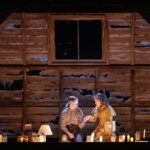
The tour includes a stop at Swedish Cottage Marionette Theatre. This is a distinct Central Park character area—different architecture, different vibe, and a strong change from the larger monument-and-garden feel.
Then you ride to Belvedere Castle, with time to explore and take photos. Even if you don’t linger long, getting to this part of the park with a guide helps you understand why it sits where it does and what you’re meant to notice from there.
The key idea: these stops come with short “info + look around” timing. You don’t have to plan separately or wonder if the attraction is worth it. You arrive, the guide sets context, and you get a structured moment to enjoy it.
Bow Bridge, Shakespeare Garden, and Strawberry Fields: Icons With Easy Targets
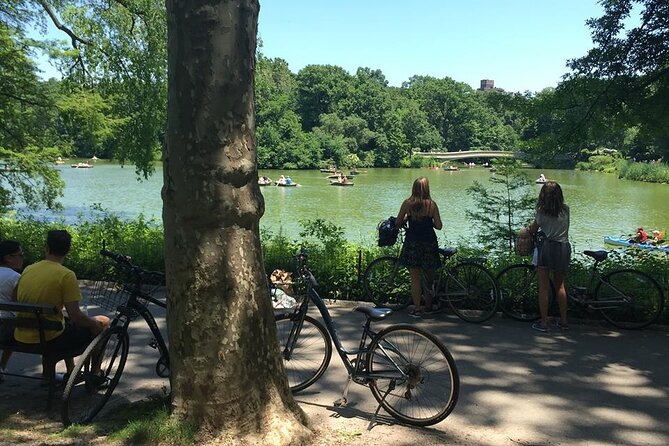
Next comes Bow Bridge for a photo stop. Bow Bridge is one of the most photographed spots in Central Park, and it’s also one of the easiest to appreciate from the bike because you’re arriving with the guide pointing out angles and what to look for.
After that is Shakespeare Garden. This stop is a quick way to see how the park layers in themes. It’s also a nice breather between the larger showpieces, since the guide helps you slow down and actually look at what’s in front of you.
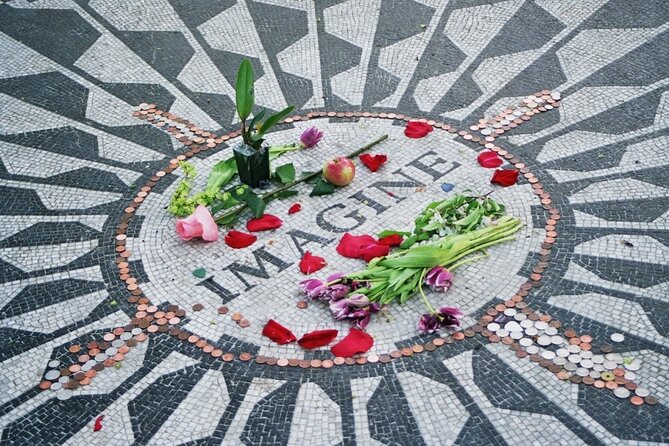
Then you reach Strawberry Fields, a stop that often lands differently for different visitors. The value in this part of the ride is that the guide’s storytelling makes the place feel connected to the wider city, not just like a stop on a list.
Then there’s a second Bow Bridge stop later on. That’s not random—it gives you a second shot at photos after you’ve moved through the park and arrived from a different direction and mood.
The Sheep Meadow Finish: A Big Ending With Room to Breathe
To close, you end at Sheep Meadow. It’s the kind of finish that helps your brain reset after a loop of landmarks. Even with the tour still in motion, you get open space and an easy place to pause for pictures.
This is also where the bike tour design pays off. Instead of ending on another tight landmark photo stop, you end somewhere that feels like Central Park at its most casual and wide.
If your day is packed, this ending is useful. You’ll leave with energy left for walking around nearby streets or ducking into a museum—because you’re not worn out from a full-day trek.
Guides Make the Difference: Stories, Flexibility, and Safety Talk
The biggest praise point across this experience is the guides themselves. Names that come up include Martin, JJ, Darrell/Darryl, Solomon, Nikos, Leo, and Yuri. What they have in common is the mix of history with practical guidance—how to ride through busy zones, where to slow down, and how to get good photos without feeling rushed.
A standout detail from real rides: when the group is very small, the guide can adapt. In some cases, the tour feels close to private, and the guide can linger a bit more or take a slightly different angle to help you see extra sections within the time limit.
You’ll also notice the tour has a steady pace. Reviews often call out that you’re not forced to sprint between stops—you get a real chance to take pictures and explore briefly, then regroup.
Bike Comfort, Hills, and Crowds: How to Prep So It Feels Fun
Central Park isn’t flat. You’ll likely encounter some hills, and the ride can feel like a workout, though most people find it manageable. If you’re sensitive to inclines, start the tour with that mindset and don’t try to “race” your own effort.
Also plan for crowds. Central Park attracts visitors, cyclists, and carriage traffic, and that can affect how smoothly the group moves. Even when everything goes well, noise can be a factor, and it can be hard to hear the guide if you’re separated.
My practical advice:
- Stay close to your guide during info moments.
- Take your photos, then be ready to move quickly.
- Bring water and a light layer, since weather can shift fast.
If rain shows up, keep expectations flexible. Even when weather changed during one ride, the tour kept its rhythm, and the guide helped make it memorable.
Price Check: Is $45 Worth It for a Guided Park Loop?
$45 per person for about 2.5 hours is not “cheap,” but it’s also not priced like a luxury city tour. For what you get, it’s reasonable value—especially if you’d otherwise spend hours figuring out transport, maps, and which sights are worth your time.
What makes it feel like a good deal:
- Bikes and helmets are included.
- The guide handles the route between major landmarks.
- The schedule includes timed exploration at each stop, so you’re not just biking past everything.
- Admission tickets are listed as included for the stops where admission applies.
If you’re traveling solo, this price still works because you gain structure. If you’re a couple, it can be a smart “see a lot, stress less” option. If you’re traveling with kids or teens, it’s a nice way to keep them moving without planning a half-day walking circuit.
Who This Tour Fits Best (and Who Should Consider Alternatives)
This tour fits best if you:
- Want the main Central Park sights without doing a self-guided marathon.
- Prefer a guided plan with short stops over wandering on your own.
- Like photos and want help hitting the famous spots efficiently.
- Are comfortable riding a bike at a relaxed to moderate pace.
It may be less ideal if:
- You hate crowds or the sound of a busy city park.
- You need quiet, long exploration time at each stop.
- You’re an ultra-sensitive listener and struggle to hear spoken info in noisy outdoor settings.
If you’re a confident rider, you’ll likely enjoy it even more because you can focus on views and photos instead of bike stress.
Should You Book This Central Park Bike Tour?
I’d book it when your goal is clarity and speed with meaning. You’ll leave with a strong sense of where everything sits—Columbus Circle edge, Bethesda’s central landmark zone, the gardens and water sections, monument moments, and the emotional stop at Strawberry Fields.
Choose this tour over DIY planning when:
- You don’t want to spend your vacation time building an itinerary.
- You want a guide to point out what you’d otherwise walk right past.
- You like the idea of admission tickets being handled for the stops that need them.
One more nudge: free cancellation is available up to 24 hours before the start time, so you can book with some flexibility if your schedule is fluid.
If you want Central Park highlights plus exercise, with a guided rhythm that keeps you moving, this is a very solid bet.
FAQ
How long is the Guided Central Park Bike Tour?
It lasts about 2 hours 30 minutes.
What does the tour cost?
The price is $45.00 per person.
Are bikes and helmets provided?
Yes. Bikes and helmets are provided.
What language is the tour offered in?
The tour is offered in English.
Do you have different start times during the day?
Yes. You can choose between morning and afternoon start times.
How large is the group?
The tour has a maximum of 15 travelers.
Where does the tour start?
The meeting point is 240 W 56th St, New York, NY 10019, USA. The tour ends back at the meeting point.