REVIEW · NEW YORK CITY
Lower Manhattan Secrets And History Walking Tour
Book on Viator →Operated by Metro Tours - Walking Tours of New York City · Bookable on Viator
Lower Manhattan has stories you can walk. This tour links the big hits with human-scale details, from the Brooklyn Bridge to the rebuilt skyline after 9/11. I love the small group size (max 15) because you get time to ask questions and actually hear the guide.
What I also like: the tour ends with a real slice of New York pizza, not a vague suggestion. And the route feels built for first-timers and repeat visitors alike, since you get context for sites you already think you know.
One thing to consider: it’s still a downtown walking tour, so you’ll be standing and moving for about 3 hours, rain or shine logic included. Wear comfortable shoes, and expect a bit of heat and sidewalk time.
In This Review
- Key things I’d circle before you book
- Lower Manhattan, but with a real guide-led storyline
- Meeting at Tweed Courthouse and starting downtown without stress
- Brooklyn Bridge: the construction story behind the postcard
- South Street Seaport: where the port helped form New York
- Wall Street and the NYSE: from action to architecture
- Federal Hall: independence made physical (right here)
- Fearless Girl and Charging Bull: why the icons exist
- Trinity Church NYC: major figures and the human side
- Battery Park: harbor views with context you’ll actually use
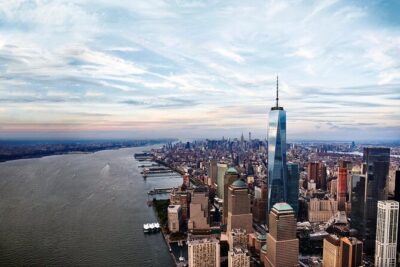
- One World Trade Center area: rebuilding, remembrance, and reflection time
- The pizza finish near 110 Cedar St: your reward and your decompression
- Price and value: what you’re paying for
- Who this tour is best for (and who should plan differently)
- Weather reality: good weather helps, but flexibility matters
- Should you book Lower Manhattan Secrets and History?
- FAQ
- FAQ
- How long is the Lower Manhattan Secrets And History Walking Tour?
- What does the tour cost?
- Where does the tour start and end?
- Is the tour offered in English?
- Is the NYSE admission included?
- Is One World Trade Center admission included?
- Does the tour include pizza?
Key things I’d circle before you book
- Small-group pace (15 max) keeps the feel relaxed, even when the streets get crowded
- Prime downtown routing strings together the bridge, seaport, Wall Street, church history, and the World Trade Center area
- Stories with cause-and-effect: finance, independence, protest-era art, and modern resilience all connect
- Pizza at the end gives you a clean, fun finish near One World Trade Center
- Photo and practical tips help you get better angles and plan breaks along the way
- Mobile ticket makes it easy to show up and get going without extra hassle
Lower Manhattan, but with a real guide-led storyline
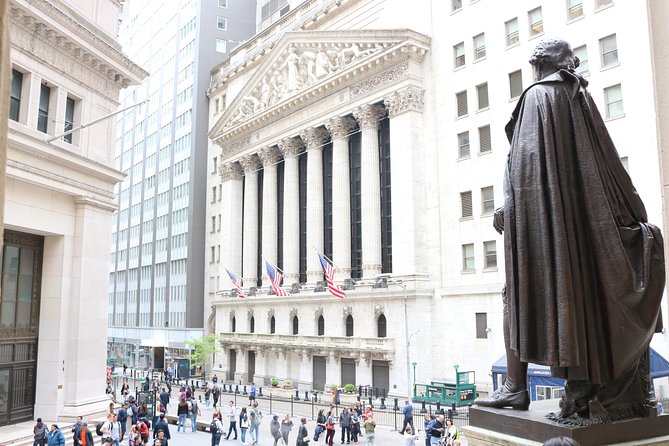
A lot of Lower Manhattan “tours” are basically a sightseeing checklist. This one is different because you’re not just looking at landmarks—you’re hearing the why behind them, in a clear order you can remember later.
You start with a bridge built to solve a practical problem, then shift into trade and shipping, then the machinery of money. After that, the tour turns toward political turning points and the people connected to them. Finally, you end with the harbor and the rebuilt World Trade Center area, with time built in for quiet reflection.
That “story arc” matters, because it helps you read the city. You’ll notice patterns you’d otherwise miss: power, trade, protest, memory, and reinvention.
You can also read our reviews of more walking tours in New York City



Meeting at Tweed Courthouse and starting downtown without stress
The tour meets at the foot of the Tweed Courthouse, 52 Chambers St. That’s a handy starting point because it’s easy to reach by public transit, and it gives you a straightforward anchor before you start weaving through the streets.
You also get a mobile ticket, so you can keep things simple on your phone. If you’re traveling with family, a mobile ticket is one less thing to lose in a museum bag or jacket pocket.
Start time is 11:00 am, and you’ll typically see people arrive a little early to settle in. Also, this tour tends to book out ahead of time—on average, travelers reserve it about 44 days in advance—so if your trip dates are fixed, I’d book earlier rather than later.
Brooklyn Bridge: the construction story behind the postcard
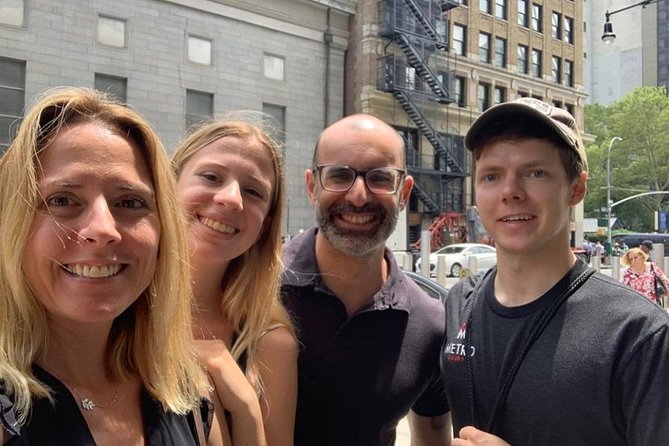
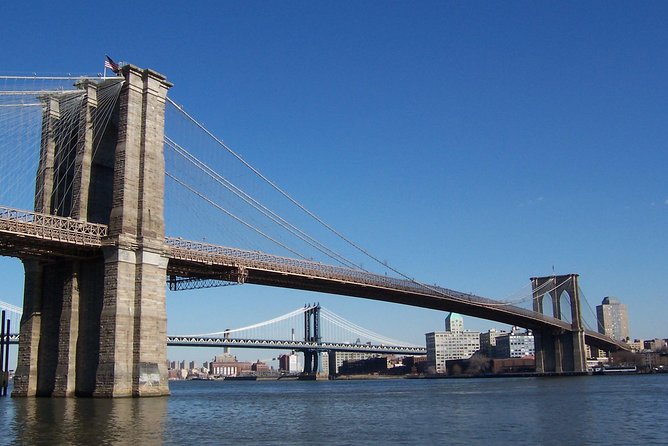
The first stop is the Brooklyn Bridge, and it’s treated like more than a photo moment. You’ll hear about the big undertaking behind building one of the most famous bridges in the world, and you’ll get a sense of what it meant for Lower Manhattan’s connection to Brooklyn.
Why this matters: bridges aren’t just architecture here. They’re about movement—who can travel, who can trade, and how a city expands its reach. Seeing the bridge early in the walk also helps you set the mental map for the rest of the day.
Plan for a quick stop. The tour time at each location is short, so the guide has to hit the key points fast and keep you moving.
South Street Seaport: where the port helped form New York
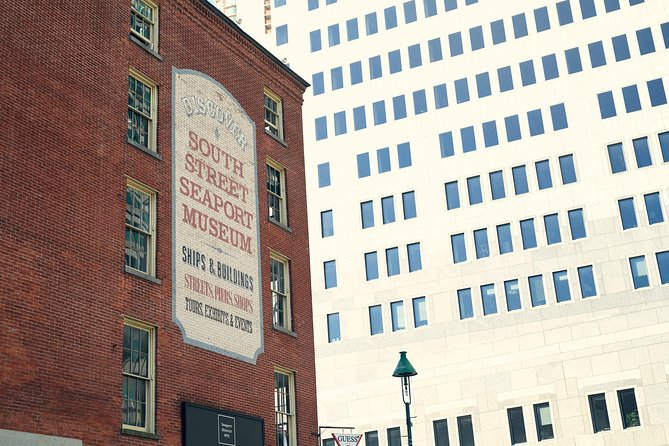
Next you move to the South Street Seaport Historic District. This area played a major role in shaping New York City as you know it, and you’ll learn why it earned one of the city’s most famous nicknames.
This stop is a good reminder that New York didn’t “start” at Wall Street. It started with shipping, labor, and the constant flow of visitors and goods through the harbor.
A practical note: Seaport streets can feel busy. Since the tour is small-group sized (max 15), you’ll usually be able to gather near the guide and still keep the pace without feeling like you’re stuck behind a busload.
Wall Street and the NYSE: from action to architecture
Then the tour shifts into Wall Street and the New York Stock Exchange. It’s one of the best parts for people who want to understand what they’re seeing, not just glance at it.
Wall Street today is global finance. But the guide frames it as a place that changed over time—so you get the sense that the financial system didn’t appear fully formed. You also get the famous “Buy! Buy! Sell! Sell!” feel from the NYSE building itself, with an explanation of how it evolved into a home for the market.
One important value point: most stops on this walk are essentially exterior views, and the tour states that admission for the NYSE is not included. So don’t build your plan around entering the building unless you’ve booked a separate ticket elsewhere.
If you like “how did this become famous” stories, this segment will click. If you only want the slickest skyline photos, it may feel more story-heavy than you expected.
You can also read our reviews of more historical tours in New York City






Federal Hall: independence made physical (right here)
At Federal Hall, the tone turns more political. You’ll hear what happened when the colonies became free and how this exact spot in Lower Manhattan helped shape history.
This is where the tour gives you context you can carry into the rest of the city. You start to see the city’s big institutions as part of a timeline, not just isolated landmarks.
Time at this stop is short, so the guide’s job is to focus on the turning point and the location’s importance. If you’re the type who likes quick, high-impact learning moments, you’ll probably enjoy this stop a lot.
Fearless Girl and Charging Bull: why the icons exist
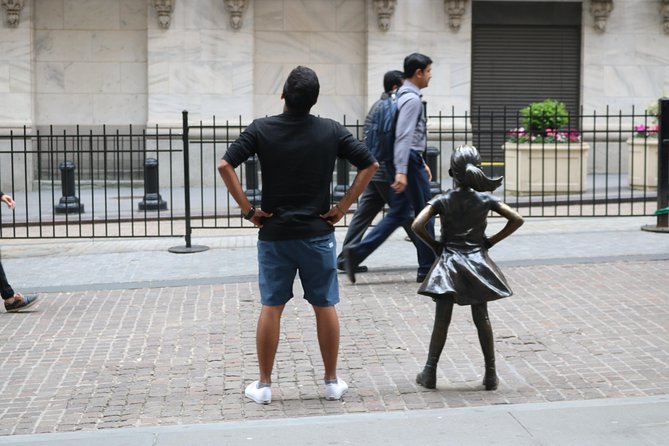
Next comes the modern-world symbolism: Fearless Girl and Charging Bull. The guide explains the story behind Fearless Girl—what led to her being installed and what she’s meant to represent. Then Charging Bull gets its own backstory, including how it ended up as a beloved Wall Street icon.
These are playful statues, but they’re not random. They’re about messaging, marketing, and how people react to power symbols. On this tour, the guide helps you connect that street-level theater to the bigger Wall Street theme.
If you care about modern culture in historic settings, this is a fun break from the more formal sites. Also, it’s one of the best places to pause for photos because the objects are instantly recognizable.
Trinity Church NYC: major figures and the human side
The tour stops at Trinity Church NYC, and you’ll hear about historical figures connected to it, including George Washington and Alexander Hamilton. You’ll also get the kind of stories that make you feel like you’re standing next to a living timeline, not just a building façade.
This stop has a “place and person” focus. It’s useful if you want Lower Manhattan history in a way that isn’t all dates and facts. Instead, the guide frames events through people and moments you can remember.
Time here is brief, so keep your questions ready. If you’re interested in the Hamilton angle, there’s a nice payoff in the fact that the guide may lead you to relevant areas within the church grounds when possible.
Battery Park: harbor views with context you’ll actually use
After the Wall Street world, you head to Battery Park, which overlooks New York Harbor and the area near Lady Liberty. It’s one of the most photo-friendly spots on the route, but the tour also gives you the port story behind the massive waves of visitors arriving in New York.
This stop is about perspective. Once you understand the port’s role in welcoming millions, the view stops being just Instagram scenery. You start seeing the harbor as a doorway the city used to welcome the world—again and again.
The tour also leans into real-time guidance. In reviews, people mention the guide helping with photo angles and practical pauses. That matters on a walk like this, because Battery Park can feel open and exposed.
One World Trade Center area: rebuilding, remembrance, and reflection time
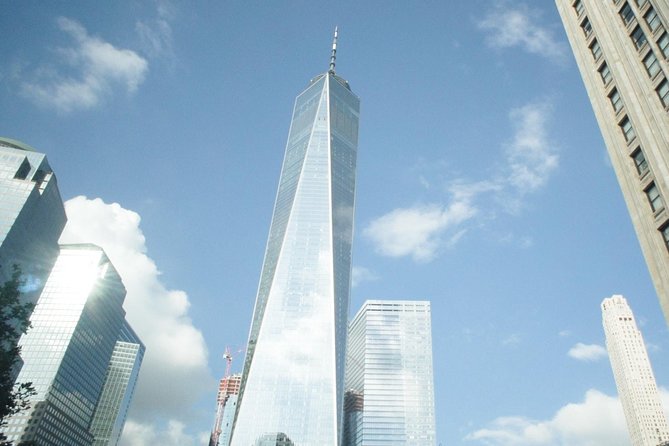
The walk finishes in the One World Trade Center area. You’ll talk about 9/11 and the huge rebuilding effort that followed, with time set aside for walking the solemn grounds and private reflection.
This is the emotional center of the tour, and the structure matters: you don’t just hear the story and rush past. You get a built-in moment to slow down.
Also, the tour states that admission is not included for this stop. So treat this as a guided time in the area, not a ticketed museum entry.
If you’re the type who appreciates respectful context, this segment is likely to stick with you longer than the statue photos.
The pizza finish near 110 Cedar St: your reward and your decompression
The ending point is 110 Cedar St, near the World Trade Center area, where the tour includes a slice of New York pizza as a capstone.
That pizza stop is more than a snack. It solves the “what do we do now” problem that hits after a long walk. You’ll be fed, you’ll be close to transit, and you’ll have a natural pause to debrief what you just learned.
From a value perspective, this matters. A $60 tour is much easier to justify when there’s a real meal-like ending included, not just a promise of something nearby.
Price and value: what you’re paying for
At $60 per person for about 3 hours, you’re paying for two things: time and interpretation.
The time is the straightforward part—you get a focused route across key Lower Manhattan areas without needing to plan stop-by-stop yourself. The interpretation is the important part. You’ll hear stories that connect bridge-building, shipping, finance, independence-era politics, modern protest-era art, and the post-9/11 rebuilding narrative.
Is it “cheap” by New York standards? No. But when you factor in the small group size (max 15), the guide-led pacing, and the included pizza, the value gets easier to see.
Also, the average booking window (about 44 days) hints that people use this as a dependable anchor activity during a trip. If you wait until late, you may have fewer time slot options.
Who this tour is best for (and who should plan differently)
I think this tour is especially strong for you if:
- You want a guided Lower Manhattan walk that’s more story-driven than checklist-driven
- You like asking questions and getting answers on the spot
- You want a manageable timeline without spending the whole day inside ticket lines
It may be less ideal if:
- You want mostly inside stops and museum-style exhibits
- You hate walking and standing for a few hours
- You’re mainly seeking quick photos and not as interested in context
In reviews, people praise the guide’s ability to tailor the walk and keep it comfortable when needed, including finding shady spots and restrooms and adjusting for different comfort levels. That’s a big deal if you’re traveling with seniors or you’re heat-sensitive.
Weather reality: good weather helps, but flexibility matters
This experience requires good weather, meaning the operator may cancel and offer a different date or a full refund if weather is too poor.
If rain is on the forecast, bring a compact umbrella or a rain jacket. And if you want shade, timing can help. Even if the tour route is fixed, the guide may manage brief pauses and shelter options along the way, so you’re not just stuck in the open.
The walking tour format means you’re outside a lot. So this is not the activity to pick if you’re trying to dodge all weather.
Should you book Lower Manhattan Secrets and History?
I’d book it if your goal is simple: get a smart, guided Lower Manhattan overview that feels connected, not random.
The big reasons to say yes are the small group feel, the way the guide ties landmarks together as a story, and the practical ending with pizza near 110 Cedar St. Add in the focus on landmarks you’ll see anyway—Brooklyn Bridge, Seaport, Wall Street, Federal Hall, Trinity Church, Fearless Girl, Battery Park, and the One World Trade Center area—and you get an efficient afternoon.
If you like to learn while you walk, and you want a Lower Manhattan route you can explain later (to your taxi driver, your friends, or your own future self), this tour is a solid pick.
FAQ
FAQ
How long is the Lower Manhattan Secrets And History Walking Tour?
It’s about 3 hours long (approx.).
What does the tour cost?
The price is $60.00 per person.
Where does the tour start and end?
It starts at Tweed Courthouse, 52 Chambers St, and ends near 110 Cedar St.
Is the tour offered in English?
Yes, it is offered in English.
Is the NYSE admission included?
No. The New York Stock Exchange stop lists admission ticket as not included.
Is One World Trade Center admission included?
No. The One World Trade Center stop lists admission ticket not included.
Does the tour include pizza?
Yes. The tour includes a slice of New York pizza to cap off the experience.