REVIEW · NEW YORK CITY
Manhattan’s Famous Artists: Exploration Game and Tour
Book on Viator →Operated by Questo · Bookable on Viator
Greenwich Village turns into a game map. This offline, self-guided scavenger hunt through Greenwich Village helps you learn what famous artists did—and where they did it—without hunting for a guide. I especially like the on-your-own timing (start any hour, pause for snacks, keep going) and the fact that the stops are tied to real places tied to big names like Jimi Hendrix and Edgar Allan Poe. One drawback to plan for: it’s not a ticketed venue tour, and some stops are marked as admission not included, so you’re mainly reading the story from the sidewalk or using the audio layer.
If you want Manhattan history that feels practical—less museum mode, more street-walk detective work—this is a fun fit. You’re basically turning your phone into a “field guide plus puzzles” experience, and you can keep it moving at your pace. And since it’s private (just your group), you avoid the awkward crowd clumping that can happen on traditional tours.
In This Review
- Key things to know before you start
- Manhattan’s Famous Artists scavenger hunt: what you really get
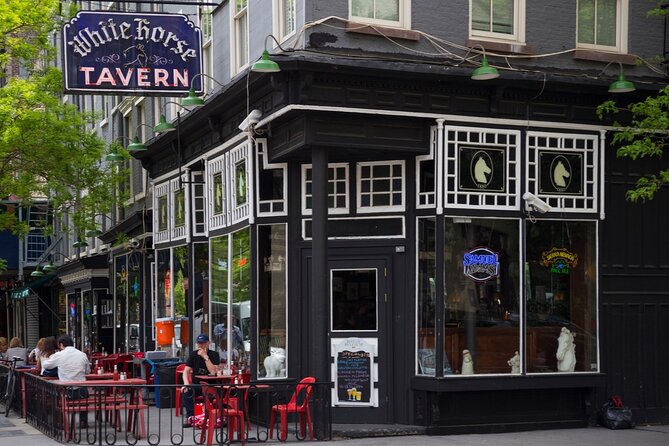
- Start at White Horse Tavern and play on your schedule
- Lucille Lortel Theatre: a movie house turned off-Broadway stage
- 1 Sheridan Square: Suze Rotolo and the folk den mother
- Electric Lady Studios: Jimi Hendrix’s recording vision
- 40 W 8th St and the Bon Soir steps down into cabaret
- Washington Square Park audio stop: square, iconic, and a meeting point
- 85 W 3rd St and Poe’s literary footprint
- Cafe Wha? where early talent cut their teeth
- Village Gate on Bleecker St: flophouse origins to Top of the Gate
- Price, time, and value for a 90-minute Greenwich Village wander
- Who this Manhattan art game is for (and who may want something else)
- Should you book Manhattan’s Famous Artists: Exploration Game and Tour?
- FAQ
- Is this tour self-guided or do I meet a guide?
- Do I need an internet connection to play?
- How long does the Manhattan artist exploration take?
- Where does the experience start and where does it end?
- What language is the experience offered in?
- Can I cancel for free?
Key things to know before you start

- Offline play means you can keep exploring even if your data plan is weak or your signal fades.
- Self-paced pacing: start at any hour, stop when you want, and resume later.
- Real stops, real names across Greenwich Village: Hendrix, Rotolo, Poe, cabaret legends, and more.
- No guide means no human contact and less time waiting around.
- A mix of street viewing and audio (including the Washington Square Park audio segment).
- Budget-friendly at $5.98 per person, especially if you’re traveling with a small group.
Manhattan’s Famous Artists scavenger hunt: what you really get
This isn’t a guided lecture or a bus tour. You’ll play an exploration game that takes you through Greenwich Village using a set of famous-art related stops. Think: each location gives you a story, a prompt, and a reason to look at the place a little differently than you would on a casual walk.
I like that the tour is built around artists as people, not just names on a plaque. The stops cover multiple creative lanes—theater, folk music circles, recording studios, stand-up and cabaret rooms, and even literature. The result feels more like you’re mapping a creative neighborhood than checking off attractions.
Also, you’re not tied to a strict group schedule. That matters in Manhattan, where plans can go sideways fast when you hit a line, a detour, or a sudden craving for coffee.
You can also read our reviews of more tours and experiences in New York City
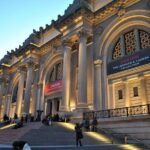
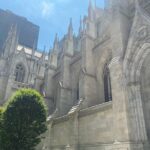

Start at White Horse Tavern and play on your schedule
Your walk begins at White Horse Tavern, 567 Hudson St, and the route ends at The Bitter End, 147 Bleecker St. The experience is designed so you can start at any hour, with the overall duration around 1 hour 30 minutes.
A big quality-of-life feature here is the flexibility to take breaks. If you want to step into a café, grab a quick bite, or just pause for a photo stop, the game structure is meant to handle that. And since it’s private and self-guided, you don’t have to wait for anyone else to finish reading.
You’ll use a mobile ticket and you can play offline, which is a practical win in NYC. It means you don’t have to gamble on signal while you’re in the middle of your story-driven scavenger hunt.
Lucille Lortel Theatre: a movie house turned off-Broadway stage
Stop 1 lands you at Lucille Lortel Theatre on 121 Christopher Street. This one is a classic “place layers” story: the building was constructed in 1926 as a 590-seat movie theater called the New Hudson, later known as the Hudson Playhouse. The interior is described as largely unchanged, which makes it a great stop for anyone who likes old theaters.
The creative plot thickens in the early 1950s when the site became an off-Broadway theater. It opened as Theatre de Lys on June 9, 1953, with a production of Maya by Simon Gantillon, starring Kay Medford, Vivian Matalon, and Susan Strasberg.
What’s great for your experience: this stop sets the tone for the whole walk. You’re encouraged to connect performance art to the bricks and layout you can still see. What’s worth considering: the stop notes admission ticket not included, so plan on taking in the story from the outside or using your game prompts rather than expecting a full inside-theater visit.
1 Sheridan Square: Suze Rotolo and the folk den mother
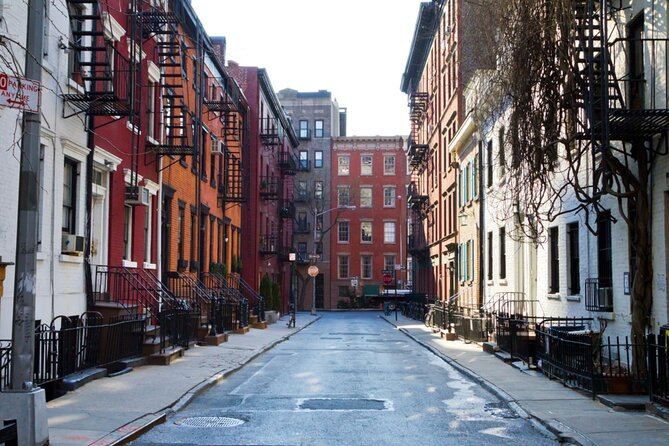
Next you’ll head to 1 Sheridan Square. This isn’t just a street address; it’s a specific home story: Suze Rotolo lived in the penthouse of One Sheridan Square with her mother. Right below, in a tiny studio apartment, lived Miki Isaacson, described as the folk den mother.
That “folk den mother” detail is the kind of thing that changes how you see Greenwich Village. It’s not just about famous people on stage—it’s about the smaller, behind-the-scenes dynamics that helped those scenes function. You’re prompted to imagine the neighborhood as a network, not a postcard.
Since this stop is listed as 10 minutes with admission ticket free, it’s likely easiest to treat it as a quick, meaningful look at a place with a direct human connection. If you’re the type who loves tracing artists through their real addresses, you’ll probably enjoy this one a lot.
Electric Lady Studios: Jimi Hendrix’s recording vision
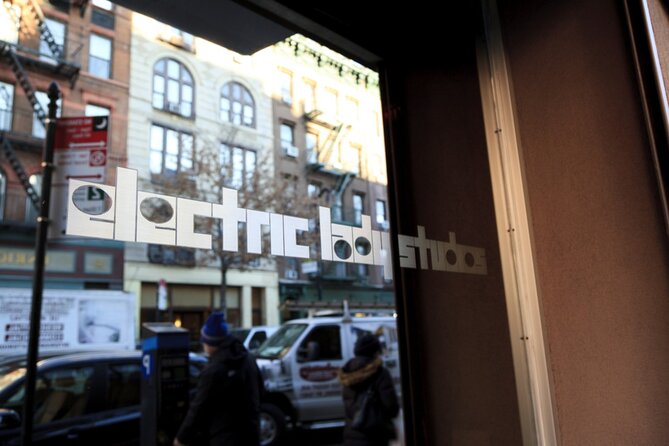
Stop 3 is Electric Lady Studios. This is where the tour shifts from “where people lived and performed” to “where sound was built.”
Electric Lady was commissioned by Jimi Hendrix in 1968. The studio is credited to architect John Storyk and audio engineer Eddie Kramer, with work reaching completion by around 1970. If you’re a music fan, this is the stop that makes you think about production as part of the creative legacy—not just the performance.
In practice, this kind of studio stop can be a bit different from the rest. Studios are often operating businesses, so you may not get the same tourist-style access you’d see at a museum. The listing notes admission ticket not included, so keep your expectation simple: you’re using the location as a launch point for the story, then moving on.





40 W 8th St and the Bon Soir steps down into cabaret
At 40 W 8th St, you’re pointed toward The Bon Soir, a small Greenwich Village night club owned by Ernie Sgroi Sr. This is the stop that leans into the vibe of an old room—intimate, close, and a little secretive.
The lineup mentioned here reads like a who’s who of comedy and song: Phyllis Diller, Kaye Ballard, and Ethel Waters performed there. There’s also a strong atmosphere description: the club’s appeal was tied to a remote, forbidden feeling—an approach that ends with you descending steps into a square black room.
That sensory framing is useful. It encourages you to picture how a performance space shapes the audience. Even if you’re just seeing the outside and the street, your game prompts can help you translate the story into something you can feel.
Admission is listed as free at this stop. Still, treat it as a story stop more than a guaranteed “walk inside the room” moment.
Washington Square Park audio stop: square, iconic, and a meeting point
Stop 5 is built around Washington Square Park. This is one of Manhattan’s most famous public parks, and it earns that reputation for a reason: it’s an icon, a meeting place, and a center for cultural activity.
In this experience, the park acts like a reset point. After a few tight-location stops (theater, addresses, a studio, a nightclub location), Washington Square gives you space to breathe, glance around, and let the stories catch up in your head. Because the stop is marked audio tour, you’re also less tied to just reading text. You get a different way of absorbing the information.
The listing notes admission ticket not included, which fits how a park works. Expect open space and flexible time rather than a formal entry.
If you want the walk to feel less like rushing and more like strolling with purpose, this is a good time to slow down and use the audio pacing.
85 W 3rd St and Poe’s literary footprint
Now you shift gears again: 85 W 3rd St brings in Edgar Allan Poe. The tour frames Poe as an American writer, poet, editor, and literary critic—best known for poetry and short stories, especially the mystery and macabre.
You’re also given a big-picture placement: Poe is widely regarded as a central figure of Romanticism in the United States and of American literature as a whole, and he’s described as one of the country’s earliest practitioners of the short story.
This stop works well because it broadens the definition of an artist. You’re not only tracing pop musicians and stage performers. You’re also tracing the kind of storytelling that influenced entire genres of reading.
One practical tip: because the focus is literary, your best strategy is to pay attention to your game prompts rather than multitasking with your phone while walking. Let the Poe story land, then carry it forward.
This stop is listed as free, so it should fit smoothly into your timeline.
Cafe Wha? where early talent cut their teeth
Stop 7 is Cafe Wha?—and it’s one of the most “name-on-the-roof” style stops on the route because it’s closely linked to recognizable early careers.
The details here are great for your mental playlist: early chances included Jimi Hendrix, Bruce Springsteen, Woody Allen, Lenny Bruce, Bill Cosby, and Richard Pryor. The club is described as welcoming folk singers, artists, poets, beatniks, and anarchists. It also attracted tourists who came specifically to see those eccentric types.
Even the name gets explained: Cafe Wha? is presented as a shortening of what, intended to convey incredulity. That adds personality and makes the stop feel like it has its own voice.
Admission is not included, which likely means you’re experiencing the story from outside and/or through the game layer rather than relying on an inside visit. If you’re hoping for a full sit-down experience during your walk, plan for it as optional time off the route rather than part of the core game.
Village Gate on Bleecker St: flophouse origins to Top of the Gate
Your last major story stop is at 158 Bleecker St, tied to the Village Gate nightclub. The listing places it at the corner of Thompson and Bleecker Streets, with Art D’Lugoff opening the club in 1958 on the ground floor and basement of 160 Bleecker Street.
Here’s what makes the stop especially interesting: the building described is a large 1896 Chicago School structure by architect Ernest Flagg, originally known as Mills House No. 1 and served as a flophouse for transient men. In its heyday, the Village Gate included an upper-story performance space called Top of the Gate.
That transformation—flophouse to performance hub—adds a layer of social context to your art tour. It nudges you to think about who had access to these spaces, how neighborhoods change, and why creative scenes often grow in places that weren’t originally created for artists.
Admission is listed as free. Expect this one to feel like a dramatic end note: by the time you reach the Bitter End area, you’ll have walked through a full arc of performance venues and creative homes.
Price, time, and value for a 90-minute Greenwich Village wander
At $5.98 per person for about 1 hour 30 minutes, this is priced like an impulse-friendly add-on rather than a “big spend” attraction. That matters because the best value here isn’t just the total cost—it’s how much you’re likely to enjoy the format.
You’re getting:
- A full route of multiple stops, not one or two photo points.
- An interactive structure that keeps you active rather than passive.
- Offline play, so you can use the experience without depending on constant connectivity.
- Self-paced control, which is a hidden value in NYC.
This also can be good for small groups. The listing notes group discounts, and the experience is private, meaning it’s only your group taking part. That combo can make it a smart option for couples, friends, or families who want a shared activity without the friction of a large tour.
One more practical value note: since the experience is available to book around the clock, you can choose a time that matches your energy—late afternoon stroll, early evening break, or any slot that fits your day.
Who this Manhattan art game is for (and who may want something else)
This experience is a strong fit if you:
- Like independent walking and want to control your own pace.
- Want a music and arts-focused route through Greenwich Village.
- Prefer learning through prompts and puzzles rather than a lecture.
- Travel in a way that benefits from offline tools.
It may not be ideal if you need:
- A live guide to answer questions on the spot.
- Guaranteed inside access to theaters, studios, or clubs (multiple stops are marked with admission not included).
- A traditional museum style where you stop once and go deep with a staff member.
In other words, if you like the idea of turning Manhattan into a “follow the clues” story walk, you’ll probably enjoy it more than a standard guided checklist.
Should you book Manhattan’s Famous Artists: Exploration Game and Tour?
If you’re spending time in Greenwich Village and you want a low-cost way to connect famous artists to real street corners, I’d book it. The offline, self-guided setup is a real advantage, and the stops are chosen with variety: theater building history, intimate homes, a major recording studio, cabaret energy, park audio, and literary lore.
Book it especially if you hate being locked into someone else’s schedule. The flexibility to start any hour and pause for a snack makes it feel built for how you actually travel.
FAQ
Is this tour self-guided or do I meet a guide?
It’s self-guided. There’s no physical tour guide, and the experience is set up as a private activity where only your group participates.
Do I need an internet connection to play?
No. You can play offline, so you don’t need an internet connection to use the game.
How long does the Manhattan artist exploration take?
The duration is about 1 hour 30 minutes (approx.).
Where does the experience start and where does it end?
It starts at White Horse Tavern, 567 Hudson St, New York, NY 10014 and ends at The Bitter End, 147 Bleecker St, New York, NY 10012.
What language is the experience offered in?
The experience is offered in English.
Can I cancel for free?
Yes. You can cancel for free up to 24 hours in advance for a full refund. If you cancel less than 24 hours before the start time, the amount paid isn’t refunded.