REVIEW · NEW YORK CITY
Wall Street and Financial District Private Walking Tour
Book on GetYourGuide →Operated by Rosotravel US · Bookable on GetYourGuide
Wall Street facts sound different at street level. I like how this private walk turns movie finance into real street names and real institutions, from the Federal Reserve Bank of New York to 40 Wall Street. I also love the way you pause for iconic symbol photos—especially in front of the Charging Bull—and then connect them to the bigger stories behind the chaos of 2008 and the Occupy Wall Street era. One possible drawback: it’s a city-center, standing-and-walking experience, so bring comfortable shoes and be ready for crowds and quick sidewalk moments.
This is a 2-hour, private, guide-led route through the Financial District. You’ll get expert commentary on US financial history, plus myths, practical context, and Q&A that can be shaped around what you actually want to understand (trading, banking, or just what those symbols mean).
In This Review
- Key things that make this Wall Street tour worth your time
- Starting at One Pace Plaza: the Benjamin Franklin Statue meet-up
- Federal Reserve Bank of New York to 40 Wall Street: power you can point at
- House of Morgan and the J.P. Morgan legacy: from one firm to four generations
- The New York Stock Exchange: what happens behind closed doors
- Fearless Girl and Charging Bull: symbols with real-world context
- Stone Street: an older street that changes the mood
- Guide quality and private-group pacing: why the experience lands
- Price and value: is $192 per person worth it?
- Who should book this Wall Street walk (and who might skip it)
- Should you book this Wall Street and Financial District Private Walking Tour?
- FAQ
- Where does the tour start?
- How long is the walking tour?
- How much does it cost?
- Is this tour private?
- What stops and sights are included?
- Will the guide talk about Occupy Wall Street and the 2008 crisis?
- What languages are available for the guide?
- Is the tour wheelchair accessible?
- Can I get a refund if I cancel?
- Is there an option to pay later?
Key things that make this Wall Street tour worth your time
- A finance expert guide who explains the system in plain language, not jargon soup
- Federal Reserve Bank to NYSE connections, so the story hangs together instead of feeling like random stops
- Occupy Wall Street and 2008 context, tied to what you’re seeing on the ground
- Photo stops with meaning, not just selfies near famous statues
- Private group pace, which matters a lot if you want slower walking or lots of questions
- Two-hour focus, designed to hit the highlights without eating your whole day
Starting at One Pace Plaza: the Benjamin Franklin Statue meet-up
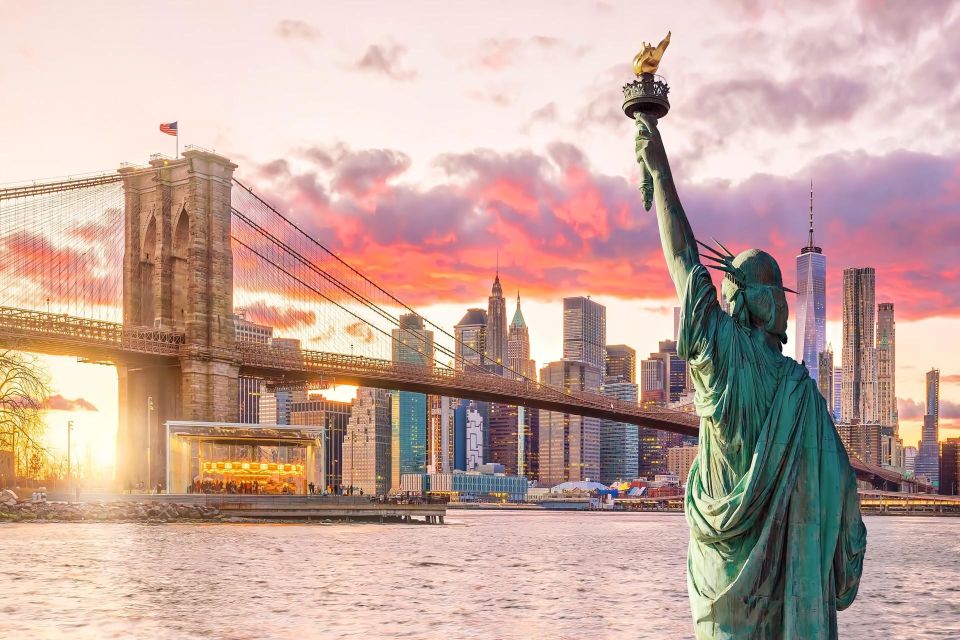
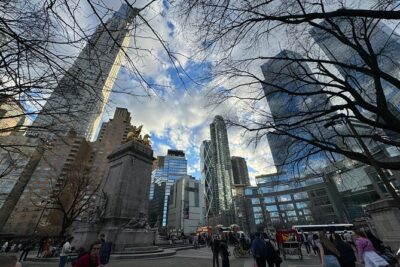
The tour begins at the Benjamin Franklin Statue, opposite Pace University, at One Pace Plaza (10038). It’s a good anchor point because it’s easy to spot and you’re already in the heart of the Financial District action.
From the start, you’ll notice the tour is designed for clarity. You’re not walking with a script that ignores your interests. You’re walking with a guide who can explain why Wall Street terms show up in everyday headlines, and how they connect to the places you’re passing.
If you’ve ever felt like finance is a locked door, this start helps. You’re meeting in a very public, very New York spot, and the guide frames the day like a guided map: what you’ll see, what it’s for, and why it matters.
And based on one standout review, the guide experience can be especially accommodating. One reviewer called out Ann for being amazing—excellent knowledge and patient with an older couple traveling at a slower pace. That’s the kind of practical difference that turns a “good” tour into a “we actually enjoyed it” tour.
You can also read our reviews of more walking tours in New York City



Federal Reserve Bank of New York to 40 Wall Street: power you can point at
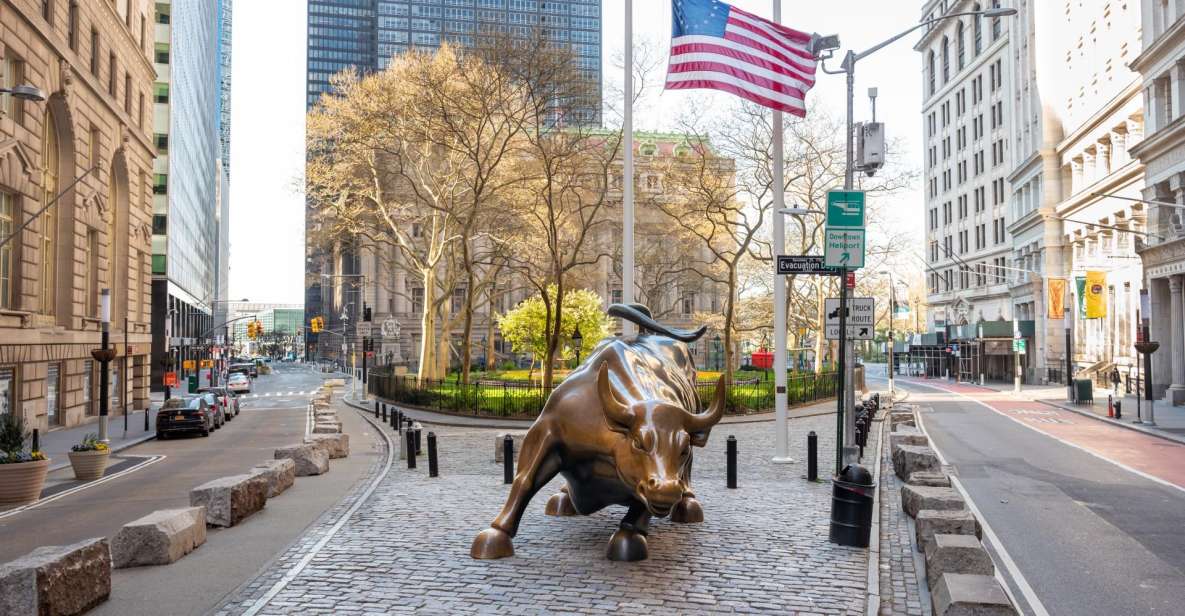
Early on, you’ll focus on the institutions that shape the economy before most people even know their names. A key stop here is the Federal Reserve Bank of New York. You’ll learn what it does in practical terms—its leadership role in monetary policy, financial supervision, and the payments system.
That matters because it changes how you think about “Wall Street” itself. In movies, Wall Street is mostly traders shouting. In real life, the system has institutions that keep the gears turning. Seeing the Fed’s role explained while you’re standing in the area makes it feel less abstract.
Next you’ll pass 40 Wall Street, also known as the Trump Building. It’s one of those landmarks people recognize even if they don’t know what’s inside. The value of this stop is that your guide ties the building to the larger idea of finance power: who the institutions are, what they do, and how the street became a symbol worldwide.
One nice touch is that the tour doesn’t just list facts. It also works in myths—small misunderstandings people repeat about how finance works. The goal is simple: you leave with the real story, plus the ability to spot the oversimplifications you’ll hear later in media or conversations.
House of Morgan and the J.P. Morgan legacy: from one firm to four generations

A major moment on this route is the stop in front of the House of Morgan. Here, the tour connects the street-level geography to the long arc of financial families and firms—specifically the history of four generations of the J.P. Morgan financial empire.
This stop is where the tour becomes more than just institutions. It becomes a story about continuity—how influence can pass through generations, and how certain names keep showing up in the history of money, markets, and banking.
You’ll also get help placing the “why” behind the architecture and prestige. Banks and finance headquarters aren’t just offices; they’re part of how trust gets performed. When your guide explains the historical context, those big addresses start to feel like evidence, not just scenery.
There’s also a practical payoff for anyone who’s planning to visit other financial-history sites in New York later. You’ll have a framework for connecting people, firms, and eras—rather than seeing each place as a disconnected postcard.
The New York Stock Exchange: what happens behind closed doors
No Wall Street walk is complete without the New York Stock Exchange (NYSE). Here, the tour shifts to what people call capitalism with a capital C. The NYSE isn’t just a building; it’s a symbol of how markets operate, how trading moves prices, and how global events can suddenly reshape expectations.
You’ll learn in detail about key events that shook markets, including the Occupy Wall Street protests in 2011 and the Financial Crisis of 2008. The benefit isn’t just knowing the headlines—it’s understanding how the mood of the era connected to real questions: who the system served, how trust broke down, and why public pressure mattered.
One practical point: you might not get a “behind-the-scenes access” feeling in the literal sense. The tour is focused on guided explanation around the area, and your guide helps you understand what goes on behind closed doors through context and commentary.
Still, it works because the tour is structured around the psychology of markets. You’re shown the places people think of when they imagine trading—and then your guide helps you connect those images to the actual events and consequences.
Fearless Girl and Charging Bull: symbols with real-world context
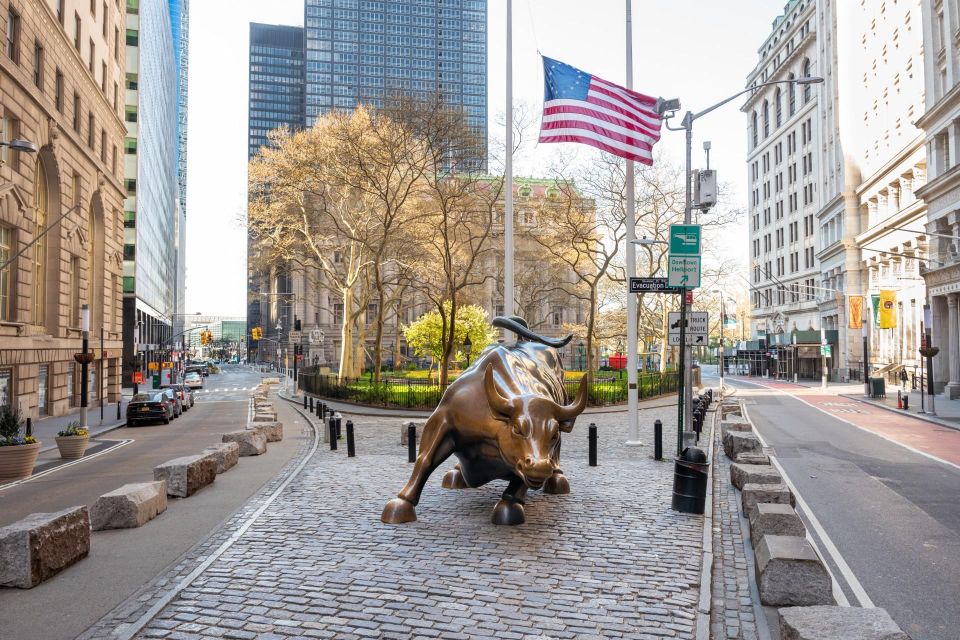
After the heavier institution talk, the tour gives you two iconic photo moments: the Fearless Girl Statue and the Charging Bull (a 3-ton bronze statue). These statues are famous for a reason. They’re visual shorthand for debates about courage, risk, power, and market behavior.
The trick is that the guide doesn’t treat them like just landmarks. You’ll learn how the symbolism fits into the stories you discussed earlier—especially around financial controversy, public reaction, and how the street turns complex events into easy-to-recognize icons.
Fearless Girl often gets read as a message about resilience. Charging Bull often gets read as a message about confidence and momentum. But on this tour, you’re pushed to think one level deeper: symbols aren’t neutral. They’re part of the narrative people build around finance.
This is also where the private format shows its value. You can take your time at the statues, ask questions without feeling rushed, and get your photos without a constant shove from a crowd. If you’re traveling with someone who moves slowly, the pause time helps you stay comfortable rather than sprinting for the next stop.
You can also read our reviews of more private tours in New York City






Stone Street: an older street that changes the mood

The tour continues down Stone Street, which you’ll likely notice feels different from the main Wall Street canyon. It’s one of those older streets where you can feel New York layering over time—old stone, newer finance energy nearby.
This is a smart ending note for a finance-themed walk. After you’ve built context about how modern markets work and how recent crises shaped public attitudes, Stone Street gives your brain a breather. You’re not just walking past money; you’re walking through a neighborhood with its own rhythm.
It’s also a good last stop if you want quick follow-up questions. Often, by this point your questions get more specific: How did events like 2008 actually change regulation? Why did Occupy Wall Street resonate? What do these institutions do in practice?
A good guide can handle that. And with a private group, you’re more likely to get answers than if you’re stuck watching a guide talk over the noise.
Guide quality and private-group pacing: why the experience lands
This tour is private, which sounds obvious, but it’s where the real experience quality shows up. A private group means the guide can adjust pace and explain concepts at the right speed for your questions.
Languages are also a real plus. Your finance expert guide is fluent in English, French, Italian, German, or Spanish. If you want the explanations in your own language, this matters. Even basic finance words can get slippery in a second language, and clarity is the whole point of the tour.
Group size guidance is built in too: the model aims for one licensed guide per maximum of 25 guests, and if the group is larger (26–50), you’ll get two licensed guides. That matters because a crowded tour can turn Q&A into quiet nodding. Two guides usually means better hearing and better chances to ask follow-ups.
From the reviews, the strongest praise is about the guide itself—especially Ann, who one reviewer described as kind, patient, and loaded with area knowledge. For older travelers or anyone who gets tired faster than they expect, that patience is not a small detail. It changes the whole mood of the tour.
Price and value: is $192 per person worth it?
At $192 per person for a 2-hour private walking tour, you’re paying for three things: expert interpretation, time efficiency, and a tailored feel.
If you try to do Wall Street on your own, you can absolutely see the buildings and statues. But you’ll likely miss the connective tissue: how the Federal Reserve Bank’s role connects to banking and payments, how the NYSE connects to public unrest and crisis-era shifts, and how 2008 and Occupy Wall Street fit into the broader story.
You’re also paying for a guided “sense-making” layer. That’s the part that turns a walk into something you remember. You don’t just look at 40 Wall Street; you understand why it’s part of the narrative. You don’t just stand near Fearless Girl; you understand what questions the symbol represents.
Could it be a drawback? It depends on your style. If you only want quick photos and you already know the basic finance story, the cost may feel steep. But if finance history is interesting to you—even casually—or you want answers to the big questions without reading a book, this price starts to feel fair.
For me, the value comes down to this: you’re buying clarity in a short window. Two hours is long enough to build a coherent picture, but short enough that you’re not stuck in generic talking.
Who should book this Wall Street walk (and who might skip it)
This tour is a great match if you:
- Want a fast, focused 2-hour way to learn how major finance institutions relate to each other
- Like real-world context behind big headlines like 2008 and Occupy Wall Street
- Appreciate guided photo stops with explanations, not just statue snapshots
- Prefer a private format, especially if your pace is slower or you want to ask questions freely
You might consider something else if you:
- Want a full-day tour with lots of interior access and museum-style time (this one is built for walking and commentary)
- Are only interested in architecture or landmarks without much interest in finance systems and history
The best part is that the tour doesn’t assume you’re a finance expert. It’s built to explain. And if you’ve seen Wall Street movies—like Wall Street (1987), The Wolf of Wall Street (2013), or The Big Short (2015)—you’ll get extra satisfaction turning those movie impressions into real geography and real context.
Should you book this Wall Street and Financial District Private Walking Tour?
I’d book it if you want a smart, time-efficient way to understand how modern finance works in the places where it’s actually concentrated. The combination of Federal Reserve context, NYSE storytelling, and crisis-era explanation makes the walk feel coherent, not random.
If you’re choosing between this and a more generic city walk, go for this one. You’ll leave with specific names, specific roles, and specific stories you can connect later when you see Wall Street referenced in the news.
If you’re on the fence, ask yourself one question: Do you want your Wall Street photos to come with meaning? If yes, this tour is built for that.
FAQ
Where does the tour start?
You meet your guide in front of the Benjamin Franklin Statue, opposite Pace University, at One Pace Plaza, New York, NY 10038.
How long is the walking tour?
It lasts 2 hours.
How much does it cost?
The price is $192 per person.
Is this tour private?
Yes. It’s a private group experience.
What stops and sights are included?
You’ll see major Financial District landmarks including the Federal Reserve Bank of New York, 40 Wall Street (the Trump Building), the House of Morgan, the New York Stock Exchange area, the Fearless Girl Statue, the Charging Bull statue, and Stone Street.
Will the guide talk about Occupy Wall Street and the 2008 crisis?
Yes. The tour includes discussion of Occupy Wall Street (2011) and the Financial Crisis of 2008.
What languages are available for the guide?
The live guide is available in English, French, Italian, German, and Spanish.
Is the tour wheelchair accessible?
Yes, it is wheelchair accessible.
Can I get a refund if I cancel?
Free cancellation is available up to 24 hours in advance for a full refund.
Is there an option to pay later?
Yes. You can reserve now and pay later.