REVIEW · NEW YORK CITY
New York City: Mafia History in Little Italy Walking Tour w/NYPD
Book on Viator →Operated by NYPD Police Tours · Bookable on Viator
Mafia legends, plus real Italian food. This NYPD-guided walking tour links Lower Manhattan’s mafia past to places you can actually stand in, from John’s of 12th Street to Mulberry Street. I especially like the strong mix of a full dinner and Sicilian cannoli with crime-story context you won’t get from a quick stroll. One thing to consider: the tour includes strong language and can feature graphic descriptions of murders, so it’s not for everyone.
This is built as a structured route through the East Village and Little Italy, with enough stops to feel like a proper “story arc” instead of a random pub crawl. You’ll also likely get audio support (some groups mention earphones), which makes it easier to hear your guide while moving through busy sidewalks.
Tours are capped at 35 people, so you get more back-and-forth than on larger walks. Guides with names like Dennis and Frank show up in the feedback as top performers—praised for storytelling that feels grounded in neighborhood experience rather than movie trivia.
In This Review
- Key highlights worth caring about
- John’s of 12th Street: the dinner table meets the 1931 Commission
- The East Village stretch: five families, a political burial link, and Marble Cemetery vaults
- Player’s Theatre history and Club 188: when nightlife power gets named
- Community garden and Albanese Meats: not all stops are “crime-first”
- Old St. Patrick’s Cathedral: the Godfather filming location with a real mission
- Mulberry Street Gambino HQ to Little Italy’s three-block reality
- Food that isn’t an afterthought: spaghetti, mozzarella, eggplant parm, cannoli
- The NYPD detective guide: how the story stays controlled and specific
- Price and value: $129 for a Lower Manhattan meal plus route
- Who should book this mafia-and-food walk
- Should you book Mafia History in Little Italy w/NYPD?
- FAQ
- How long is the Mafia History in Little Italy walking tour?
- Where does the tour start and end?
- What food is included in the dinner?
- Are drinks included?
- Is there a vegetarian option?
- Does the tour include any admission fees for stops?
- What kind of content should I expect?
Key highlights worth caring about
- John’s of 12th Street: a historic red sauce joint tied to Lucky Luciano, with film-history added to the facts
- Luciano’s 1931 Mafia Commission: the tour frames this stop as a turning point, not just folklore
- Full Italian-American dinner included: spaghetti with meatballs plus made-from-scratch style add-ons
- Retired or active NYPD detective as your guide: the tone tends to be controlled, specific, and story-led
- Landmarks beyond the obvious: Old St. Patrick’s Cathedral, Player’s Theatre history, and more than “just mob sites”
- A real Little Italy ending: the walk finishes around Mulberry Street, where the neighborhood still shows its old spine
John’s of 12th Street: the dinner table meets the 1931 Commission
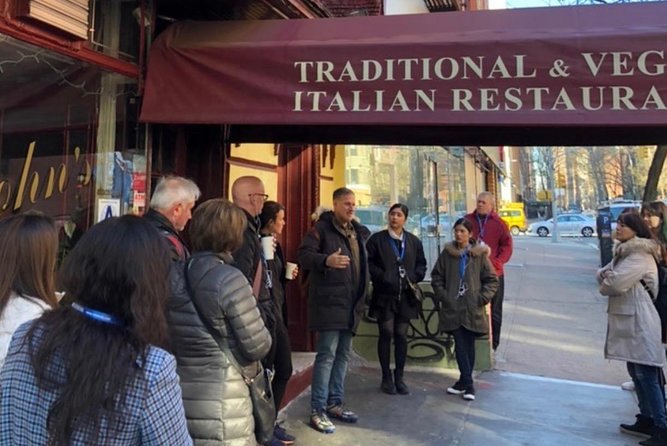
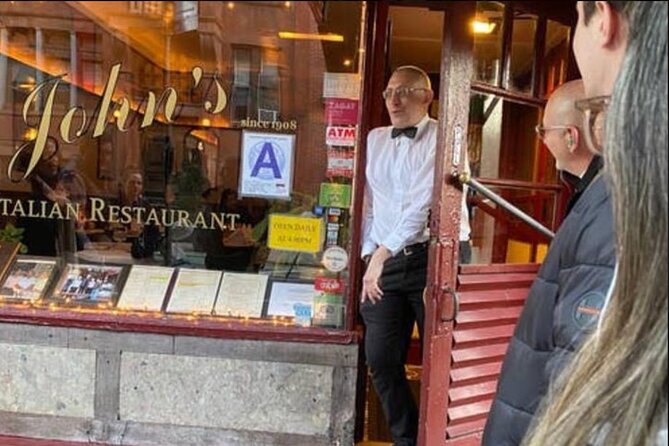
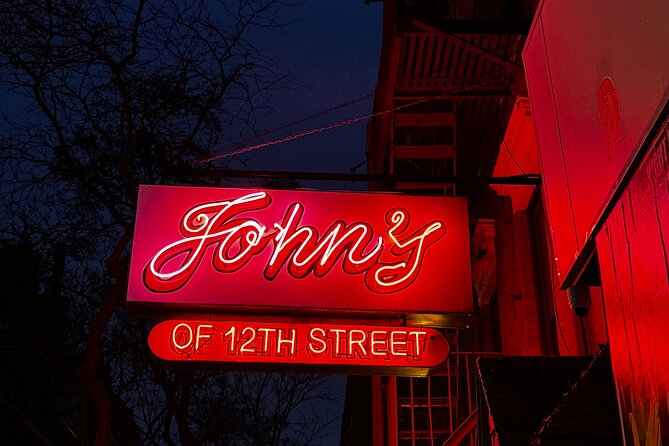
The tour starts at John’s of 12th Street in the East Village, a classic red sauce joint that dates back to March 1908. The place is tied to Lucky Luciano and other mob figures, and the tour also points out the spot’s big-screen and TV footprint, including filming connections mentioned for shows and crime-themed projects.
What I like about starting here is simple: it’s a restaurant that’s already part of your vacation. You’re not just looking at a plaque outside—you’re walking into the kind of old New York room where the neighborhood’s immigrant-era identity still lives. The tour’s pitch is that you get special access for this mafia-themed experience, and the 45-minute runtime at the restaurant reflects that they want you to settle in and actually hear the story.
John Pucciatti is part of the background here—an immigrant from Umbria, Italy, who helped found the earlier version of the restaurant’s story in the East Village. Today, the ownership is described as Lowell Fein with partners Paul Dauber, Robbie Rundbaken, and continued leadership tied to the restaurant’s namesake. Even if you only catch the highlights, it gives you a sense that this is not a themed set built for visitors; it’s a working neighborhood institution.
Possible drawback: because this is the longest “talk-heavy” segment, go in ready to listen. If you’re the type who wants quick-hit stops and constant movement, you may feel the pace more at this first restaurant than later outside walking legs.
You can also read our reviews of more walking tours in New York City



The East Village stretch: five families, a political burial link, and Marble Cemetery vaults
Once you leave John’s of 12th Street, the route leans deeper into the East Village as a true mob corridor. The tour frames this area as a mafia stronghold since around 1900, and it points you toward key locations tied to the operating presence of the five crime families.
One of the values here is contrast. You’re walking through modern East Village street scenes, but the tour keeps snapping the context back to the early 20th-century neighborhoods—tenements, nightlife, immigrant blocks, and the kind of local power that could stay hidden in plain sight.
The stop at New York Marble Cemetery is especially memorable because it’s tied to “why the city built this.” The cemetery is described as New York’s first public cemetery, with below-ground vaults required to protect residents from disease. That’s the kind of detail that makes a criminal-history tour feel grounded in real civic history, not just names and dates.
The cemetery also has a practical detail for planners: it’s described as open to the public every first Sunday of the month. If your trip lines up, you might catch more atmosphere than you would on a random day. Even when it’s not open for extra viewing, it’s still a striking stop because you’re seeing the infrastructure of old New York health and public works decisions.
The tour also points to additional burial context tied to political elite and John C. Colt, connected to famed gun manufacturer Samuel Colt. That’s useful because it broadens the “mob story” into a bigger picture: organized crime didn’t grow in isolation; it rode alongside politics, industry, and money.
Quick heads-up: a couple of these stops are described in short windows (often around a minute). That means the street-level takeaways matter. If you want photos, be ready to step quickly and keep moving.
Player’s Theatre history and Club 188: when nightlife power gets named
A major “why this tour works” moment is when it moves from the mob sites you expect into entertainment spaces that were part of the same world. The stop at the Orpheum Theatre (formerly Player’s Theatre) is a good example.
The tour description connects the venue to the Yiddish theatre heyday on Second Avenue and the so-called Jewish Rialto. It also explains that by the 1920s the theatre showed films and then returned to dramatic use in 1958, including the first production opening in November 1959. You also get a list of significant productions tied to the venue’s later years, which helps you see the building as more than a name on a crime map.
Then the walk pivots to 188 1st Ave, described as the famous Club 188, run by Charlie Lucky Luciano. This stop lands differently: it’s about nightlife and influence, and how the Genovese crime family’s power shaped what happened after dark from the 1920s through today. Even if you’re not a nightlife historian, it’s a reminder that “mob history” often means access—who controlled rooms, who controlled crowds, and who decided what was possible.
What to do during these stops: focus on the building’s identity. Even from the sidewalk, you’ll notice how theatre and nightlife spaces were designed for people to gather. Crime stories make more sense when you picture the flow of bodies through the room.
Community garden and Albanese Meats: not all stops are “crime-first”
One of the smarter balances on this kind of tour is when it slows down and shows how neighborhoods grew beyond organized crime. Two stops do that well.
First is the Liz Christy Bowery Houston Community Garden, described as the oldest community garden in New York, established in 1973. The tour traces its story through activist groups, including the Green Guerillas, and explains that the city agreed to rent the lot for $1 a month. You get the point: the Lower East Side didn’t only produce pressure and power struggles; it also produced community organizing that made a long-term difference.
Next is Albanese Meats & Poultry, described as the oldest butcher shop in NYC that welcomed Sicilian immigrants since the 1800s. The tour also connects it to major film history, noting that Martin Scorsese and Robert De Niro frequented it, and that Scorsese filmed his first film there. Even if you never plan to watch the movie tied to that detail, it’s still a helpful “culture bridge” between old immigrant commerce and New York’s later creative industry.
If you’re worried the tour will feel like a parade of “bad guys, bad guys, bad guys,” these two stops help. They make the area feel lived-in, not just reenacted.
Old St. Patrick’s Cathedral: the Godfather filming location with a real mission
The stop at Basilica of Saint Patrick’s Old Cathedral is where faith, immigrant history, and pop culture all overlap in one site. The tour describes it as the original Cathedral Church of the Roman Catholic Archdiocese of New York, opening over 200 years ago on the corner of Mott and Prince Streets in Nolita.
The key is how the tour frames the building: it began as a worship center for an Irish community that was largely impoverished, then expanded over decades to serve a diverse set of Catholics, including Italian, African American, Chinese, and Vietnamese Catholics. That’s the kind of context that keeps a mafia-themed walk from turning into pure spectacle.
Then you get the movie connection: the tour notes that The Godfather was filmed inside. That matters because it helps you connect what you’ve seen on screen to an actual architectural space—stone, scale, and room layout that modern sets often imitate but rarely match.
Practical note: this is an active religious site in an old-city block. Dress respectfully and keep your voice down when you’re near people praying or attending services.
You can also read our reviews of more city tours in New York City






Mulberry Street Gambino HQ to Little Italy’s three-block reality
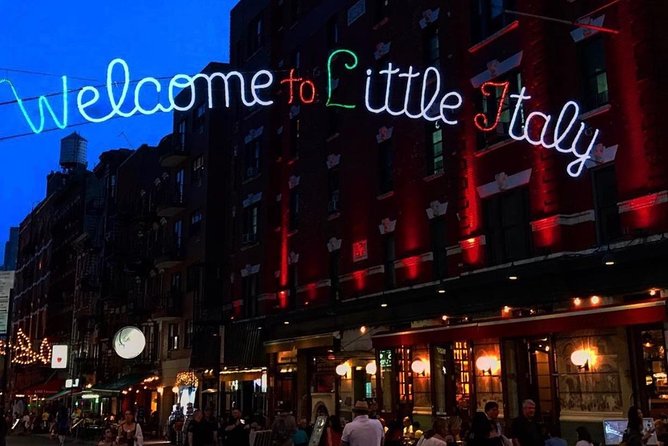
The tour’s ending stretch is where the story gets more pointed. Mulberry Street is described as the Gambino crime family headquarters, with John Gotti tied to the place. It’s also the spot where you’re supposed to feel the weight of “local power” rather than just famous names. The framing here is that this was a headquarters for an elusive and often deadly business—so expect the tone to grow darker again near the end.
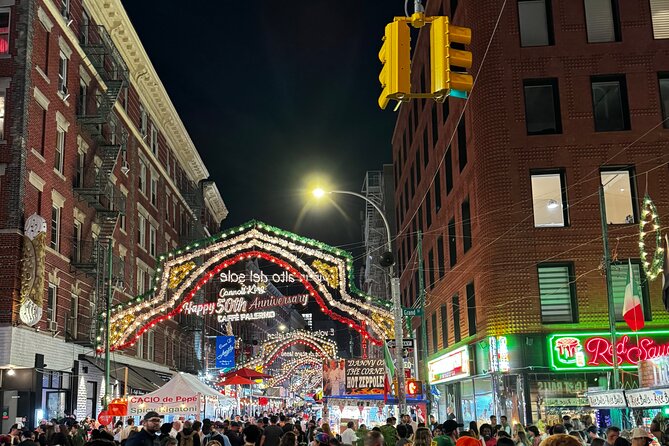
Then you walk into Little Italy, which the tour describes as a neighborhood that began developing in the 1840s when Italian immigrants settled there. It also includes earlier layers, noting Dutch settlers and the Lenape people in the earlier history of the broader area. The tour says Little Italy today takes up roughly three blocks on Mulberry Street, so you’re not dealing with a huge “district.” You’re dealing with a focused pocket where the neighborhood’s identity is compact.
This ending works best if you treat it like a “final scene” rather than a shopping stop. Look at the storefront rhythms, the tight block layout, and how the neighborhood still holds onto its old-world feel even as the city around it changes.
If you want souvenirs, plan to do it after you finish eating. The cannoli portion at the end is supposed to be a full-size treat, and you’ll enjoy the neighborhood more if you’re not wrestling with your stomach mid-walk.
Food that isn’t an afterthought: spaghetti, mozzarella, eggplant parm, cannoli
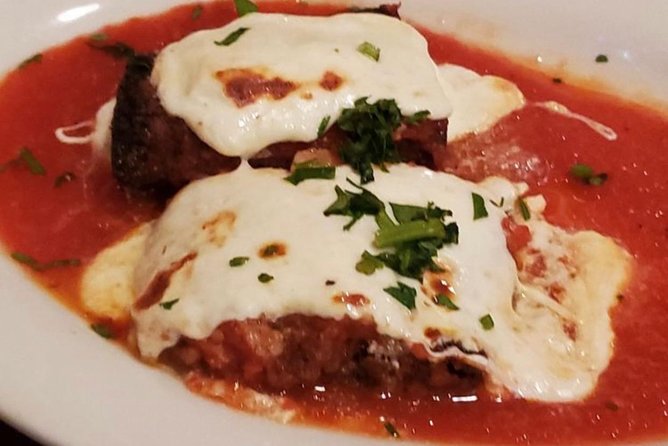
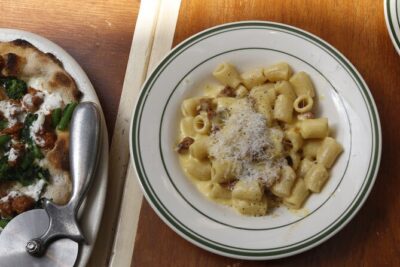
Let’s talk about the thing that quietly justifies the price: the meal is built into the tour, and it’s described as a full portion spaghetti with meatballs plus bread, and then more serious Italian stops. The sample menu includes a starter of fresh cheese—handmade mozzarella from what’s described as NY’s oldest cheese shop—followed by a main of eggplant parm in a rollatini style, and then dessert: fresh-made Sicilian cannoli that are full-sized (not the small, disappointing ones you often get on tours).
In plain terms, you’re not just buying a story. You’re buying a dinner you can stand behind. Several guides are praised for the food quality, and cannoli is repeatedly singled out as a highlight. Even people who found the narration longer still tend to rate the meal as worth it.
Two practical tips:
- If you’re ordering drinks, budget for them since drinks are not included. The tour says you can buy them on the day.
- Come hungry. Multiple comments mention the meal amount being enough to last most of the day.
Vegetarian options are available if you request them in advance, so you should be able to keep the experience from feeling “limited.”
The NYPD detective guide: how the story stays controlled and specific
The guide setup is one of the strongest selling points: the tour includes an active or retired NYPD detective, plus insider mafia expertise tied to the neighborhoods. That combination tends to shape the tone. It’s not just names; it’s the way New York works—alibis, enforcement pressures, neighborhood dynamics, and how the same blocks kept producing new chapters.
What stands out in the feedback is that guides like Dennis and Frank are praised for storytelling that helps you picture scenes, not just memorize facts. People also point out that guides answered questions and were accommodating, which matters on a topic where you’ll likely want clarifications.
The audio support is another practical win. One detailed note says earphones helped keep a group manageable and made the narration easier to follow while walking. If you see an audio setup offered on your departure, take it. It’s one of those small things that turns a walking tour from “hope you can hear me” into “actually listen.”
Because the group max is 35, the guide can still manage pacing without losing everyone. That makes the tour feel more like a guided experience than a line you stand in.
Price and value: $129 for a Lower Manhattan meal plus route
At $129 per person, you’re paying for three things at once: a structured walking route through East Village and Little Italy, a specialized guide (including a NYPD detective), and a multi-stop dinner that goes beyond a snack.
Is it “cheap”? No. But in New York terms, the meal components alone (spaghetti with meatballs, mozzarella starter, eggplant parm, full cannoli) are the part that makes the cost feel grounded. Add in the guided access and the way stops are selected to connect crime history with actual local institutions, and the price starts to make sense.
Two value notes to keep you from surprises:
- Drinks aren’t included, so if you plan soda/beer/wine, factor that into your budget.
- Gratuity is not included, and it’s described as always welcomed. If your guide is doing a lot of heavy lifting, plan to tip.
Also, you’re choosing a 3 hours 30 minutes walking experience with a moderate fitness level requirement. Comfortable shoes matter more than you think, especially if you come from other parts of the city.
Who should book this mafia-and-food walk
This is a great fit if you’re one (or more) of these:
- You love true crime or mafia storytelling that’s tied to real places, not just documentaries
- You’re a movie fan and want the behind-the-scenes connection to locations tied to popular films and TV
- You want Italian-American food in Lower Manhattan and you’d rather pay for dinner with context than buy food separately
- You like neighborhood history that includes community spots (like the Liz Christy garden) alongside the darker chapters
Skip it if:
- You’re sensitive to strong language or graphic descriptions of murders
- You have walking issues. The tour is explicitly not recommended for travelers with walking problems
- You want a fully family-friendly tone. This one is adult-oriented in content, even when it ends with dessert
Also, if you’re the type who gets restless with long talking at a single stop, know that the first restaurant leg is designed as a long anchor.
Should you book Mafia History in Little Italy w/NYPD?
If you like the idea of pairing NYPD-led true crime with a proper Italian meal, this is a strong pick. The tour has an impressive 4.8 rating and is recommended by 97% of people in the feedback, which lines up with what this format does well: it’s structured, food-forward, and place-based.
My advice for deciding is simple:
- Book it if you’re hungry and want the dinner to be part of the experience.
- Wear good shoes and plan for a real walk through several Lower Manhattan blocks.
- If you’re easily shocked by violent details or strong language, read that warning as your deciding factor.
One more cautious note: there has been at least one instance described where a guide didn’t show due to severe illness, and the company handled refunds through the platform and offered a return option once the guide recovered. That’s rare, but it’s a reminder to keep an eye on day-of updates.
FAQ
How long is the Mafia History in Little Italy walking tour?
It runs about 3 hours 30 minutes.
Where does the tour start and end?
It starts at 302 E 12th St, New York, NY 10003, and ends at 108 Mulberry St, New York, NY 10013.
What food is included in the dinner?
The included meal is described as spaghetti with meatballs (with fresh bread), plus a starter of fresh mozzarella/cheese, eggplant parm as the main, and large Sicilian cannoli for dessert.
Are drinks included?
No. Drinks are not included, but you can purchase them on the day.
Is there a vegetarian option?
Yes. Vegetarian options are available if you request them in advance.
Does the tour include any admission fees for stops?
The listed stops include admission as ticket free, with specific stops described as free to enter.
What kind of content should I expect?
The tour includes strong language and sometimes graphic descriptions of murders. It’s also not recommended for travelers with walking problems.