REVIEW · NEW YORK CITY
New York: Hop-on Hop-off Sightseeing Tour by Open-top Bus
Book on GetYourGuide →Operated by Big Bus Tours - New York · Bookable on GetYourGuide
The easiest way to read New York is from above. I like the open-top ride and the simple hop-on hop-off freedom—sit up top for views, then jump off when a stop pulls you in. The digital audio keeps the drive practical, so you’re not just sightseeing—you’re orienting fast.
Two things I really enjoy: first, the bus feels built for comfort and safety, which matters when you’re crisscrossing a big city. Second, the staff and drivers can turn a routine loop into something more personal, including guides like Miguel, JR, and Manny, plus standout driver Harry and Santana.
One thing to think about: timing can squeeze you, especially on the Downtown route. Downtown runs 9:30 AM to 5:00 PM, and once the last buses roll out, you’ll be stuck figuring out the rest by foot or subway.
In This Review
- Key highlights
- Big Bus in New York: what you’re really paying for
- Picking the right plan: 1, 2, or 3 days of hop-on freedom
- Downtown vs Uptown: the loops that shape your day
- Downtown Loop stops: Battery Park, Wall Street, neighborhoods, and views
- Battery Park and the Statue of Liberty area
- 9/11 Memorial and the Twin Tower sites
- Wall Street, Charging Bull, and the Financial District
- Neighborhood hopping: SoHo, Greenwich Village, Chinatown, Little Italy
- Hudson Yards and The Edge area
- Uptown Loop: Museum Mile, Frick Collection, The Met, and Midtown icons
- Upper East Side and Museum Mile
- Midtown highlights: Grand Central and St. Patrick’s Cathedral
- Why Uptown needs a plan
- Empire State Building and the skyline hits you can’t skip
- The audio, the app, and how to avoid the common missteps
- Digital commentary: useful, not perfect
- Big Bus app: your best friend for timing
- Staff at stops: when you need help
- Food and extras: Butterbeer ice cream is a real perk
- What can go wrong: crowds, frequency gaps, and detours
- Who should book this Big Bus tour?
- Should you book the Hop-on Hop-off Big Bus tour?
- FAQ
- How long is the ticket valid?
- What routes does the tour include?
- What time does the Downtown Loop run?
- What time does the Uptown Loop run?
- How often do buses arrive?
- Is audio commentary included, and what languages are offered?
- What’s included with the ticket besides the bus ride?
- Does the tour include hotel pickup?
- Is the tour wheelchair accessible?
Key highlights
- Hop-on freedom on a double-decker open-top bus with clear digital audio commentary
- Big Bus app + real-time tracking so you can time your next hop without guessing
- Top NYC icons on one route like the Statue of Liberty area, Brooklyn Bridge, Empire State Building, and One World Trade Center
- 9/11 Memorial access nearby with time to pay respects before you continue
- Two route loops with different pace: Downtown every 10–15 minutes, Uptown every ~30 minutes
- Built-in extras like Butterbeer ice cream at The Harry Potter Store and optional digital walking tours
Big Bus in New York: what you’re really paying for

At about $60 per person, this hop-on hop-off tour isn’t trying to be a one-and-done “sit and stare” experience. It’s a flexible transport and sightseeing bundle that lets you decide how much time you spend at each place.
You get unlimited rides for 24, 48, or 72 hours (valid 1–3 days depending on what you choose). That matters because New York is spread out. If you want to see big landmarks plus a couple of neighborhoods without burning your whole day in transit, the value comes from using the bus as your moving base.
I also like that it’s not just a loop-and-park system. You’re getting digital audio commentary (in multiple languages) and a Big Bus app for city info and real-time bus tracking. In practice, that means fewer wrong turns and less time circling around stops.
You can also read our reviews of more tours and experiences in New York City.



Picking the right plan: 1, 2, or 3 days of hop-on freedom
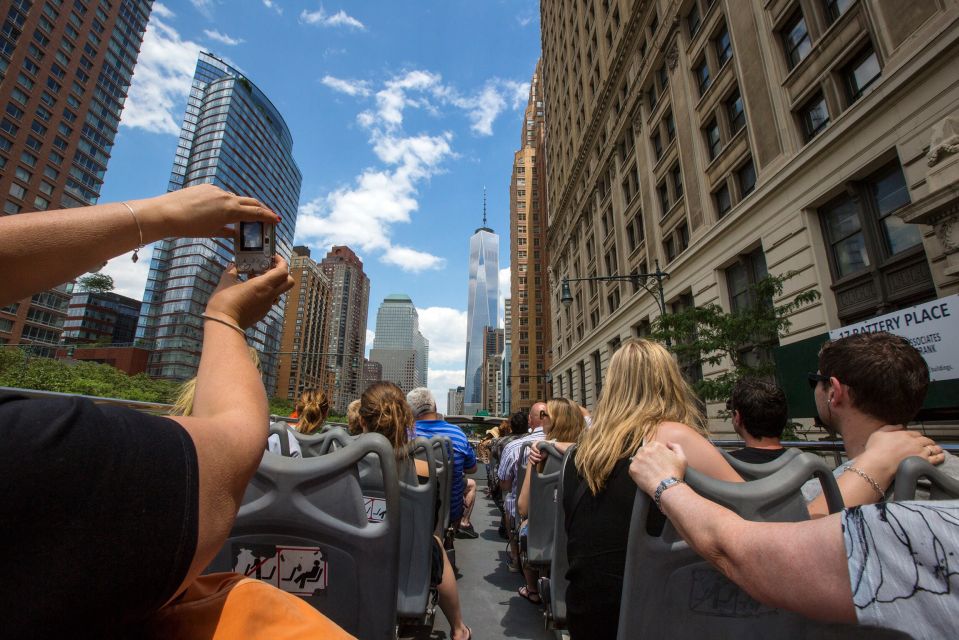
You can buy the access window that fits your rhythm: 24, 48, or 72 hours. If it’s your first visit, 2 days is usually the sweet spot—one day to get orientation and another to follow up where you actually want to linger.
Here’s how to think about it:
- A 24-hour pass works if you want “greatest hits” and are comfortable with shorter stops.
- A 48-hour pass is best if you plan to hop off more than a few times, especially for museums or longer walks.
- A 72-hour pass is for slow explorers—people who like returning to spots for photos and then spreading museums across different times.
If you’re the type who likes a plan but hates being rushed, hop-on hop-off shines. You’re not locked into a set order. You can ride, get off, explore, and then rejoin when you’re ready.
Downtown vs Uptown: the loops that shape your day

This tour runs two main loops: a Downtown Loop and an Uptown Loop.
- Downtown Loop: a 90-minute circuit, running 9:30 AM to 5:00 PM, with buses arriving every 10–15 minutes.
- Uptown Loop: a 75-minute circuit, running 10:00 AM to 4:00 PM, with buses arriving every 30 minutes.
That difference is important. Downtown is more frequent, so it’s easier to hop off for quick stops and return without much waiting. Uptown is still workable, but the longer wait between buses means you’ll want to plan your hop-offs with a bit more intention.
If you’re trying to cover the most famous sights quickly—Statue of Liberty area, 9/11 Memorial, the Financial District—you’ll lean toward Downtown. If your priorities are museums and Midtown landmarks, Uptown becomes the main event.
Downtown Loop stops: Battery Park, Wall Street, neighborhoods, and views

The Downtown route is built for the “NYC anchors” you expect—plus neighborhood texture in between.
Battery Park and the Statue of Liberty area
One of the big draws here is admiring the Statue of Liberty from Battery Park. Even if you don’t take a cruise, the harbor views make the stop feel like a mini-trip inside your trip. If you do want the cruise experience, the information around Liberty Island is part of the appeal of coming to this area through the bus route.
A practical tip: don’t let yourself get swept into expensive add-ons at the harbor. The bus gets you to the right region, so you can decide on your own timing and ticket choices.





9/11 Memorial and the Twin Tower sites
This route also gets you to the 9/11 Memorial, with the memorial close to the original Twin Tower sites. It’s a stop that changes the tone of the day. I like that the format lets you pause—ride there, get off, pay tribute, and then move on when you’re ready.
Wall Street, Charging Bull, and the Financial District
If you want the classic Wall Street photo moment, this loop includes Wall St., the famous Stock Exchange area, and Charging Bull. It’s not just sightseeing; it’s New York’s “power center” energy in a few blocks.
Neighborhood hopping: SoHo, Greenwich Village, Chinatown, Little Italy
Downtown doesn’t stay stuck in one business district mood. It moves through areas like SoHo & NoHo, Greenwich Village & East Village, Chelsea, Financial District, and also routes near Little Italy and Chinatown.
For me, this is where hop-on hop-off starts to feel like real value. Instead of spending your day trying to stitch together subway stops, you get drops near the neighborhoods where you’ll actually want to walk, snack, and browse.
Hudson Yards and The Edge area
The Downtown route also includes Hudson Yards, and specifically references The Edge, the open-air observation deck. Even if you don’t go up, it helps to see where the view-hungry New York energy is coming from.
Uptown Loop: Museum Mile, Frick Collection, The Met, and Midtown icons

If Downtown is for landmark stacking, Uptown is for museum time and Midtown structure.
Upper East Side and Museum Mile
Uptown is closely tied to the Upper East Side, including the Museum Mile area. The big names called out are the Frick Collection and The Met (Metropolitan Museum of Art).
This is a smart pairing for a hop-on hop-off bus because museum visits need flexibility. You’re not supposed to see a museum in 45 minutes. With hop-on access, you can stay longer if you’re enjoying a specific wing, or move on to another stop once you’ve had your fill.
Midtown highlights: Grand Central and St. Patrick’s Cathedral
The route also passes Grand Central Terminal and St. Patrick’s Cathedral. These are “you know it when you see it” landmarks. Even if you’re not a big worship-or-architecture person, they’re still worth a quick stop because they’re iconic and easy to understand at street level.
Why Uptown needs a plan
Uptown buses run every 30 minutes, and the loop ends at 4:00 PM. So if you want to do multiple museum hops, you’ll be better off deciding ahead of time what matters most. Think of it as: pick one anchor museum stop, and then let everything else be optional.
Empire State Building and the skyline hits you can’t skip
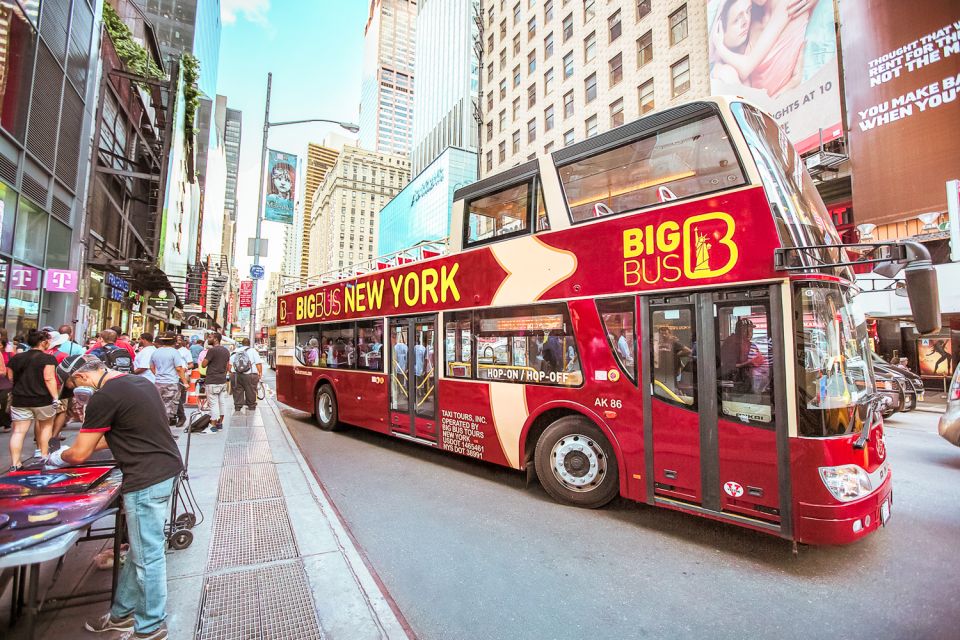
The big-ticket sights show up across the routes, including the Empire State Building, Times Square, and the Brooklyn Bridge area.
Empire State Building is a great example of why open-top bus viewing works. From the bus, you catch the Art Deco feel and the scale of the tower without needing to commit to tickets right away.
Similarly, the Brooklyn Bridge stop makes sense as a bridge moment: you’re not just seeing a structure, you’re seeing the city’s geometry—water, skyline, and the way streets connect.
And then there’s One World Trade Center. The tour information specifically points to the building’s 360-degree skyline view. Even if you only view it from the outside on the bus, having it on your route gives you a real sense of where modern Lower Manhattan sits in the larger skyline story.
The audio, the app, and how to avoid the common missteps
Digital commentary: useful, not perfect
The audio commentary is a central part of the experience. It’s digital and includes language options like Spanish, English, French, German, Italian, and Portuguese.
In the real world, audio can be hit or miss depending on headset fit and device functioning. Some people found the audio cheesy, and a few mentioned headset plugs not working. If your headset cuts out, don’t panic. Try adjusting the connection and keep moving until you get it clear. The bus ride still works well even without audio, but commentary is what makes it “tour” instead of “just transit.”
Also, recorded content can feel a bit dated in spots, but the overall route gives you the big visuals you came for. Your job is to stay alert to the stops and use your own eyes when the audio is less precise than you hoped.
Big Bus app: your best friend for timing
The Big Bus app with real-time bus tracking is the part I’d lean on most. New York traffic changes, and knowing whether the next bus is 5 minutes away or 20 matters when you’re deciding whether to cross a street or wait.
If you like structure, use the app to plan your next hop. If you like wandering, use it to get back on with less waiting.
Staff at stops: when you need help
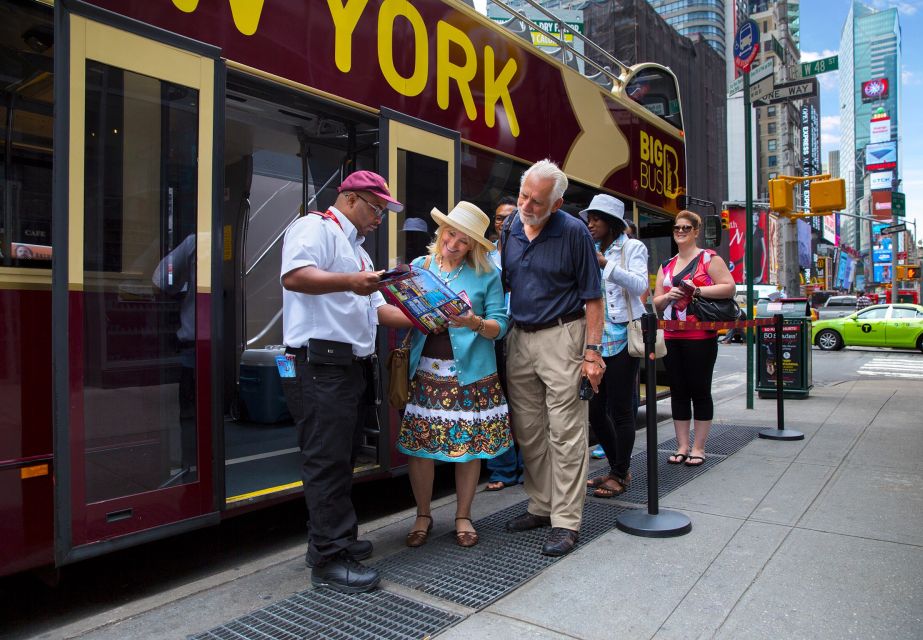
One of the most practical wins from the experience is how helpful attendants can be at stops. The tour info and firsthand impressions both point to staff being present and guiding people. That’s huge when your route includes busy areas like Times Square, where it’s easy to lose your way.
Food and extras: Butterbeer ice cream is a real perk

Included in the Downtown/Uptown offerings are a couple of fun extras:
- Free Butterbeer ice cream from The Harry Potter Store
- Self-guided digital walking tours with 4 tour options (only if that option is selected)
The Butterbeer perk is straightforward: you’ll redeem a voucher at Stop #1 M&M World or at any stop along the route where redemption is allowed. If you’re traveling with kids—or you simply want one playful stop—the ice cream counts as a small but memorable payoff that doesn’t cost you extra time.
The walking tours are optional. If you choose them, they’re a good way to turn bus stops into actual neighborhood walks, not just photo breaks.
What can go wrong: crowds, frequency gaps, and detours

Hop-on hop-off is built for flexibility, but New York throws curveballs.
1) Marathon and major events
There was at least one report of a Sunday marathon causing changes and forcing an alternative. On big event days, routing can be affected. Plan extra buffer if you’re visiting on a weekend.
2) Uptown frequency
Waiting can be longer on Uptown since buses arrive every 30 minutes. If you hop off for something that takes longer than you planned, you might feel the gap.
3) Headset and audio quirks
Some people had clear audio; others struggled with headset plug connections. It’s not a reason to skip the tour, but it is a reason to keep a backup plan: rely on the visuals first, audio second.
Who should book this Big Bus tour?

This tour makes the most sense if:
- It’s your first time in NYC and you want a quick sense of where everything sits
- You want freedom to choose which iconic stops to treat as “real visits”
- You’d rather pay for convenient sightseeing transport than piece together multiple subway transfers
It also fits groups well. A bus ride keeps everyone moving in the same direction, while hop-off time lets people split their interests: museums for some, landmarks for others, and neighborhood strolling for whoever likes walking.
If you’re the kind of traveler who hates waiting at stops, Downtown’s faster frequency will likely feel better than Uptown. Use that knowledge to plan your day.
Should you book the Hop-on Hop-off Big Bus tour?
Yes—if you want the smartest way to see a lot of NYC without overplanning. For the roughly $60 price, you’re paying for time saved and route convenience: open-top skyline moments, key landmarks, and repeated access over 1–3 days.
I’d book it especially if you:
- Want to get your bearings fast
- Plan to hop off at multiple stops rather than do a single long ride
- Like the idea of using an app to manage timing in a city that can throw delays at you
I’d hesitate if you only want one area, only have a short window, or you’re sensitive to schedule limits like the Downtown and Uptown end times. In that case, you might be happier picking a single neighborhood plan and building from there.
FAQ
How long is the ticket valid?
Your access is valid for 1 to 3 days, depending on whether you choose the 24, 48, or 72-hour option.
What routes does the tour include?
The tour includes a Downtown Loop and an Uptown Loop, each with its own circuit time and stop coverage.
What time does the Downtown Loop run?
The Downtown Loop runs from 9:30 AM to 5:00 PM.
What time does the Uptown Loop run?
The Uptown Loop runs from 10:00 AM to 4:00 PM.
How often do buses arrive?
Buses arrive every 10–15 minutes on the Downtown Loop and every 30 minutes on the Uptown Loop during the day.
Is audio commentary included, and what languages are offered?
Yes. Digital audio commentary is included, with languages listed as Spanish, English, French, German, Italian, and Portuguese.
What’s included with the ticket besides the bus ride?
In addition to hop-on hop-off access, you get digital audio commentary (with souvenir earbuds), optional self-guided digital walking tours with 4 options (if selected), and the Big Bus app for city information and real-time bus tracking. The Downtown/Uptown offers also include free Butterbeer ice cream at The Harry Potter Store.
Does the tour include hotel pickup?
No. Hotel pickup and drop-off are not included.
Is the tour wheelchair accessible?
Yes. The tour is listed as wheelchair accessible.