REVIEW · NEW YORK CITY
NYC Central Park guided Pedicab Tour – 1 hour
Book on Viator →Operated by Central Park Attractions · Bookable on Viator
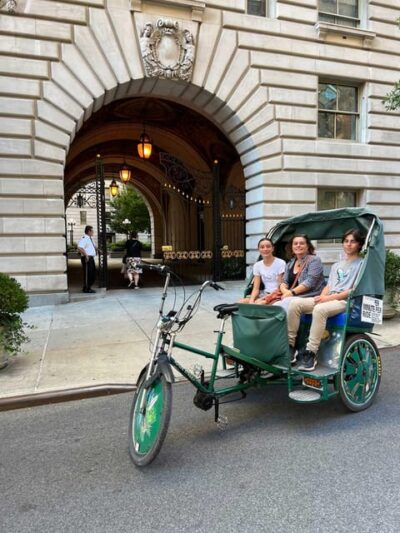
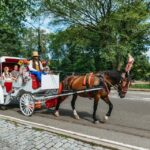
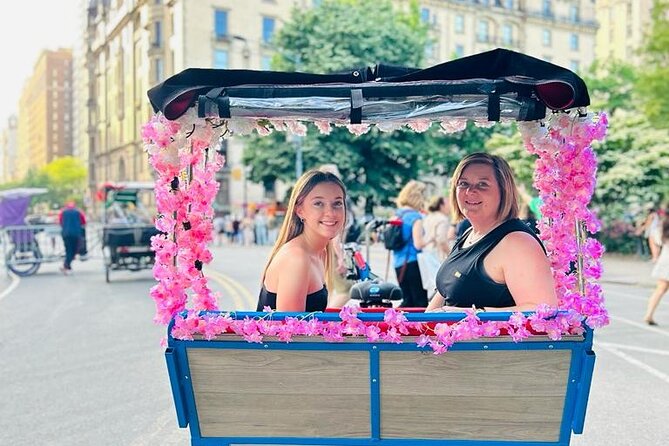
Central Park looks bigger when you walk. A pedicab tour fixes that fast, letting you zip between major sights and still stop for photos.
I like the local-guided pacing: you cover standout places like Bethesda Fountain and Strawberry Fields without feeling rushed through them. I also like the flexibility for photo stops, so you can linger at the places that matter most to you instead of marching on like a timetable. One possible drawback: at about one hour, you won’t see every corner of the park, so decide ahead of time which landmarks you care about most.
In This Review
- Key things I’d focus on before you ride
- Why this 1-hour pedicab Central Park tour works
- Getting started at 1794 Broadway (and what that means for timing)
- Carousel, Chess & Checkers House, and The Dairy: “old Central Park” in motion
- Umpire Rock, Wollman Rink, and Balto: iconic corners with real stories
- SummerStage, the Upper East Side, and Museum Mile views
- Bethesda Fountain to The Mall: where architecture slows you down
- Cherry Hill, Bow Bridge, and Strawberry Fields for photo breaks
- The Dakota and Tavern on the Green: famous buildings and a historic dining stop
- Pinebank Arch: the “pause and look closely” bridge
- Price and value: what $44 buys in one hour
- Should you book this NYC Central Park guided pedicab tour?
- FAQ
- How long is the NYC Central Park guided pedicab tour?
- What does the tour cost?
- Where does the tour start?
- Is this tour private?
- What language is the tour offered in?
- Do I get a mobile ticket?
- What are some of the stops on the route?
- Are service animals allowed?
- Is it easy to reach using public transportation?
- Is there free cancellation?
Key things I’d focus on before you ride
- Short 1-hour duration means high efficiency, with stops chosen for maximum impact.
- Guides can help with photos, and you get enough time at major spots to frame a few good shots.
- Movie-and-famous-family type stories add color to what you’re actually looking at from the pedicab.
- Central Park Conservancy tie-ins at locations like The Dairy and visitor-centered stops make your purchases and visits feel meaningful.
- Winter comfort may include extra warmth like a blanket, depending on conditions and guide practices.
Why this 1-hour pedicab Central Park tour works
Central Park is famous, but it’s also a lot to process when you’re walking. With a pedicab, you get the park’s “you can’t believe this is in Manhattan” feeling while still moving efficiently between the most recognizable landmarks.
This tour also makes the park easier to understand. You’re not just passing by pretty spots—you’re getting explanations that connect the dots between structures, memorials, and where people gather. Even if you’ve seen Central Park in photos, the guided order helps you see the park as a real place, not a checklist.
The value is tied to that time. For $44 per person and roughly 1 hour, you’re paying to compress the experience: major sights plus narrative plus photo breaks.
You can also read our reviews of more guided tours in New York City



Getting started at 1794 Broadway (and what that means for timing)
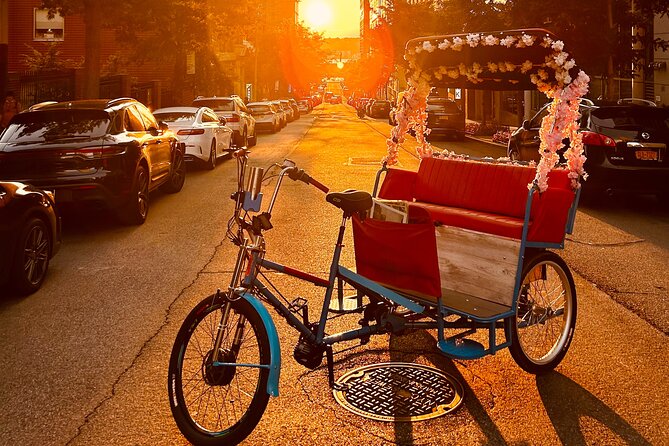
The meeting point is 1794 Broadway. That’s a very workable location for getting in, getting seated, and getting moving quickly—especially if you’re already planning your day around midtown Manhattan.
Because this is a private tour (only your group), you’re not competing with other groups for photo moments at the stops. You also tend to get better “fit” with the route, since the guide isn’t forced to follow one rigid flow for crowds.
Also note: the tour uses a mobile ticket, and it’s offered in English. Service animals are allowed, and it’s described as most travelers can participate—so it’s built for a wide range of visitors.
Carousel, Chess & Checkers House, and The Dairy: “old Central Park” in motion
The early part of the ride is about classic Central Park identity. The stop at one of the park’s favorites since 1871 puts you near a tradition that’s still alive and busy—on average 250,000 people ride the carousel every year.
Then you’ll hit the Chess & Checkers House, one of Central Park’s visitor-centered areas managed by the Central Park Conservancy. What I like here is the detail: the octagonal brick building sits among 24 game tables shaded by a wooden trellis. Even if you don’t plan to play, it’s a great “this park is built for everyday recreation” moment.
From there, the tour stops at The Dairy, Central Park’s largest gift shop. It’s mid-park at 65th Street, so it’s convenient rather than out of the way. The key practical point: every purchase supports the Central Park Conservancy, which means buying something feels tied to care for the park rather than just souvenirs.
Possible consideration: since The Dairy is a shop stop, it can feel slightly repetitive if you’re not interested in gifts. If you don’t want to shop, use the time for a quick look around and keep your focus on the photo opportunities outside.
Umpire Rock, Wollman Rink, and Balto: iconic corners with real stories
A pedicab makes it easier to reach a park feature like Umpire Rock—located in the southwest corner. The name connects to what used to be Central Park’s first playground, a big open meadow where kids played games. Standing here (and looking out from the same area) gives you that “how did this become so structured?” feeling.
From the same area, you can see Wollman Rink. The rink’s seasonal identity is part of the magic: ice-skating in winter and roller-skating in summer. Plus, because the rink sits in the south area of the park, it’s easier to reach and makes a strong viewing point for both park scenery and the city skyline. After dark, that mix gets extra dramatic.
Next is Balto, one of the park’s most beloved monuments. The story is the kind you remember: in January 1925, Nome, Alaska faced an outbreak of diphtheria, and weather blocked vaccines from reaching by plane. A relay of dog-sled teams and mushers became the alternative—and Balto became a symbol of that effort.
What you should expect: the guide narration turns these points into a thread, so you’re not only looking at famous objects, you’re understanding why they’re here and why people keep coming back.
SummerStage, the Upper East Side, and Museum Mile views
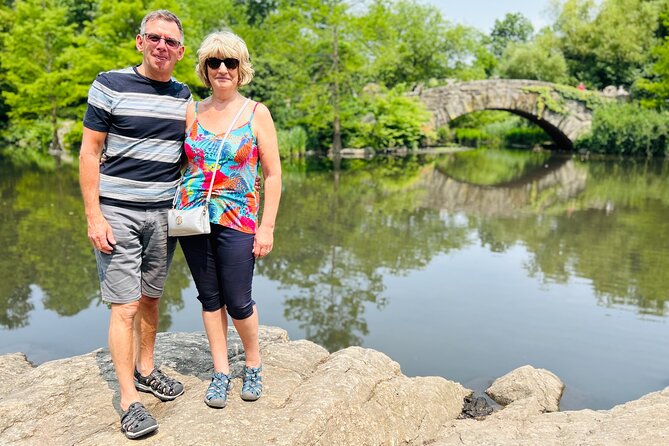
A smart part of the route is the way it brings you toward the edge of the park and out into the surrounding neighborhoods. The tour connects Central Park to the Upper East Side, where you’ll see a mix of classic brownstones and upscale high-rises along Madison Avenue.
It also points you to Museum Mile on 5th Avenue, the stretch that draws crowds to major institutions including the Metropolitan Museum of Art, the Solomon R. Guggenheim Museum, and El Museo del Barrio. Even if you don’t enter any museums, this helps you orient your Manhattan day: you’ll know which neighborhood you’re actually looking toward.
You’ll also visit SummerStage, an outdoor concert and performance series run by the City Parks Foundation. It’s held at Rumsey Playfield, so it’s a useful stop for seeing how the park functions not just as scenery, but as an active public space.
Practical consideration: if you’re visiting in a season with no major events, SummerStage still works as a viewpoint and “how the park hosts culture” moment, but it won’t feel like a live concert.
You can also read our reviews of more tours and experiences in New York City






Bethesda Fountain to The Mall: where architecture slows you down
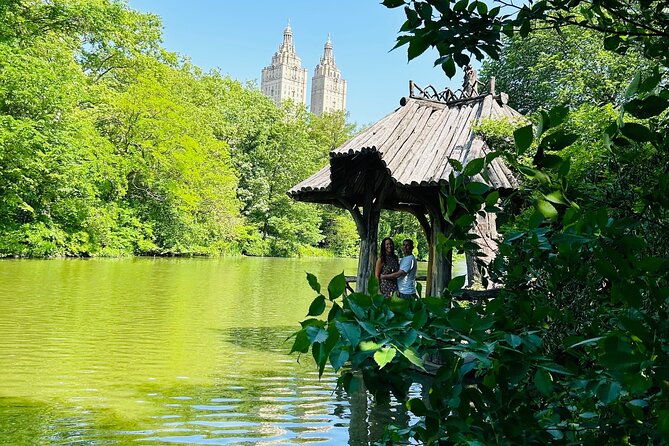
One of the best sections of Central Park, in my view, is the Bethesda area. The tour takes you to Bethesda Fountain, a two-level plaza with an arcade and fountain setting. The centerpiece is Bethesda Fountain, also known as the Angel of the Waters.
This stop is great because it gives you people-watching and a sense of how the park’s design channels movement. The terrace area is a classic place to pause, and it’s also where the architecture and surrounding views do most of the talking without needing you to walk far.
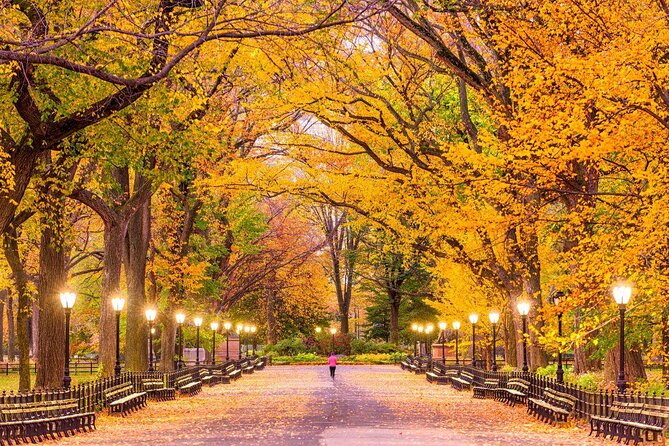
Next is The Mall, described as one of Central Park’s most significant landscapes, with a wide straight path lined by two rows of American elms. The southern section is known as Literary Walk, where statues of writers were added in the 19th century.
What I like about this pairing is contrast. Bethesda is dramatic and central; The Mall feels orderly and ceremonial. Together, they help you understand why Central Park has both “romantic landmark” and “structured classic” vibes.
Cherry Hill, Bow Bridge, and Strawberry Fields for photo breaks
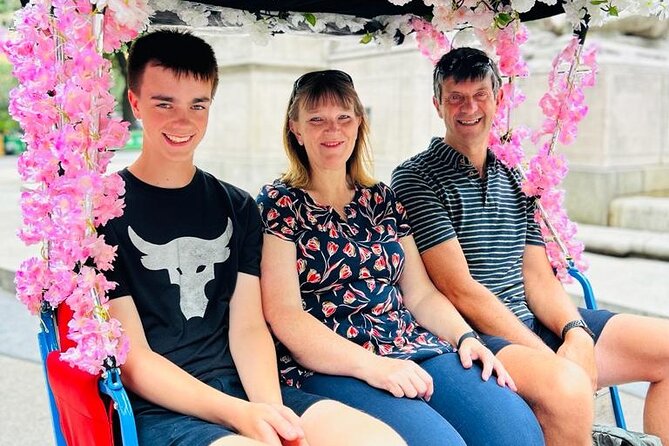
This is the part of the tour that’s tailor-made for cameras. You’ll visit Cherry Hill, named for cherry trees that bloom each spring. It’s popular for its sloping lawn and those views over the lake, including rowboats. In spring, the Yoshino cherry trees bring the famous pink-and-white bloom moment.
Then it’s Bow Bridge, named for its graceful low curve that resembles a bow. The bridge is one of the most photographed park features and also one of the more romantic spots, often associated with wedding proposals. Even if no one proposes while you’re there, the framing is consistently beautiful.
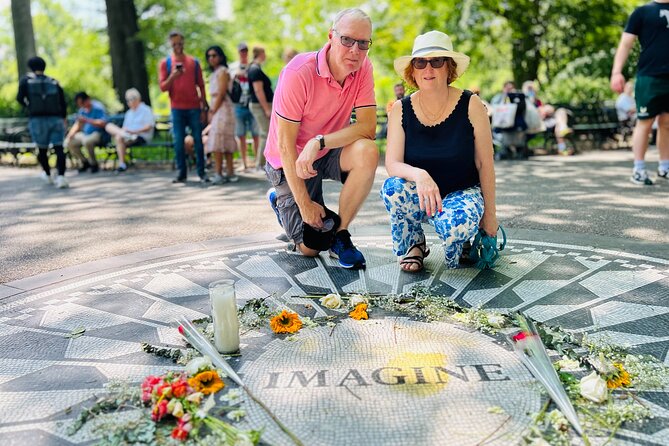
After that comes Strawberry Fields, the memorial for John Lennon. You’ll see the Imagine mosaic, where people come to pay tribute. The name comes from Lennon’s 1967 song Strawberry Fields Forever, so this stop carries a pop-culture layer that many visitors don’t expect in a park setting.
Important practical note: because this is a guided pedicab tour, you’ll typically get short photo windows—enough for a few solid shots—without the stress of trying to coordinate walking distances on your own. In one winter-style experience, the guide also took group photos, and you were given enough time at major stops to snag multiple pictures.
The Dakota and Tavern on the Green: famous buildings and a historic dining stop
The tour includes The Dakota, located on Central Park West between 72nd and 73rd streets. It’s square in plan with an H-shaped courtyard, and apartments connect through the central courtyard area. The idea here is to show you what “park-adjacent Manhattan life” looks like from inside the park’s perimeter.
You’ll also stop at Tavern on the Green, in a historic building once known as the Sheepfold. This is one of those Central Park landmarks that feels like it’s been there forever, partly because dining here has been a destination since the 1930s. It reopened in 2014 after years of renovation that removed some additions and exposed more of the original structure, aiming for more variety in dining options.
If you care about architecture, this section adds a different texture to the park story. If you’re only there for classic views and memorials, you might treat it as a quick look-and-photo moment rather than a lingering stop.
Pinebank Arch: the “pause and look closely” bridge
The tour ends with Pinebank Arch, an elegant cast-iron bridge that spans the bridle path. It’s designed to blend into the surrounding rocks, so it looks like it rises from the landscape rather than interrupting it. The ironwork is lace-like, and it’s a popular spot for photos.
This stop is worth it because it’s less about a single famous name and more about how the design feels when you’re actually there. It’s a good final moment to slow down, shoot a few pictures, and absorb the park’s craft details before you’re done.
Price and value: what $44 buys in one hour
At $44 per person for about one hour, you’re paying for four things:
- Transportation inside the park without long walks
- A guide who explains what you’re seeing
- Photo flexibility at major stops
- A condensed route that hits many of the most recognizable Central Park points
Is it the cheapest way to experience the park? No. But it’s often a good value when you’re short on time, traveling with limited mobility, or want a guided narrative without spending half a day on transit and walking.
Also, this kind of tour rewards tipping. In a winter experience, gratuity culture was part of the advice: if the guide takes photos and gives you a comfortable ride, plan to tip accordingly.
Should you book this NYC Central Park guided pedicab tour?
Book it if you want a high-efficiency Central Park intro with enough stops to feel like you saw the park, not just rode around it. It’s especially appealing if you like photo breaks and you’d rather hear the stories than read a guidebook while navigating paths.
Skip it (or consider a different format) if you’re the type who wants to wander for hours, explore lesser-known areas far off the main routes, or you dislike sitting for long stretches. This tour is built for a one-hour highlight run, not a full-day park immersion.
If you book, do this: pick your must-see list before you arrive—Bethesda, Bow Bridge, Strawberry Fields—and then let the guide handle the rest of the timing and storytelling. That way, the one hour feels like the right size.
FAQ
How long is the NYC Central Park guided pedicab tour?
The tour lasts about 1 hour.
What does the tour cost?
It costs $44.00 per person.
Where does the tour start?
The meeting point is at 1794 Broadway, New York, NY 10019, USA.
Is this tour private?
Yes. It’s listed as a private tour/activity, with only your group participating.
What language is the tour offered in?
The tour is offered in English.
Do I get a mobile ticket?
Yes, the tour includes a mobile ticket.
What are some of the stops on the route?
Stops include places like Chess & Checkers House, The Dairy, Umpire Rock, Wollman Rink, Bethesda Fountain, The Mall, Cherry Hill, Bow Bridge, Strawberry Fields, The Dakota, Tavern on the Green, and Pinebank Arch.
Are service animals allowed?
Yes, service animals are allowed.
Is it easy to reach using public transportation?
The meeting point is listed as near public transportation.
Is there free cancellation?
Yes. You can cancel up to 24 hours in advance for a full refund.