REVIEW · NEW YORK CITY
NYC’s History of Comedy Tour
Book on Viator →Operated by Comedy History Tours NYC · Bookable on Viator
Comedy history starts on a Village street corner. This Greenwich Village walk connects classic club facades to the TV era, guided in English over about 1 hour 15 minutes.
I love the format: the guide brings each stop to life with photos, and you also get free access to a local stand-up show later that evening. The guide is often described as friendly, funny, and happy to answer questions.
One thing to consider: it’s mostly on your feet and finishes at Village Underground, so plan your next stop there instead of expecting to wander back from the starting point.
Key points to know before you go
- Short, focused route through Greenwich Village’s comedy landmarks in about 1 hour 15 minutes
- Photo-led storytelling that helps you picture the rooms and performers behind the jokes
- Includes a later stand-up benefit, with free access to a show that night
- Covers major eras from early vaudeville through radio, then TV and Saturday Night Live
- Max group size of 20, so the guide can keep things interactive
- Ends at Village Underground, near the Comedy Cellar’s second location
In This Review
- Why this comedy history walk feels different
- Price and value: what $30 really buys in NYC
- Timing and logistics: where to start and how the route finishes
- Gay Street and Christopher Street: the vaudeville-to-radio kickoff
- The Duplex: learning how comedians rose through a room
- Cafe Wha?: the club era you can almost hear
- Bitter End and Cafe Au Go Go: comedy’s overlap with nightlife
- Grisly Pear Comedy Club: TV’s rise and the SNL turning point
- Comedy Cellar marquee: the photo moment and the brand you recognize
- Village Underground finish: second Comedy Cellar location plus a free show
- The guide style that makes it worth your time
- Who this tour is best for
- Should you book NYC’s History of Comedy Tour?
- FAQ
- How long is NYC’s History of Comedy Tour?
- How much does the tour cost?
- Where does the tour start and end?
- Is the tour offered in English?
- Do I get a mobile ticket?
- Is admission required for the stops?
- Is there anything included besides the walking tour?
- What is the cancellation policy?
Why this comedy history walk feels different
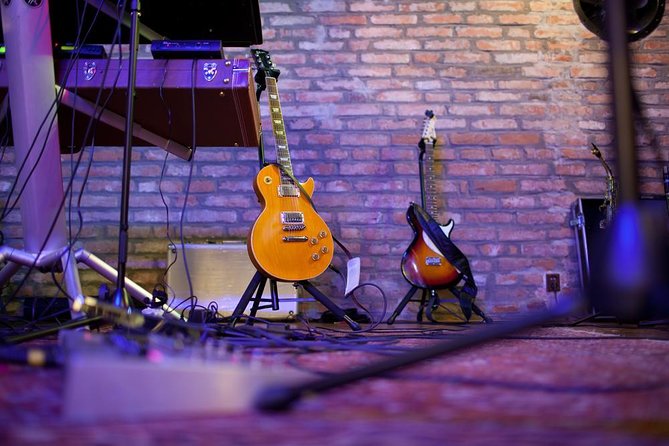
If you like comedy, this tour gives you more than trivia. You’re walking past the actual street-level context where performers built their careers, from early 1900s vaudeville roots to the television shake-up of the 1960s. It’s the kind of route where the city itself becomes the stage.
What makes it work is the pacing. It’s not a long lecture, and it’s not a jumpy bar crawl either. You get a sequence of stops with clear themes: venues, the type of comedy they supported, and the bigger media shifts that changed comedy’s shape.
Price and value: what $30 really buys in NYC
At $30 per person for roughly 1 hour 15 minutes, this is priced like a guided experience, not like a museum visit. And the tour design keeps costs practical: the stops themselves involve narration from the sidewalk, with admission ticket free at each listed location.
The best value piece is the bonus show access. At the end point, you’re told about a local stand-up comedy show you can attend later with free access (as a benefit of coming on the tour). That alone can turn a “fun walk” into a full evening plan, especially if you’re staying in the area and want something comedy-related without extra searching.
You can also read our reviews of more historical tours in New York City



Timing and logistics: where to start and how the route finishes
The tour starts at 13 Christopher St, New York, NY 10014, and ends at Village Underground (130 W 3rd St, New York, NY 10012). That matters because Greenwich Village is walkable, but you’ll finish closer to W 3rd St than you started at Christopher St.
You can choose morning or afternoon options, which is handy if you’re building a day around a show or a meal. The group size is kept to a maximum of 20 travelers, so you’re unlikely to feel lost in a crowd.
You’ll also get a mobile ticket, and the experience is offered in English. It runs near public transportation, which helps if you’re coordinating with other plans around the city.
Gay Street and Christopher Street: the vaudeville-to-radio kickoff
Your walk begins at the famous intersection of Gay Street and Christopher Street. This isn’t just a convenient start point—it’s used as a launch pad for the big timeline jump.
Here, your guide narrates with pictures about NYC comedy’s early eras, moving from early 1900s vaudeville into the dinner club scene and then the radio years of the 1930s and 40s. It’s a smart opener because it frames comedy as an evolving performance technology. Vaudeville trained comedians to hit fast, radio asked for timing that traveled through sound, and clubs demanded a different kind of intimacy.
Practical takeaway: this is a great stop to ask questions. If you’re new to the history, you’ll get the clearest “how we got here” start before the tour gets more venue-specific.
The Duplex: learning how comedians rose through a room
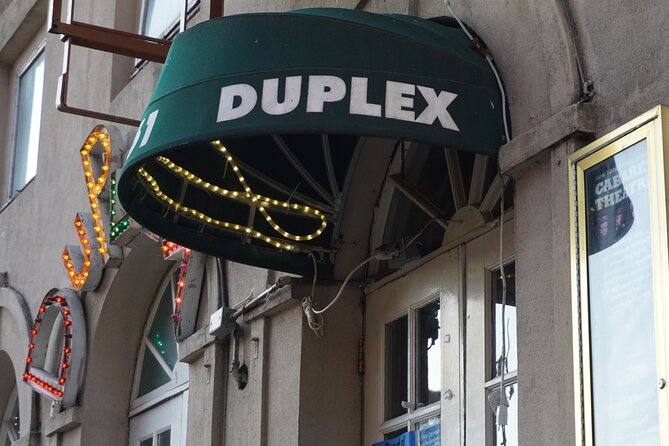
Next comes The Duplex, where you spend a short stop listening to stories about the venue and the comedians who rose through it. Even with limited time, the guide’s method stays consistent: sidewalk-level narration plus photos to connect the building to the performers.
Why this stop matters: places like The Duplex helped create the ladder for comics—working the room, building a following, and getting noticed. If you’re the kind of comedy fan who likes knowing the career paths, this is where the tour starts to feel like a behind-the-scenes map rather than a list of famous names.
If you’re hoping to identify the exact interior vibe from the outside, temper expectations. This is still a street walk, so you’ll be imagining the room more than inspecting it.
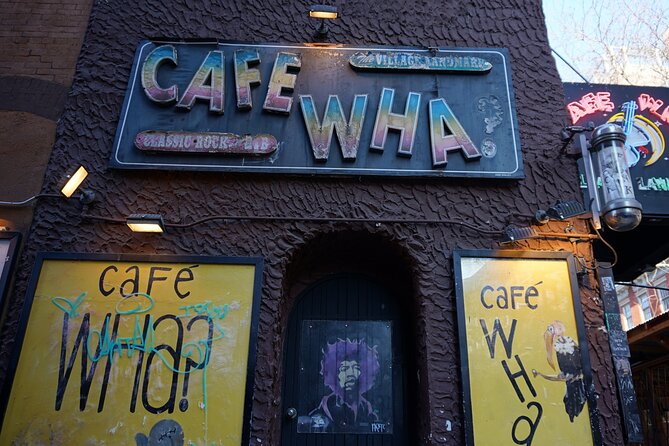
Cafe Wha?: the club era you can almost hear
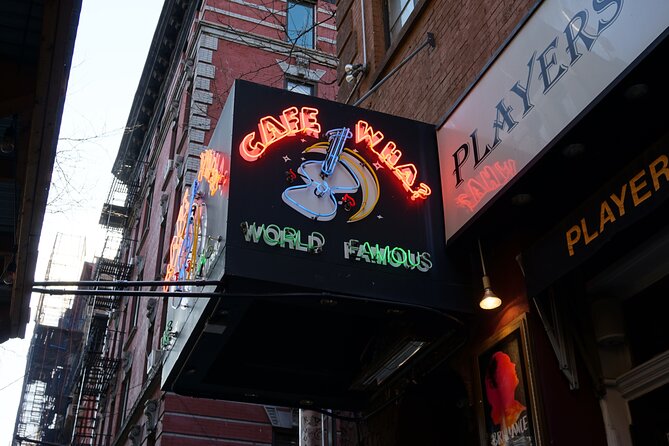
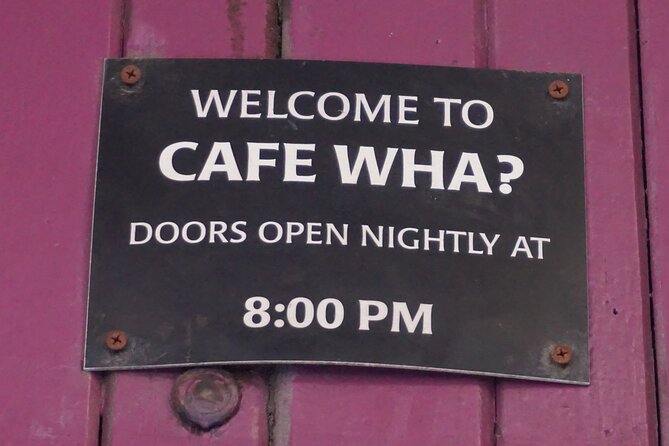
At Cafe Wha?, you get another quick, photo-supported storytelling stop. The guide covers the club’s place in comedy history and highlights comedians associated with the venue.
This stop works well because it bridges two things that comedy fans often separate: club culture and performer development. The outside view gives you the location. The narration gives you the meaning—why the room mattered, what kind of audience showed up, and how that translated into careers.
Tip for your own enjoyment: listen for the names and the pattern. The tour connects eras, so the same themes show up again later when television takes over.





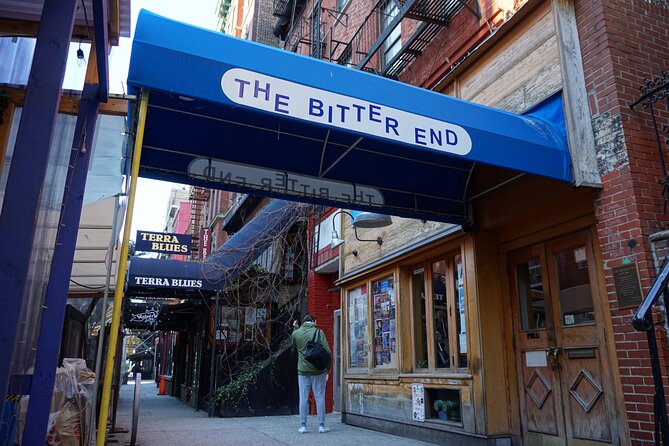
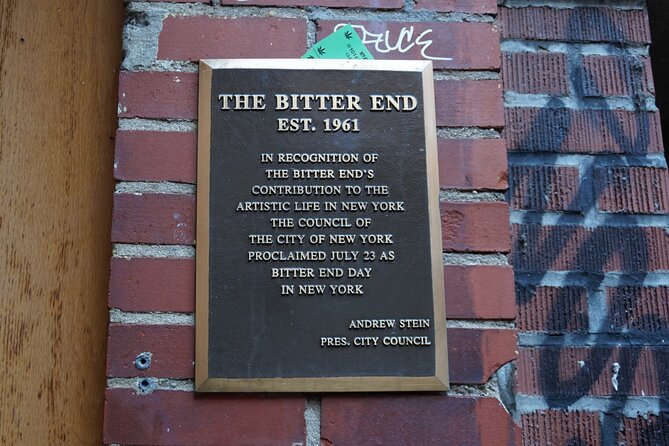
Bitter End and Cafe Au Go Go: comedy’s overlap with nightlife
The stop at Bitter End is also where the tour folds in Cafe Au Go Go. You get narration about the comedy history tied to these places, plus the famous comedians who rose through them.
This is a useful checkpoint because NYC comedy often didn’t develop in a neat box labeled comedy only. Clubs, music venues, and “nightlife ecosystems” fed each other. The guide’s job here is to show how comedy growth often happened alongside other forms of performance and audience trends.
Consideration: if you’re expecting a heavily footnoted lecture, you may find the storytelling more scene-driven than academic. But for most people, that’s the point—the tour keeps the city and the comedy connected.
Grisly Pear Comedy Club: TV’s rise and the SNL turning point
At The Grisly Pear Comedy Club, the tone shifts toward the media break that changed everything: the rise of television in the 1960s. Your guide ties that shift to the creation of Saturday Night Live, and also points out African American contributions to comedy.
This is one of the most satisfying stops for anyone who cares about how modern comedy formed. Television didn’t just broadcast jokes—it shaped format, timing, and who got a national platform. The tour uses this stop to explain why comedy’s center of gravity moved, and how that affected the kinds of comedians and sketches that became household names.
Practical bonus at this stop: the guide also notes some of the most famous modern comedy clubs in NYC. Even if you’re not planning to book anything on the spot, it gives you a shortlist for later.
Comedy Cellar marquee: the photo moment and the brand you recognize
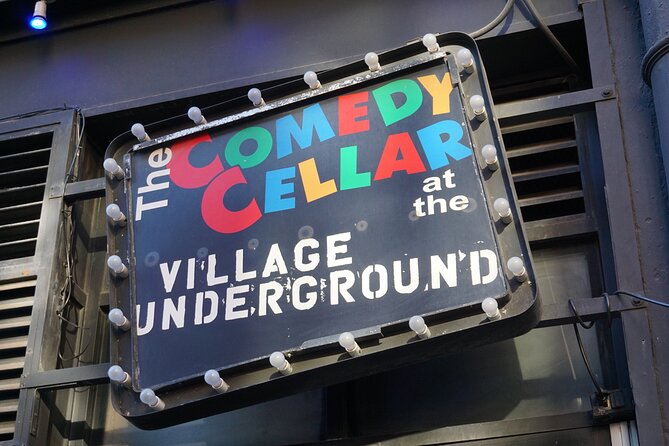
Then you reach Comedy Cellar, one of the venue names most comedy fans already associate with NYC. The guide narrates the history of the club and offers to take photos in front of the famous marquee.
This stop is fun even for people who aren’t sure they care about branding. Comedy Cellar has become shorthand for a certain kind of New York comedy scene—small room, serious comedy craft, big reputations built from live work. Seeing the marquee in context makes the famous name feel less like a poster and more like a specific place in the city.
If you want a good photo: wear something comfortable and plan to keep your phone handy. You’re only there briefly, so you’ll want to be ready for the moment.
Village Underground finish: second Comedy Cellar location plus a free show
The tour ends at Village Underground (130 W 3rd St). Here, your guide shows the second location of the Comedy Cellar in that area and ties the neighborhood back into the larger comedy story.
The best part comes at the finish: your guide also points out a local stand-up comedy show that you’re given free access to later that evening as a benefit of attending the tour. This turns the “history walk” into something actionable—you can stay in the same comedy lane after the tour ends.
Planning tip: since you finish at Village Underground, pick a dinner or drink plan nearby that doesn’t require a long trek across town. It’s easier to keep the night flowing when you’re close to where you’ll go next.
The guide style that makes it worth your time
The most consistent strength in how this experience is run is the guide’s delivery. The tour is described as friendly, interactive, and full of photos, with a pace that gives you time to absorb each stop. When a tour is only about 1 hour 15 minutes, that pacing matters.
You’ll also want to lean into the Q&A aspect. The guide is set up to answer questions not just about comedy history, but about neighborhoods and comedy clubs too. If you’re visiting for shows, this is the moment to ask practical things like what areas you should concentrate on or what kind of comedy vibe you prefer.
Who this tour is best for
This is a great fit if you:
- love comedy history but don’t want a long, classroom-style outing
- plan to attend stand-up anyway and want an easy path into the right kind of show
- want a compact way to explore Greenwich Village while learning why the comedy scene took shape here
- enjoy photo-based storytelling and short stops tied to real locations
It may be less ideal if you:
- prefer indoor museums and want a traditional ticketed attraction
- dislike walking or prefer long, seated programs
- expect every stop to include deep interior detail (it’s a street tour format)
Should you book NYC’s History of Comedy Tour?
Book it if your goal is simple: see the streets where comedy grew up, connect vaudeville and clubs to radio and television, and leave with a plan for a comedy show that night. At $30, the math is strong because the stops are narration-based with free admission ticket and the day is capped with a free-access stand-up benefit.
If you’re short on time in NYC but want something that feels like you’re getting the real story behind famous names, this walk is a smart choice. Just come ready to listen, take in the visuals, and make your next move from Village Underground when you finish.
FAQ
How long is NYC’s History of Comedy Tour?
It runs about 1 hour 15 minutes (approx.).
How much does the tour cost?
The price is $30.00 per person.
Where does the tour start and end?
It starts at 13 Christopher St, New York, NY 10014 and ends at Village Underground, 130 W 3rd St, New York, NY 10012.
Is the tour offered in English?
Yes, it’s offered in English.
Do I get a mobile ticket?
Yes, the tour uses a mobile ticket.
Is admission required for the stops?
The listed stops are marked as admission ticket free, so you’re not paying entry fees at each location.
Is there anything included besides the walking tour?
Yes. At the end stop, you’re given free access to a local stand-up comedy show later that evening as a benefit of attending.
What is the cancellation policy?
You can cancel for a full refund up to 24 hours in advance. If you cancel within 24 hours, the amount paid is not refunded.