REVIEW · NEW YORK CITY
The Met Museum & Central Park New York Exclusive Guided Tour
Book on Viator →Operated by Babylon Tours New York City · Bookable on Viator
Two NYC legends in one guided day. This exclusive-style outing strings together the Metropolitan Museum of Art and Central Park’s biggest hits so you don’t waste time figuring out what to see first. You get a focused museum plan (with admission included) and then a paced walk through bridges, fountains, and the Lennon memorials.
What I like most is the way the Met visit starts in the Great Hall and moves into the museum’s key galleries, so you get a real sense of how the collection is organized. I also like that Central Park isn’t treated like a vague stroll; you’re guided to specific landmarks like Bethesda Terrace, Bow Bridge, Strawberry Fields, and the Dakota, with photo-ready viewpoints built into the route.
The main drawback to consider is that the schedule is tight. Many Central Park stops are only around 10 minutes, so if you prefer lingering at a single spot (or doing a slower museum deep-read), this format may feel a bit fast.
In This Review
- Key highlights worth knowing
- Entering The Met’s Great Hall: a museum tour with structure
- What to watch out for at the Met
- Why the lunch break and Central Park swap keeps the day doable
- Bethesda Terrace and Bow Bridge: two photo magnets with very different moods
- Then comes the skyline payoff
- Turtle Pond, Great Lawn, and the calm breaks you’ll want
- Lennon’s New York: the Dakota and Strawberry Fields connection
- Midday skyline moments: 432 Park Avenue and Time Warner Center
- Wrapping up at the Central Park Zoo
- Price and value: what $238.50 buys you
- Who this tour fits best (and who should rethink it)
- Should you book the Met Museum & Central Park guided tour?
- FAQ
- What time does the tour start and where do I meet?
- How long is the experience?
- Is the Metropolitan Museum of Art admission included?
- How big is the group?
- What should I know about bag rules at the Met?
- Where does the tour end?
- Can I cancel for a full refund?
Key highlights worth knowing

- Great Hall to the top galleries at the Met: you’re routed into the museum’s biggest story arcs without wandering.
- Henry VIII armory and the Studiolo connection in Medieval Europe, plus major American-wing icons.
- Central Park’s signature beats: Bethesda Terrace, Bow Bridge, Gapstow Bridge, Strawberry Fields, and Sheep Meadow.
- Lennon-focused payoff: the Dakota and Strawberry Fields are built in as a single narrative pocket.
- Midtown skyline side stops: 432 Park Avenue, Time Warner Center, and even the 1912 ASPCA horse drinking fountain.
- Max 8 people: small-group pacing that’s ideal for questions and getting your bearings fast.
Entering The Met’s Great Hall: a museum tour with structure
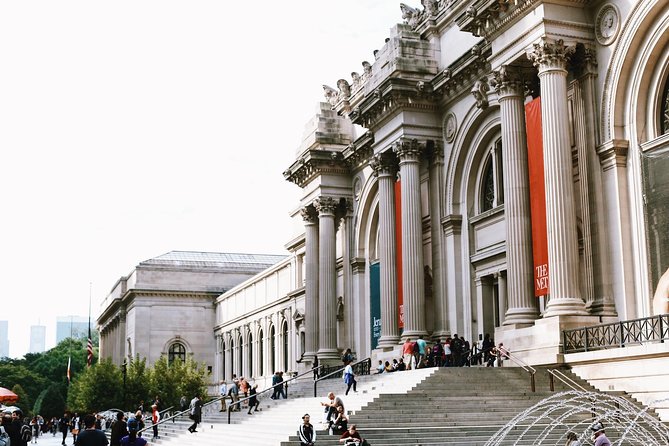
Your day starts at the Metropolitan Museum of Art on 5th Ave (meeting at 1000 5th Ave, near the museum entrance). The start time is 10:30 am, and you’ll spend about 2.5 hours inside. That matters because the Met is huge. Without a plan, you can end up doing a lot of walking and not much learning. With a guide, you get a route that hits the museum’s most meaningful highlights in a single sweep.
The tour begins in the Great Hall, which is the right move. You get oriented to the scale and the flow of the building before anyone asks you to pick a wing. From there, the itinerary moves through specific gallery stops rather than a random grab-bag of masterpieces.
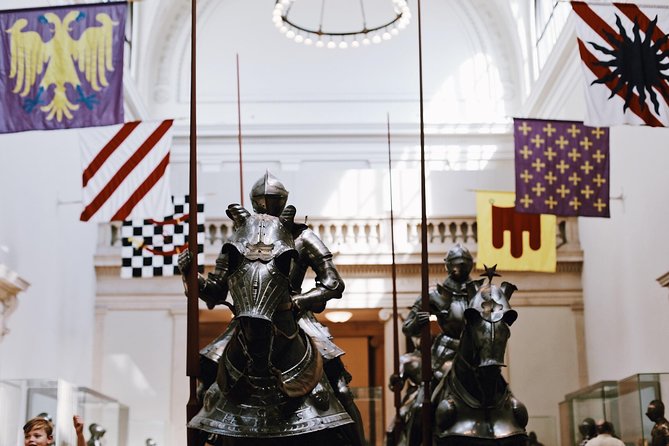
In Medieval Europe, you focus on two standout elements: the Studiolo from a Ducal Palace context, and the armory connected to Henry VIII. It’s a great pairing because it shows two sides of medieval life—courtly rooms and the physical tools of power—without requiring you to already know the dynasty details.
Then you head into the American wing, which the guide frames in a smart way: it includes major objects that function like a visual timeline of American identity building. You’ll see the staircase from the Chicago Stock Exchange and the famous portrait of Washington crossing the Delaware River. The guide also explains how the American gallery differs from the older European counterparts—especially since parts of it began before the United States even turned 100.
If you’re a fan of European painting, the European galleries are where the tour really leans in. You’ll learn about the turbulent and inspiring lives of painters including Vermeer, Seurat, and Van Gogh. This is useful even if you’ve seen their names before, because the guide ties the artworks to the people behind them, so the museum doesn’t feel like a set of disconnected frames.
You can also read our reviews of more guided tours in New York City



What to watch out for at the Met
A practical note: the museum has security rules. No large bags or suitcases are allowed inside—only handbags or small thin bag packs are allowed through security. Also, some areas are quiet or have restricted speaking; when that happens, the guide provides the info before you enter those rooms. That’s not a problem—just know that you might have to keep your voice down for stretches.
Dress matters too. The tour notes say appropriate dress is required for entry into some sites, so pack for comfort first, then make sure you’re covered enough for museum and park areas.
Why the lunch break and Central Park swap keeps the day doable
After the Met, you’ll have a break for lunch before moving into Central Park for about 2.5 hours. That break is a big deal. The Met alone can drain you, and Central Park can either feel like a relief or like another workout depending on how you plan it.
This route works because you’re not asked to “wander until you find something cool.” Your guide keeps the walking efficient, and you hit the park’s best-known sights in a logical flow that makes the park’s layout feel understandable instead of confusing.
The tour also leans into Central Park’s dual identity: it’s greenery, yes, but it’s also a place for memorials and public art honoring a wide range of figures. You’ll hear about memorials and artwork connected to people like Bolivar and Marti, plus tributes such as Balto and Hans Christen Andersen. Even if you’re not a “statue person,” hearing what each monument is for makes Central Park feel less like generic scenery.
Bethesda Terrace and Bow Bridge: two photo magnets with very different moods
Central Park’s most famous fountain moment lands early: Bethesda Terrace and Fountain. You’ll get the Angel of Bethesda atop Bethesda Terrace, and the guide explains that it became New York City’s first major piece of public art commissioned from a woman. That’s one of those details that changes how you look at the scene—suddenly you’re not just seeing a movie backdrop.
From there, the tour includes Bow Bridge, the park’s largest bridge. It’s a cast iron bridge with classical Greek refinement from the 19th century. What I’d prioritize here is the design you can spot without needing to read a plaque: the interlocking circles banister and the intricate details under the arch span. Those are the bits that separate Bow Bridge from the rest of the park bridges.
If you like taking photos, this is exactly the kind of stop that rewards you for arriving with a little patience. You’ll have a short window, but the bridge details give you multiple angles in a small area.
Then comes the skyline payoff
After Bow Bridge, the route continues to Gapstow Bridge, described as a beautiful schist bridge originally built in 1874. It’s famous for views of the city skyline, which is a rare moment in Central Park where the skyscraper world feels close enough to count individual towers.
Gapstow Bridge also gives you contrast. Bow Bridge is ornate and classic in mood. Gapstow Bridge is older and more rugged, and the city views make the whole park feel like a stage set between greenery and steel.
You can also read our reviews of more museum experiences in New York City





Turtle Pond, Great Lawn, and the calm breaks you’ll want
One reason this tour feels more enjoyable than a random park walk is that it includes pockets of slower scenery. Turtle Pond is one of them—right near the Great Lawn area. You’ll see Turtle Pond where many of the park’s turtles live.
Then you’ll get to the Great Lawn, a stretch of about 55 acres that’s famous enough to come with everyday-life uses: picnic time on spring afternoons and rays in summer. Even in a short guided visit, that’s valuable because it reminds you Central Park isn’t only for icons. It’s for ordinary life, too.
There’s also mention of Sheep Meadow later in the walk. That’s where you can feel the park’s purpose: it’s a space where locals of all kinds step away from the city for a moment. The guide’s pacing helps you actually notice the “people use this place” side of Central Park, not just the monuments.
Lennon’s New York: the Dakota and Strawberry Fields connection
If pop culture is your thing, this portion is the reason many people book this specific pairing of Met + Central Park. You’ll stop at the Dakota, a cooperative building constructed in 1884, still maintaining much of its original character. It’s also tied to John Lennon. You’ll learn that he lived there starting in 1973 and until his murder in 1980, in the archway outside the building.
Right after that, you’ll visit Strawberry Fields, a 2.5-acre tribute area dedicated to Lennon. The tour notes describe it as a designated quiet zone, lined with elm trees, shrubs, flowers, and rocks. That combination of plants and stones is what gives Strawberry Fields its reflective mood, and your guide’s explanation helps you see it as a living memorial rather than a themed stop.
One smart detail: the way the Dakota and Strawberry Fields are treated as related stops. Instead of splitting them into random sightseeing, you get a single narrative arc—home, then memorial—so the emotion of the story lands more clearly.
Midday skyline moments: 432 Park Avenue and Time Warner Center
Not every Central Park tour includes the edge-of-the-park architecture views, but this one does, and it’s a nice contrast to the museum and memorial stops.
You’ll start that section at the Latin America History equestrian statues at the corner of 6 Ave & 59 St, then head toward 432 Park Avenue. This residential skyscraper overlooks Central Park, and the tour frames it as the second tallest building in New York, behind One World Trade Centre. In other words: if you want the modern skyline perspective without making it a separate trip, this is a useful slot.
There’s also a detail that feels like New York trivia but ends up being memorable: you’ll see the surviving ASPCA horse drinking fountain sited in 1912. Even though we’re in the automobile era, the guide notes this is the only place in the city where you can bring a horse to drink water—if you happened to have one. It’s playful, but it also connects you to older NYC life.
Then the tour goes to Time Warner Center, a mixed-use complex with two twin towers bridged by a multi-story atrium. You’ll have time to photograph it, and the guide explains what you’ll typically find there, including upscale retail and office/residential spaces.
These stops are short (around 10 minutes each), but they’re timed well. They give you a break from park walking and keep the day from turning into pure monument focus.
Wrapping up at the Central Park Zoo
The tour finishes at the Central Park Zoo on the southeast corner of Central Park. You’ll get one last stretch of scenery and an easy ending point, which is more convenient than trying to squeeze in one more viewpoint and then find a way out.
Your guide may also accompany you to the nearest subway station if you want to keep moving. That can be a big help when you’re tired and the city feels like it has too many directions.
Price and value: what $238.50 buys you
At $238.50 per person, this isn’t a cheap add-on. The value comes from what’s wrapped into the fee:
- Admission to the Met is included, and the tour lists all entrance fees.
- You’re with a professional guide exclusively for your group, not a loose join-and-go situation.
- The pace is protected by design: you get the Met and the park connected in one planned day, instead of spending your energy on logistics.
- It’s max 8 people per booking, which usually means you can actually ask questions and get attention without competing for time.
- It runs rain or shine, so you’re not betting your day on perfect weather.
One more value point: the tour is generally booked about 69 days in advance on average, which is a sign it’s a popular way to do New York when you only have a limited window. If you’re planning a trip with tight days, that matters.
What’s not included is also clear: it doesn’t include hotel pickup or drop-off. The tour recommends Uber or taxi, so budget for that local transport. Also, gratuities are not included, and tipping is optional.
Who this tour fits best (and who should rethink it)
This tour is a strong match if you want:
- a structured Metropolitan Museum of Art experience without choosing galleries on your own,
- Central Park’s top sights linked into a single walk,
- a mix of art, architecture, and pop culture highlights (especially the Dakota and Strawberry Fields),
- small-group attention, with a guide who keeps the day on schedule.
It’s also a decent fit if you have moderate physical fitness, since you’ll be walking across both museum and park areas for roughly 5.5 hours total, including a lunch break.
Consider skipping this format if you’re the kind of person who needs a full day in the Met to truly slow down. Because the tour is designed to cover major points, you won’t get long, unstructured time in a single gallery. You’ll be shown many key scenes, not one scene for a long afternoon.
A small extra note from the tour details: the Met can have occasional closures without previous warning. If the opening time is delayed by more than 1 hour, they provide an alternative, but you won’t get refunds or discounts in those cases.
Should you book the Met Museum & Central Park guided tour?
Yes, if you want an efficient day that pairs the Met’s biggest hits with Central Park’s most recognizable landmarks, this is a solid choice. The small group size and guided route are the heart of the value, and the itinerary is built so you can go from grand museum halls to bridge-and-fountain walks without losing the thread.
I’d especially recommend it if you like having a human guide connect details—like Henry VIII’s armory context, the American wing’s perspective, and the emotional story arc from the Dakota to Strawberry Fields—because that’s where the day feels most “New York,” not just “sightseeing.”
If you want maximum freedom to linger, or you plan to spend most of your day in one museum gallery, you may prefer a different plan. But if your goal is a great day with clear direction and minimal guesswork, this one earns its spot.
FAQ
What time does the tour start and where do I meet?
The tour meets at The Metropolitan Museum of Art, 1000 5th Ave, New York, NY 10028. The start time is 10:30 am. The end point is in Central Park.
How long is the experience?
The tour is about 5 hours 30 minutes (approximately), including a lunch break.
Is the Metropolitan Museum of Art admission included?
Yes. Admission to the Met is included, and the tour also lists that all entrance fees are covered.
How big is the group?
The maximum group size is 8 people per booking.
What should I know about bag rules at the Met?
The tour notes that no large bags or suitcases are allowed inside the museum. You can bring handbags or small thin bag packs through security.
Where does the tour end?
The tour ends at the Central Park Zoo in the southeast corner of Central Park. Your guide can also accompany you to the nearest subway.
Can I cancel for a full refund?
Yes. You can cancel up to 24 hours in advance for a full refund. If you cancel less than 24 hours before the start time, the amount paid is not refunded.