REVIEW · NEW YORK CITY
Self-Guided Tour of the Museum at Eldridge Street
Book on GetYourGuide →Operated by Museum at Eldridge Street · Bookable on GetYourGuide
This synagogue tells its story in light. Step into the Museum at Eldridge Street, a National Historic Landmark built in 1887, and explore it at your own pace. I especially love the Moorish Revival architecture and the 60 historic stained glass windows, because the building feels designed to slow you down. One catch: it’s truly self-guided, so if you want a live narration, you’ll have to read the labels and signage closely.
The place also carries real meaning. The synagogue’s story runs from immigrant dreams on the Lower East Side to near-loss in the era of strict 1920s immigration quotas, followed by a long restoration effort that brought the space back for public use. For a low $7 admission and about 1 hour, you get a lot of perspective—just plan on using that hour well.
In This Review
- Key things you should notice
- Entering the Eldridge Street Synagogue: Where the Visit Really Starts
- Moorish Revival Architecture and 60 Historic Stained Glass Windows
- The Modern Window Moment: Kiki Smith and Deborah Gans
- Learning Lower East Side Jewish Immigrant Life (Without Needing a Tour Guide)
- What You’ll See in the Permanent Collection and the Temporary Exhibit
- Photography Rules and On-Site Practicalities That Affect Your Timing
- The $7 Price and Real Value: Why This Works for a Short Visit
- Should You Book This Museum at Eldridge Street?
- FAQ
- How long is the self-guided visit?
- Is this tour self-guided or guided by a staff member?
- What does my admission include?
- Where do I meet to start?
- What languages are available for the self-guided tour?
- Can I take photos?
- Is flash photography allowed?
- Are professional cameras allowed?
- Is the museum wheelchair accessible?
- Is food allowed inside the museum?
Key things you should notice
- Moorish Revival design inside a working symbol of immigrant community
- 60 stained glass windows that help set the mood the moment you enter
- A modern art window by Kiki Smith and Deborah Gans, placed right in the historic setting
- A clear focus on immigration-era life for Eastern European Jewish newcomers
- A restoration story that explains why the museum exists today
- A fast-moving, one-hour layout, so decide what you want to linger on
Entering the Eldridge Street Synagogue: Where the Visit Really Starts
Your visit starts before you even reach the main rooms. The museum is inside the Eldridge Street Synagogue, and the instructions are simple: go to the main entrance at the bottom of the left-hand staircase as you approach. Do that first, then let the building pull you in.
This is not a museum that pretends it’s just a pretty shell. The synagogue was built in 1887 and is described as the first grand synagogue purpose-built by Eastern European Jewish immigrants in the United States. That detail matters. It frames the building as something more than architecture. It was about getting rooted—turning crowded street life into permanent community space.
In the early days, the synagogue served multiple roles. Yes, it was a house of worship. But it also functioned as a place to build community for people living amid cramped tenements and packed city streets. In other words, the building wasn’t only for Sundays and holidays; it belonged to daily life in the Lower East Side.
Then comes the part that adds emotional weight. The building was impacted by strict 1920s immigration quotas, and it was nearly lost to neglect. After that near-miss, a long restoration project—20 years and $20 million—returned the space to public use. Walking through today, you’re seeing a result of that effort, not just a preserved artifact.
If you like visiting places that connect built space to real human choices, you’ll feel it here. And because this is self-guided, you can move as fast or slow as you want—without the pressure of a group clock.
You can also read our reviews of more guided tours in New York City



Moorish Revival Architecture and 60 Historic Stained Glass Windows
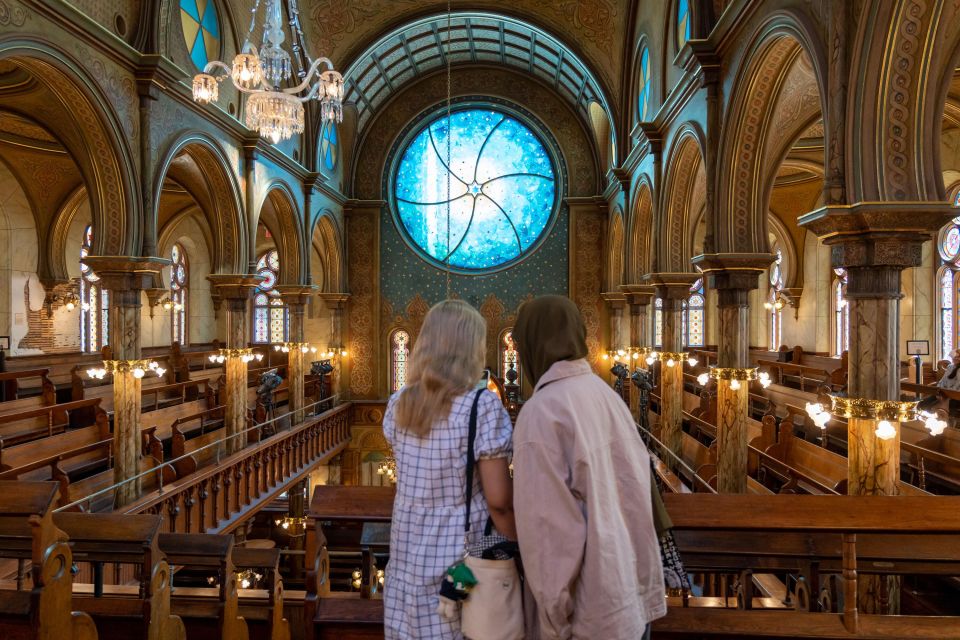
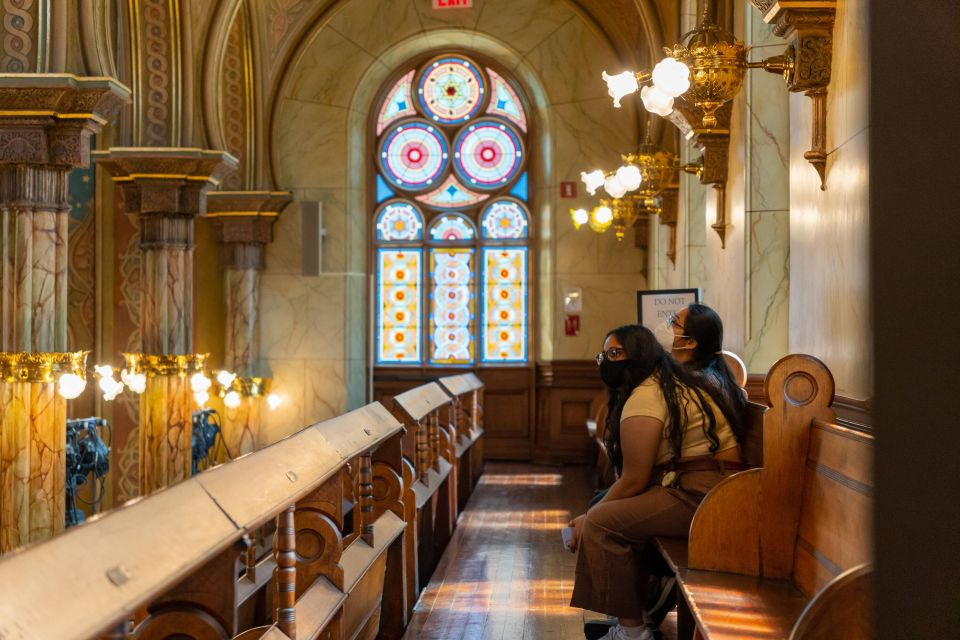
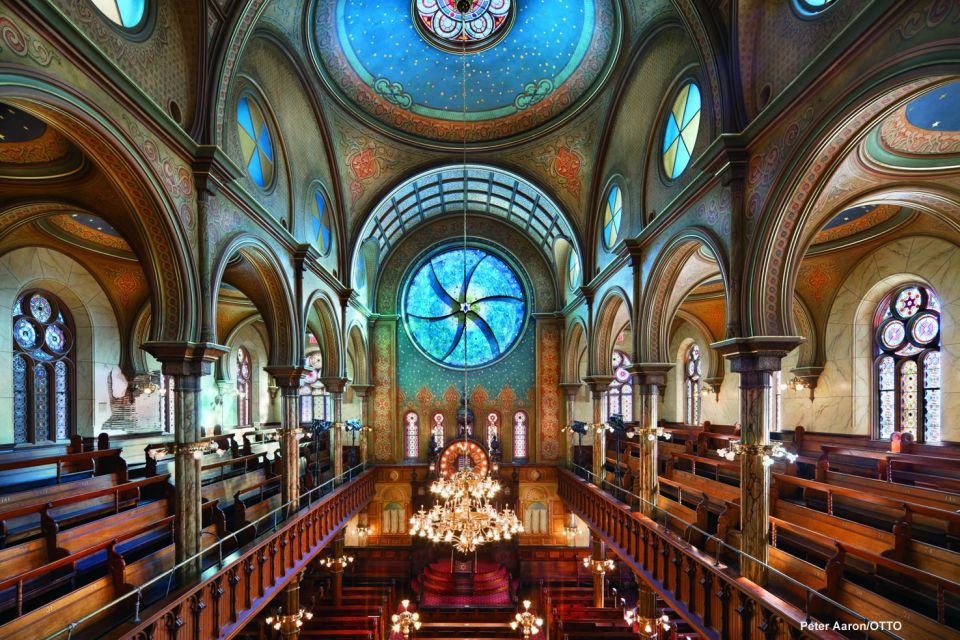
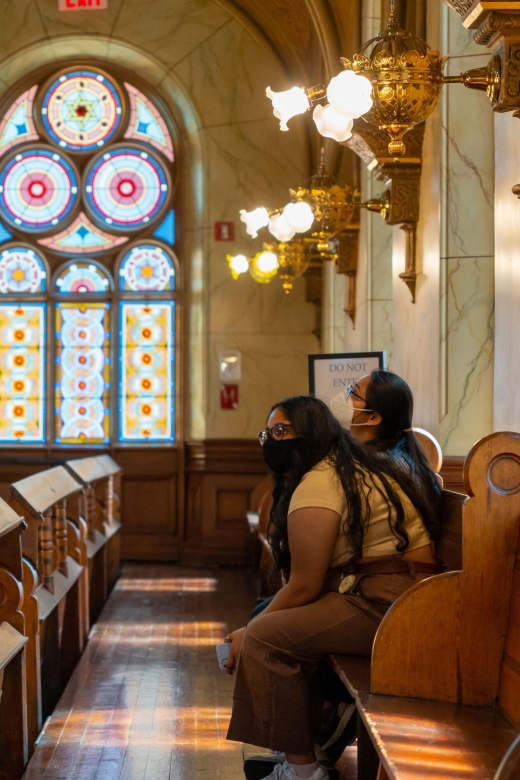
The big visual star is the stained glass. You’re looking for 60 historic stained glass windows, and the museum makes sure you can’t miss them. In a self-guided setting, that’s a smart design choice: you always have a clear focal point as you navigate.
The windows matter beyond beauty. Stained glass is often treated like decoration, but in synagogues it usually connects to meaning, craftsmanship, and the idea of holiness in everyday space. Here, because the building is tied to Eastern European Jewish immigrant community life, the stained glass becomes part of that “we’re making something enduring” feeling.
The other architectural element you’ll notice is the Moorish Revival style. That blend of historical reference and local purpose creates a particular kind of atmosphere. It gives the synagogue an identity that feels both ambitious and intentional—like the community wanted their worship space to look and feel worthy of their hopes.
One practical tip: don’t rush the first room. When you arrive, take a slow look around before you start reading every panel. Your eyes adjust quickly, and the windows often look different once you stop moving and let the light settle.
The Modern Window Moment: Kiki Smith and Deborah Gans
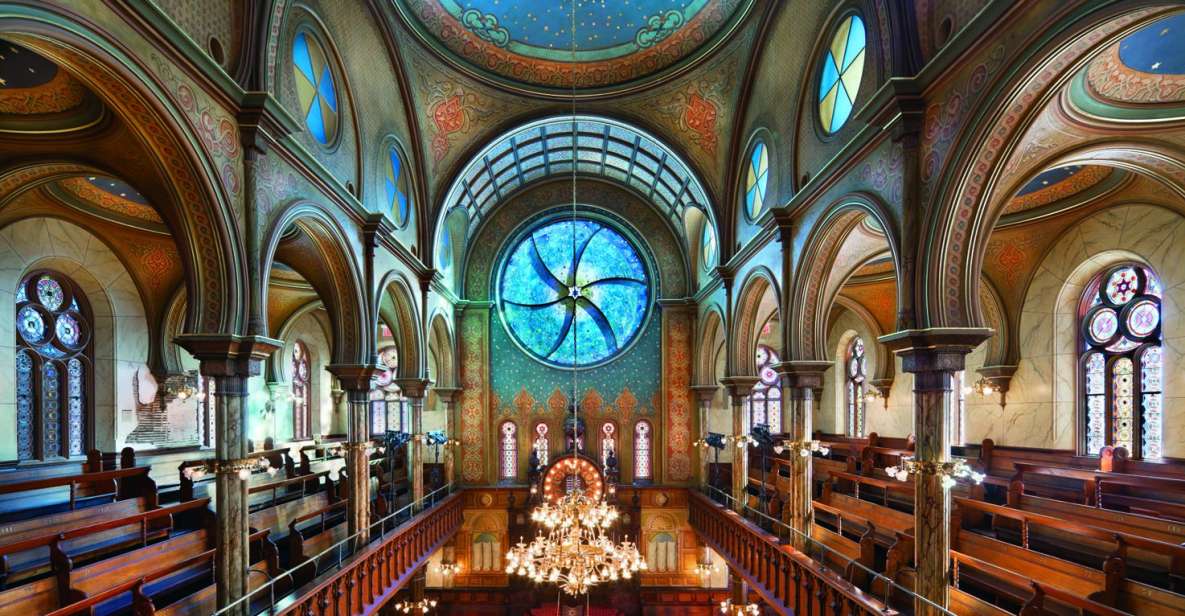
After you’ve taken in the older stained glass, you’ll run into something newer—an art experience built into the museum space. The highlights call out a modern window by artists Kiki Smith and Deborah Gans.
This is one of those museum decisions that can work really well if you’re open to it. Putting contemporary work into a historic synagogue isn’t a gimmick; it’s a statement that the building is still alive in the present. It turns your visit into a conversation across time: the immigrant past on the walls, and the current artistic voice in the same spiritual setting.
I like this kind of contrast because it keeps the visit from becoming only a nostalgia loop. You’re not just looking backward. You’re seeing how the space continues to inspire interpretation now.
Learning Lower East Side Jewish Immigrant Life (Without Needing a Tour Guide)
Even though this is self-guided, the museum is structured around understanding, not wandering in confusion. You’ll learn about the rise, decline, and restoration of this landmark. You’ll also connect that with the lives, traditions, and customs of the Lower East Side’s Jewish community.
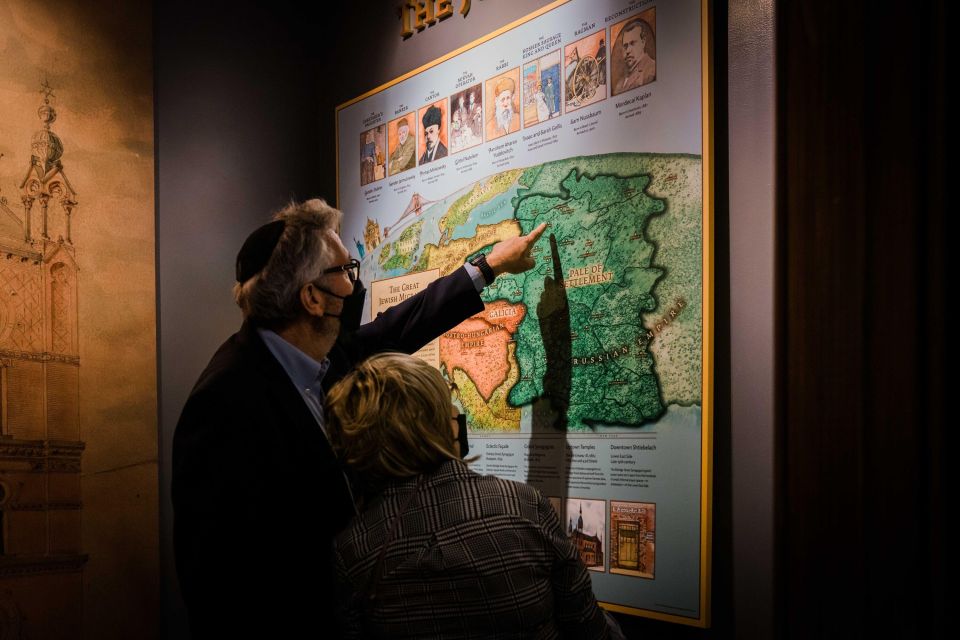
The immigration focus is central—especially the era around the turn of the 20th century. That’s when one third of Europe’s Jewish population crossed the Atlantic, and the synagogue is presented as a symbol of those aspirations realized. It’s the kind of context that helps you read the building properly.
Here’s how I’d approach it during your 1 hour:
- Spend the first part orienting yourself to the building and stained glass.
- Then spend time with the panels that explain why the synagogue was built when it was, and what changed later.
- Finish by returning to the visual elements with the story in your head.
That pattern makes the space feel coherent. Otherwise, stained glass and architectural details can float free from meaning. The museum’s job is to connect them.
One more meaningful thread: the restoration story isn’t just about saving a structure. It’s about preserving stories and making sure future generations can access them. For many visitors, that reframes the whole visit—from sightseeing to stewardship.
What You’ll See in the Permanent Collection and the Temporary Exhibit
Your admission includes access to the museum’s temporary exhibit plus the permanent collection. That mix is what keeps the one-hour visit from feeling purely repetitive or purely architectural.
The permanent collection is where you’ll get the core context: immigrant-era community life, the synagogue’s history, and the reasons it nearly disappeared before restoration. The temporary exhibit adds an extra layer, giving you something to focus on beyond the main architectural storyline.
Because you only have an hour, you’ll want to choose your pacing. If you like architecture, give yourself time to look at the windows more than once, because your second pass will usually feel more intentional. If you’re more of a history reader, prioritize the sections explaining the synagogue’s role on the Lower East Side and the impact of the 1920s immigration quotas.
Either way, the museum’s self-guided setup works best when you actively decide what you care about. You’ll still leave with the big picture, but you’ll enjoy the visit more if you don’t try to read everything.
You can also read our reviews of more museum experiences in New York City





Photography Rules and On-Site Practicalities That Affect Your Timing
This place has clear rules, and knowing them saves hassle.
Flash photography is not allowed, and professional cameras are not allowed. That means your phone is your friend, and you should keep the flash off. The museum also says it welcomes personal, non-commercial photography, so you’re not coming empty-handed.
Food and drinks aren’t allowed other than water. Also, you should plan on bag checks. Food, strollers, and backpacks will be searched and checked in on arrival, which can add a few minutes at the start.
If you’re traveling with a backpack, I’d keep essentials minimal so you can check in quickly. If you bring a stroller, factor in that you’ll need to store it before you start exploring.
Good news: the museum is fully accessible. There’s an elevator reaching all four floors, so movement through the building should be straightforward.
The $7 Price and Real Value: Why This Works for a Short Visit
At $7 per person for museum admission, the value here is strong—especially because you’re not paying for a narrow experience. Your ticket covers the synagogue museum itself, plus both the temporary exhibit and permanent collection.
Where this becomes a smart buy is the combination:
- A historic National Historic Landmark building from 1887
- A visual highlight you can experience right away (Moorish Revival style and 60 stained glass windows)
- A story-focused learning path about immigration and community life
- A modern art addition by Kiki Smith and Deborah Gans
For many museums, you’d pay more for any one of those elements. Here, you’re getting the building, the art, and the context together.
And if you only have about an hour, this is a reasonable fit. The visit isn’t trying to turn into a half-day project. It’s more like: see the core, understand the why, and then let the space do the rest.
Should You Book This Museum at Eldridge Street?
Book it if you want an up-close New York experience that mixes architecture, immigrant history, and art in the same room. It’s ideal for couples, solo travelers, and anyone who likes self-guided wandering with a strong sense of direction.
Skip it or approach with realistic expectations if you need a full guided lecture. This tour is self-guided, so you’ll get the most out of it by actually reading the signs and taking your time with the stained glass and the story panels.
If you like thoughtful museums that don’t rush you into shallow answers, I think you’ll enjoy this one.
FAQ
How long is the self-guided visit?
The duration is listed as 1 hour.
Is this tour self-guided or guided by a staff member?
It is self-guided. There is an English host or greeter.
What does my admission include?
Admission includes entry to the Museum at Eldridge Street/Eldridge Street Synagogue, access to the temporary exhibit, and access to the permanent collection.
Where do I meet to start?
Find the main entrance at the bottom of the left-hand (downward) staircase.
What languages are available for the self-guided tour?
The self-guided tour is available in English, Spanish, and Chinese.
Can I take photos?
Yes, personal, non-commercial photography is welcomed.
Is flash photography allowed?
No, flash photography is not allowed.
Are professional cameras allowed?
No, professional cameras are not allowed.
Is the museum wheelchair accessible?
Yes. The museum is fully accessible, with an elevator reaching all four floors.
Is food allowed inside the museum?
Food and drinks are not allowed other than water.