REVIEW · NEW YORK CITY
Sushi Workshop for Home Chefs in NYC
Book on Viator →Operated by Selfup · Bookable on Viator
That first roll you make is a real thrill. This NYC sushi workshop is a friendly, teach-you-by-doing class with instruction on hand rolling, eating technique, and the basic logic behind Japanese dishes.
I especially like two parts: the way the chefs break down delicate sushi skills, and the fact you end by eating what you made instead of just watching. You’ll also get culture and food context along the way, not just a step list.
One consideration: it’s priced like a premium experience, and it’s non-refundable, so double-check your schedule and have a backup plan in case weather forces changes.
In This Review
- Key things to look forward to
- A 3-hour sushi workshop in NYC with real take-home value
- Where it starts (and why location matters)
- What you learn: sushi basics plus the why behind the food
- Chopstick help you can actually use
- The hands-on portion: rolling, stuffing, and presentation
- The multi-course flow: learning, then feasting
- Who teaches it: the teaching team style you can expect
- Group size and pacing: why 20 people is the sweet spot
- Price in perspective: is $120 worth it?
- Practical details: what to know before you go
- Tips to get the most out of your sushi class
- Date night or team building: when this workshop fits best
- Should you book the Sushi Workshop for Home Chefs in NYC?
- FAQ
- How long is the sushi workshop?
- What time does the class start?
- Where do we meet for the workshop?
- How much does it cost?
- Is the workshop offered in English?
- What group size should I expect?
- Do I get a mobile ticket?
- Is it non-refundable?
- Are service animals allowed?
- Is there any weather-related cancellation?
Key things to look forward to
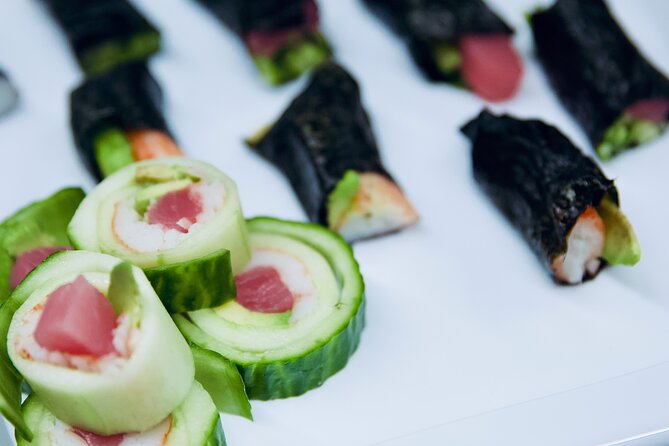
- Hands-on sushi skills: hand rolling and stuffing rolls, with patient coaching so you’re not stuck guessing
- How to eat Japanese food with chopsticks: a practical mini-lesson, even if your grip needs work
- A multi-course flow: you learn presentation basics, then sit down to feast at the end
- A small group: capped at 20 people, which helps you get real attention
- Chefs with big teaching energy: names you might see include Oliver, Danny, Chris, Armando, Edgar, Paige, and Ashley
A 3-hour sushi workshop in NYC with real take-home value
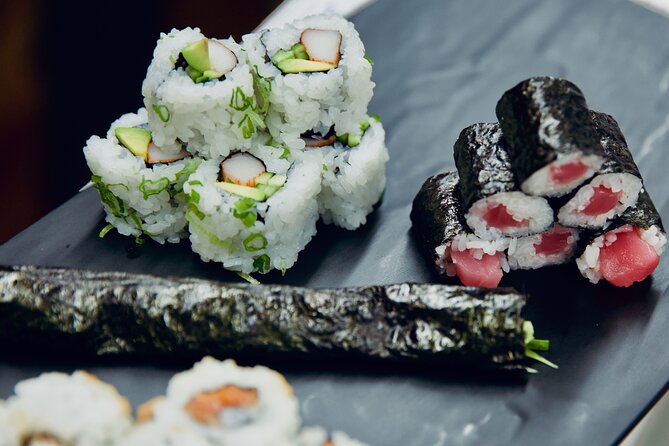
This class is built for people who want to make sushi at home and not feel like it’s a lost cause. You’re in New York City, but the lesson style feels like a kitchen workshop: clear steps, quick corrections, and enough time to actually practice—not just pose with a chef while the work happens off to the side.
The biggest thing you’re paying for is the coaching. Sushi looks simple until you try it. Then you learn how tiny changes—rice pressure, roll tightness, knife control, even how you hold food—affect the final bite. Over about 3 hours, you’ll go from basic understanding to confidence with rolling and presentation.
At the end, you don’t stand around. You sit down and eat. That matters. Homemade food tastes better when you can connect each step to the result.
And yes, you can turn it into a plan. The class works well as a date night or a special occasion, and it’s also been used for team-building vibes. The room stays social without turning into chaos, partly because the group is capped at 20 travelers.
You can also read our reviews of more tours and experiences in New York City



Where it starts (and why location matters)
You’ll meet at 325 W 37th St #12f, New York, NY 10018, with the activity ending back at the same meeting point. The start time listed is 12:00 pm, and the experience runs about 3 hours.
This address is convenient if you’re already in Midtown. It’s also close to public transportation, which is your easiest way to get there without burning time in traffic. In a cooking class, that’s not a small detail. You want to arrive early enough to settle in, not rush your way into the session.
Since this is a mobile-ticket experience, have your confirmation handy on your phone when you arrive. You don’t want to lose momentum by hunting for paperwork mid-day.
What you learn: sushi basics plus the why behind the food
The class focuses on sushi-making for home chefs, including skills you can repeat later. You’ll work with sushi types like nigiri, sashimi, and sushi rolls (including hand-rolled techniques). The teaching doesn’t stop at technique, either. You also get background on the origin of classic Japanese dishes, so you understand what you’re making and why certain presentation details matter.
In plain terms: sushi rice and roll construction are the core. Rice is the foundation that affects everything else. Presentation is how you make it look and taste like it belongs on a Japanese table, not just a plate of ingredients.
Also, the chefs spend time on patience. That’s not a motivational poster line. It’s practical advice: you learn to slow down, handle delicate pieces carefully, and accept that good sushi comes from small, steady moves.
Chopstick help you can actually use
If chopsticks are a problem for you, this workshop has you covered. Part of the experience includes instruction on the proper way to eat Japanese food, taught as the chef explains Japanese history and culture.
This is one of those tiny add-ons that turns into a big payoff. You might know the motions, but sushi eating is different from normal finger food. Timing matters. The bite size matters. Even how you dip or handle pieces changes how the meal feels.
So by the time you sit down to eat your creations, you’re not stuck asking someone next to you for help. You know what to do, and the food stays enjoyable.
The hands-on portion: rolling, stuffing, and presentation
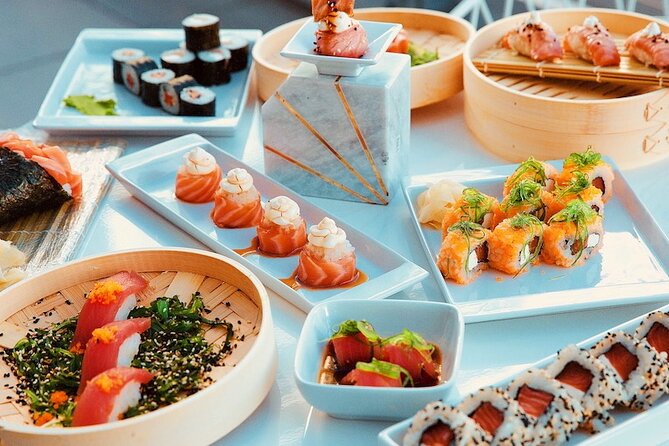
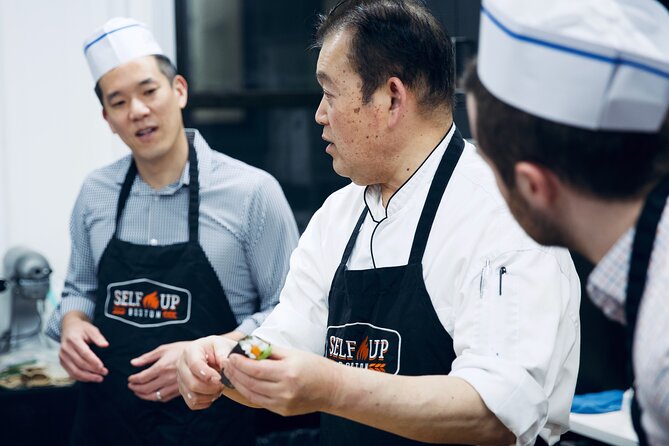
The heart of the class is learning how to make sushi rolls through coached practice. You’ll work on hand rolling and stuffing sushi rolls, with the chef guiding you through the details that separate messy from clean.
Presentation comes up repeatedly. Sushi is a visual food. You learn how to set up pieces neatly, handle them without damaging the rice, and aim for a tidy finish. That’s also what helps if you want to bring the skill home for guests.
One useful detail from past sessions: the vinegar step in sushi rice can be easy to overdo. A suggestion shared from a group was to skip boiling the vinegar next time, since it can irritate eyes. I’m not saying you should change anything during the class, but it does hint at what the chef likely teaches: control the process and don’t rush.
Another tip that would help many beginners: a short demo specifically on making sushi rice would clear up confusion fast. If you’re serious about learning for home cooking, pay close attention to how the rice is handled, seasoned, and cooled.






The multi-course flow: learning, then feasting
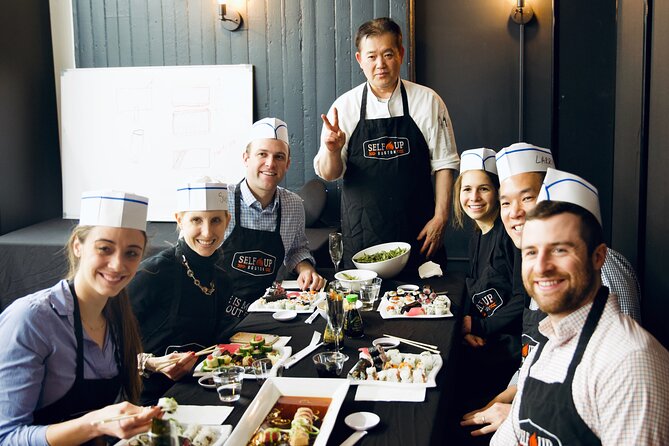
This isn’t just one demo followed by one roll and a quick bite. The workshop is described as a multi-course sushi-making experience, and the structure is meant to build skills in stages.
A typical arc goes like this:
- You learn key concepts and technique
- You practice delicate steps, especially rolling and stuffing
- You refine presentation so the final plates look right
- Then you sit down and eat what you made
That sit-down feast is part of the value. You’ll likely taste multiple items, not just the last roll you finished. Eating right after learning also helps your brain connect the skill to the outcome. When something tastes better than you expected, you can often trace why: better texture, better shape, better balance.
In several sessions, people also noted small extra touches, like taking cookies home at the end. Those little details make the class feel complete, not like a ticketed workshop that ends the second the timer hits.
Who teaches it: the teaching team style you can expect
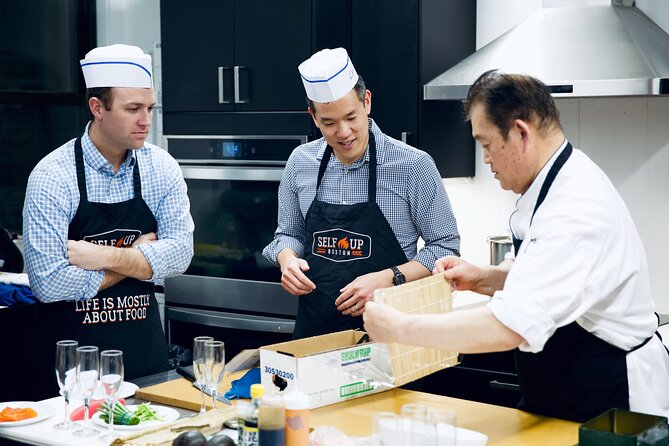
This experience is run by a provider called Selfup. The teaching team varies by session, but names you might see include Oliver, Danny, Chris, Armando, Edgar, Paige, and Ashley. What’s consistent across those instructors is a warm, practical teaching style.
Many of the chefs were described as professional, funny, and super helpful in the kitchen. You also get tips and tricks as you work. That’s important. A good sushi workshop doesn’t just say do this. It explains how to fix it when it’s going wrong.
If you’re bringing a friend or a date, this matters even more. The best classes keep the mood light while still correcting your technique.
Group size and pacing: why 20 people is the sweet spot
The workshop has a maximum of 20 travelers. That’s a big deal for hands-on cooking. In small kitchens, attention gets diluted fast when the room grows.
Here, the group size is small enough that you can likely get feedback on your rolling, not just watch other people from across the counter. That makes the workshop feel personal, even though you’re not there one-on-one.
Pacing matters too. Over 3 hours, you have time to learn steps and still produce food worth eating. If you’ve tried a too-short cooking class before, you know the feeling: you finish with a couple decent bites and then leave wondering what you did wrong. This one is built long enough to reduce that frustration.
Price in perspective: is $120 worth it?
At $120 per person for about 3 hours, this isn’t the cheapest option in NYC. But it also isn’t a bland tasting or a quick demo.
You’re paying for:
- Chef-led technique practice (especially rolls and presentation)
- A guided understanding of Japanese dishes and culture
- Help with chopstick use so you can enjoy the meal
- The chance to sit down and eat what you make, not just sample
In NYC, $120 for a guided cooking workshop where you leave with real skills can be good value, especially if you’ll actually repeat what you learned at home. If you’re the type who cooks regularly, sushi can be expensive to order out. So one strong lesson can offset a chunk of future dinners.
It’s also a good value for dates because it replaces a restaurant meal with an activity. If you’ve ever felt restaurant sushi is too easy to consume without learning anything, this gives you that hands-on payoff.
Still, because the experience is non-refundable, you should only book if your schedule is likely locked.
Practical details: what to know before you go
This is an English-offered class with a mobile ticket. Confirmation is received at booking. Service animals are allowed, and it’s near public transportation. The activity ends back at the meeting point.
The workshop requires good weather, and if it’s canceled due to poor weather, you’ll be offered a different date or a full refund. That’s a little surprising for something that sounds indoor, but it’s what’s stated in the policy. If you hate schedule risk, keep an eye on your email and don’t wait until the last hour to plan transit.
Since the experience is non-refundable and unchangeable for any reason, treat it like you would a booked show. Commit thoughtfully.
Tips to get the most out of your sushi class
If you want this to stick, come ready to learn, not just to have fun.
Here’s how to make the most of the time you’re given:
- Watch how the chef holds tools and food, then copy the grip before you worry about speed
- Slow down during rolling. Tightness beats speed every time
- Ask questions when you see others struggling. It often signals what beginners miss
- Focus on presentation cues. Sushi looks simple, but it’s about clean lines
- If chopsticks are tough, lean into that part of the lesson. You’ll feel more confident at the meal
- Take mental notes on sushi rice handling. The biggest home-cooking difference is usually the rice texture and temperature
And if you’re the type who loves to cook for others, the class gives you a strong framework. Once you know the basic mechanics, you can start swapping fillings and practicing plating without feeling lost.
Date night or team building: when this workshop fits best
This class works best if you want an experience with:
- A fun social atmosphere
- A real skill to take home
- Food you get to enjoy immediately
For dates, it’s a great middle ground. You’re together, but you’re not trapped in a quiet restaurant. You’re doing something. Then you eat the results.
For groups, the small size and structured teaching make it feel doable even if not everyone is comfortable in a kitchen. It’s been used for events where people wanted something interactive and delicious.
If you want a private, luxury chef service or a super formal omakase-style experience, this may feel more hands-on and casual. But if you want to learn, it’s a strong fit.
Should you book the Sushi Workshop for Home Chefs in NYC?
If you’re a sushi fan who’s tired of ordering the same rolls and hoping someday you can make them at home, I think you should book this. The combination of hands-on rolling, presentation coaching, and chopstick instruction makes it more than a novelty night out. And the fact that you sit down to eat what you make turns learning into a meal you’ll remember.
Book it if:
- You want practical sushi skills for home cooking
- You’re planning a date night or special occasion
- You like structured teaching with time to practice
- You prefer smaller groups (max 20)
Skip it or reconsider if:
- Your plans are shaky and you can’t risk a non-refundable booking
- You’re expecting a super long, restaurant-style show or a totally solo class
- You’re very sensitive to schedule changes, since the policy mentions weather and minimum traveler thresholds
If you want a workshop that ends with you feeling like you can actually roll sushi again later, this is the kind of class that can pay off fast.
FAQ
How long is the sushi workshop?
The experience lasts about 3 hours.
What time does the class start?
The listed start time is 12:00 pm.
Where do we meet for the workshop?
You meet at 325 W 37th St #12f, New York, NY 10018, USA. The activity ends back at the meeting point.
How much does it cost?
The price is $120.00 per person.
Is the workshop offered in English?
Yes, the workshop is offered in English.
What group size should I expect?
The maximum group size is 20 travelers.
Do I get a mobile ticket?
Yes, this experience uses a mobile ticket.
Is it non-refundable?
Yes. The experience is non-refundable and cannot be changed for any reason.
Are service animals allowed?
Yes, service animals are allowed.
Is there any weather-related cancellation?
It requires good weather. If canceled due to poor weather, you’ll be offered a different date or a full refund.