REVIEW · NEW YORK CITY
The Original SoHo, Little Italy, Chinatown Walking Tour
Book on Viator →Bookable on Viator
A fast 90 minutes, and you leave with context. I like that this walk links Chinatown and Little Italy through the streets people actually lived on, then backs it up with food you can taste along the way. You’ll also catch what’s new in the area near Soho, without it turning into a generic photo-op crawl.
What I love most is the small group size, capped at 15. That means you can ask questions, and your guide can steer you toward details you might miss on your own.
One thing to consider: at roughly 1 hour 30 minutes, you’re not meant to linger in each neighborhood. If you want long stops and lots of free time to wander, this is more of a focused guided tasting-and-story route than a slow neighborhood stroll.
In This Review
- Key things to know before you go
- Lower Manhattan in 90 Minutes: Chinatown, Little Italy, and Soho-adjacent style
- Spring Street Park to Columbus Park: the walk that keeps you oriented
- Chinatown on Mott and Mulberry: 1800s immigrant life plus real food
- Little Italy without losing the thread: how immigration stories connect
- Church of the Transfiguration: a small church with a long neighborhood job
- Cannoli King at Caffé Palermo: the sweet finale that feels genuinely local
- Price and value: what $49 buys you in time, stories, and food
- When this tour shines (and when to skip it)
- Should you book this walking tour?
- FAQ
- How long is The Original SoHo, Little Italy, Chinatown Walking Tour?
- What does the tour cost?
- How big is the group?
- Where does the tour start and end?
- Is a mobile ticket used?
- What food samples are included?
- Is admission included anywhere?
- Are service animals allowed?
- What’s the cancellation window for a full refund?
- How far in advance should I book?
Key things to know before you go
- Small-group pace keeps the walk moving while still feeling personal
- Mott and Mulberry Streets are your anchor for immigrant-era stories and street-level history
- Food samples are a real part of the experience, not just a token taste
- Church of the Transfiguration adds a grounded, old-Manhattan stop
- Caffé Palermo and the Cannoli King give you a classic finish with built-in local credibility
Lower Manhattan in 90 Minutes: Chinatown, Little Italy, and Soho-adjacent style
Lower Manhattan can feel like three cities at once. This tour helps you put it together fast. You start near Spring Street Park and finish around Columbus Park, so the route naturally threads through the places where Chinatown and Little Italy overlap and where people have been coming for generations.
The best part is that it’s not just streets and signage. Your guide frames what you see with stories about who arrived, where they settled, and how the neighborhood changed. That’s why I think this is a great “first Lower Manhattan” walk, even if you’ve already seen a few big-name sights.
You’ll also hear about the area’s shift toward newer art and culture hubs, especially around the Soho edge of Lower Manhattan. The goal isn’t to act like change erased the past. It’s to show how both can exist in the same block.
You can also read our reviews of more walking tours in New York City


Spring Street Park to Columbus Park: the walk that keeps you oriented
Meeting at Spring Street Park makes sense because you’re already in a walkable pocket of Lower Manhattan. You get a clean start point, and you’re not hunting around subway entrances with a confused group.
The tour ends at Columbus Park at Mulberry and Baxter Streets. That matters because you’re finishing near a place where it’s easy to grab a snack, move on to your next plan, or head back toward transit without backtracking.
Also, you’ll get a mobile ticket, which is simple on your phone. No paper chase, no lost confirmation emails.
And because the group is kept to a maximum of 15, you usually feel like you’re following a guide who can respond in real time, not herding a crowd.
Chinatown on Mott and Mulberry: 1800s immigrant life plus real food
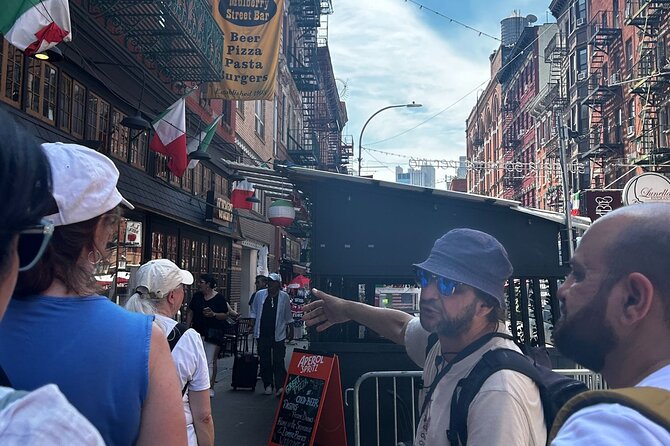
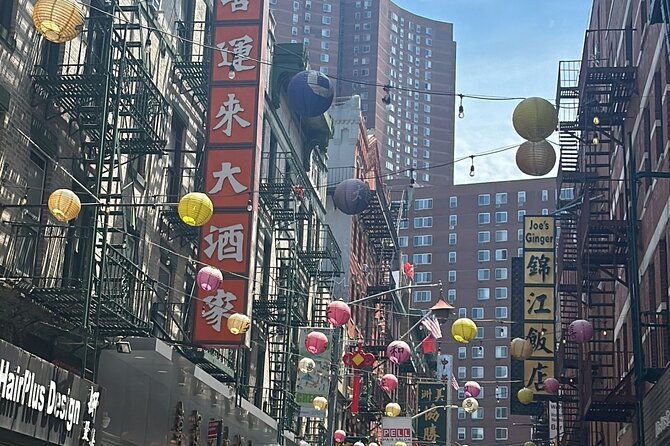
Your first stop is Chinatown, centered on Mott and Mulberry Streets. This is one of the best areas in the city for getting street-level texture. You’ll see the part of the neighborhood that’s been preserved over time and also the edges where modern art and architecture show up.
The guide’s focus is what life was like for immigrants arriving in the 1800s. That’s the key: you’re not just reading a list of facts. You’re getting stories tied to the buildings and the street layout around you.
Then come the bites. You’ll refine your palate with a mix that typically includes:
- authentic Chinese pork buns
- Chinese dumplings
- and other savory samples along the way
This is where the tour earns its price. Sampling food is not only fun; it’s a quick way to understand how people built community. You’re tasting traditions that made the neighborhood’s identity.
One small practical note: because this is a guided stop-and-go tasting format, it’s smart to come hungry but not ravenous. You’re scheduled for multiple foods across the route, and you’ll want to enjoy each one rather than rush through them.
Little Italy without losing the thread: how immigration stories connect
The Little Italy portion stays anchored to Mott and Mulberry Streets as well. That continuity is smart. Instead of treating Chinatown and Little Italy like two totally separate theme worlds, the tour shows how they sit close together, overlap, and evolved.
You’ll hear more about immigrant life as people arrived and built businesses and routines. That historical frame is what keeps the walk from feeling like a checklist of famous spots.
Food sampling continues here too, and this is where you’ll likely spot the contrast between savory and sweet:
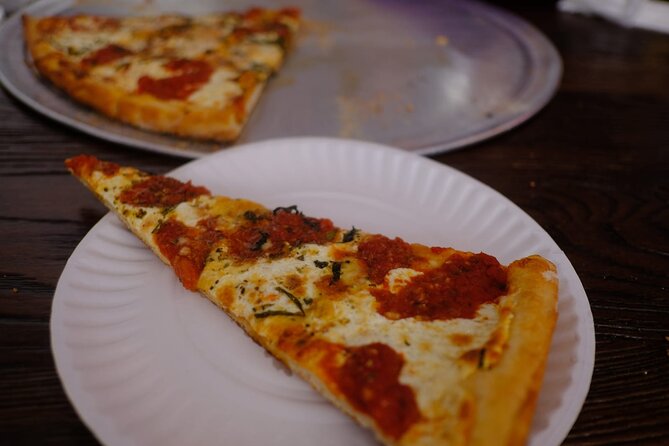
- real New York-style pizza
- Italian gelato
- and more items that keep the tour moving
In other words, you’re getting a “taste map” of Lower Manhattan rather than just a route. If you like learning through food, this format fits you well.
A possible drawback is also tied to pacing. The Little Italy stop is about 30 minutes, so it’s enough to learn and taste, but not enough to browse shops slowly. If you want to shop for souvenirs, plan to do that after you finish the walk.
Church of the Transfiguration: a small church with a long neighborhood job
At the Church of the Transfiguration, you get a different kind of context—spiritual life and community continuity. This church was completed in 1801, and it served as a center of worship for immigrant groups in the neighborhood for over 200 years.
That’s not a throwaway stop. It adds depth to the story you’ve been hearing on the streets. When you listen to immigration history while also standing in a place built so long ago, the facts land differently.
The visit is brief—about 10 minutes—so it’s not a long museum-style experience. But it’s the kind of stop that gives you a mental picture of how daily life might have looked beyond the restaurants and shops.
If churches and local landmarks are your thing, you’ll likely enjoy this moment more than you expect, because it’s tied directly to the immigrant narrative the guide has been building all along.





Cannoli King at Caffé Palermo: the sweet finale that feels genuinely local
Your last scheduled food stop is Cannoli King at Caffé Palermo. This is where the tour shifts into celebration mode—without going overboard.
Here’s the local credibility baked into the stop: Caffé Palermo has provided pastries since 1973, and it’s home to the Cannoli King for 51 years. You’re not just buying dessert; you’re landing at a spot with a track record in the neighborhood.
This is a 10-minute stop with cannoli included. That makes it easy to plan. You can usually treat it as your ending snack, then head out with a satisfied “we did it” feeling.
If you’re someone who usually skips dessert, this stop is a good argument to reconsider. Not because every cannoli is automatically perfect, but because this one is tied to a specific place and history in the neighborhood.
Price and value: what $49 buys you in time, stories, and food
At $49 per person, this tour sits in the “value for an organized experience” range—mostly because food is part of the package. You’re not paying only for walking and storytelling.
Here’s what you’re paying for in practical terms:
- a guided route with expert narration (so you understand what you’re seeing)
- a small group cap of 15, which improves the experience quality
- food samples along the way (including pizza, dumplings, gelato, and cannoli)
- a short, efficient time commitment of about 1 hour 30 minutes
Even the stop structure supports that value. Some parts include free admission, while the cannoli stop specifically has the pastry included. That reduces the mental math of deciding what to buy and where.
Also, you’ll want to book ahead. This is typically booked about 7 days in advance, which suggests it fills reliably.
So if you’re trying to choose between piecemeal “snack hopping” on your own and a guided tasting with historical context, this tour is a tidy middle ground: organized but still street-level.
When this tour shines (and when to skip it)
This is a great match if you want:
- a guided way to understand Chinatown and Little Italy as connected neighborhoods
- history tied to real streets like Mott and Mulberry
- multiple tastings without planning each stop yourself
- a small-group atmosphere where questions feel welcome
It may be less ideal if you prefer:
- long, slow wandering with lots of free time
- a tour that focuses on one neighborhood for most of the time
- a flexible route where you can easily go off-script for shopping and sitting down
Should you book this walking tour?
I’d book it if this is your priority: learn fast, eat well, and get oriented in Lower Manhattan. The food samples plus immigrant-era stories plus a small landmark stop (the Church of the Transfiguration) make the time feel earned.
I’d skip it if your main goal is shopping for an extended period or if you hate structured pacing. This is a planned walk that moves, tastes, and explains.
If you do book, come hungry enough to enjoy the samples, wear shoes you can handle on foot, and be ready to look at the street corners like they have reasons—because your guide will show you they do.
FAQ
How long is The Original SoHo, Little Italy, Chinatown Walking Tour?
It runs for about 1 hour 30 minutes (approx.).
What does the tour cost?
The price is $49.00 per person.
How big is the group?
The tour has a maximum of 15 travelers.
Where does the tour start and end?
It starts at Spring Street Park (Spring St, New York, NY 10013) and ends at Columbus Park on Mulberry & Baxter St (New York, NY 10013).
Is a mobile ticket used?
Yes, the tour uses a mobile ticket.
What food samples are included?
The tour includes food samples such as Chinese pork buns and dumplings, New York-style pizza, Italian gelato, and cannoli.
Is admission included anywhere?
The ticket information indicates admission ticket is free for the Chinatown and Little Italy stops, and cannoli is included at Cannoli King.
Are service animals allowed?
Yes, service animals are allowed.
What’s the cancellation window for a full refund?
You can cancel up to 24 hours in advance for a full refund. If you cancel less than 24 hours before the start time, the amount paid is not refunded.
How far in advance should I book?
On average, it’s booked about 7 days in advance.

![[Taro's Origami Studio] 30-Minute Origami Experience - Brooklyn, New York - The touchscreen menu: picking a model without the guesswork](https://img.discoveringnyc.com/wp-content/uploads/taros-origami-studio-30-minute-origami-experience-brooklyn-new-york-400x267.jpg)