REVIEW · NEW YORK CITY
Walking tour in Manhattan Brooklyn Bridge and Waterfront
Book on Viator →Operated by SCOTT'S NEW YORK LLC · Bookable on Viator
That bridge walk changes how you see NYC.
This small-group walk (max 30) takes you from the City Hall area to the Brooklyn waterfront with a guide offering a local Brooklyn resident perspective, plus lots of time to stop for photos. You’ll also get practical help on what to do next, including where to eat when you’re done.
My favorite part is how the guide ties the sights to real people and real building work—especially on the bridge itself, with plenty of mid-walk photo moments. The only real drawback is logistics: it ends in Brooklyn Heights, so you’ll want a plan for getting back to Midtown or downtown once you’re finished, especially if you don’t want to rely on guesswork.
In This Review
- Key things you’ll notice fast
- Why This Manhattan-to-Brooklyn Walk Feels Like a Local’s Day
- City Hall to Woolworth: Starting With Washington-Era Manhattan
- Crossing the Brooklyn Bridge: 40.5 Meters of Views and Building Details
- DUMBO Under the Manhattan Bridge: Best Photo Op With Real Neighborhood Texture
- Empire Fulton Ferry State Park: A Breather Beneath the Bridge
- Brooklyn Bridge Park’s 85 Acres: Park Design That Makes the Water Feel Close
- Brooklyn Heights Promenade: The Classic Skyline Angle to End With
- Pace, Shoes, and the 3-Mile Reality
- Value Check: Is $29 a Good Deal Here?
- Who Should Book This Walk (and Who Should Skip It)
- Should You Book This Brooklyn Bridge and Waterfront Tour?
- FAQ
- How long is the Brooklyn Bridge and waterfront walking tour?
- How much walking should I expect?
- Where does the tour start?
- Where does the tour end?
- What happens if the weather is poor?
- How big is the group?
Key things you’ll notice fast
- A guide-led bridge story, not just a photo line across the East River
- DUMBO + Manhattan Bridge views timed for iconic pictures
- Plenty of photo stops, with your guide helping with photos
- A smart mix of old landmarks and newer park design in Brooklyn Bridge Park
- An ending in Brooklyn Heights Promenade where the skyline angle is hard to beat
Why This Manhattan-to-Brooklyn Walk Feels Like a Local’s Day
This is one of those NYC experiences where the city finally makes sense. You start on the Manhattan side with big civic landmarks, then you move onto the Brooklyn Bridge for views that don’t feel like postcards. Along the way, you’re not just watching buildings—you’re hearing what mattered, who built it, and why these places turned out the way they did.
The experience works because the pacing is human. You’ll have time for photos, and your guide is also there to answer questions and point you toward food and drinks afterward. Guides here also seem to tailor their approach to what the group likes, which helps when people are focused on architecture, photos, or pure history.
One more value point: you’re not stuck for hours in one spot. You walk through multiple neighborhoods, so you get a sense of how Manhattan and Brooklyn “talk” to each other across the water.
You can also read our reviews of more walking tours in New York City



City Hall to Woolworth: Starting With Washington-Era Manhattan
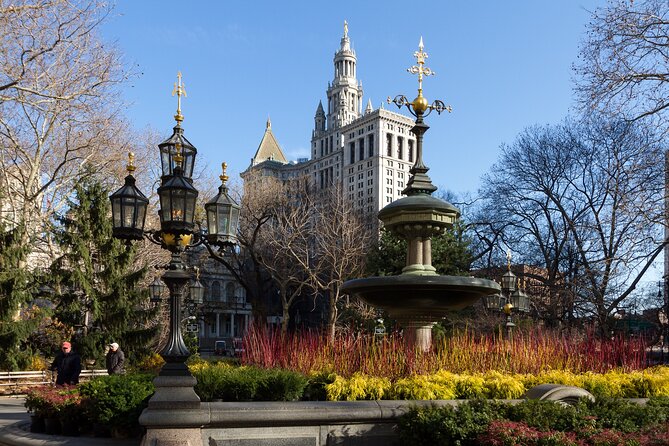
You begin near the Jacob Wrey Mould Fountain at 43 Park Row, right by the energy of Downtown. The first stop centers on the City Hall area, where the Declaration of Independence was read and the American Revolution era is tied to this neighborhood.
This opening matters more than it sounds. When you understand why this section of Manhattan was a power hub, the bridge crossing later feels less random. Even if you’re more of a photo-first person, those early landmarks give you something to hang your attention on as you start walking toward the East River.
Expect your guide to point out nearby points of note such as City Hall, the Municipal Building, the Woolworth Building, St Paul’s Chapel, and Tweed Courthouse. It’s a good setup: you get context before you get views.
Crossing the Brooklyn Bridge: 40.5 Meters of Views and Building Details
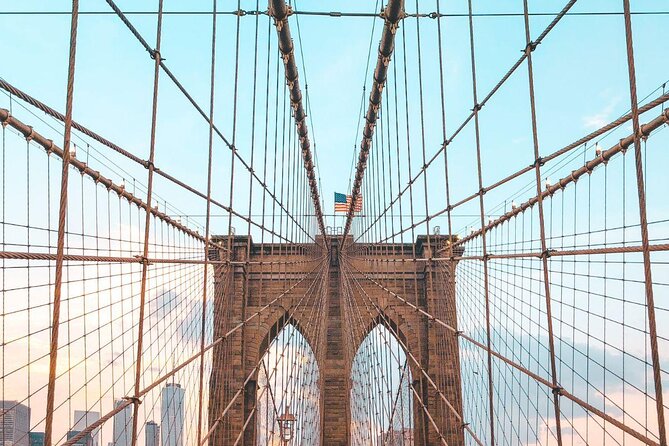
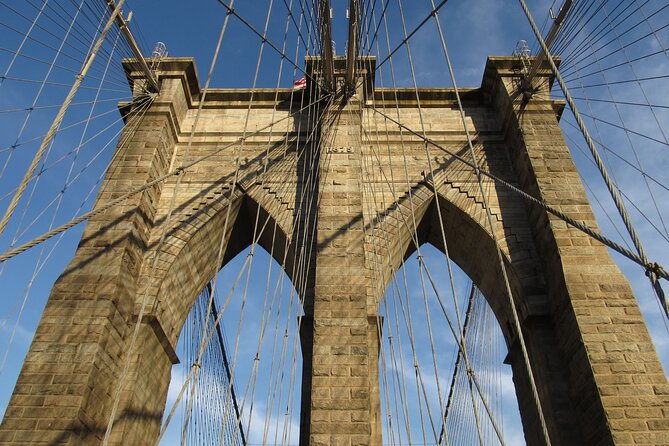
Once you hit the Brooklyn Bridge, the scale hits you right away. The bridge rises about 133 feet (40.5 meters) above the East River, and that height gives you the kind of panorama that’s hard to replicate from ground level. You’ll see both the Manhattan and Brooklyn skylines, plus the busy harbor area stretching around you.
What makes this crossing worth booking is the way the story is delivered. This bridge took 16 years to build, and the guide frames it as a monument to science and art—not just a transportation project. You’ll also get the small “look here” details that turn a long bridge walk into something you can actually pay attention to.
Photo time here is not an afterthought. You can stop, frame the skyline, and catch the bridge’s geometry from angles you’d miss if you were walking on your own. If you like comparing views as you move forward, this is the part of the walk that rewards patience.
DUMBO Under the Manhattan Bridge: Best Photo Op With Real Neighborhood Texture
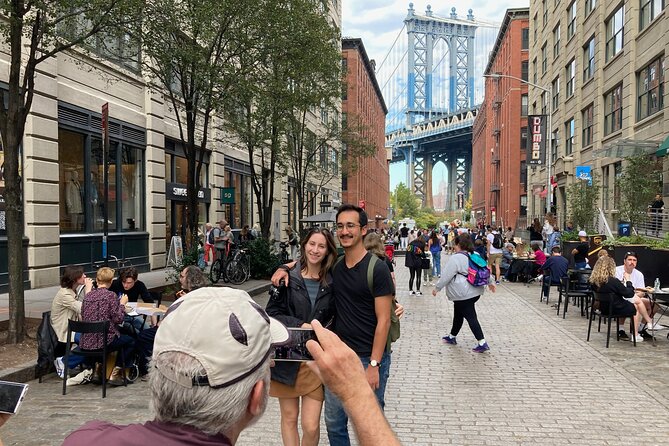
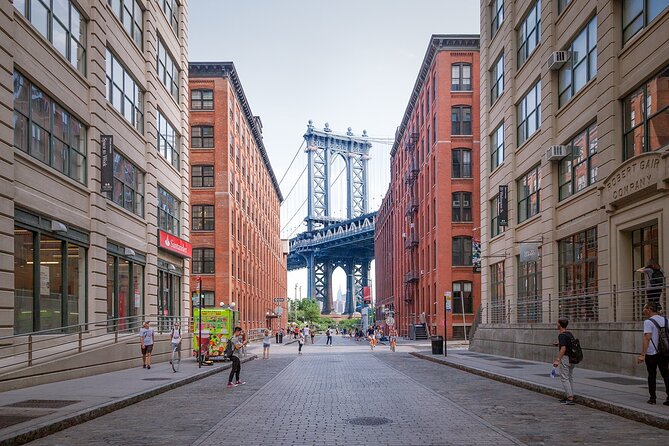
After the bridge, the tour shifts into DUMBO, a neighborhood famous for photo angles and old industrial structures. You’ll stop for the classic Manhattan Bridge view from under the bridge, with historic warehouses and factory buildings around you.
This is your “okay, I get why people come here” moment. DUMBO has changed a lot over time—those old industrial shells now hold shops, restaurants, and some very desirable lofts. Your guide’s help makes a difference because you’re not just finding a spot; you’re learning what you’re seeing while you shoot.
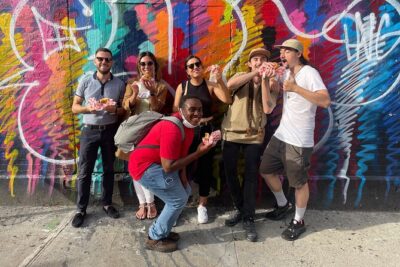
One practical bonus: your guide will take pictures of your group. That’s useful if you’re traveling as a couple or in a small family unit and don’t want to keep hunting for strangers with a phone.
If you’re someone who enjoys the visual side of travel, DUMBO is where you’ll feel the tour delivering on “lots of great pictures” without turning it into a rush job.
Empire Fulton Ferry State Park: A Breather Beneath the Bridge
Empire Fulton Ferry State Park is short enough to keep momentum, but it’s placed well. You get a break under the shadow of the bridge and a change in scenery, with the water and the surrounding riverfront atmosphere doing a lot of the relaxing work.
This stop also ties back to the bridge’s human story—especially the Roebling family. If you’re a history nut, this is a nice moment to connect names to a place you’ve just crossed. Even if you’re not, it helps the bridge feel like something built by people, not just something you walk over.
There’s a simple rhythm here: move, look, learn, pause, repeat. That rhythm keeps the whole walk feeling manageable even though you’re doing real distance.





Brooklyn Bridge Park’s 85 Acres: Park Design That Makes the Water Feel Close
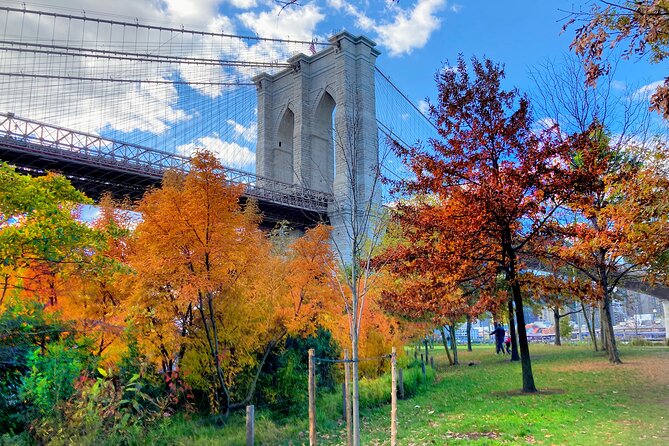
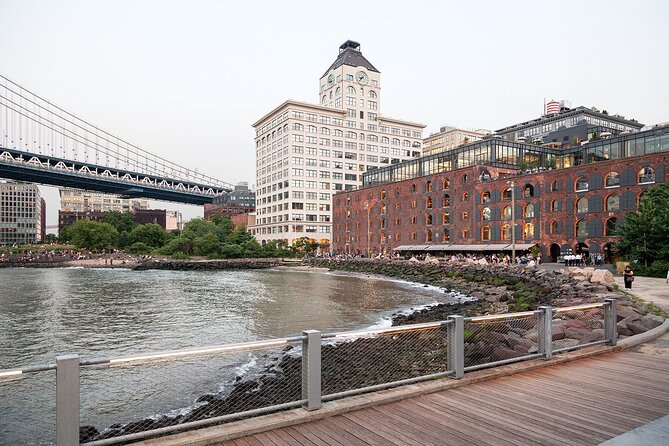
Brooklyn Bridge Park is where the scenery starts to feel modern and outdoorsy. This space covers 85 acres and mixes woodlands, lawns, tidal pools, sports areas like basketball courts and soccer fields, and open viewpoints for the skyline.
Your guide will connect the park to Brooklyn’s shipping roots, then point out sustainable design principles used in the park. That blend is what makes the stop satisfying: you’re not just seeing a pretty park, you’re learning why the park looks the way it does and how it’s meant to function long-term.
This stop is also a good “energy check.” If you’re traveling with kids or you’re more photo-focused than history-focused, the park gives you options—wide viewpoints, open walking paths, and plenty of places to take a breather.
Brooklyn Heights Promenade: The Classic Skyline Angle to End With
The walk finishes at Brooklyn Heights Promenade near Montague St & Pierrepont Pl. This is one of those NYC viewing spots where the Manhattan skyline looks framed, almost staged.
The promenade is a cantilevered balcony over the waterfront, so you get an elevated feeling without needing to climb stairs for long stretches. You’ll also see bridges from this vantage point, which helps the whole trip “click” into one connected story: Downtown civic Manhattan, the bridge construction and engineering, then the waterfront neighborhoods you walked through.
End-point location is a key part of the experience. After you arrive, you can stay in the neighborhood for dinner—there are plenty of restaurants nearby, and a pizza recommendation is often a popular choice in this area.
Just remember the logistics: because you end in Brooklyn Heights, you should plan how you’ll return to your hotel. If you don’t, it’s easy to lose time right when you’re ready to eat.
Pace, Shoes, and the 3-Mile Reality
This tour is roughly 2 hours 30 minutes to 3 hours, with about a 3-mile walk and enough steps and inclines to matter. They recommend moderate physical fitness and comfortable shoes, and that advice is spot on.
From what I’ve seen in how guides manage groups here, the pace is set to keep things moving but not frantic. You’ll have stops where you can reset your legs and take photos, and your guide also tends to help with breaks when needed.
If you’re traveling with someone who hates walking, this might feel like too much. If you’re okay with a brisk urban stroll, this is doable and even enjoyable—especially because you’re not walking in a single straight line with nothing to look at.
My practical tip: wear shoes you trust for uneven sidewalks and keep your phone charged. You’ll want it during bridge views and again in DUMBO.
Value Check: Is $29 a Good Deal Here?
At $29 per person, you’re not paying for museum entry or a complicated ticketed attraction. You’re paying for a guided experience that does three big things well: it connects multiple neighborhoods, it explains what you’re seeing, and it builds in time for photos.
Free admission is listed for the stops, which means you’re mostly paying for the guide’s time and the structure of the walk. You also get a mobile ticket, and the tour keeps group size capped at 30, which helps the experience feel personal rather than chaotic.
In a city where you can wander independently, the value comes down to this: you’ll understand the bridge and the waterfront more quickly with a guide than you would by guessing. Plus, you’ll leave with real food and drinks ideas for later, not just generic advice.
If your goal is a quick skyline hit with minimal walking, this may not match your style. If your goal is a guided, story-driven walk with standout viewpoints, this price feels fair.
Who Should Book This Walk (and Who Should Skip It)
This tour is a great fit if you:
- love architecture, big bridges, and engineering stories
- want photo-worthy stops without sprinting between them
- enjoy a neighborhood walk that ends somewhere you can keep exploring
It’s also a solid choice for couples and small groups because your guide can help take photos, and the route gives you plenty of “we’ll remember this later” moments. Families can do it too, as long as everyone is comfortable with walking and steps.
You might skip it if you know you struggle with distance, if long stairs and inclines are a problem, or if you want a round-trip route that finishes back near where you started.
Should You Book This Brooklyn Bridge and Waterfront Tour?
I’d book it if you want the bridge experience done the smart way. Walking the Brooklyn Bridge alone is possible, sure, but this adds what makes it special: context, photo timing, and the kind of neighborhood storytelling that helps you enjoy both sides of the river.
I’d hold off if you hate planning. Because you start in Downtown Manhattan and end in Brooklyn Heights, you’ll want to know your return route ahead of time. Map it before you go, so you can shift straight into dinner mode at the end.
If you’re comfortable walking about 3 miles over 2.5–3 hours, this is one of the best-value ways to see NYC’s waterfront and neighborhoods connect.
FAQ
How long is the Brooklyn Bridge and waterfront walking tour?
It runs about 2 hours 30 minutes to 3 hours.
How much walking should I expect?
Plan on walking about 3 miles, and bring comfortable shoes.
Where does the tour start?
The meeting point is Jacob Wrey Mould Fountain, 43 Park Row, New York, NY 10038.
Where does the tour end?
The tour ends at Brooklyn Heights Promenade at Montague St & Pierrepont Pl, Brooklyn, NY 11201.
What happens if the weather is poor?
The experience requires good weather. If it’s canceled due to poor weather, you’ll be offered a different date or a full refund.
How big is the group?
The tour has a maximum of 30 travelers.