REVIEW · NEW YORK CITY
World Trade Center Area Underground Art and History Tour
Book on Viator →Operated by Ann McDermott · Bookable on Viator
Follow the art under Lower Manhattan.
This World Trade Center area underground tour turns commuting corridors into living history, with stops tied to the PATH station, the Fulton Transit Center area, and the sacred sites nearby. I especially like the chance to understand the architecture and memorial details you’d otherwise zip past, and the small-group format that lets you ask questions as you go, guided by Ann McDermott.
One thing to plan for: part of the experience runs through the working transit system, so you should expect a $2.90 subway fare for the transit portion connected to the artwork, plus some walking on station levels.
In This Review
- Key highlights at a glance
- Entering Lower Manhattan through the working transit maze
- World Trade Center Station and the Oculus: where transit becomes the exhibit
- The underground transit art segment (and the one fare to expect)
- Fulton Transit Center connections: how the guide keeps it from feeling random
- Saint Paul Chapel: prayers, recovery, and names you can’t skip
- Why this stop works on a guided walk
- St. Peter’s Church: an oldest congregation lens on rebuilding
- What you gain from Ann McDermott and a 10-person cap
- Timing and logistics: the 2:00 pm start and how to dress
- Price: what $44 buys you in real-world terms
- Who should book this tour (and who might not)
- Should you book the World Trade Center Area Underground Tour?
- FAQ
- Where does the tour start and end?
- What time does the tour begin?
- How long is the tour?
- How much does it cost?
- What stops will we visit?
- Is admission included for churches?
- Do I need to pay any extra for the transit portion?
- Is there a group size limit?
- What’s the weather plan?
- What is the cancellation policy?
Key highlights at a glance
- Oculus and PATH connections: see how the transit hub fits into the post-9/11 landscape
- Memorial cues in plain sight: footprints of One and Two World Trade Centers and the damaged globe in the plaza
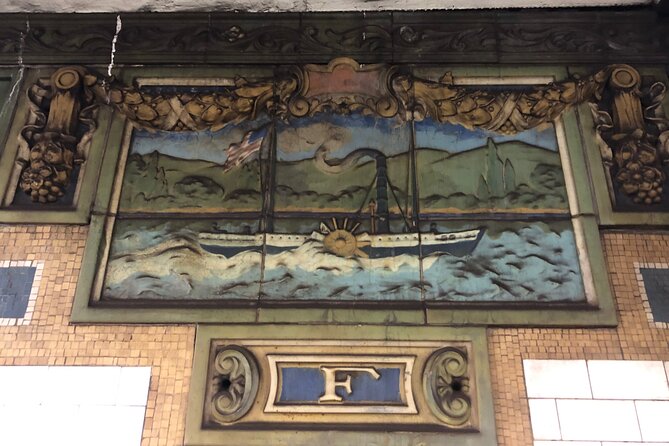
- NYC Transit underground art: installations you experience while moving through the system
- Saint Paul Chapel, two histories in one room: Revolutionary-era roots and 9/11 recovery moments
- St. Peter’s Church memorials: a look at rebuilding and remembrance
- Max 10 people with Ann McDermott: more time for questions and slower pacing where needed
Entering Lower Manhattan through the working transit maze
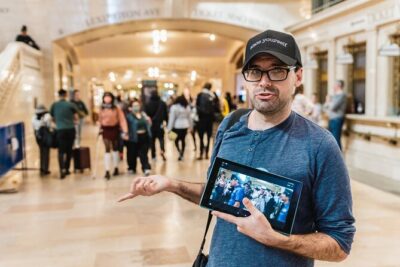
If your NYC mindset is usually: walk outside, look up, take photos, head to the next landmark—this tour nudges you in a different direction. You spend your time where most people only pass through: inside stations and underground passageways. That shift matters. Art and history here aren’t hanging off to the side like a museum exhibit. They’re integrated into the commute, so the experience feels practical and real—like the city is still functioning while it remembers.
The tour runs about 1 hour 30 minutes, starting at 209 Broadway at 2:00 pm, and ending near 192 Broadway at the Corbin Building at John Street. Because it’s small group (max 10), Ann McDermott can keep the pace human and answer questions without turning it into a lecture you can’t pause.
You also get a key “value multiplier”: the tour includes admission to the New York City transit network. Translation: you’re not just walking from one sight to the next—you’re using the city’s transit web as part of the story. That’s a smart way to see Lower Manhattan efficiently, even if you’re short on time.
You can also read our reviews of more historical tours in New York City



World Trade Center Station and the Oculus: where transit becomes the exhibit
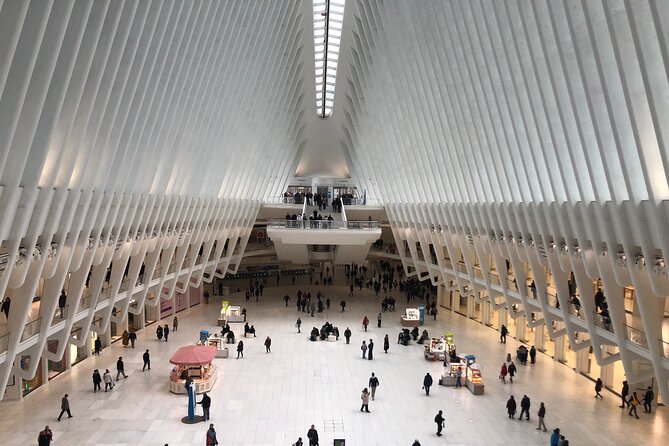
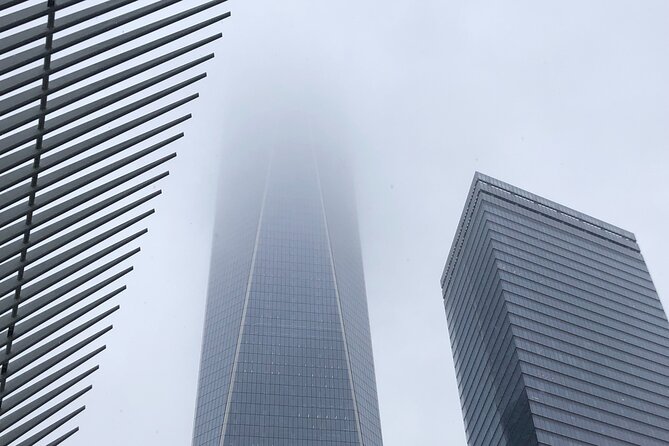
The first major moment is World Trade Center Station (PATH) and the Oculus. Even if you’ve seen the Oculus from outside, stepping inside changes how you understand it. You get to see the flow of commuters and the design that makes this huge hub feel navigable. You’ll also have a clear look at how you can catch the PATH train to New Jersey or other major routes tied into New York’s transit system.
What I like most here is that the guide doesn’t treat the station as just a backdrop. The architecture and the memorial elements are explained as one combined experience. Expect to see:
- the reflecting pools
- the original footprints of One and Two World Trade Centers
- the damaged globe from the plaza area across the street
These details can be moving even if you’ve read about 9/11 before. The difference on this tour is that you’re not only seeing objects—you’re learning what they represent and how they’re placed in the rebuilt space.
The underground transit art segment (and the one fare to expect)
After the Oculus and plaza-area observations, you’ll move into underground passageways of NYC Transit to see art installations designed for the route itself. This is one of the most “only-in- NYC” parts of the tour: you’re noticing materials, messages, and design choices in the exact places where people normally rush.
Here’s the practical consideration: the transit portion connected to the artwork requires one subway fare of $2.90. Even if the tour includes admission to the transit network, plan your budget for that extra fare and have a payment method ready.
If you’re the type who enjoys noticing subtle design choices—text, surfaces, and symbolism—this part tends to be the payoff. If you’re expecting a bus-and-shuffle sightseeing style, the underground time might feel more like “seeing the city at work,” which is exactly why many people end up loving it.
Fulton Transit Center connections: how the guide keeps it from feeling random
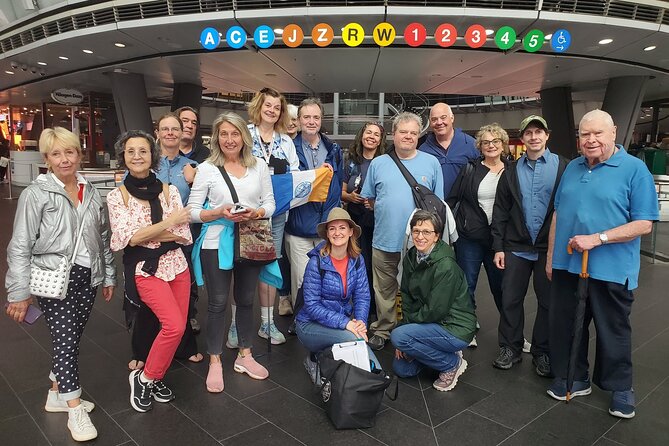
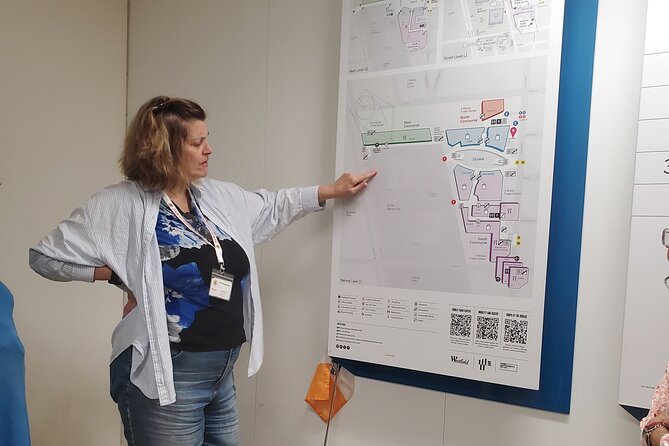
This tour is anchored around the World Trade Center area, but it doesn’t treat the route like a checklist of unrelated stops. Instead, Ann McDermott helps you understand how Fulton Transit Center and the World Trade Center Station area connect as a functional web. You’ll be walking through areas that feel like a maze at first, but the guide’s narration helps you build a mental map fast—what each space is for, and how it shapes your movement.
That “build your bearings” effect matters because Lower Manhattan transit can be confusing. A good guide turns wrong turns into learning opportunities, and the small-group size makes it easier to keep everyone together without leaving people behind.
If you’re short on time and you want something more meaningful than a quick look and a photo, this is a smart use of your afternoon.
Saint Paul Chapel: prayers, recovery, and names you can’t skip
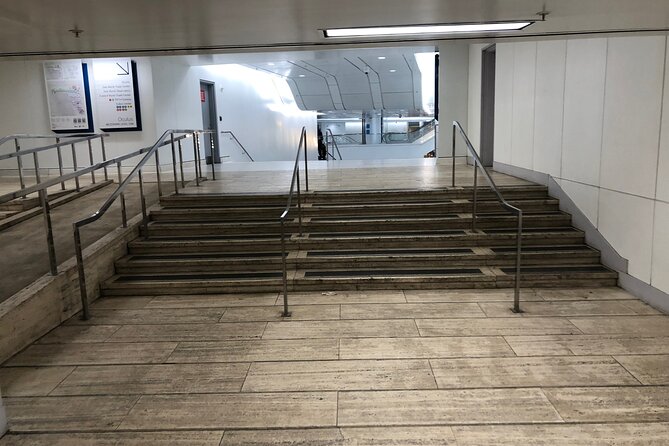
The next stop is Saint Paul Chapel, and it’s a quick one—about 15 minutes. But don’t let the short time fool you. This is a place where the walls hold multiple eras at once.
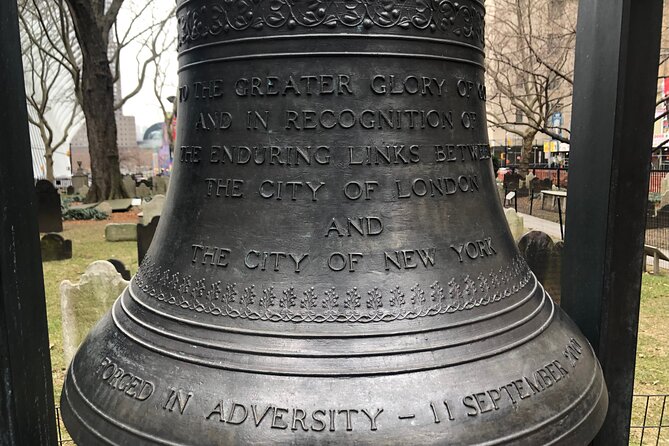
You’ll learn that Saint Paul Chapel was sacred ground where George Washington prayed after being sworn in as President. That’s already a heavy-hitter historical fact. Then the story expands into 9/11 recovery: it also became a place where workers clearing debris rested as they worked.
And if you’re the kind of person who likes to feel the layers of a neighborhood, the churchyard adds another dimension. Many Revolutionary War heroes and prominent New Yorkers are buried there. In other parts of NYC, you might need to plan a separate cemetery visit. Here, it’s integrated into the stop.





Why this stop works on a guided walk
This isn’t just a “look at the building” stop. You’re given context for why people would have come here—before 9/11 and during the immediate aftermath. That context can change how you look at even small details like plaques, memorial spaces, and how people move through the church.
Also, admission here is free, so it’s a nice value layer within the overall tour price.
St. Peter’s Church: an oldest congregation lens on rebuilding
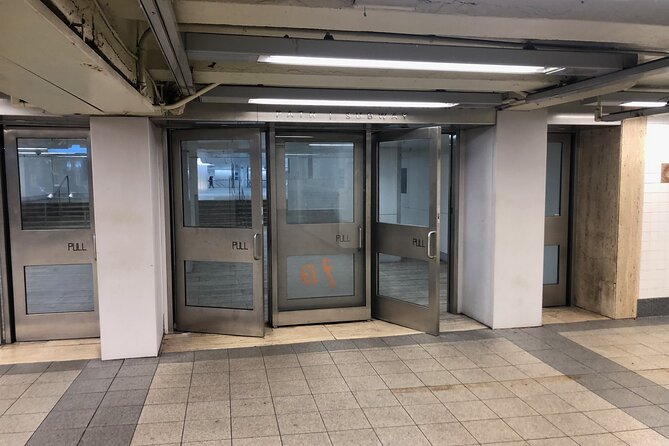
Next up is St. Peter’s Church, also about 15 minutes. This is the stop that rounds out the religious and memorial theme with a different angle.
St. Peter’s is described as the oldest Catholic congregation in NYC, and you’ll see several memorials connected to people involved in rebuilding NYC after 9/11. That shift—from the immediate recovery and Revolutionary-era connections at Saint Paul Chapel to rebuilding memorials at St. Peter’s—creates a timeline feeling without needing extra stops.
Admission is not included for St. Peter’s, so you should plan on paying if you want to go inside. The good news: the time window is built into the tour rhythm, so you aren’t left hunting for hours-long church visits during your already-tight schedule.
What you gain from Ann McDermott and a 10-person cap
A lot of “underground” tours fail because they turn into a fast stampede. Here, the group size matters. With a maximum of 10 travelers, you can ask questions and get answers that fit your pace, not a stopwatch.
Ann McDermott is the guide named for this experience, and the most consistently praised thing about her style is how she connects art, architecture, and history in a way that makes you actually notice what’s around you. That’s a rare skill in Lower Manhattan, where people walk quickly through spaces that are quietly loaded with symbolism.
There’s also practical care built into how the tour is handled. If someone needs to use elevators or alternative routes due to mobility needs, Ann can work with that approach. The tour is listed as requiring moderate physical fitness, so it’s not “sit-down only,” but it’s not rigid either.
For you, that translates into a better experience even if you’re not a “technical history” person. You can just follow the route, absorb the stories, and still feel like you understood what you saw.
Timing and logistics: the 2:00 pm start and how to dress
This tour starts at 2:00 pm and runs roughly 1 hour 30 minutes. That timing is useful. It places you in the afternoon for a Lower Manhattan circuit without needing a full day. If you’re also doing other sights nearby, it’s a great mid-window activity: you’ll come out with a better understanding of what you’ll see next.
Weather matters. The experience notes it requires good weather. That means if you book on a day with rain risk, you may need flexibility. Since you’ll spend time around transit entrances and outdoor-adjacent memorial elements (even if much is indoors), comfortable shoes matter.
Bring a layer. Stations can feel cooler than you expect, and passageways often have that echoing, temperature-shift effect.
Price: what $44 buys you in real-world terms
At $44 per person, this isn’t a budget “walk and go” tour. But it’s also not trying to be an expensive museum ticket day. Here’s what you’re buying:
- Guided interpretation of memorial and architectural details (not just pointing at them)
- A small group format with room for questions
- Transit-network admission, which changes the value equation by making transit part of the tour experience
- Access to multiple stops in a compact window, including Saint Paul Chapel (free admission)
The one clear cost consideration is the $2.90 subway fare that may be required for the transit-connected portion of the art. It’s a small add-on, but it should be in your planning so the math stays clean.
Overall, I see this as good value if you want to understand Lower Manhattan beyond surface sightseeing. If you’re just hunting for famous exterior photo spots, you might get more from a different kind of tour. But if you like architecture, design, and how cities tell stories through movement, the price starts to make sense quickly.
Who should book this tour (and who might not)
This is a strong match if you:
- enjoy art tied to real public spaces, especially places you’d normally ignore
- want context for major memorial areas without needing a long museum plan
- like guided walks where you can ask questions and keep moving
- want a Lower Manhattan activity that uses transit intelligently, not wastefully
It may be less ideal if:
- you want an all-indoors, fully seated experience (this is more walking and passageways)
- you strongly prefer to pay zero additional transit costs (there’s that $2.90 subway fare factor)
- you dislike active transit environments or are uncomfortable navigating stations
Should you book the World Trade Center Area Underground Tour?
I’d book it if you want a different angle on Lower Manhattan: not just monuments, but the way memorial and meaning are woven into the daily city machine. The combination of Oculus/PATH area, memorial details like footprints and the globe, and the experience of transit art in underground corridors makes it feel fresh even if you think you already know the story.
If you’re willing to work with the transit flow, pay the small added fare, and spend your time noticing details, this tour is one of the more practical ways to see the World Trade Center area with depth—without spending an entire day.
FAQ
Where does the tour start and end?
The tour starts at 209 Broadway, New York, NY 10007 and ends at 192 Broadway, New York, NY 10038, at the Corbin Building at John Street.
What time does the tour begin?
The start time is 2:00 pm.
How long is the tour?
The duration is about 1 hour 30 minutes.
How much does it cost?
The price is $44.00 per person.
What stops will we visit?
You’ll visit World Trade Center Station (PATH), Saint Paul Chapel, and St. Peter’s Church, plus the underground passageways of NYC Transit linked to the art installations.
Is admission included for churches?
Saint Paul Chapel is listed as free. St. Peter’s Church is listed as not included, so you may need to pay if you want to enter.
Do I need to pay any extra for the transit portion?
The underground transit art segment requires one subway fare of $2.90.
Is there a group size limit?
Yes. The tour has a maximum of 10 travelers.
What’s the weather plan?
The experience requires good weather. If canceled due to poor weather, you’ll be offered a different date or a full refund.
What is the cancellation policy?
You can cancel for a full refund up to 24 hours before the experience’s start time. If you cancel less than 24 hours before, the amount you paid won’t be refunded.