REVIEW · NEW YORK CITY
911 Ground Zero Tour & Museum Preferred Access
Book on Viator →Operated by New York Tours · Bookable on Viator
This walk hits Ground Zero where it happened, then climbs for the city view. You get a focused 9/11 Memorial & Museum experience tied to what you see outside, plus a plan for One World Observatory after. Expect a respectful, photo-led route around the Oculus, the World Trade Center complex, and the memorial before you go in at your own pace.
What I especially like is the way the tour uses large-format historic photos to connect the street-level layout to what people endured. Another big plus: the price includes 9/11 Museum Enhanced Access, so you’re not spending your energy on ticket lines or figuring out the best order once you arrive.
One consideration: the museum visit takes real time, and you should plan on a longer, more emotional break than a quick stop. A few people also note the museum is a separate experience within the day, so build in patience for both the walking and the indoor time.
In This Review
- Key Highlights You’ll Care About
- Ground Zero and One World Observatory in One Ticketed Day
- Meeting at 20 Dey St and Ending Inside the Memorial
- Oculus Stop: Orion of Transit, and the Human Stories Behind It
- World Trade Center Memorial Plaza: Getting Your Bearings in 40 Minutes
- Brookfield Place and Operation Aegis: The Sea Rescue Lesson
- Winter Gardens and the Eleven Tears Memorial: A Quiet, Specific Tribute
- World Trade Center Complex Wrap-Up: Survivor Tree and Building Four Questions
- National September 11 Memorial & Museum: Skip the Line, Then Go at Your Pace
- A small but important logistics heads-up
- One World Observatory Views: What You See After the Story
- Price and Value: What You’re Paying For at $79.95
- Who This Tour Fits Best (and Who Might Want Another Option)
- Tour Guide Quality: The Difference Between Hearing and Understanding
- Practical Tips for a Smooth, Respectful Day
- Should You Book 911 Ground Zero Tour & Museum Preferred Access?
- FAQ
- How long is the 911 Ground Zero tour and museum experience?
- Where does the tour start?
- Where does the tour end?
- Is the National September 11 Memorial & Museum admission included?
- Do I need to wait in line for the museum?
- Is the museum visit guided or self-paced?
- Is One World Observatory included?
- How big is the group?
- What language is the tour offered in?
- What is the cancellation policy?
- Are mobile tickets provided?
Key Highlights You’ll Care About
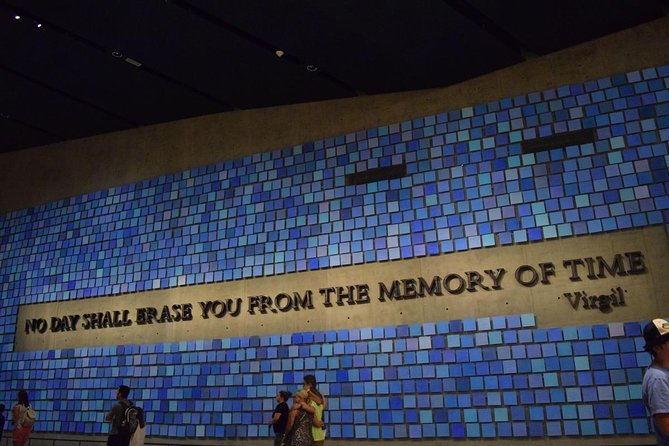
- A guided walk with photo-supported storytelling (11 x 17 inch historic images) that helps you “read” the memorial area fast.
- Skip-the-line museum access plus an escort-style entry so you can get into the National September 11 Memorial & Museum without delay.
- Lower Manhattan stops that connect the dots: Oculus, World Trade Center Memorial Plaza overlooks, Brookfield Place, Winter Gardens, and the memorial area.
- Real names and real roles in the story—including FDNY Captain John Jonas and the Dragon Fighters.
- Museum time works with your pace: the walking portion is guided, then you explore the museum self-guided.
- One World Observatory after with skip-the-line access and views from 102 stories above street level.
Ground Zero and One World Observatory in One Ticketed Day
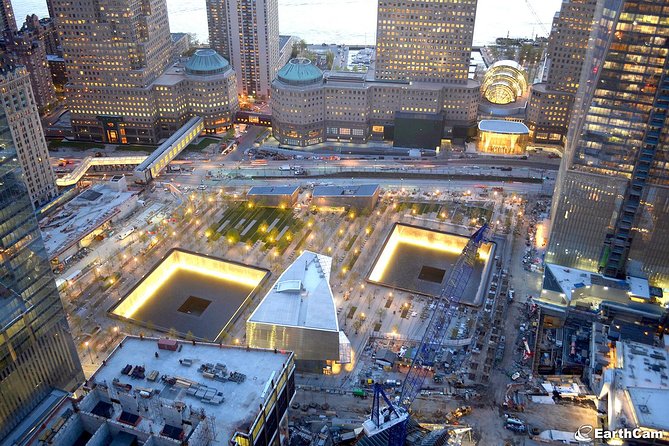
If you’re visiting New York and want a day that feels connected instead of scattered, this tour has a clear structure. You start on the street where everything changed, get guided context right where you’re looking, and then finish with a high viewpoint over the city. That mix matters because the memorial complex is powerful, but it can also feel confusing if you’re just walking around cold.
I like that the tour is built around landmarks you can actually see and orient to: the Oculus transit hub, the memorial plaza overlook, and the reconstructed areas nearby. You’re not just hearing dates; you’re learning why specific corners, buildings, and layouts matter.
The other smart piece is the museum timing. You get guidance before you enter, so once you step inside the National September 11 Memorial & Museum, you’re not wasting time deciding where to go first.
You can also read our reviews of more museum experiences in New York City



Meeting at 20 Dey St and Ending Inside the Memorial
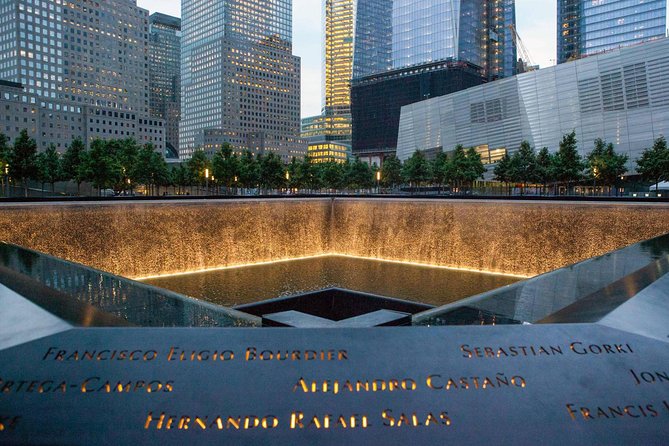
You meet at 20 Dey St, New York, NY 10007, which puts you close enough to the World Trade Center area that you can start without a long commute. The tour ends at 180 Greenwich St, and importantly, it ends inside the 9/11 Memorial. That end point is useful because it lets you continue in the memorial spaces without feeling like you must rush back to a separate exit.
This is also a small-group style tour, with a maximum of 25 travelers. That size helps your guide manage questions and keep the group together, especially in places where foot traffic and security lines can slow things down.
You also have a choice of morning or afternoon departures, so you can match it to your day plan—handy if you’re pairing this with a Broadway show or another Lower Manhattan visit.
Oculus Stop: Orion of Transit, and the Human Stories Behind It
The tour starts at the Starbucks across the street from the Oculus, described here as the most expensive subway hub in the world. That detail alone gives you a sense of scale: this is not a quiet backstreet. It’s a major public crossroads, rebuilt as part of the new downtown.
You don’t just pass through it. You get a short briefing—about five minutes—plus context for FDNY Captain John Jonas and his team, the Dragon Fighters. This is the kind of stop that can look like architecture-only if you’re on your own, but with a guide it becomes a way to anchor the bigger story: what this place meant before, and how the rebuilt downtown took shape afterward.
A practical tip: this first stop is brief by design. If you want pictures, it’s a good moment to get a quick shot before the walking settles into the longer memorial pace.
World Trade Center Memorial Plaza: Getting Your Bearings in 40 Minutes
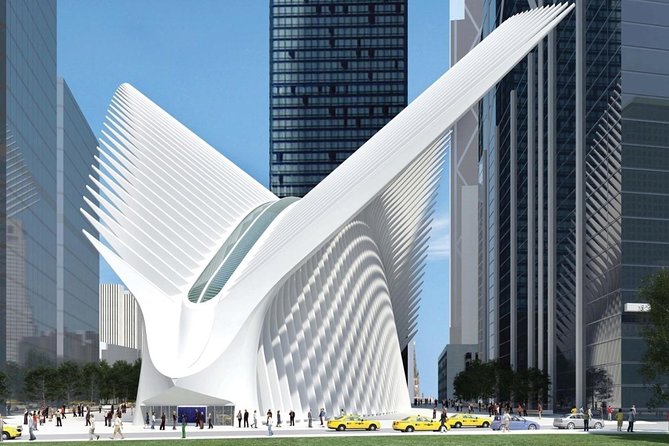
Next, you move to an overlook of the World Trade Center Memorial Plaza. You get roughly 40 minutes here, and that time window is exactly what most people need to understand the site layout. From this vantage point, you can take in the major pieces: One World Trade Center, the Reflecting Pools, and the museum area.
This is where a guide helps most. If you’ve never been, the site can feel like a “complex of things” rather than a clear geography. From the overlook, you’re better able to recognize what you’ll see again at ground level when the walking continues.
Consider staying present during this part. It’s easy to treat an overlook as just a photo platform, but the guide’s framing turns it into orientation—so when you later stand at the memorial edges, it’s easier to connect the physical design to the story you just learned.
Brookfield Place and Operation Aegis: The Sea Rescue Lesson
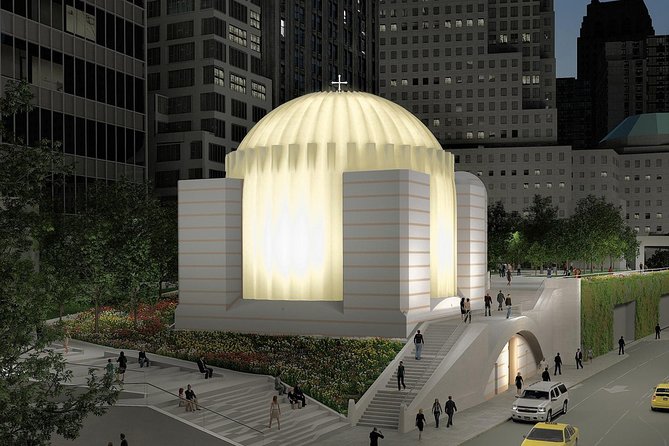
The tour proceeds to Brookfield Place, with about 45 minutes here. This stop adds a less obvious chapter: Operation Aegis, described as the largest rescue by sea in history, evacuating over 500,000 civilians by watercraft of all sizes.
I like that this reframes the day beyond firefighting and skyline tragedy. You get reminded that survival involved many kinds of action—and that downtown didn’t just depend on one type of response.
If you’re the kind of person who reads about 9/11 and still feels like you’re only getting part of the picture, this is one of those stops that fills the gaps. It’s also a helpful reset before you go to the memorial spaces that are more direct in their grief.
One consideration: because this is a public area with lots of people, the group can move at a slower pace than you’d expect. Comfortable shoes help.




Winter Gardens and the Eleven Tears Memorial: A Quiet, Specific Tribute

Then you reach the Winter Gardens, described as a reconstructed 10-story glass pavilion with a $60 million rebuild effort after the attacks. The tour time here is about 15 minutes, but it’s not a rushed photo stop. The guide uses the space as a landmark to explain what was rebuilt and why.
From there, you visit the Eleven Tears Memorial, dedicated to the eleven American Express employees lost that day. This specific dedication is one of the most moving parts of the route, because it’s not an abstract memorial. You’re seeing how individuals are honored within the larger national event.
If you’re traveling with teens or family members who worry this will be too heavy, this stop is also a good pacing tool. It gives you a focused moment to reflect without turning the entire day into one long emotional tunnel.
World Trade Center Complex Wrap-Up: Survivor Tree and Building Four Questions

Your tour concludes at the new World Trade Center complex, with about 15 minutes for the final guided context. This section includes:
- The Survivor Tree, highlighted for resilience, survival, and rebirth.
- Discussion of the mystery around lost gold and silver reserves of Building Four.
I appreciate that the tour doesn’t pretend all the answers are tidy. You get some of the factual details you can verify and a sense of the lingering uncertainties that people have debated over time. That approach feels more honest than forcing closure.
This is also a good place to slow down for one reason: after the museum begins, you’ll mostly shift into self-guided mode. In other words, use these last minutes to absorb what the guide tells you so you’re not “starting over” in the museum with unfamiliar names and themes.
National September 11 Memorial & Museum: Skip the Line, Then Go at Your Pace
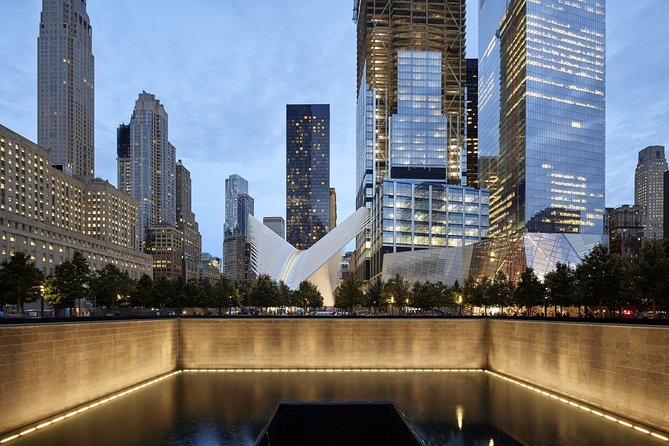
After the walking portion, you enter the National September 11 Memorial & Museum with skip-the-line access. The tour time budget is about 2 hours, and the museum is self-guided once you’re inside. Before you go in, your guide gives tips and highlights to help you optimize the visit—meaning you’re less likely to wander aimlessly for the first 20 minutes.
What I like about this setup is control. The guide helps you prioritize, then you steer your own pace. That matters in a museum like this, where one person wants to focus on artifacts and another wants to spend time with first-person accounts or specific exhibits.
The museum experience here is described as including multiple artifacts and first-person videos from survivors and rescuers. That combination tends to hit different for different people. Some visitors leave feeling like they finally understand the day’s human stakes. Others feel overwhelmed and need breaks. Since you’re self-guided, you can step aside when you need to.
A small but important logistics heads-up
One thing to watch: the ticketing system emails your museum access ticket automatically, typically the day before. And once you enter, the museum has a no reentry policy, so plan your timing with that in mind. If you notice a ticket issue, the guide will escort you into the museum entrance, and there’s support mentioned for fixing problems—so don’t struggle in silence if something goes wrong.
Also, give the museum real time. Even if the guided portion is structured, the indoor experience takes longer than a quick walk-through.
One World Observatory Views: What You See After the Story
The tour package includes skip-the-line access to One World Observatory. You’ll view New York from 102 stories above street level. This doesn’t erase what you just learned, but it does change your perspective.
I recommend treating the observatory as your “breath back” moment. You’re moving from memorial concentration to city-wide scale. That can feel strange right after a heavy museum, but it also helps you place Lower Manhattan in the larger map of the city you came to see.
Practical note: keep your energy for the whole day. The total experience is about 4 hours on average, and with museum time inside, you’ll feel it if you try to stack too many activities immediately after.
Price and Value: What You’re Paying For at $79.95
At $79.95 per person, this tour is priced as a bundled experience: a guided Lower Manhattan walk tied to 9/11 landmarks plus museum admission included and skip-the-line access. You’re also getting narrated context that helps you interpret what you see outside.
If you attempted this day on your own, you’d likely pay for museum entry separately, then spend extra time figuring out where to go and in what order. Here, you get that order built in. You’re paying for reduced guesswork and reduced waiting.
Is it expensive? For some budgets, yes. But when you count the included museum access and the guided walk that points you to meaningful stops (including smaller tributes like the Eleven Tears Memorial), it can feel like the more efficient way to do this emotionally and practically.
Who This Tour Fits Best (and Who Might Want Another Option)
This tour is a strong match if:
- You want your first visit to Ground Zero to make sense fast.
- You care about seeing specific places instead of only hearing a general overview.
- You like having a guide set your priorities before you do a self-paced museum.
It may be less ideal if:
- You want zero walking. This is built around a structured route and multiple stops.
- You need a very flexible museum schedule. The museum itself is self-guided, but the day has a defined flow, including the museum portion and the observatory.
Tour Guide Quality: The Difference Between Hearing and Understanding
The single biggest factor you’ll notice with this experience is the way the guides teach the route. Many people specifically praise guides for combining factual clarity with a caring tone.
Names that come up in standout stories include David, Christopher, Kevin, Richard, Andrew, Mark, Bobby, Raymond, and Keith. Several comments highlight guides who answer questions at a comfortable pace, and in some cases share personal NYC perspectives about living through the period around 9/11. A few guides are also praised for helping with photography—so if you care about getting a good shot without losing your place in the narrative, it’s worth knowing the guides are often ready for that.
Still, even the best guide can’t change the fact that the subject is serious. Plan for it to feel heavy. The tour’s structure helps with respect and pacing, but it’s not meant to be a casual sightseeing loop.
Practical Tips for a Smooth, Respectful Day
Here are the simple things that make the tour easier on your body and your brain:
- Wear comfortable shoes. The route is a walking tour with multiple stops, and you’ll stand at overlooks.
- Bring water and expect security foot traffic. Public areas around the World Trade Center can be crowded.
- Plan to spend time in the museum. Don’t schedule something tight right after.
- Keep your camera ready, then pause. Some stops are photo-friendly; others are reflection-heavy. Follow your guide’s timing cues.
- Use the pre-museum pointers. They’re there to help you pick what matters so your 2-hour self-paced visit feels intentional.
Should You Book 911 Ground Zero Tour & Museum Preferred Access?
I’d book this tour if you want a structured first visit that turns the site into a story you can follow. The included museum admission, skip-the-line access, and the photo-supported walking route make it a practical value, not just an emotional experience.
I wouldn’t book it if you’re looking for a purely architectural tour or you’re afraid of heavy content. In that case, you might prefer a less time-structured option or separate visits. But if you want Ground Zero plus a top-of-the-city reset, this is one of the more efficient ways to do it.
FAQ
How long is the 911 Ground Zero tour and museum experience?
It runs about 4 hours on average. The walking tour is described as narrated 2 hours, and the museum portion is about 2 hours.
Where does the tour start?
The meeting point is 20 Dey St, New York, NY 10007.
Where does the tour end?
The tour ends inside the 9/11 Memorial at 180 Greenwich St, New York, NY 10006.
Is the National September 11 Memorial & Museum admission included?
Yes. Museum admission is included in the tour cost with enhanced access.
Do I need to wait in line for the museum?
No. The package includes skip-the-line access to the National September 11 Memorial & Museum.
Is the museum visit guided or self-paced?
The museum is self-guided. Your guide gives you pointers and highlights before you enter so you can plan your time inside.
Is One World Observatory included?
Yes. After the tour, you get skip-the-line access to One World Observatory to view New York from 102 stories above street level.
How big is the group?
The maximum group size is 25 travelers.
What language is the tour offered in?
The tour is offered in English.
What is the cancellation policy?
You can cancel for a full refund up to 24 hours before the experience’s start time.
Are mobile tickets provided?
Yes. This experience uses a mobile ticket. Confirmation is received at booking time.