REVIEW · NEW YORK CITY
Central Park Guided Pedicab Tours
Book on Viator →Operated by Peter Pan Tours of Central Park · Bookable on Viator
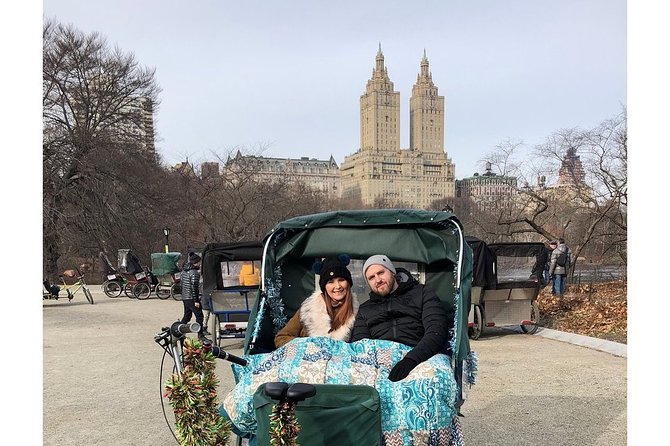
Central Park is huge, and a pedicab helps. This guided ride connects major landmarks with the stories that make them make sense, from terraces and bridges to the quieter corners most people skip. You get a leisurely pace, regular stops for photos, and a guide who turns the park into a walkable map.
I particularly like the stop-and-explain style. One minute you’re gliding past famous places like the Bow Bridge or Bethesda Terrace, and the next you’re getting the why behind them. I also like the flexible route choices (1, 2, or 3 hours), so you can match the tour to your energy level and the season.
One thing to plan around: this experience depends on good weather. They do not conduct tours in rain or even a small chance of rain, so I’d build in a backup afternoon during your trip.
In This Review
- Key points worth knowing
- Central Park without the maze: why a pedicab guide works
- Price and time: is $65 per person good value here?
- Meeting at 1411 6th Ave and what the ride feels like
- First-hour focus: Wollman Rink to Bethesda Terrace
- Bethesda Fountain and Angel of the Waters: a quick stop with big meaning
- Cherry Hill to Bow Bridge: the photo-friendly triangle of wow
- The park edges: San Remo, The Dakota, and Strawberry Fields
- Sheep Meadow and the dining-photo zone
- The 2-hour summer route: Cleopatra’s Needle, the Reservoir, and the Great Lawn
- Belvedere Castle and Turtle Pond: the best payoff for panoramic views
- Full-park 3-hour tour: Harlem, Wright’s museum, and the stories behind the edges
- What I would do before you ride: practical tips for a smoother day
- Should you book this Central Park pedicab tour?
- FAQ
- How much does the Central Park guided pedicab tour cost?
- How long is the tour?
- Is this a private tour?
- Are there admission fees for the sights on the tour?
- What is included in the price?
- Does the tour run in rain?
Key points worth knowing
- Private pedicab for your group with a driver-guide who keeps the ride relaxed and photo-friendly
- Short photo/walk stops at major spots, so you’re not just passing by behind the windshield
- Movie and TV spotting is part of the fun, from Bethesda Terrace to the Plaza
- Season matters: the 2-hour tour runs only in warm months
- Guides bring personality and energy (I’ve seen stories credit guides like Vitaly, Ali, Vitali, and John with great humor)
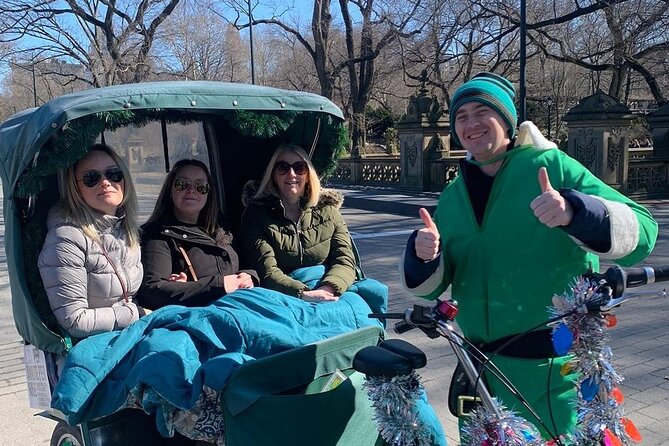
- Cold-weather extras show up in real life: people mention blankets during winter rides
Central Park without the maze: why a pedicab guide works
Central Park can feel like a giant green puzzle. Streets slice it up, landmarks are scattered, and your feet start negotiating with you. A guided pedicab ride is the simple solution: you move efficiently while still getting out enough to take pictures and soak in key views.
What I like about this format is that it lowers the mental workload. Instead of constantly checking your phone, you listen, look, and absorb. Your guide points out what to notice—architecture details, why an area exists, and what’s famous about it—then you get the brief pause to take it in.
Also, this is a private experience, so it’s less awkward than shared-group tours. You can keep the pace you want, ask questions, and focus on what you care about most—whether that’s famous film locations, famous buildings on the edges, or the small designed touches inside the park.
You can also read our reviews of more guided tours in New York City


Price and time: is $65 per person good value here?
The price is $65 per person, and the range is 1 to 3 hours. That matters because you’re not just buying transport—you’re buying interpretation plus an easy route through a huge park.
A 1-hour option is best when you want the highlights without turning your day into a workout. You’ll hit major anchors like the Bethesda area and the Bow Bridge zone, plus classic Central Park icons along the way. A 2-hour route is for people who want more distance and more variety, including additional landmarks that make the park feel bigger than one loop. The 3-hour option is the full sweep, reaching out toward spots that many visitors miss unless they plan a longer day.
My practical take: if you’re spending a limited number of hours in New York, $65 is easier to justify than it looks. Central Park is free, but the time cost of figuring out the park’s layout is real. This tour trades money for clarity and convenience—and that’s a fair exchange.
Meeting at 1411 6th Ave and what the ride feels like
Your tour starts and ends back at 1411 6th Ave in Manhattan. Being back where you began is a small detail, but it keeps you from scrambling for your next plan. It also helps if you’re bouncing between Midtown sights and want a clean, contained block of time.
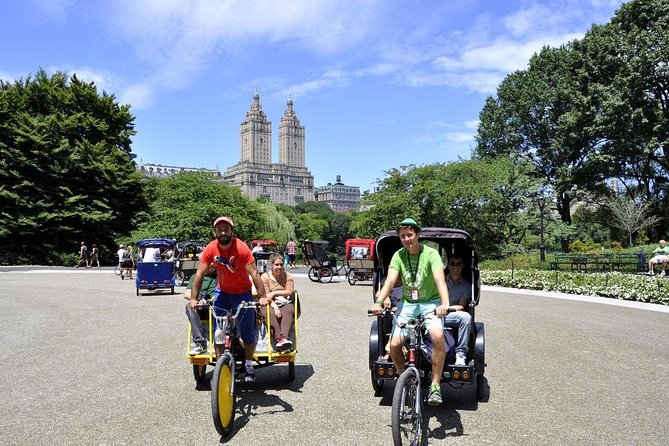
The ride is described as private and runs with a professional guide and a pedicab. Most people can participate, and the general flow is built around stopping often enough to enjoy the park, not sprint through it.
One tip I picked up from how guides handle the experience: good guides start by asking what you care about. People mention that their guide asked priorities at the start, then shaped the emphasis accordingly. If you have a must-see list—say, Bethesda Fountain plus Strawberry Fields—share it up front so your stops match your expectations.
First-hour focus: Wollman Rink to Bethesda Terrace
The first hour is designed to get you oriented fast. You start at Central Park and move through a cluster of famous, easy-to-find landmarks that give you a feel for the park’s style and rhythm.
A standout early stop is Wollman Rink—a famous ice skating rink that has been enchanting visitors since 1949 and shows up in popular culture. Then you roll into spots that feel old-school and playful: the Chess & Checkers House (built in 1952 for all ages) and the Central Park Carousel (dating back to 1871).
From there, you get a quick hit of park history and functions. The Dairy, designed in Victorian Gothic style by Calvert Vaux and Jacob Wrey Mould, originally worked as a refreshment stand. The tour also threads through the area where the Plaza connects parkland with city glamour, opened in 1907 and featured in movies and literature.
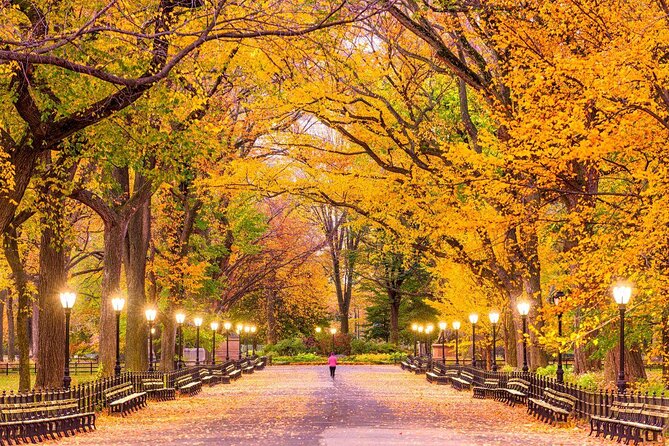
The route then pushes into the park’s iconic “destination” zones: the Central Park Zoo (one of the oldest zoos in the U.S., now tied to conservation and education) and the Mall, famous for its line of American elm trees that provide shade in summer and dramatic fall color.
Finally, the hour closes with the Bethesda area. Bethesda Terrace is a two-level platform with ornate architecture and a large circular fountain. It’s also a frequent filming spot, showing up in productions like The Avengers, Doctor Who, Elf, Home Alone 2: Lost in New York, Gossip Girl, Ransom, and John Wick. You get that mix of grand design and park calm that makes Bethesda feel like a set you can walk around.
Bethesda Fountain and Angel of the Waters: a quick stop with big meaning
Right after the terrace, you reach Bethesda Fountain, located at the heart of the park. The tour’s framing is smart here: it doesn’t treat the fountain as just a pretty photo stop. You’ll hear about the Angel of the Waters statue, created to celebrate New York City’s clean water.
This is the kind of stop that works even if you don’t want long explanations. It’s short, but it changes how you see the place. Instead of thinking of fountains as scenery, you learn they were also meant to communicate civic pride and public purpose.
If you’re the type who likes your vacations to feel story-led, you’ll appreciate this. It’s also practical: you’re not losing precious time at one location, and you’re moving toward additional sights while the park is still in “look at me” mode.


Cherry Hill to Bow Bridge: the photo-friendly triangle of wow
Next up is a classic park trio for views and photos: Cherry Hill, Bow Bridge, and the surrounding water and skyline angles.
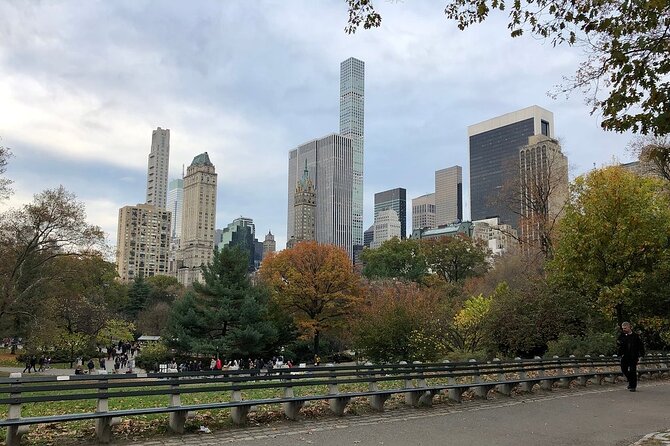
Cherry Hill is named for cherry trees that bloom into a pink display in spring. Even when the blossoms aren’t in season, the hillside offers panoramic views over the lake area and the city skyline.
Then comes Bow Bridge—cast iron, designed to feel romantic, and famous for its lake views. This is one of the places where the pedicab format earns its keep. You can stop, get pictures, and take a moment without having to fight the crowd flow for a perfect angle.
The bridge also has serious pop-culture credentials, showing up in Spiderman 3, Autumn in New York, and Glee. So even if you’ve never heard Central Park’s history, you still get that instant recognition when you see the real thing.
The park edges: San Remo, The Dakota, and Strawberry Fields
After the core park beauty, you roll toward the city’s edge landmarks—the buildings that make Central Park feel like it’s pressed right up against Manhattan life.
The San Remo is a twin-towered building completed in 1930 and known for its distinctive architecture. It’s considered a prestigious address and has housed celebrities, artists, and business leaders. That’s a theme here: the guide points out how the park’s views connect to real addresses and real stories.
A bit later is The Dakota, built in 1884. The tour highlights its celebrity connection, including John Lennon from The Beatles, which is one reason fans visit this section so often.
And then the mood shifts to quiet reflection at Strawberry Fields, a memorial dedicated to John Lennon. The area is named for the Beatles song Strawberry Fields Forever and functions as a peaceful gathering place. This stop feels like the tour’s emotional palate cleanser: you get the romance of Bow Bridge, then you pivot into something calmer and more personal.
Sheep Meadow and the dining-photo zone
Central Park isn’t only monuments. It’s also open space, and a guide-led ride helps you find where that openness is. One major stop is Sheep Meadow, originally planned as a space for sheep grazing in the 19th century and now a favorite gathering place.
If you like people-watching, you’ll probably enjoy this segment. It’s where the park shifts from designed landmarks into everyday park life—sunbathing, strolling, and just stretching out.
The tour also includes the nearby dining-photo area tied to a historic building that was transformed into a restaurant. People connect film shoots here too, with references mentioned to Mr. Popper’s Penguins, Wall Street, and Ghostbusters. Even if you never watch those exact scenes, it’s a fun way to feel the park’s connection to New York pop culture.
The 2-hour summer route: Cleopatra’s Needle, the Reservoir, and the Great Lawn
The 2-hour version is special because it’s longer, but it also depends on the season. This route runs only during warm months. If you’re traveling in winter, the 1-hour or 3-hour options become your main plan.
One of the big anchors is Cleopatra’s Needle, described as the oldest man-made object in New York City. It’s over 3,500 years old, still bears original hieroglyphs, and has a story that includes a major move in 1881. The monument weighed about 220 tons and took 112 days to transport from the Hudson River to its park location.
Then you hit the Met area, with its grand Beaux-Arts architecture and the kind of landmark presence you can feel even from a distance. The tour ties this into the park’s broader cultural identity, not just a garden vibe.
Next is Jacqueline Kennedy Onassis Reservoir, built in the mid-19th century as drinking water. It was renamed in 1994 to honor Jacqueline Kennedy Onassis and now offers scenic views of the Manhattan skyline.
The route then spends time around the Great Lawn—a location tied to major concerts (Simon & Garfunkel, Diana Ross, Andrea Bocelli, Garth Brooks are mentioned) and also to the park’s free public-performance culture via Shakespeare in the Park.
This is a smart stretch because it shows Central Park as an event space, not just a scenic park. You’ll also encounter the Marionette Theater, with puppet shows and its Scandinavian-style cottage appearance. Finally, you get Shakespeare Garden, a four-acre area where plants mentioned in William Shakespeare’s works are grown. It’s one of those places where a guide helps you see the design logic quickly.
Belvedere Castle and Turtle Pond: the best payoff for panoramic views
Another high-value stop on the longer routes is Belvedere Castle. It has striking Gothic and Romanesque design and was originally built in 1869 as a decorative observation deck. Because it sits on a high point, it’s built for views—so you get a change of perspective after walking around mostly flatter paths.
From there, the tour includes Turtle Pond, with a fun, simple idea: it’s a spot for turtles to sunbathe and relax. It’s not a deep excursion, but it’s a nice break in the pacing, especially if you’ve spent a lot of time looking at buildings and sculptures.
This part of the park works well if your group includes kids or anyone who gets tired of landmark facts. It gives you something calm to watch while the guide keeps moving at a manageable pace.
Full-park 3-hour tour: Harlem, Wright’s museum, and the stories behind the edges
If you choose the full 3-hour route, expect a broader arc that reaches far beyond the Bethesda and Bow Bridge core. This option is for people who want to see Central Park as a whole system—gardens, performance spaces, cultural spots, and neighborhood connections.
The route includes the Solomon R. Guggenheim Museum, designed by Frank Lloyd Wright with a spiral shape. It also notes that the movie Night at the Museum was filmed here. So yes, this is another “big Central Park landmark meets pop culture” moment, but it also connects to a real architectural reason you’d visit the area anyway.
You’ll also hear about figures tied to park and city life, including Fred Lebow, co-founder of the New York City Marathon. The story goes back to a small start in 1970 with 127 participants and how the event expanded into something global.
Another stop covers the former Andrew Carnegie mansion, with a reminder that Carnegie believed in using wealth for public benefit and donated heavily to causes including libraries, Carnegie Hall, and peace-related efforts.
The tour also points out a prestigious all-girls Catholic school, part of the Sacred Heart network, founded in 1881. The tour ties it to education and leadership themes and mentions notable alumni like Lady Gaga and Caroline Kennedy.
Then you reach North Meadow (23 acres of open space) and finally step toward Harlem. Harlem is presented as a center of African American culture tied to the Harlem Renaissance, jazz legends like Duke Ellington, and writers such as Langston Hughes. The tour also connects you to places like the Apollo Theater and the area’s continuing food and cultural scene.
From there, you get Conservatory Garden, a six-acre garden split into French, Italian, and English sections. It’s described as seasonal with different bloom seasons like tulips in spring and chrysanthemums in fall.
Two nature-ish stops follow: The Ravine (dense foliage and seasonal changes with a contrast to the more manicured parts of the park) and The North Woods (wildlife and birds, with dense trees and hidden streams).
Then you move into more water and bridge details, including Glen Span Arch, the Loch (a scenic waterway from the North Woods to the Harlem Meer), and the larger historical layer tied to Seneca Village and Hooverville. The tour notes that in the 1850s the land was acquired by the city to create Central Park, which gives these “scenic” spots a grounding beyond postcards.
The ride also references West Side Story filming ties around this area, which is a fun way to connect the park’s city edge energy to a classic New York story.
What I would do before you ride: practical tips for a smoother day
Here are the small planning moves that make this kind of tour feel worth it.
- Pick the route that matches your stamina. If you only have one afternoon, the 1-hour loop keeps it simple. If you’re here for several days and want more variety, go 2 hours in warm weather or go 3 hours for a full sweep.
- Tell your guide your priorities early. People mention guides like Vitaly and Ali asking what matters most at the start, then adjusting the emphasis. If your must-see list includes Bethesda Terrace, Bow Bridge, Strawberry Fields, or Cleopatra’s Needle, say so at the beginning.
- Expect some views to be partially blocked. Central Park trees can hide parts of buildings and statues from certain angles. When visibility matters, plan for a time when foliage isn’t at maximum density.
- Budget for tips. Tips aren’t included, so I’d plan extra cash even if you’re paying online for the main fare.
- Go with weather logic. They do not run tours in rain or even a small chance of rain, so choose a day with a real weather buffer. If it gets canceled due to poor weather, you’ll be offered another date or a full refund.
Should you book this Central Park pedicab tour?
Book it if you want a guided way to see Central Park’s biggest landmarks without turning your day into constant map-reading. It’s also a strong choice for first-time visitors who want Bethesda Terrace, Bethesda Fountain, Bow Bridge, Strawberry Fields, and the other major anchors—plus a guide who can connect the dots with culture and design details.
Skip it (or re-think the timing) if your schedule is too tight around weather. Since the experience won’t run in rain or even a small chance of rain, build in flexibility. Also, if you’re planning to spend most of your trip on long hikes or you love slow, solo wandering only, you might prefer doing Central Park on your own. This tour is about efficiency plus storytelling, not an extended self-guided stroll.
FAQ
How much does the Central Park guided pedicab tour cost?
It costs $65.00 per person.
How long is the tour?
The tour lasts about 1 to 3 hours, depending on which tour option you choose.
Is this a private tour?
Yes. Only your group will participate.
Are there admission fees for the sights on the tour?
The stops listed on the tour are marked as free admission.
What is included in the price?
The price includes a professional guide and the pedicab tour.
Does the tour run in rain?
No. The tour requires good weather, and they do not conduct tours in the rain or even with a small chance of rain.