REVIEW · NEW YORK CITY
Best of Central Park Tours by Pedicab – Stories & Photos
Book on Viator →Operated by CENTRAL PARK TRAVEL ™ · Bookable on Viator
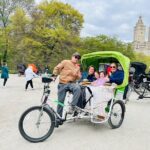
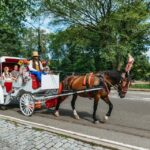
Central Park in a pedicab feels made for photos. This private pedicab ride pairs short scenic stops with stories and photo stops at the park’s most famous corners.
I especially like the way your licensed NYC guide keeps things moving without rushing, like when guides such as Ricky put real effort into getting good pictures.
Two big wins for me: the photo help and the friendly, human storytelling from the guide. The ride is also an easy-on-your-feet way to see a lot of ground in a limited time window.
One thing to keep in mind: this experience is weather-dependent, so plan to be flexible if conditions turn.
In This Review
- Key highlights to know before you go
- Enter Central Park by pedicab, with stops built for pictures
- Price and what $38.40 buys you in real terms
- The ride length: why 1 to 3 hours changes what you see
- Central Park core: Bethesda Fountain, Terrace tiles, and the Angel
- The Mall and Bow Bridge: classic geometry and cast-iron romance
- Strawberry Fields and the Imagine mosaic: a quiet pause inside the noise
- The Pond, Reservoir, and the Lake: water views that keep pulling you back
- Carousel, Chess & Checkers House, and Dairy House: the park’s playful brain
- Wollman Rink, Gapstow Bridge, and movie-ready corners
- Animals, statues, and the park’s outdoor community
- Longer option extras: Alice, Cleopatra’s Needle, The Met, Belvedere Castle
- Who should book this pedicab tour?
- Should you book Best of Central Park Tours by Pedicab?
- FAQ
- What is the price?
- How long is the tour?
- Is this tour private?
- What language is the tour offered in?
- Where does the tour start?
- Is hotel pickup included?
- Does it include admission tickets?
- Do I need good weather?
- Are service animals and car seats allowed?
- How does cancellation work?
Key highlights to know before you go
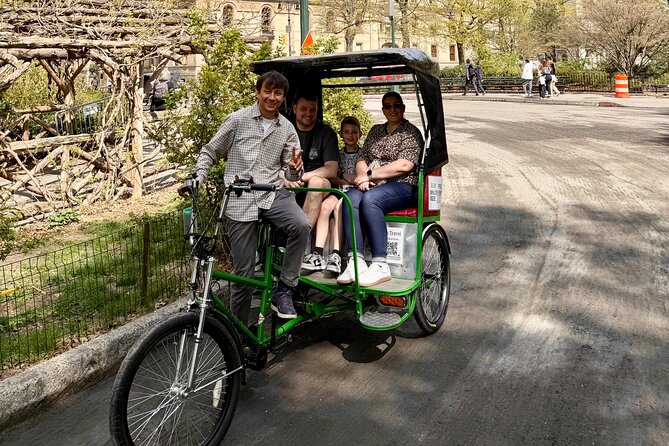
- Private pedicab pacing: You control the flow as a group, with photo breaks at major landmarks.
- Guide-led photo moments: Expect posing tips and stop-and-shoot time, not just passing views.
- Olmsted and Vaux everywhere: You’ll repeatedly see how Frederick Law Olmsted and Calvert Vaux shaped the park.
- Iconic film-and-photo backdrops: Stops connect to recognizable movie locations and well-known New York scenes.
- Comfort features for the weather: Blankets in cold weather and a cover if it rains are included.
Enter Central Park by pedicab, with stops built for pictures
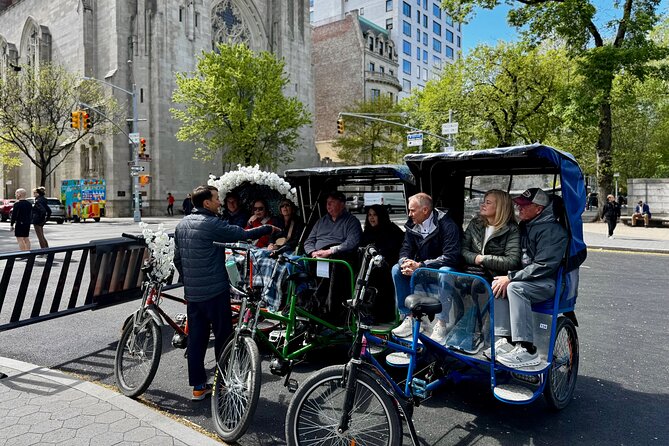
This tour is designed around comfort and clarity: you ride in a private pedicab, then pause at the photo-worthy spots that define Central Park from postcards to TV scenes. The value here is not speed for speed’s sake. It’s smart pacing—enough time at the places that matter, without turning your visit into a marathon.
On top of that, the guide role is not just facts-on-a-plate. Guides such as Ricky (from past experiences) are praised for fun, engaging storytelling and for helping you get great-looking photos at famous points. That matters, because Central Park is huge, and good angles are not always obvious when you’re standing in the crowd.
Also, you’re not on a ticket-rip, line-crawl plan. Many of the stops you hit are free areas inside the park, so you’re spending your time on the view—not standing around wondering what costs extra.
You can also read our reviews of more photography tours in New York City



Price and what $38.40 buys you in real terms
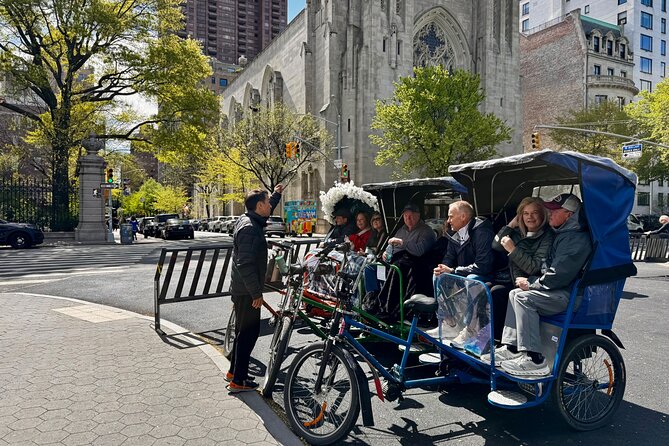
At $38.40 per person, the cost can feel a little steep at first glance—especially if you’re used to self-guided walking tours. But here’s where the value stacks up:
- You’re paying for private transport through a big walking area.
- You’re paying for a licensed NYC guide who connects landmarks to stories and film locations.
- You’re paying for photo stops and help getting better pictures without wasting time searching for the perfect spot.
In a park this large, “you can do it on your own” is often true, but it usually costs you something—energy, navigation time, or the missed chance to get the best angles at key landmarks. This tour trades a bit of money for a smoother, easier experience and a tighter route.
The ride length: why 1 to 3 hours changes what you see
You’ll be on this tour for about 1 to 3 hours, depending on the chosen duration. That time window is the difference between seeing the core classics and adding on some extra iconic stops near the park edges.
A useful way to think about it: this is a “best-of” format. You won’t have time for every museum, every walkway, or a long sit-down break. Instead, you get short, well-timed stops so you can say yes to the big Central Park moments—then still have energy left for the rest of your NYC day.
If you want maximum coverage without turning it into an all-day event, the longer end of the range is a good fit. If you’re short on time or you want a calmer pace, the shorter option still covers the big-name highlights.
Central Park core: Bethesda Fountain, Terrace tiles, and the Angel
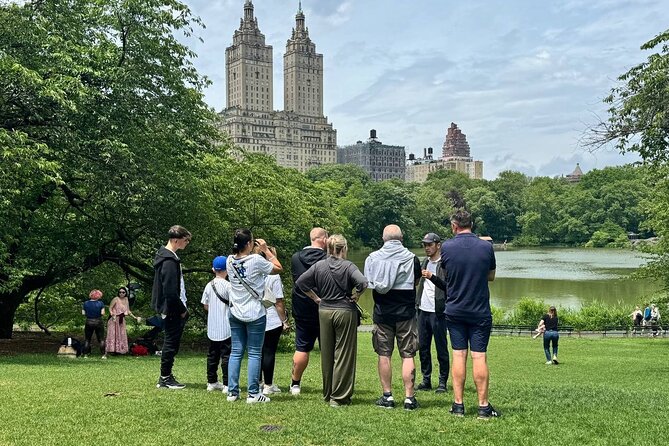
Your Central Park route makes a strong case for why Bethesda is a must in any first visit. You’ll stop at Bethesda Fountain and then at Bethesda Terrace, and these two spots work as a story pair.
At Bethesda Fountain, the centerpiece is the Angel of the Waters, a sculpture by Emma Stebbins (designed in 1868, unveiled in 1873). The symbolism is biblical—an angel blessing the Pool of Bethesda from the Gospel of John. It’s the kind of landmark detail you’ll notice much more once someone puts the meaning into plain words.
Then comes Bethesda Terrace, with its famous arcade ceiling covered in Minton encaustic tiles. One thing I love about this stop is that it’s not just pretty: it’s a restoration story. The tiles were removed during a renovation in the 1980s because restoring them was too expensive at the time. Later, the Central Park Conservancy restored and reinstalled them starting in 2004, with the project funded by a private donation. If you look closely, those colors and patterns are exactly why the terrace feels so special in photos.
Practical tip: at both Bethesda spots, camera height matters. This is where the guide’s photo help really pays off—better angles mean fewer awkward crowd shots and more “this looks like New York” images.
The Mall and Bow Bridge: classic geometry and cast-iron romance
Next, the tour leans into the park’s most postcard-friendly stretches.
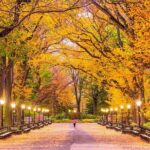
The Mall (also called Literary Walk) is one of the park’s most iconic promenades, lined with towering American elms. You’ll notice the straight-line design contrast—Central Park’s overall curves, punctuated by one intentionally straight section. That’s why it photographs so well. You also get the literary connection, since the walk includes statues honoring writers such as William Shakespeare, Robert Burns, and Sir Walter Scott.
Then you’ll hit Bow Bridge, a cast-iron bridge completed in 1862 and restored in 1974. It’s designed by Calvert Vaux and Jacob Wrey Mould, and it’s known for that graceful bow-like curve. If you’ve ever seen Central Park scenes in movies or TV, there’s a good chance this bridge looks familiar. It’s also a romantic stop where couples naturally gravitate for photos—so expect others nearby, which makes good timing and angles even more important.
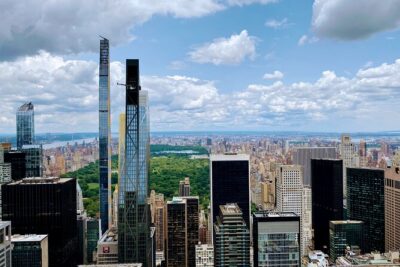
If you’re visiting in nicer weather, this is the part of the day where you’ll likely want to slow down for a few extra seconds—because the combination of bridge + trees + skyline is why people fall for Central Park.



Strawberry Fields and the Imagine mosaic: a quiet pause inside the noise
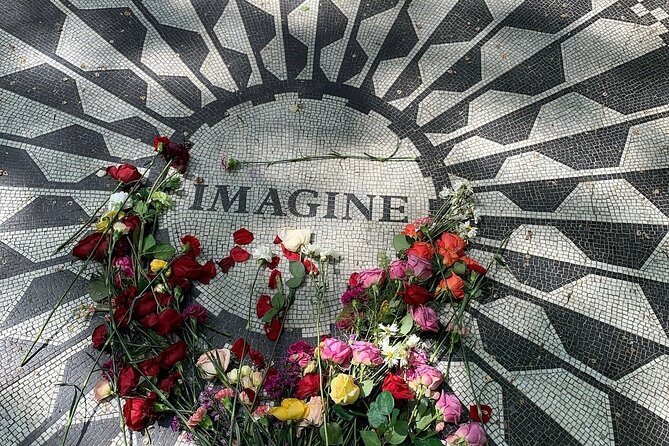
Strawberry Fields is the memorial section dedicated to John Lennon, and it brings a different mood than the fountain-and-bridge stops. It’s a 2.5-acre tribute designed by Bruce Kelly, created as a living memorial after Lennon’s death in 1980.
At the heart of the area is the Imagine mosaic, linked to Lennon’s vision of peace. It’s a simple design with a big emotional weight, and it’s frequently surrounded by flowers, tributes, and small moments of remembrance. If you want a break from the standard sightseeing rhythm, this is one of the best places in the park for it.
Around this stop, you also get a clean connection between music and place: Strawberry Fields takes its name from Strawberry Fields Forever, inspired by the former children’s home in Liverpool that was important to Lennon’s early life. It’s the kind of detail that turns a “nice memorial” into something you’ll actually remember.
The Pond, Reservoir, and the Lake: water views that keep pulling you back
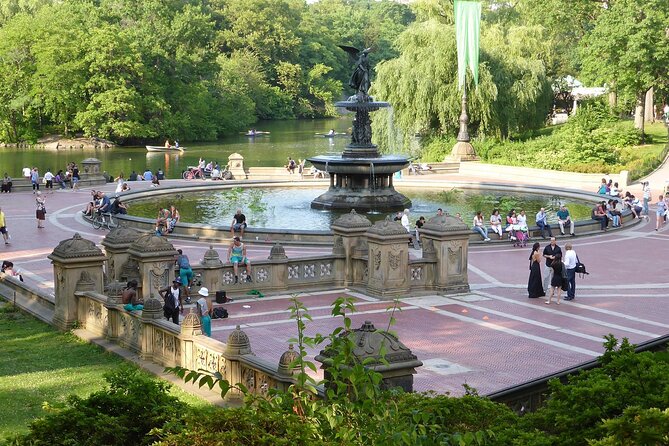
A big part of Central Park’s charm is water, and this tour points you to the spots where you can see it at its best.
The route includes The Pond, a serene 3.8-acre area created as part of Olmsted and Vaux’s original 1858 plan. You’ll get the sense of how the paths were designed for changing scenery as you walk around it.
You’ll also pass Jacqueline Kennedy Onassis Reservoir on the longer set of stops (included in the 2-hour version). This reservoir was built between 1858 and 1862 and now covers 106 acres, holding more than one billion gallons. Even if you don’t read every sign, the curving shape and sheer scale are hard to miss.
Then there’s The Lake, a 20-acre centerpiece that helps tie the Ramble and Bethesda Terrace areas together. If you want the most “Central Park afternoon” feeling, The Lake is the place to do it—shore views are great, and you can also row if you’re in the mood. (The tour notes nearby rowboat rentals at Loeb Boathouse.)
Carousel, Chess & Checkers House, and Dairy House: the park’s playful brain
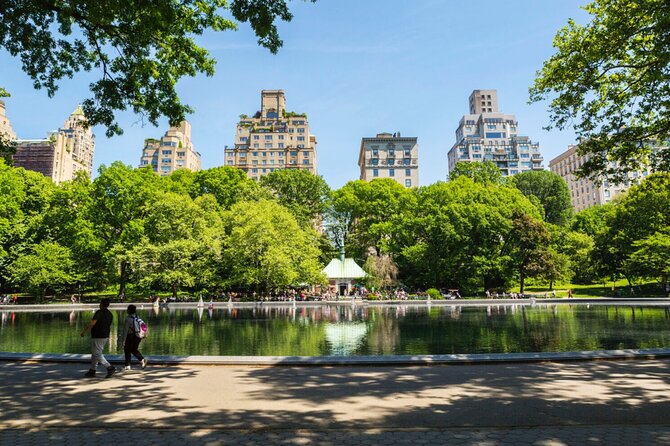
Not all Central Park magic is big monuments. Some of it is old-school fun and little corners that feel like the park has a personality.
You’ll make time for the Central Park Carousel, with an especially interesting chain of history: the original carousel dated to 1871, then a current version installed in 1951 marks it as the park’s fourth. The classic carved horses are famous—57 of them—built by the Stein and Goldstein company and considered among the finest examples of early 20th-century carousels in the U.S.
Another stop is the Chess & Checkers House, an octagonal brick structure built in 1952 and surrounded by 24 game tables. It’s a friendly place for strategy and conversation, and it’s known for showing up in pop culture, including Searching for Bobby Fischer (1993). Even if you’re not a chess player, it’s fun to watch people take a break from the city and actually focus.
Finally, there’s the Dairy House, built in 1870 and restored after years of neglect. It started as a refreshment spot for children and families and now works as a visitor center with maps and brochures. It’s one of those fairy-tale style buildings that makes you look up for a second and realize the park was designed with imagination in mind.
Wollman Rink, Gapstow Bridge, and movie-ready corners
Depending on the timing and duration, you may also get stops that are famous for photos year-round—or iconic in winter.
At Wollman Rink, the tour hits a key Central Park winter tradition. It opened in 1950 and is named after Kate Wollman, who donated $600,000 in honor of her family. The rink sits with that unbeatable backdrop of the Manhattan skyline, and the history includes both casual skating and higher-profile events. The rink was renovated after a decline in the 1980s, then reopened.
For pure postcard views, Gapstow Bridge is a standout. It was built originally in wood and cast iron, then replaced in 1896 with the current stone version. The ivy-covered exterior and rustic arches look great in every season. This is also a good wildlife-watching stop—turtles and ducks often hang around The Pond area nearby.
If you’re a film fan, this section of the park is loaded with familiar visuals. Central Park keeps getting used onscreen, and these corners are part of why.
Animals, statues, and the park’s outdoor community
Some of the most “New York” moments are small and human-scale: statues, outdoor play, and spaces where people gather without tickets or reservations.
You’ll have a stop for the Central Park Zoo, which began as a menagerie in 1864, became the city’s first official zoo in 1934, and later shifted away from cages toward more natural habitats in 1988. Today it’s managed by the Wildlife Conservation Society and includes exhibits such as the Temperate Territory, Tropic Zone, and Polar Circle.
There’s also Balto, the sled dog statue tied to the 1925 Serum Run to Nome. It’s a moving reminder that hero stories aren’t always human, and the inscription honors the sled dogs that delivered antitoxin across rough conditions.
In the “park as a living playground” category, you might pass by Rumsey Playfield, tied to the Central Park Conservancy’s transformation of older structures into sports fields and then the home of SummerStage performances. You may also see Conservatory Water, known for model boat sailing and the presence of literary-themed statues like Alice in Wonderland and Hans Christian Andersen.
Longer option extras: Alice, Cleopatra’s Needle, The Met, Belvedere Castle
If you choose the longer plan, the route adds extra famous anchor points just beyond the classic “inner park” loop.
Alice in Wonderland is one of the quick, kid-friendly icons included in the longer tour. The statue was donated by George Delacorte in 1959 as a gift for New York City children.
You may also stop at Cleopatra’s Needle, the oldest outdoor monument in New York City, brought from Egypt and dedicated in Central Park in 1881. It’s a vertical history lesson with hieroglyphs and a real sense of ancient scale placed right in Manhattan.
The longer route can include The Metropolitan Museum of Art, which traces back to 1870 with a building that opened along Central Park’s eastern edge in 1880. It’s one of those places where even looking from outside gives you a sense of why it became such a major institution.
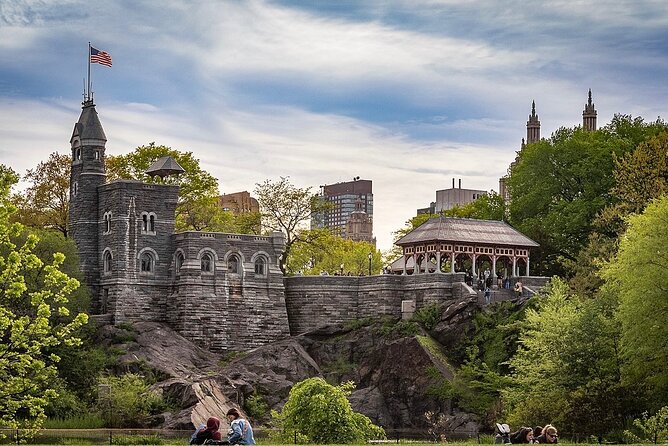
And then there’s Belvedere Castle on Vista Rock, a whimsical Gothic-Romanesque structure designed by Calvert Vaux and Jacob Wrey Mould in 1867. It’s named for “beautiful view,” and you can take in panoramic scenes from the observation deck. It also connects to official weather data since 1919.
Who should book this pedicab tour?
This tour is a strong match if you:
- Want a first-time Central Park plan without turning it into a long walking day
- Care about photo stops and want help getting the best angle
- Like a story-driven approach rather than just staring at landmarks
- Prefer comfort and pacing, especially if you don’t want to crisscross the park on foot
It may not be ideal if you want long, slow museum time or if you’re trying to cover every single Central Park attraction in one go. This tour aims for the best-known landmarks and the stories that make them click.
Should you book Best of Central Park Tours by Pedicab?
I think you should book it if your priority is a high-impact Central Park day with minimal legwork and better photos. The private pedicab format and the guide’s support with photo moments are the big reasons it works so well, especially when you’re juggling other NYC plans.
If you’re the type who loves wandering on your own, you can still DIY Central Park. But if you want your time focused on the places that define the park—and you’d rather trade a bit of money for smoother logistics—this pedicab tour is a smart choice.
FAQ
What is the price?
The tour costs $38.40 per person.
How long is the tour?
It runs about 1 to 3 hours.
Is this tour private?
Yes. It’s a private tour/activity, and only your group participates.
What language is the tour offered in?
The tour is offered in English.
Where does the tour start?
The meeting point is 1415 6th Ave, New York, NY 10019, USA. The tour ends back at the meeting point.
Is hotel pickup included?
No. Hotel pickup and drop-off are not included.
Does it include admission tickets?
The tour includes an admission ticket for the Central Park stop. Many other highlighted stops listed are marked free (for example Wollman Rink, Gapstow Bridge, The Mall, Bethesda Fountain, Bethesda Terrace, and others).
Do I need good weather?
Yes. The experience requires good weather, and if it’s canceled due to poor weather, you’ll be offered a different date or a full refund.
Are service animals and car seats allowed?
Service animals are allowed. A carseat cannot be used on the pedicab.
How does cancellation work?
You can cancel for a full refund up to 24 hours in advance of the experience start time. If you cancel less than 24 hours before, the amount paid won’t be refunded.