REVIEW · NEW YORK CITY
Central Harlem African-American Culture Walking Tour
Book on Viator →Operated by Harlem One Stop Inc. · Bookable on Viator
Harlem history moves fast on foot. This Central Harlem African-American culture walk ties music, civil rights, and neighborhood change into one easy route from 145th toward 125th, with the Apollo Theater as your anchor point. You’ll cover major landmarks and you’ll hear the story from a Harlem resident on a licensed tour.
I especially like how the guide is part educator, part storyteller, and you get a steady stream of local context as you walk. I also like the small-group pace, capped at just 15 people, so questions don’t get swallowed.
One consideration: while the tour is listed at about 2 hours, it can run long if the group starts late, so don’t schedule something tight right after.
In This Review
- Key things I’d mark on your map before you go
- Entering Central Harlem the local way
- Apollo Theater and 125th Street: where the story kicks off
- What you learn about jazz, gospel, and cultural change
- Strivers Row, Schomburg Center, and the institutions you’ll remember
- Strivers Row and the architecture lens
- The Schomburg Center and cultural memory
- Harlem Hospital murals and public art
- Harlem School of the Arts and next-generation creativity
- Astor Place and the bigger walk context
- The walking pace, shoes, and the 10:00 am reality
- Group size: why max 15 changes the experience
- Price vs. what you actually get for $30
- Who this Harlem culture walk is best for
- Should you book it?
- FAQ
- How long is the Central Harlem African-American Culture Walking Tour?
- What is the price per person?
- How many people are in the group?
- Where do I meet the guide?
- What time does the tour start?
- Is this tour in English?
- What’s included in the tour?
- Does it include visiting churches or attending music?
- What happens if the weather is bad or the tour can’t run?
Key things I’d mark on your map before you go
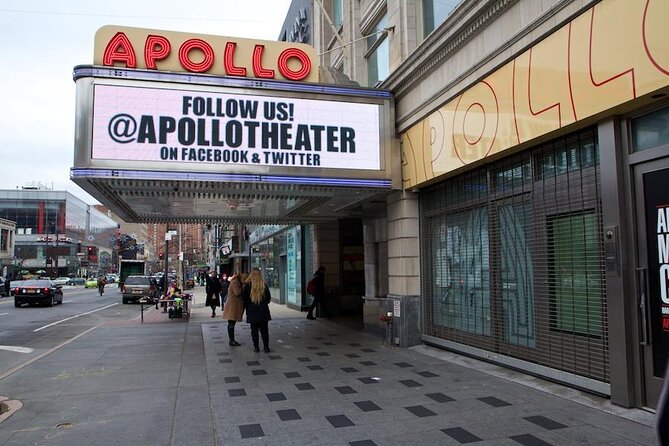
- Apollo Theater as the starting anchor for the Harlem Renaissance through Civil Rights era and what’s changing now
- Small group (max 15), which keeps the pace human and makes it easier to ask questions
- A music-focused narrative (jazz, gospel, and more) without doing a church or music performance visit
- Stops that mix culture + institutions like the Schomburg Center, Harlem Hospital murals, and Strivers Row
- Easy route from 145th to 125th along major Harlem corridors where you can keep orienting yourself
Entering Central Harlem the local way
This is the kind of tour that helps you stop treating Harlem like a blur between subway stops. You start with the big cultural signal—Apollo Theater—then you work your way through the neighborhood’s older blocks and landmark institutions. It’s a walking experience, so the “learning” sticks because you’re seeing what the guide is talking about as you go.
The tour’s core promise is neighborhood history, with special attention to African-American cultural development—especially music forms like jazz and gospel. That matters because Harlem isn’t just a place to point at. It’s a place where people built communities, schools, performance spaces, and cultural institutions over generations. When your guide can connect those dots, you walk away with a clearer mental map.
Also, I like that you’re not asked to sit through a lecture. You’re outside, moving, and the guide keeps the story anchored to what’s on the street: architecture, institutions, and the changing feel of key corridors.
You can also read our reviews of more walking tours in New York City



Apollo Theater and 125th Street: where the story kicks off
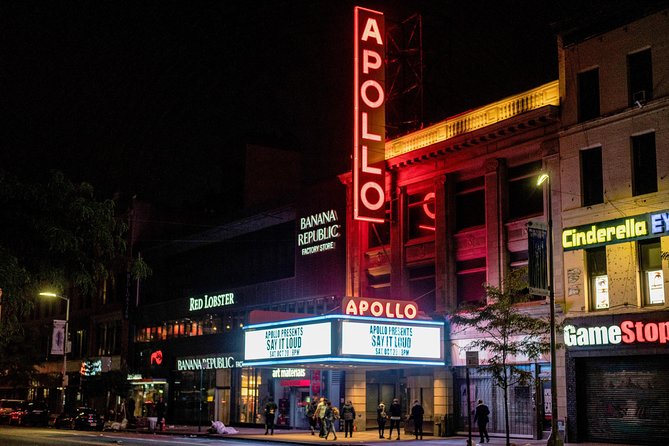
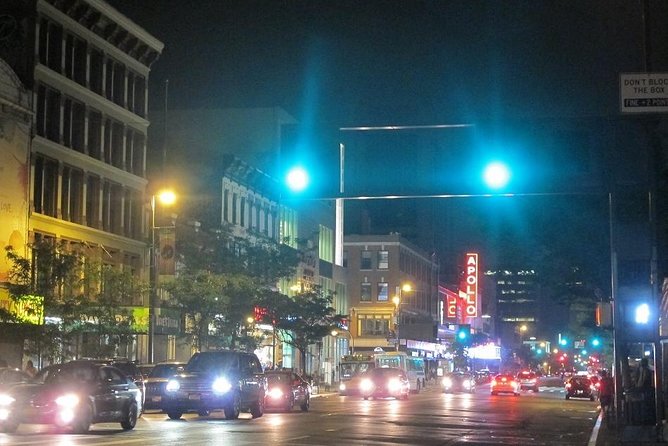
You’ll begin at 700 St Nicholas Ave and end at the Apollo Theater area (233 W 125th St, 3rd floor), and the tour’s first major focus is the Apollo Theater. Even if you’ve seen it from the sidewalk before, the guide frames it as more than a landmark. It’s a symbol of Harlem’s cultural engine—tying together the Harlem Renaissance, the Civil Rights era, and the neighborhood’s present-day momentum.
From there, you’ll walk near the 125th Street shopping corridor, which is where the area’s public life is loud and visible. Your guide also points out the African Market in Little Senegal, a reminder that Harlem isn’t a museum piece. New layers keep arriving, and the neighborhood’s identity keeps widening.
A couple of other notable names come up around this area: Speaker’s Corner and Hotel Theresa. Even if you’ve never heard those tied into a Harlem story, the tour’s value is that it shows how everyday landmarks can hold meaning. The guide links them to the larger narrative—who gathered where, why it mattered, and how those spaces relate to music and civic life.
Practical upside: the tour notes Admission Ticket Free, so you’re not getting hit with extra paid entries for what you’re seeing at this stage.
What you learn about jazz, gospel, and cultural change
This tour is not a performance tour. It’s not built around sitting in a church service or attending a music program. Instead, you learn the neighborhood’s history of jazz, gospel, and other musical forms through the places that helped shape those sounds and the communities that supported them.
That approach works well for first-timers. You don’t have to know anything ahead of time. You just need to be willing to listen and connect. When the guide talks about music culture in Harlem, you’ll hear it as something tied to daily life—people, institutions, and public spaces—rather than just famous artists on posters.
It’s also a good fit if you like cultural history that’s grounded in geography. Harlem’s musical development isn’t an abstract concept here. It’s tied to schools, theaters, corridors, and cultural centers you can actually point at while you walk.
The best part is that the guide keeps it local. Names you might hear—like George, William, Keith, and Dr. Keith Taylor—come with a sense of pride and familiarity. In real-world terms, that usually means the talk feels like it has footnotes and street context, not just slides.
Strivers Row, Schomburg Center, and the institutions you’ll remember
Your walking route runs from 145th Street to 125th Street, so you get a sense of moving through Harlem rather than hopping between isolated stops. Along the way, you’ll pass by several anchors that help explain how the neighborhood functioned culturally and educationally.
Here are the kinds of places that typically make this tour click for people:
Strivers Row and the architecture lens
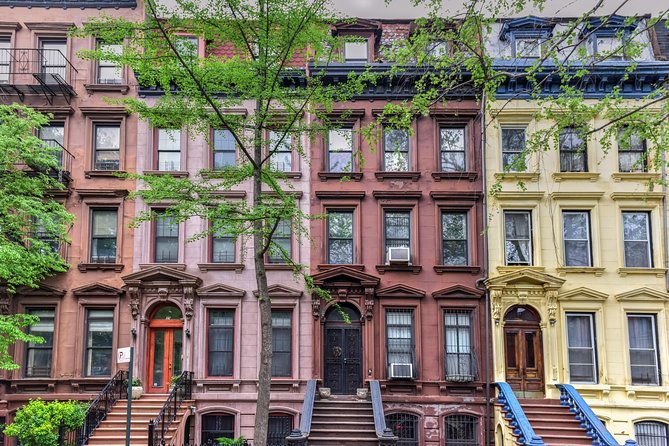
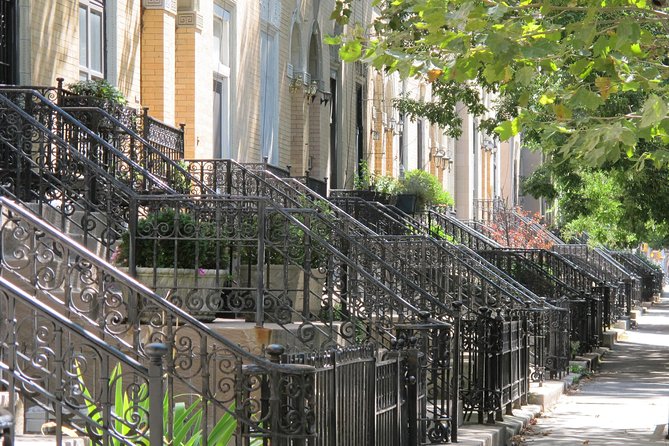
Strivers Row is one of the stops included on the route. Reviews and descriptions around this style of tour often emphasize architecture because it tells a story of ambition, wealth, and community building. Even if you’re not an architecture buff, it helps to see the block-level “how did people live?” reality behind the headline history.





The Schomburg Center and cultural memory
Schomburg Center shows up as part of the route, and this is the kind of stop where your guide can connect research and preservation to the wider Harlem narrative. If you like learning how a neighborhood protects its own story, this is the moment you’ll feel it.
Harlem Hospital murals and public art
You’ll also see Harlem Hospital Murals. The key value here is perspective: cultural history isn’t only in theaters and famous stages. It’s also in public-facing spaces where art communicates identity.
Harlem School of the Arts and next-generation creativity
Harlem School of the Arts is listed among included sites. For many people, that adds a future-looking angle—how institutions support creative life beyond the past.
Astor Place and the bigger walk context
Astor Place is included as well, which helps the route feel like an actual walk through interconnected corners of the neighborhood rather than a straight line of “name tags.”
One note: this tour is focused on what you can see and connect in the street. You’ll likely come away with a stronger sense of where to go next, because the tour points to institutions you can revisit on your own.
The walking pace, shoes, and the 10:00 am reality
This experience is listed as about 2 hours, and it can be moderately difficult for the physically challenged, mainly because it’s a walking tour. Wear appropriate clothing and footwear—this isn’t the time for fashion shoes.
Good shoes are not a small detail here. Even without any steep challenges stated, you’re covering ground between 145th and 125th and stopping often to take in context. Several people specifically highlight comfort and the importance of being ready for tired feet.
Timing matters too. The tour starts at 10:00 am, and it’s near public transportation. I’d still plan to arrive a few minutes early and keep your schedule flexible. One of the most consistent practical lessons from tours like this is that small-group discussions take time—especially if people ask questions.
Also, because the tour requires good weather, the plan can change if conditions are poor. The experience notes that if it’s canceled due to weather, you’ll be offered a different date or a full refund.
Group size: why max 15 changes the experience
At up to 15 travelers, this is a different experience than the big bus-tour version of Harlem. A smaller group changes everything:
- The guide can slow down for questions instead of rushing past them.
- You’re more likely to get direct answers, especially on cultural context and what certain places meant.
- The overall pace stays comfortable because the guide can manage the group on foot.
In several accounts, guides like George and William are described as engaging and capable of keeping people interested over the whole walk. When that’s paired with a small group, it’s easier to feel like you’re learning with a local, not watching someone perform for a crowd.
If you’re the kind of person who likes to ask: Why here? How did this change? What does this building signal?—this size is a real advantage.
Price vs. what you actually get for $30
At $30 per person, this is priced like a solid “first layer” Harlem experience. You’re not paying for entry fees tied to paid attractions. The tour indicates Admission Ticket Free for the key elements and focuses on neighborhood context.
What you’re really paying for is three things:
1) A licensed tour guide and Harlem resident who can connect the dots between places and events
2) A walking route that covers a cluster of meaningful stops from 145th to 125th
3) A small-group setup that tends to keep the talk interactive
If you’re only going to do one guided Harlem experience on your trip, this is a strong pick because it builds orientation quickly. If you’re staying longer and plan to explore on your own afterward, it also helps you know where your time is best spent.
Who this Harlem culture walk is best for
You’ll probably love this tour if:
- You want a neighborhood-style lesson on Harlem’s African-American cultural development, not a checklist of random sights
- You care about how music culture connects to institutions and public spaces
- You prefer small groups and a guided pace you can actually hear
You might be less happy if:
- You want a church visit or a music performance included (this tour does not include that)
- You need a strictly timed, never-late 2-hour block with no wiggle room
If you’re traveling with teens or older kids who can handle a solid walking morning, it’s often a good way to give context that’s easier to remember than a textbook page.
Should you book it?
I’d book this if you want a first-time Harlem experience that makes the place feel understandable fast. The Apollo Theater focus, the walk toward 125th, and the included stops like Strivers Row and the Schomburg Center give you enough structure to go deeper on your own later.
Book it with the expectation that it’s a walking culture tour with real discussion time, not a speed-run. Bring comfortable shoes, plan around the 10:00 am start, and keep your afternoon flexible in case the pace shifts.
If your goal is to understand Harlem through the connections between music culture and the places that shaped it, this one does that well for the money.
FAQ
How long is the Central Harlem African-American Culture Walking Tour?
It runs for about 2 hours (approx.).
What is the price per person?
The tour costs $30.00 per person.
How many people are in the group?
The experience has a maximum of 15 travelers.
Where do I meet the guide?
The start location is 700 St Nicholas Ave, New York, NY 10031, USA. The end point is Apollo Theater, 233 W 125th St 3rd Floor, New York, NY 10027, USA.
What time does the tour start?
The start time is 10:00 am.
Is this tour in English?
Yes, the tour is offered in English.
What’s included in the tour?
You get a guided tour by a licensed tour guide and a Harlem resident. The tour focuses on neighborhood history.
Does it include visiting churches or attending music?
No. The tour focuses on neighborhood history and does not include visits to church or music.
What happens if the weather is bad or the tour can’t run?
The experience requires good weather. If canceled due to poor weather, you’ll be offered a different date or a full refund. It can also be canceled if the minimum number of travelers isn’t met, with an alternative date/experience or a full refund.