REVIEW · NEW YORK CITY
Grand Central Terminal Walking Tour
Book on Viator →Operated by Nerd Herd Tours · Bookable on Viator
Grand Central hides stories in plain sight, and I love how this walk turns a famous building into an easy-to-follow timeline of New York. I also love the moment the guide explains the Main Concourse astronomy, so the ceiling stops being decoration and starts being meaning—plus you get Grand Central secrets you’d never guess on your own.
Before you book, consider one thing: this tour works best in good weather. It’s a walking format with time spent outside for views, so if you hate cold or rain on foot, plan accordingly.
In This Review
- Key highlights you should care about
- Why Grand Central feels different with a guide
- The meeting area: getting set up for a smooth start
- Your one-stop experience: the walk that unfolds inside and around Grand Central
- Why it’s there: location and what came before
- The accident story that shaped the building
- The architecture you can actually see: materials, design logic, and meaning
- The ceiling and the astronomy of the Main Concourse
- Jacqueline Kennedy Onassis and why the terminal was saved
- Myths and urban legends: what to believe and what to ignore
- A guide’s role you can feel: pacing, questions, and photos
- Morning or afternoon options: choose based on how you travel
- Getting value from the $35 price
- Who should book this tour (and who might skip it)
- Tips to get more out of your time there
- Should you book the Grand Central Terminal Walking Tour?
Key highlights you should care about

- Star maps in the Main Concourse explained in plain language, not just pointed out
- Big preservation story around how the terminal was saved during the Jacqueline Kennedy Onassis era
- Accident → construction timeline that explains why Grand Central looks the way it does
- Myths and urban legends sorted from the real story you can actually verify by sight and design
- Small-group pace capped at 35, so questions don’t get swallowed
Why Grand Central feels different with a guide
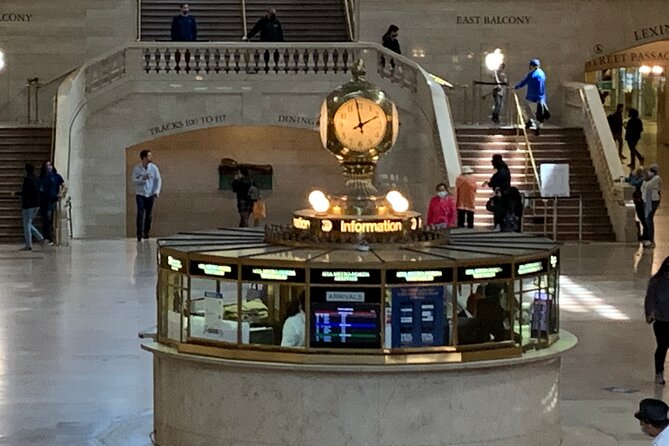
Grand Central Terminal is famous enough that you might think you already know it. You’ve probably seen photos of the main concourse, the famous ceiling, and the main clock area. But without context, it’s easy to treat the place like a backdrop.
This walking tour gives you the missing layer: why the terminal ended up exactly where it did, what was there before, and how major events shaped the building. That’s the key difference. You’re not just looking at beautiful architecture—you’re learning how people built, used, and even defended this place over time.
At $35 for a 1.5–2 hour guided walk, you’re buying time and interpretation. New York’s famous sights aren’t cheap, and Grand Central is no exception. The value here is that you get someone to connect dots quickly, so your self-guided exploration afterward feels smarter and more purposeful.
You can also read our reviews of more walking tours in New York City



The meeting area: getting set up for a smooth start
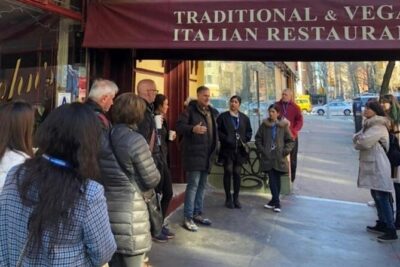
The tour starts at 90 E 42nd St, New York, NY 10017, and it ends back at the same meeting point. That matters more than you might think.
A return-to-start format helps you avoid the common problem of finishing a walk and then having to figure out your next move from scratch. It’s also convenient for planning: you can step out right after and continue exploring nearby neighborhoods, museums, or just grab a coffee without changing plans mid-day.
You’ll also get a mobile ticket, which keeps things easy if you’re juggling subway cards, photos, and schedules. And because it’s offered in English and near public transportation, you’re not forced into a car-based plan.
Your one-stop experience: the walk that unfolds inside and around Grand Central
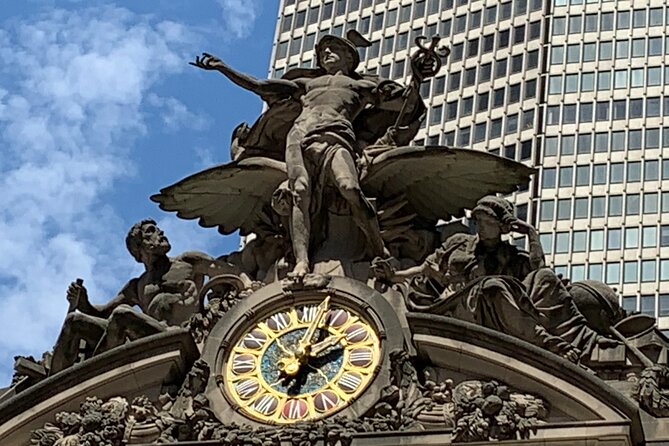
Even though there’s one main stop, you don’t just “stand and listen.” The experience is built like a guided story that moves through the terminal’s most important features: location and earlier site history, the construction backstory, the architecture, the ceiling, preservation, and the legends.
The format usually works like this: you gather at the terminal area, then the guide helps you look with intention—what to notice first, what details to connect, and what questions to keep in mind as you move through the space. You’ll come away with a much stronger mental map than if you just follow the flow of people.
And the duration—about 1 hour 30 minutes to 2 hours—is long enough for real context, but short enough that you still have energy afterward.
Why it’s there: location and what came before
One of the most useful parts is the question your average visit skips: why Grand Central Terminal is where it is. You’ll hear how the site related to earlier activity in the area, so the terminal doesn’t feel like it appeared out of nowhere.
This kind of context changes what you notice when you walk around. Instead of treating each corridor and entrance like a standalone feature, you start seeing how the station fits into the city’s bigger plan and movement patterns.
That’s practical. New York is overwhelming, especially in transit-heavy zones. When you understand the “why,” you stop getting pulled in every direction and start moving with purpose.
The accident story that shaped the building
The tour includes a major cause-and-effect chapter: a terrible accident that led to the construction. It’s one of those facts that sounds like history trivia at first, but it helps explain choices in the design.
When you know there was a safety-driven push behind major construction decisions, you start looking at structure and layout differently. Details stop being just ornament and start being response—how engineers and planners tried to solve real problems at real scale.
This is also where a guided walk earns its keep. You might not connect a dramatic historical moment to the physical form of the terminal without help. The tour bridges that gap.






The architecture you can actually see: materials, design logic, and meaning
Grand Central is gorgeous, but the tour helps you understand what you’re seeing. You’ll get a guided look at architecture and materials, not just a quick “isn’t this cool?” stop.
That matters because the terminal has a way of swallowing attention. Everything looks important—the ceiling, signs, crowds, polished surfaces. A guide gives you a priority list. You’re not wandering. You’re learning how the building communicates.
You’ll also hear about the station’s larger design story, which sets you up for the next big moment: the astronomy in the main space.
The ceiling and the astronomy of the Main Concourse
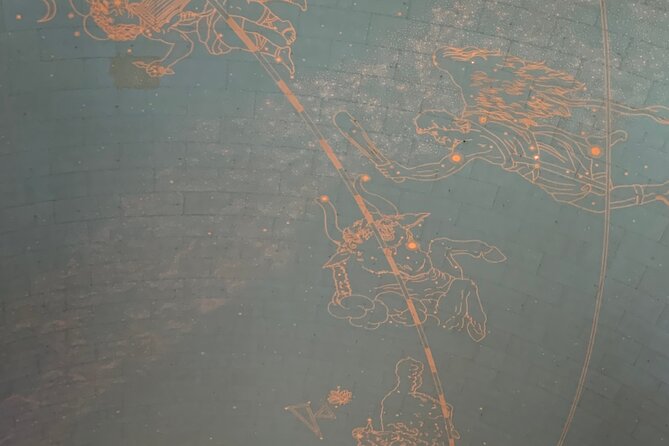
If you want a single “aha” moment, it’s the explanation of the astronomy of the Main Concourse. The ceiling isn’t random decoration. It’s part of a planned visual language.
The guide helps you interpret what you’re looking at, so you can re-find the details later when you return for a photo or a quiet minute. Without context, most people treat the stars as background. With context, they become a map—something you can follow.
This is one of the best reasons to take a guided version first. You’ll get the pattern, and then self-exploration becomes way more fun.
Jacqueline Kennedy Onassis and why the terminal was saved
Preservation is a huge part of Grand Central’s modern identity, and the tour includes the story of how Jacqueline Kennedy Onassis saved it.
This chapter is valuable because it explains why the terminal still feels intact today. A landmark isn’t only architecture—it’s survival. When you understand the preservation push, you start appreciating not just what the terminal was, but what it became after people fought to keep it.
It also gives you a different lens for the present. You’ll walk through the terminal knowing it wasn’t a guaranteed happy ending. That changes how you see restoration and maintenance.
Myths and urban legends: what to believe and what to ignore
Grand Central is the kind of place that attracts stories. The tour specifically includes common myths and urban legends, and it focuses on separating rumor from the kind of story supported by what you can observe in the building itself.
This is a smart approach. It’s easy to fall for legend-heavy explanations when you’re surrounded by tourists and quick facts. A guided tour gives you context so you can enjoy the folklore without losing track of the real architectural logic.
You come away more confident. Instead of wondering what’s real, you know what to look for and what the building is likely telling you.
A guide’s role you can feel: pacing, questions, and photos
A big part of the experience is the guide’s teaching style. In past runs, Martin has been described as engaging and very knowledgeable, with the added bonus of using historical photos to show what the terminal looked like at earlier moments. That kind of visual comparison makes the stories stick.
It also helps when the guide manages pace and stays responsive to questions. Some small groups have had the advantage of hearing and answering questions with more personal attention. If you love asking follow-ups—like how one architectural feature connects to the history—you’ll appreciate this format.
And when weather gets chilly, a good guide will keep you comfortable during any exterior viewing. That’s not a small thing in New York, where the difference between pleasant and miserable can be an hour.
Morning or afternoon options: choose based on how you travel
The tour offers morning and afternoon options. Picking the right time is about how you plan the rest of your day.
If you want the tour to act like your orientation, afternoon can work well because you can build momentum and still have time afterward for a slower look. If you prefer starting with a highlight and then enjoying the rest of the city with a full brain, morning is often easier.
Either way, the key is that the tour is efficient. It leaves you time for more exploration after, which is exactly how I like to structure a first visit to a major attraction.
Getting value from the $35 price
Let’s talk value, because $35 in Manhattan can feel like “do I really need it?”
For this tour, you’re paying for three things that add up fast:
- Interpretation: a guide turns the terminal into an organized story instead of a chaotic crowd experience
- Time efficiency: you learn multiple eras—construction drivers, architecture, preservation, and legends—in about 1.5–2 hours
- Spotlight details: the astronomy angle and key preservation story are hard to self-source quickly without lots of pre-reading
Also, the price includes the admission ticket for the guided activity. That reduces friction. You’re not doing a separate entry step, and you’re not spending extra mental energy budgeting for add-ons.
If you enjoy walking tours that give you a framework you can keep using after you leave, this is a strong use of money. If you only want a casual photo stop, you might find it better to explore on your own.
Who should book this tour (and who might skip it)
This works best for you if:
- you like architecture with context, not just architecture photos
- you want a fast way to understand Grand Central’s major historical chapters
- you plan to spend more time in the terminal after the tour and want a better “map” in your head
It may be less ideal if:
- you hate standing in line areas or walking for 1.5–2 hours
- you’re only interested in quick views and don’t care about the stories behind them
One practical note: service animals are allowed, and the tour says most travelers can participate. If you’re traveling with kids, seniors, or anyone who needs a steadier pace, it’s worth considering how comfortable your group is with a guided walk format.
Tips to get more out of your time there
This is one of those places where your experience depends on how you pay attention.
Wear shoes you’re comfortable standing and walking in. You’ll be inside a busy station, and you’ll also spend time outside for views. If the weather is cold, dress for it—New York waits for no one.
Arrive with one goal: decide what you want to remember. For many people it’s the Main Concourse astronomy or the JFK-era preservation story. If you go in with that in mind, you’ll notice more during the walk and feel better about taking photos afterward.
Finally, plan to stay curious. The tour touches myths and urban legends, and that’s your permission to ask questions when something doesn’t add up.
Should you book the Grand Central Terminal Walking Tour?
I think you should book this tour if you want Grand Central to make sense fast. For $35, you get a guided framework that covers the site’s origins, a construction-driving accident, architecture you can see, the starry ceiling, preservation under Jacqueline Kennedy Onassis, and legend-to-fact sorting—all in about 1.5–2 hours.
Skip it if you’re in pure sightseeing mode and you’d rather spend that time drifting through the station without structure. Or if weather could be a problem for your day, be ready to adjust.
If you want a strong first pass through one of the world’s most iconic terminals—and you like learning while you walk—this is a solid, cost-effective way to do it.